

Give Butterflies and Bees the Protection They Need to Come Back Strong in Spring
Small actions can make big differences for the tiny creatures that seek a safe harbor in our yards over the winter. This guide contains 4 easy but crucial things you can do in your own yard to make it a hospitable place for pollinators like bees, beetles, and butterflies to find shelter before the weather gets too cold for them to buzz around any longer.

1. Awareness is the First Step
With just the action of slowing down and looking around your outdoor space, you might begin to notice the smaller members of the animal kingdom that lurk all around. Okay, “lurk” sounds more like a creature you may want to eliminate from your surroundings, but that is part of the problem. When we target the bugs we don’t want, it can also have profound effects on the bugs that are so beneficial to us such as pollinators.
Some examples are:
• Queen Bees
Bumblebee queens are the only members of their colony to hibernate and survive underground until spring. They dig down under old leaves, sandy soils or unused borrows and can stay there for up to 8 months until the cold passes.
• Swallowtail Butterflies
The last generation of swallowtail butterflies each year overwinters in their chrysalises waiting to emerge next year.
• Ground Nesting Bees
70% of native bees stay in the ground over winter. They burrow into loose soil in sunny open areas of ground.
• Beneficial Beetles
Soldier beetles (cantharidae family) are excellent pollinators. The adults feed on nectar and pollen while their larvae live in soil or leaf litter.
• Moths
Many moths overwinter in their pupal stage in leaf litter. These include beneficial pollinators such as those from the Sphinx moth family. In the spring, these adult moths also known as Hummingbird moths, emerge from their cocoons to feed on nectar sources. One example is Hemaris diffinis or the Snowberry clearwing.
Similarly, many species of flies and wasps are pollinators that overwinter locally. As the days get shorter and temperatures cool, these insects enter a hibernation state called diapause, where growth and development slows down and they become dormant.

This swallowtail butterfly chrysalis that attached itself to a plant pot will overwinter and emerge in spring provided it stays undisturbed.
2. How to Provide Habitat
• Consider leaving fallen leaves in protected places such as under shrubs as a mulch or against a South facing wall. The extra insulation just might help a chrysalis buried in the leaves endure the hard freezes of winter.
• Leave some long stems standing in the garden that can be hollowed out by bees and used as shelter. Instead of pruning spent flowers all the way to the base, leave about 18 inches for winter inhabitants.
• Additionally, you can provide more shelter for overwintering insects by setting aside some loosely stacked brush piles, leaving fallen wood to naturally decay, and even making a bee hotel. (More on how to build a bee hotel later!)
• For bees that dig into the ground to hibernate, leave some areas of exposed loose soil in a sunny location.
• And most importantly, wait until April or May before disturbing areas with leaf litter or cleaning up the yard. This allows time for these tiny creatures to respond to the warmer temperatures and come out of hiding.

Example of a bee house.
3. Grow Some Late-Season Nectar Sources
Just a week’s worth of nectar from late blooming flowers in the Fall can really help queen bees survive until warmer weather comes.
• Monarch butterflies also rely on nectar sources for energy along their yearly migration route.
• Plan your garden to include perennials that bloom late or all season long.
Some options for native plants include Fall asters, goldenrod, salvias, lantana, and don’t forget trees with flowers too. An example in Texas is the Desert Willow tree.
For more details on late-blooming native plant options to feed butterflies see this guide.
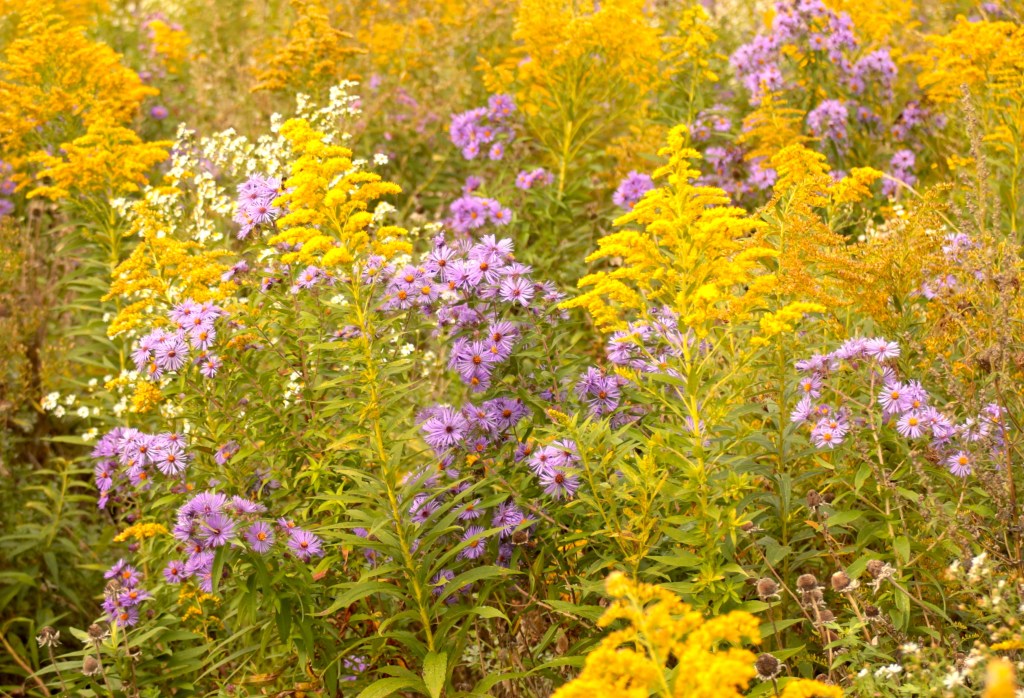
Purple aster and goldenrod flowers blooming in fall are an excellent food source for bees and butterflies alike.
4. Protect Your Pollinator Habitat Until Spring
• Avoid disturbing the areas of leaves, brush piles or barren ground that you have set aside as little habitats. Waiting until the weather is consistently warm with daytime temperatures at 55 degrees F is best.
In Zone 8, that would be until around late March to April to delay any heavy raking, tilling, or pruning.
• Avoid applying any chemicals or pesticides that can harm pollinators. Many ‘natural’ products can also be harmful. (See How to Prevent Common Garden Pest Naturally).
Conclusion
You do not have to let your yard go completely wild to make it a better place for pollinators to spend the colder months. Just being mindful of what you are protecting, how, and these few small techniques can make a huge difference. That way, the beneficial insects will be waiting and ready to come out in the Spring to continue pollinating your garden and putting on a pretty show as they go.

Swallowtail butterfly in spring ready to go!
If you are planning or planting this season, the Butterfly Garden Cheat Sheet can help you check that the basic habitat pieces are in place.
Related Guides:
The Complete Guide to Butterfly Gardening: How to Attract, Feed, and Protect Butterflies All Year
Fall Blooming Plants to Fuel Butterflies at the End of the Season
How You Can Support Monarch Butterflies During Their Migration
Photo credits: Swallowtail chrysalis – Quang Nguyen Vinh, Monarch on leaves – Chris F, Bee hotel – David Hablützel, Fall Flowers – Maria G Hester, Butterfly on leaf – Paul Crook
 Butterfly garden paradise
Leave a comment