
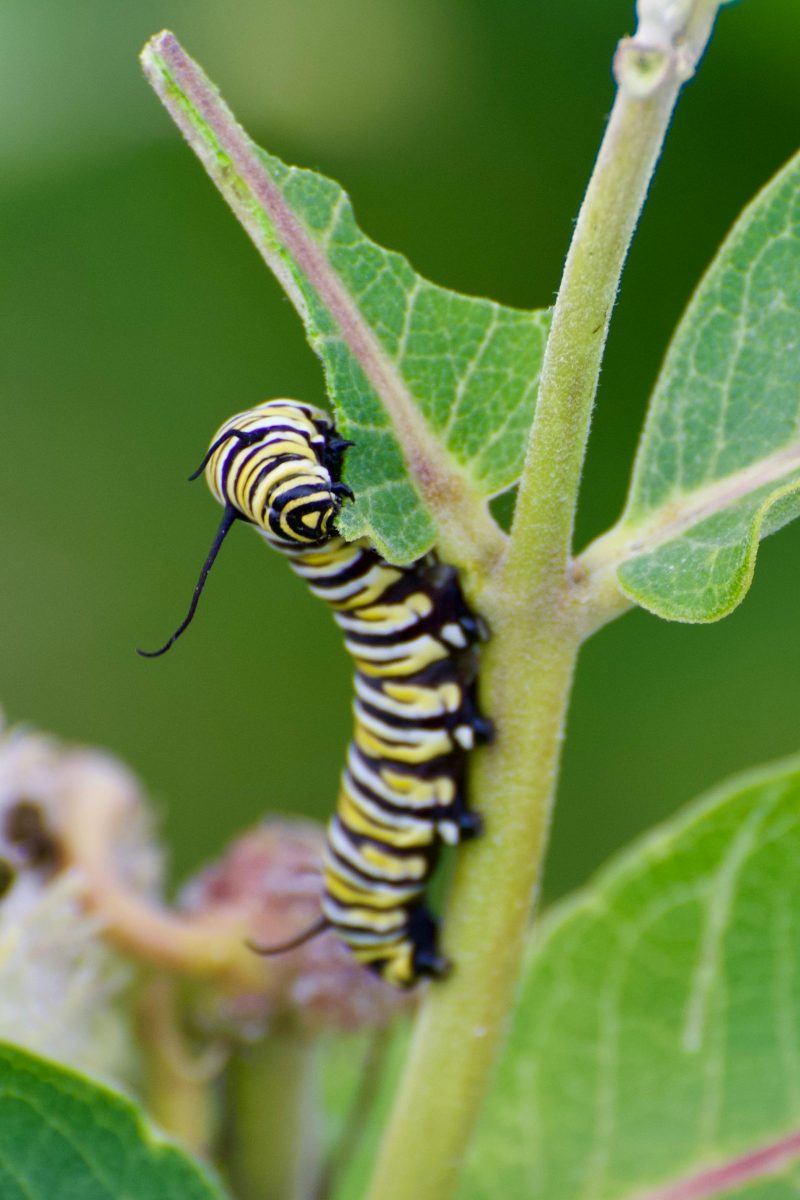
Draw More Butterflies to Your Yard to Reproduce and Support their Entire Life Cycle
Adult butterflies will sip the nectar from many types of flowers, but caterpillars are much pickier when it comes to food choice. Many butterfly species only have a specific genus or two of plant species they will eat as caterpillars. Adult female butterflies seek out these specific plants on which to lay their eggs. Once the eggs hatch, the caterpillars will remain and feed on their host plant until they grow enough to be ready for their next stage: developing a chrysalis and becoming butterflies.
Why Plant Host Plants?
Nectar rich flowers are great for attracting butterflies while they are feeding, but even better is providing host plants for the butterflies to stay and utilize to multiply themselves.
Providing host plants is especially important given the recent decline in Monarch butterfly populations. Replacing a section of lawn with native plants has positive benefits for other butterfly species as well. It provides a pesticide-free haven for butterflies and other pollinators to feed and reproduce. This supports the entire life cycle of the butterfly, from egg to caterpillar to chrysalis to adult.
Primary Butterfly Host Plants for Zone 8 Gardens:
Note: While this list focuses on plants well-suited to Zone 8, many of these host plants and the butterflies that depend on them are found across multiple regions and can be grown well beyond Texas.
Host Plants for Monarch Butterflies
• Milkweed Species Only

Monarch butterfly feeding on nectar from Orange milkweed (Ascelpias tuberosa), which also hosts its caterpillars.
Monarch butterfly caterpillars exclusively feed on the members of the milkweed plant genus Asclepias. Fortunately, there are around 70 different types of milkweed that are native all over North America. The trick is discovering the ones that are native to your particular area and will thrive in the area you intend to plant them. Discover the best milkweed types for Texas here.
If you are planning on attracting monarchs to your garden and providing a place for them to reproduce, Orange milkweed is a great plant to start with. It is simple to grow from seed and hardy in zones 3-9. It is one of the most adaptable native milkweeds, with its range extending from southern Canada through the Eastern and Midwest U.S. and into parts of Mexico.
Learn how to grow milkweed from seed.
A quick note about tropical milkweed (Asclepias curassavica): some people grow it as a fast-growing supplemental food for Monarch caterpillars. But conservationists warn against it for several reasons. It dies back later in the season than other milkweeds, which can delay Monarchs from migrating at the proper time. It also harbors parasites that are detrimental to monarch butterflies, so do not plant it in your garden if you are intending to help monarch butterflies. There are many other valuable and attractive milkweed species to choose from.
Bonus: Milkweed is also the host plant for queen butterfly caterpillars.
Other Important Butterfly Host Plants for Zone 8 Gardens
Milkweed is essential for monarchs, but a thriving butterfly garden supports many species beyond just one. In Zone 8, several large, visible butterflies depend on specific host plants to reproduce. Including even one or two of these plants can dramatically increase the diversity of butterflies you see throughout the season.
Below are the most important non-monarch host plants for Zone 8 gardens, with notes on why they matter and how to use them effectively.
Host Plants for Black Swallowtail Butterflies
• Golden Alexander
• Dill
• Parsley
• Bronze Fennel
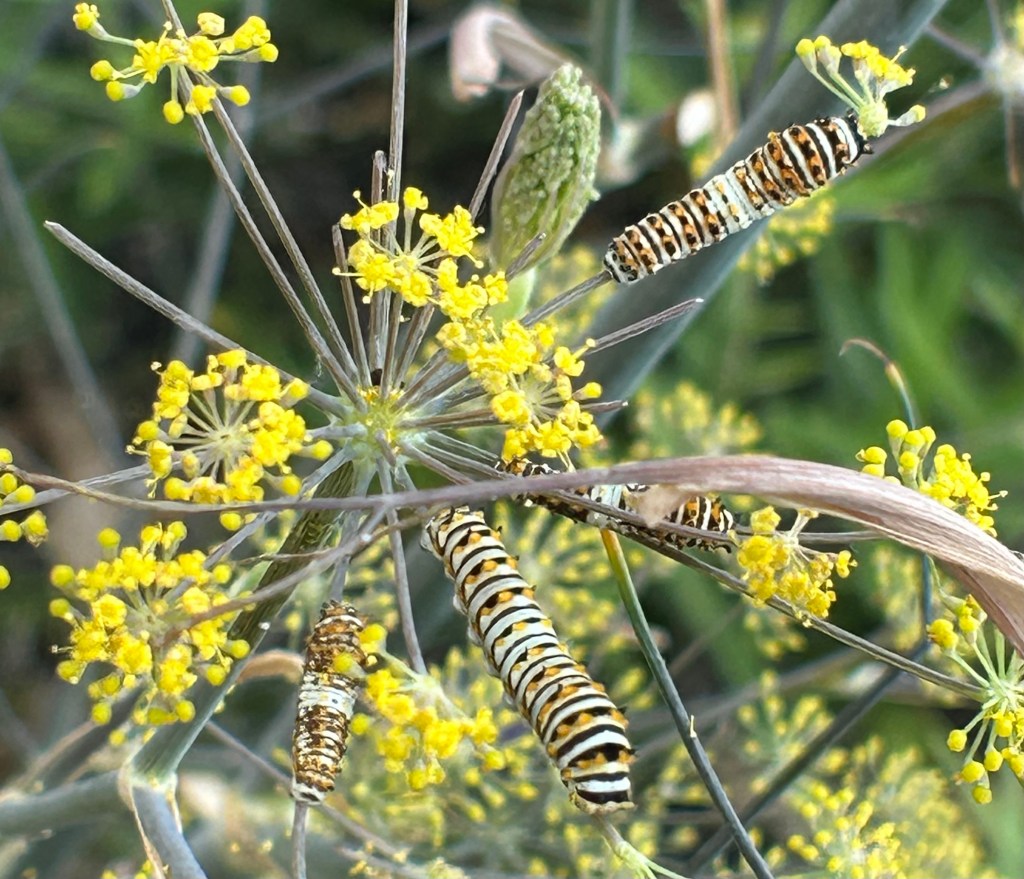
Black swallowtail butterfly caterpillars feeding on one of their host plants, Bronze fennel (Foeniculum vulgare).
Yes, you can have an herb garden and feed the swallowtail caterpillars too. Just make sure to plant extra! Once these caterpillars reach their final stages they can devour a whole plant down to its stems.
Black swallowtail caterpillars feed exclusively on plants in the carrot family, Apiaceae. These are some of the easiest host plants for beginners because they are widely available, fast-growing, and double as useful culinary herbs.
Adult black swallowtails are commonly seen in spring and early summer, and females readily lay eggs on healthy host plants placed in full sun. Once the caterpillars reach their final growth stages, they can consume an entire plant very quickly, so planting extras is strongly recommended.
In hot Zone 8 climates, bronze fennel makes a reliable long-term host plant (See the step-by-step guide to growing bronze fennel plants here). Dill and other herbs often bolt or decline during peak summer heat, while fennel continues producing foliage well into the season. See our full guide on the best host plants for black swallowtail caterpillars for the complete details.
Tip: Growing some host herbs in containers allows you to move plants closer to caterpillars if food becomes scarce.

Potted Passiflora edulis flowering for the first time this season.
Host Plants for Gulf Fritillary Butterflies
• Passionvine (passiflora species)
Gulf fritillaries rely on passionvine as their host plant. In Zone 8, Passiflora incarnata (purple passionflower or maypop) is the most dependable option due to its cold hardiness (zones 5-9) and vigorous growth.
Passionvine is a fast-growing perennial vine that tolerates heavy feeding by caterpillars. The leaves contain compounds that make the caterpillars less appealing to predators, while the spiny orange-and-black caterpillars provide additional visual deterrence.
These butterflies are especially common in suburban gardens, along fences, trellises, and arbors where passionvine can spread freely. Because the plant spreads by underground runners, it should be placed where expansion is acceptable or grown in a large container.
Note: Some passionflower species have toxic leaves or fruit. Always confirm species identification before planting, especially if children or pets are present.
Host Plants for Giant Swallowtail Butterflies
• Citrus Trees (Orange, Lemon, Lime, etc.)
• Rue (Ruta graveolens)
• Native Trees such as Hop Tree, Wafer Ash, and Prickly Ash

Giant swallowtail butterfly feeding on lantana camara flowers
Giant swallowtail butterfly caterpillars eat the leaves of plants from the citrus family Rutaceae. This includes plants from 4 genuses- citrus, ruta, ptelea, and zanthoxylum. Examples of citrus plants include cultivated trees like orange, lemon and lime. Other native trees that can serve as host plants are the hop tree, wafer ash, prickly ash, and Hercules club tree.
For gardeners without space for trees, common rue (Ruta graveolens) is a practical alternative. It is a perennial herb that tolerates drought and poor soils, though gloves should be worn when handling due to potential skin irritation.The rue genus contains a helpful herb if you need something smaller and faster to grow.
Giant swallowtail caterpillars are called “orange dogs” and are well known for their convincing mimicry of bird droppings as a defense strategy. Although the caterpillars are not poisonous, they possess an osmeterium—an orange, forked gland that releases a strong odor when disturbed—which helps deter predators like ants and spiders.
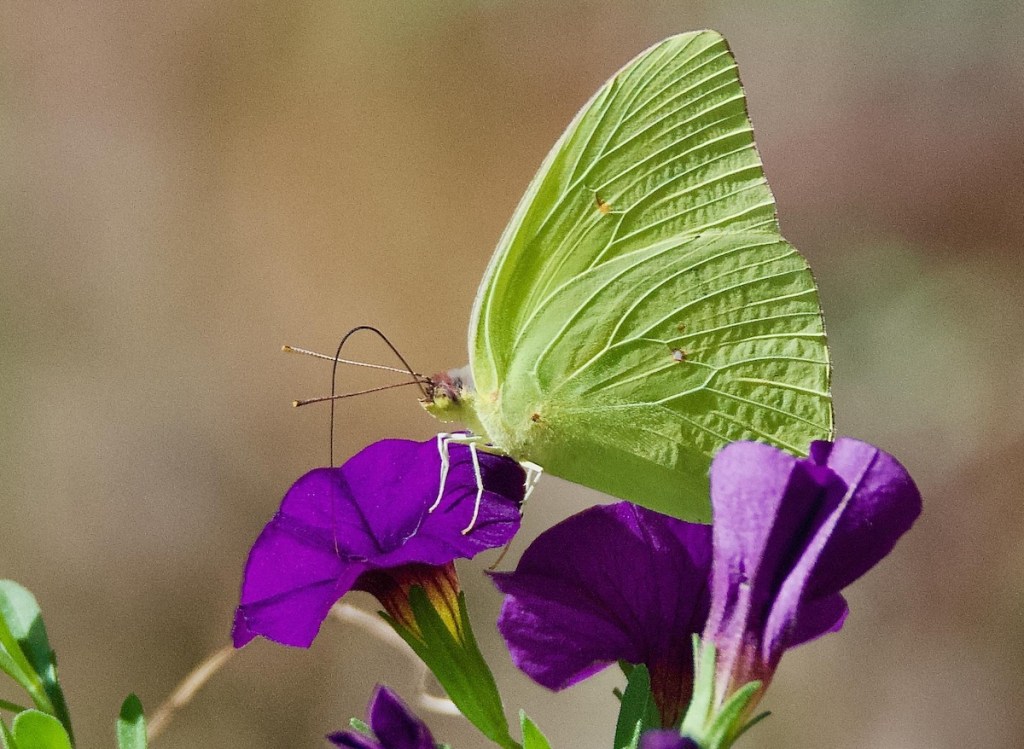
Cloudless sulphur butterfly (Phoebis sennae) sipping nectar
Host Plants for Cloudless Sulphur Butterflies
• Partridge Pea (Chamaecrista fasciculata)
• Senna Genus
Cloudless sulfur butterflies are among the most common and noticeable butterflies in Zone 8 gardens. Their large size, bright yellow coloration, and frequent activity make them easy for beginners to observe.
These butterflies depend on plants in the pea family (Fabaceae), particularly senna and partridge pea, for egg-laying and caterpillar development. Partridge pea is especially valuable because it is native, drought-tolerant, and blooms with yellow nectar-rich flowers while simultaneously supporting caterpillars.
Including senna (such as Lindheimer’s senna) or partridge pea in your garden often results in repeated generations of sulfur butterflies throughout the warm season.
Lastly, these are not the only butterfly species with hungry caterpillar babies, so here are a few more species with their corresponding host plants so you can encourage more butterfly diversity:
Additional Host Plants for Common Butterflies in Texas
• Pipevine (Aristolochia species): Pipevine Swallowtails
• Hackberry Trees (Celtis genus): Hackberry Emperors and Question Mark Butterfly
• Elm Trees: Mourning Cloaks
• Sensitive Plant and Other Senna Species: Additional Sulphur Butterflies (Clouded & Orange)
Trees and shrubs are often overlooked as host plants, but even a single mature tree can support dozens of caterpillars each year.

A question mark butterfly basking in the sun on a leaf. Its caterpillars rely on trees from the Celtis genus.
Important Considerations for Growing Caterpillar Host Plants
When planting host plants, expect visible feeding damage. Chewed leaves are a sign of success, not failure. Avoid pesticides and chemical treatments entirely, as caterpillars are extremely sensitive to residues.
Planting multiple individuals of each host species helps ensure that caterpillars do not run out of food before completing their development. Pairing host plants with nearby nectar plants allows newly emerged butterflies to feed immediately. See our guide Top nectar plants for butterflies in Texas here.
Conclusion
By planting host plants for caterpillars and not just full grown butterflies you can support their entire life cycle and ensure the butterflies will be sticking around longer for a true butterfly garden experience. There are so many options, but choosing one host plant to grow and starting there can make a big impact.
This article covers one part of butterfly gardening. The Butterfly Garden Cheat Sheet shows how these elements fit together at a basic level.
Related Guides:
Top 12 U.S. Butterflies to Plant For (And Their Favorite Native Nectar & Host Plants
Host Plants for Lesser-Known Texas Butterflies
Photo credits: Monarch Caterpillar cover – Matt, Cloudless sulphur – A. G. Rosales, Question Mark Butterfly – Thomas Elliott
 Butterfly garden paradise
Leave a comment