
Tips for a Safe Butterfly Garden
Have you ever wandered out into your garden to check the caterpillars you found munching away on your host plants, only to find they are gone? Caterpillars have many natural predators, but there is no need for chemicals or complicated setups to to make a meaningful difference and give these little creatures a fighting chance. In this guide, you will learn simple, effective ways to help caterpillars survive from egg to butterfly, so you can enjoy more colorful pollinators in your garden.
Who This Guide Is For
This guide is for home gardeners who:
• Want to protect caterpillars without pesticides or chemicals
• Are growing butterfly host plants in a backyard or small garden
• Want to support butterflies while still respecting natural balance
• Feel unsure when (or if) they should intervene with predators
This is not about eliminating predators — it is about giving caterpillars a fair chance in a human-altered landscape.

Caterpillar eggs on a leaf
Why Caterpillar Survival Matters
Caterpillars are the foundation of the next generation of butterflies. The butterfly lifecycle follows four stages: egg → caterpillar → chrysalis → butterfly. No matter the species, monarchs, gulf fritillaries, and swallowtails all rely on this vulnerable stage. Predators and environmental stressors can drastically reduce the number of caterpillars that reach adulthood, affecting both your backyard butterfly population and rippling out to local ecosystems.
By taking steps to protect caterpillars, you are not just helping one insect — you are contributing to pollination, biodiversity, and the survival of butterfly species in your area.
Common Threats to Caterpillars
Even in a well-planned garden, caterpillars face multiple challenges:
Predators
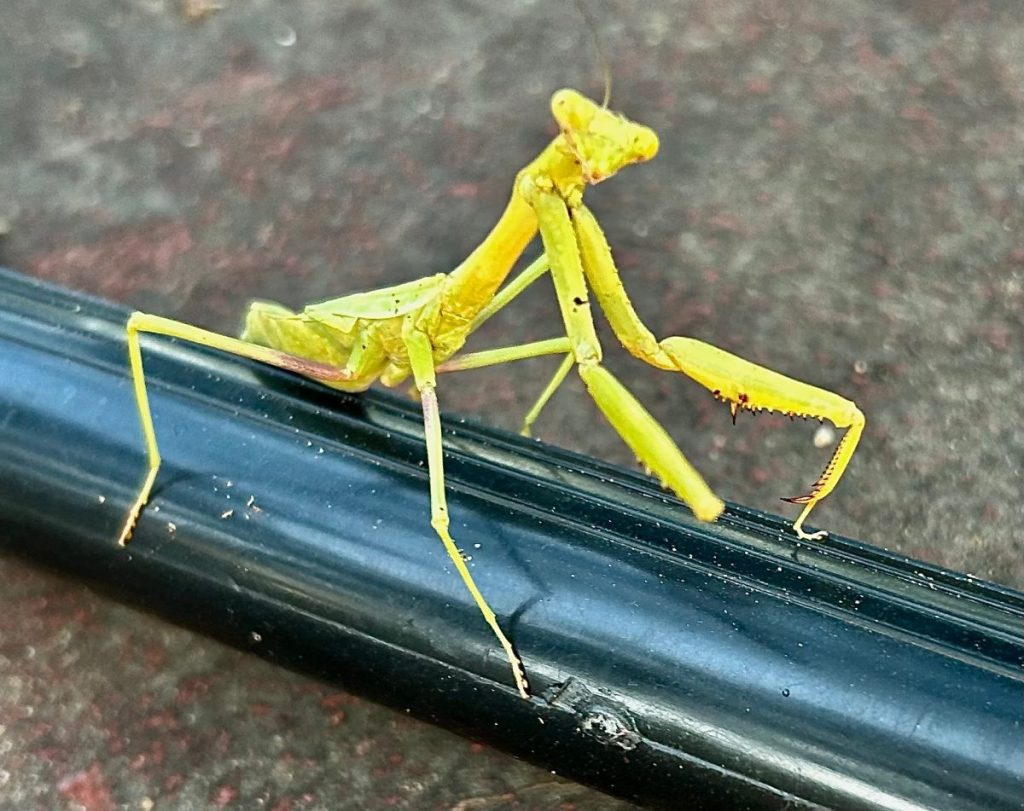
Small birds, ants, spiders, and wasps can quickly decimate caterpillar populations. Paper wasps, yellow jackets, hornets, and mantids (including praying mantis pictured above) actively hunt caterpillars, while other types of wasps and flies are parasitic and lay their eggs on or even inside caterpillars. Stink bugs and assassin bugs use their mouthparts to pierce caterpillars and drink their juices.
Environmental Hazards
Overwatering, high humidity, or poor airflow can cause mold or fungal infections. Wet leaves and caterpillar droppings (called frass) can help spread deadly viruses.
Chemical Exposure
Pesticides, herbicides, and the drift from these chemicals from nearby areas can be deadly. It is important not to use any products meant to kill bugs on or around your caterpillar host plants, even if they are marketed as natural. Not all wasps and hornets target caterpillars; some only feed on nectar, serve as pollinators, or hunt a specific group of bugs such as spiders.
Understanding the presence of these threats is the first step to giving your caterpillars a safe, nurturing environment.

This common thread-waisted wasp is an example of a predatory wasp to caterpillars.
Common Caterpillar Predators — And What Actually Helps
Not all predators require the same response. Knowing who is responsible helps you choose the least invasive solution.
Wasps (paper wasps, yellowjackets, hornets)
These are among the most effective caterpillar hunters. Helpful actions:
• Use mesh or netting over host plants
• Plant host plants among companion plants to reduce visibility
• Relocate wasps only if they are repeatedly hunting a specific plant
Ants
Ants often attack eggs and very small caterpillars. Helpful actions:
• Apply sticky barriers to nearby stems or supports
• Avoid placing host plants where ants already travel
• Reduce aphids, which attract ants
Birds
Birds can remove many caterpillars quickly, especially during nesting season. Helpful actions:
• Use physical barriers like netting
• Place host plants closer to shrubs or visual cover
Spiders & Mantids
These are opportunistic predators. Helpful actions:
• Relocate mantids away from host plants
• Avoid placing host plants directly next to web-heavy areas
Parasitic Wasps & Flies
These lay eggs on caterpillars and are difficult to prevent. Helpful actions:
• Increase plant diversity
• Accept some losses as part of natural balance

Birds can eat large numbers of caterpillars, especially when they have chicks to feed.
Practical Protection Strategies
Here are several safe and effective ways to shield caterpillars without resorting to chemicals:
Physical Barriers
Lightweight mesh covers, cages, or plant nets can prevent birds and other predators from reaching your caterpillars. Make sure they are tall enough for the plants to grow and still allow sunlight, water and air to reach the plants. Mantids can be physically relocated away from caterpillar populations.
Companion Planting
Certain herbs and flowers, such basil, mint, lavender or marigolds, can deter ants or wasps naturally. Butterflies locate their host plants primarily through visual cues and the smell and taste of the leaves. Many caterpillar predators like wasps and stink bugs use smell and movement to hunt, so planting some strong smelling herbs in the area surrounding host plants may help protect caterpillars by confusing smells and visually shielding host plants without disguising them to butterflies. Make a border of herbs around the host plants but not blocking or smothering them.
Special Care
Plant host plants in more sheltered areas, and water carefully to avoid creating moldy conditions. Morning watering is often the best time, allowing leaves to dry through the day. Space your host plants far enough apart to allow for good airflow between them. Avoid putting all your host plants in one area. Scatter them among your companion plants to make it more difficult for predators to find them.
Safe Handling
If you need to move a caterpillar, do so gently. Avoid excessive handling, as caterpillars are delicate and stress can reduce their survival rate. The safest way to relocate them is to trim the branch they are perched onto and move it close to another branch rather than trying to force them off by hand or with a stick, which can injure their soft bodies.
When to Intervene — and When to Let Nature Work
It is normal (and healthy) for some caterpillars to be lost to predators. The goal is not zero loss, but balance.
Consider Intervening When:
• A single predator is repeatedly wiping out all caterpillars on a host plant
• Host plants are isolated in a highly visible location
• You are intentionally supporting a specific butterfly species
Consider Stepping Back When:
• Caterpillars are spread across multiple plants
• Losses are occasional, not total
• Predators are part of a diverse, functioning garden ecosystem
Thoughtful intervention supports butterflies without disrupting the broader food web.
Quick Decision Guide:
• All caterpillars disappearing overnight → Use netting or relocate predators
• Only a few losses → Normal, monitor but do not intervene
• Eggs missing → Check for ants
• Caterpillars dying suddenly → Check moisture, airflow, and disease risk

Black swallowtail butterfly caterpillar in the sun on its host plant bronze fennel.
Creating a Caterpillar-Friendly Environment
A garden designed with caterpillars in mind gives them the best chance to thrive:
Plant Layout
Group several host plants together in sunny areas, but a little shade is good to prevent caterpillars from being too exposed.
Habitat Features
Mulch lightly, provide small perches or hiding spots for when caterpillars are ready to pupate, and leave the leaves intact — don’t prune host plants until after all the butterflies have emerged.
Continuous Feeding
Ensure your host plants are healthy and abundant so caterpillars can feed without wandering into danger. (See this guide for tips on growing healthy milkweed plants for monarchs).
Even small touches like these can dramatically improve survival rates.

Gulf fritillary butterfly feeding on nectar from lantana camara.
Encouraging Butterfly Visitors
Once your caterpillars mature into butterflies, you will want to attract them back year after year. Provide nectar-rich plantslike lantana, coneflowers, or zinnias alongside your host plants. For a list of nectar plants and butterfly host plants follow these links to our other guides.
Protecting caterpillars does not require a lot of time or chemicals — just thoughtful placement, gentle care, and a few practical steps. Every small step you take helps butterflies survive, reproduce, and bring more fluttering life to your garden.
Save this post for reference or share it with a fellow gardener — together, we can create safer, thriving caterpillar habitats.
This article covers one part of butterfly gardening. The Butterfly Garden Cheat Sheet shows how these elements fit together at a basic level.
Related Guides:
How to Prevent Common Garden Pests Naturally
How to Raise Black Swallowtail Butterfly Caterpillars
Photo credits: caterpillar eggs on leaf – Ali Goode, bird with caterpillar – Brian Forsyth
 Butterfly garden paradise
Leave a comment