
Simple Fixes for the Top Garden Mistakes
Even the most enthusiastic gardeners face disappointment when plants fail to thrive. A drooping tomato plant, a yellowing fern, or flowers that just won’t bloom can feel discouraging. But most plant problems have simple, fixable causes. By understanding the most common reasons plants fail, you will not only save your current garden—you will also set yourself up for success season after season.
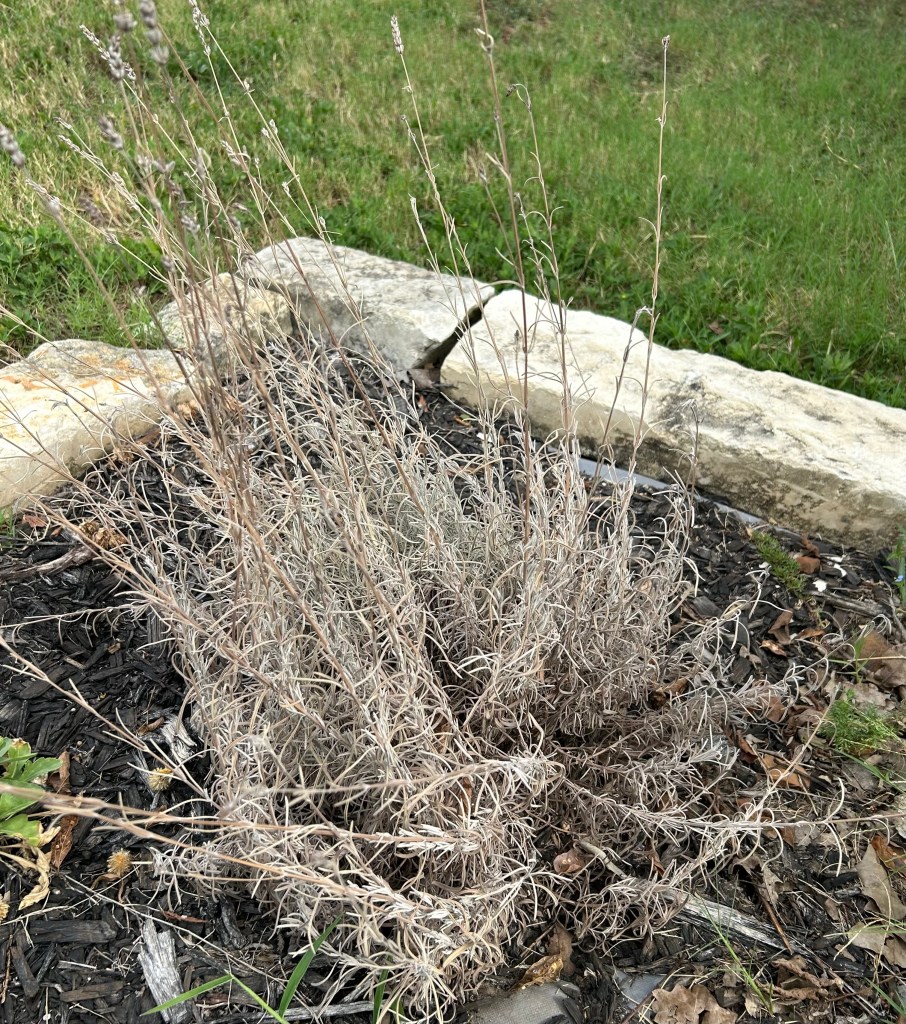
Too much rain and not enough soil aeration doomed this lavender plant.
Reason 1: Overwatering
The Problem:
Roots need both water and oxygen. Too much water suffocates them and leads to root rot.
Solution:
• Check soil moisture before watering. Stick your finger an inch deep—if it is still damp, wait for the soil to dry more. Another option is to use a moisture meter.
• Use well-draining soil and pots with drainage holes. Often times I find I need to drill extra holes in plastic pots I have purchased to ensure the water drains through well enough. To improve drainage add perlite, sand, or other coarse materials.
• Water deeply but less often. Some plants enjoy a lot of moisture. Others, such as the lavender above, need well draining soil and little if any watering once established.
Here is the Complete Guide for Watering Native Plants the Right Way for more details.

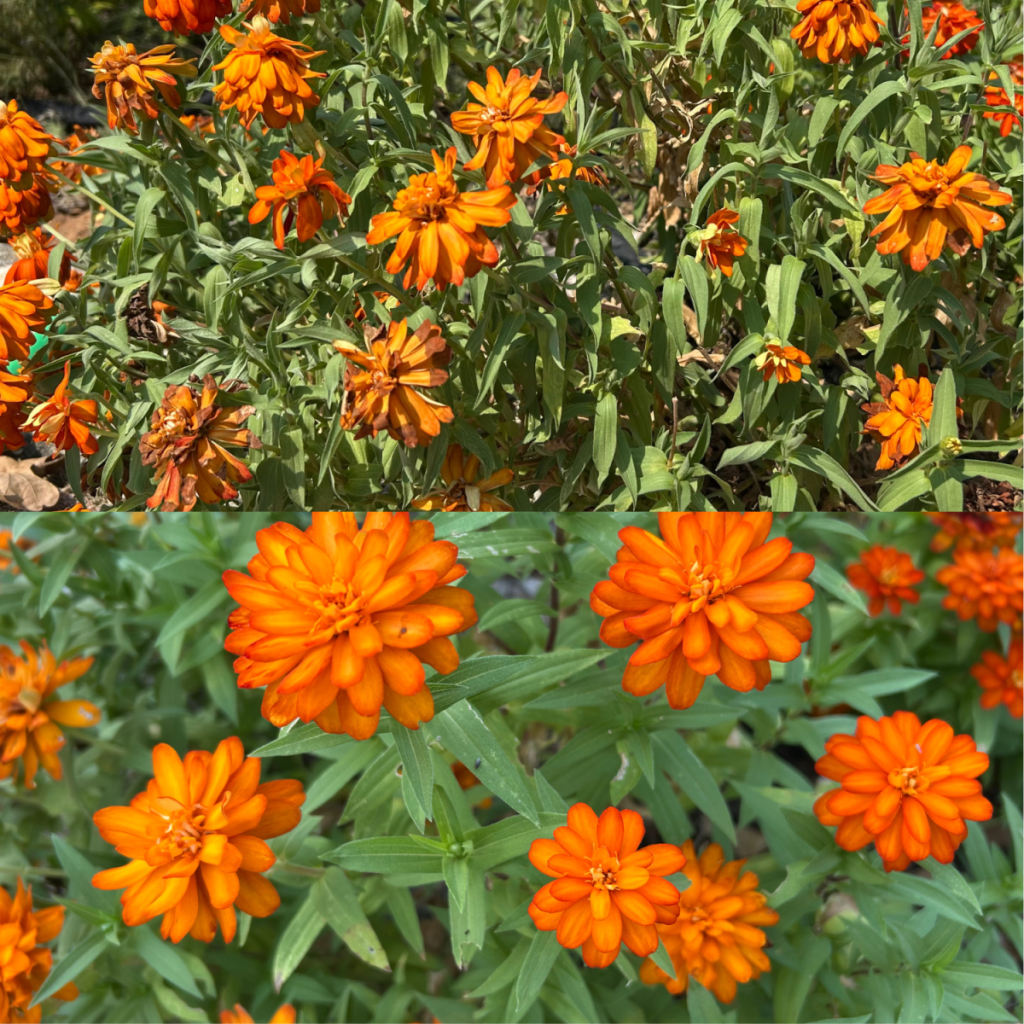
Zinnias with shriveling leaves and petals due to lack of water.
Reason 2: Underwatering
The Problem:
Stems wilt, leaves curl, and growth stalls when plants do not get enough water to absorb into their tissues.
Solution:
• Establish a consistent watering schedule. Utilize timers on drip hoses and water in the morning so plants can soak it up before the daytime heat.
• Mulch around plants to retain moisture and reduce evaporation.
• Use self-watering containers for potted plants, or relocate them out of the midday sun during the hottest part of the season.
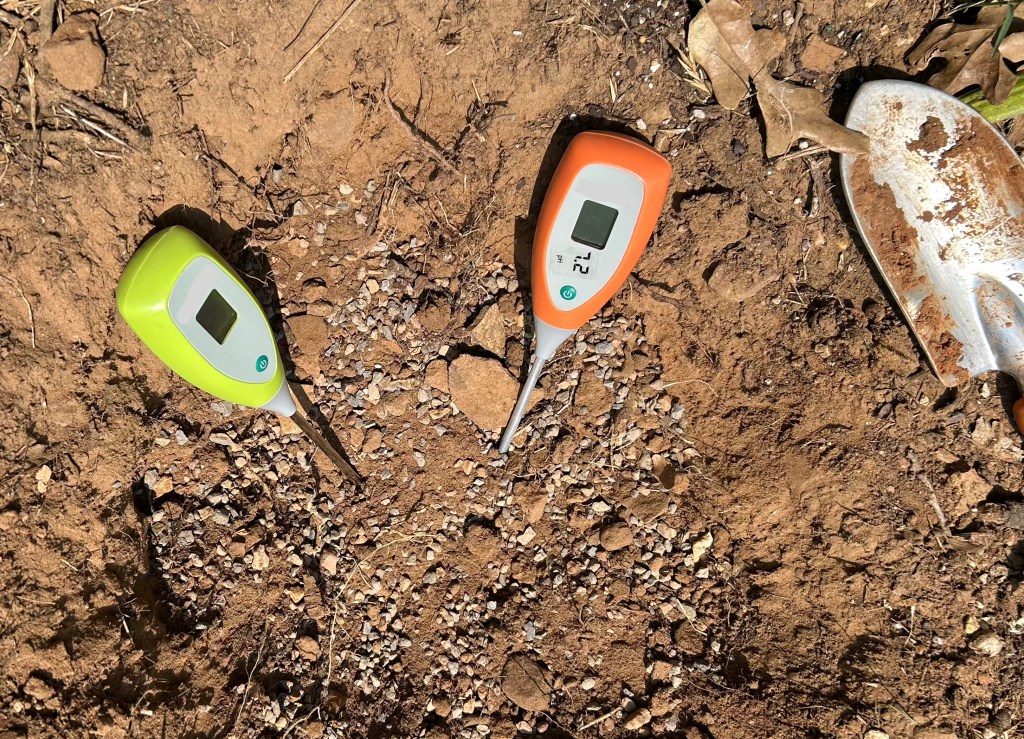
Testing soil moisture and pH in soil amended with course material to improve drainage in clay soil.
Reason 3: Poor Soil Quality
The Problem:
Nutrient-poor or compacted soil makes it hard for plants to grow strong roots.
Solution:
• Amend very sandy or gravelly soil by mixing in compost or organic matter. Add course material like sand, gravel, or perlite to improve drainage in wet areas. Clay soil is another challenge, especially if it does not drain well. In this case, the soil may benefit from both the addition of organic material and coarse drainage materials. If you are unsure, it is possible to have your soil tested to confirm what type it is.
• Test soil pH—most plants prefer slightly acidic to neutral (6.0–7.0). A pH meter is a handy tool, but you can also get a general idea by geographical region.
• To learn more about How to Test and Adjust pH in your garden see this guide.
• Rotate crops in vegetable gardens to avoid nutrient depletion. Plant cover crops to add soil nutrients and/or consider planting nitrogen fixing plants such as legumes.
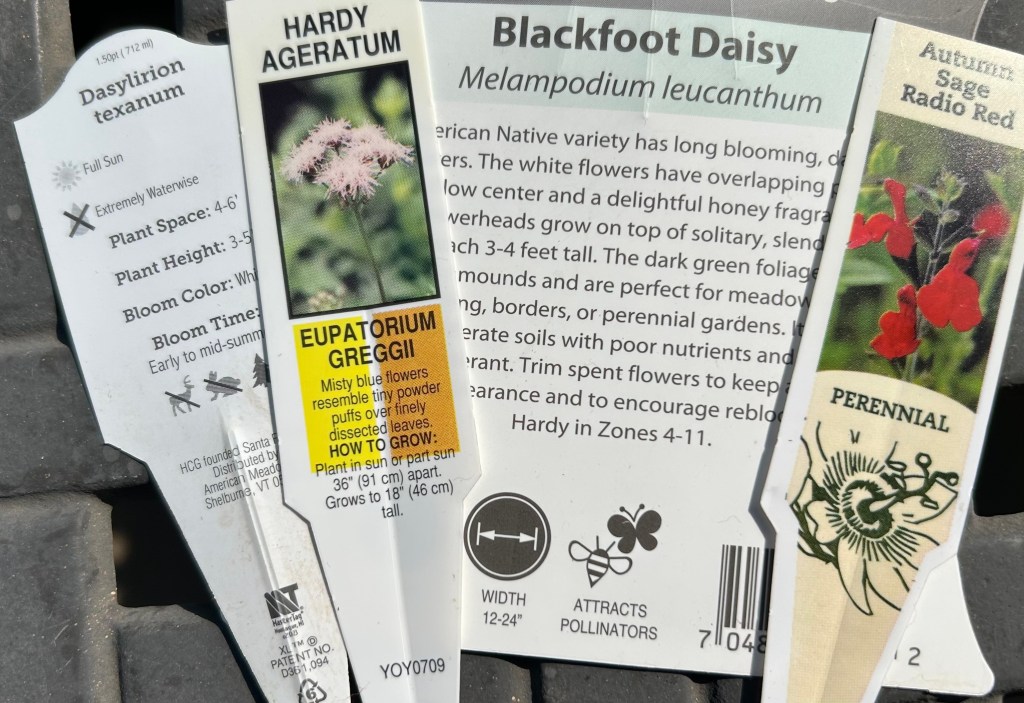
Native plant tags with different soil and moisture preferences.
Reason 4: Wrong Plant, Wrong Place
The Problem:
Each plant has its own sunlight, temperature, and soil type needs. Planting in the wrong environment can hinder them from thriving.
Solution:
• Read plant tags or seed packets carefully.
• Place sun-loving plants in full sun (6+ hours) and shade-loving ones in cooler spots.
• Pay attention to the type of soil and moisture required. Some plants do well in lean, dry, well-draining soils and despise having wet roots; other plants love moisture and will do poorly if planted on a hill or an area that drains too quickly.
• Consider your USDA Hardiness Zone before planting perennials. Click the image of the USDA map on our homepage to find the specific zone for your zip code.
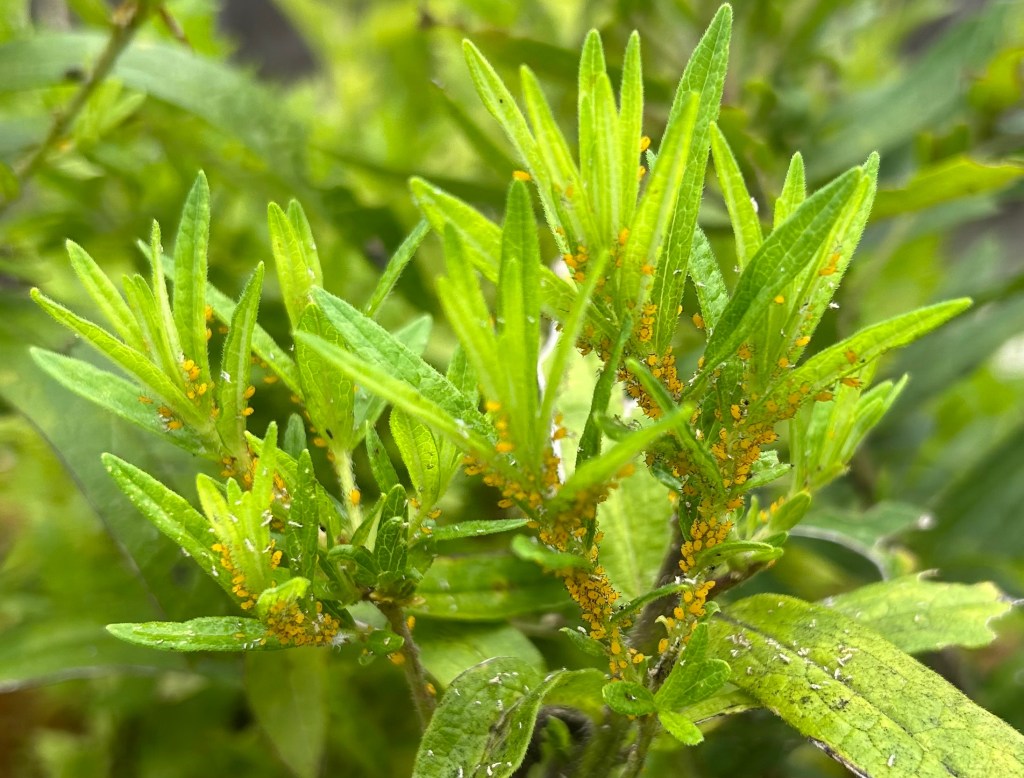
Oleander aphids are a common occurance on milkweed plants. Fortunately they can be controlled with a jet of water from the hose or manual removal. They are not harmful to butterfly caterpillars.
Reason 5: Pests and Diseases
The Problem:
Aphids, caterpillars, powdery mildew, and fungal infections can quickly weaken plants.
Solution:
• Inspect plants regularly for signs of damage.
• Encourage beneficial insects like ladybugs.
• Use organic sprays like Neem oil when needed (unless plants are caterpillar host plants). In a small garden, pests may be handpicked or forcefully sprayed off with a hose.
• Quarantine infected plants or destroy them to prevent spread if necessary.
For natural pest solutions that will not harm caterpillars or butterflies visit this guide.
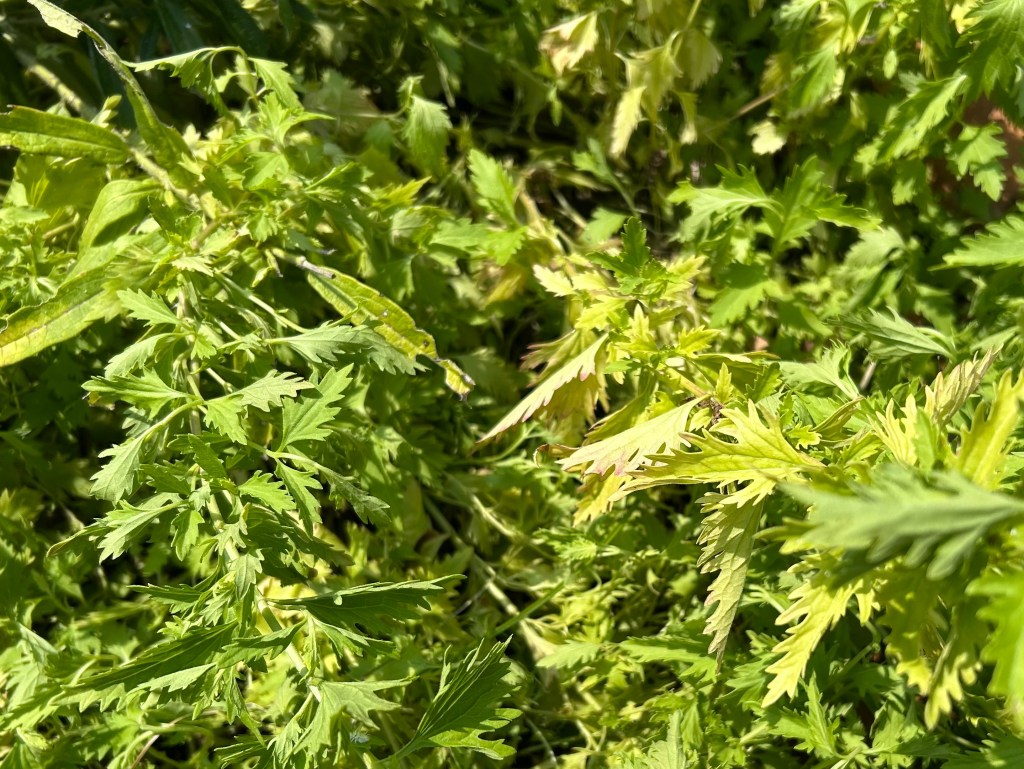
Mistflower (Conoclinium greggii) leaves looking a little yellow. Just a small amount of compost worked into the soil can help.
Reason 6: Lack of Nutrients
The Problem:
Yellow leaves, stunted growth, and poor flowering often indicate nutrient deficiencies.
Solution:
• Use a balanced fertilizer (10-10-10) or organic alternatives like compost tea.
• Apply fertilizer according to the plant’s growth stage. A gentler option for young plants is fish fertilizer.
• Avoid over-fertilizing, which can burn roots. Always read the package instructions and measure your fertilizer amounts to apply correctly.
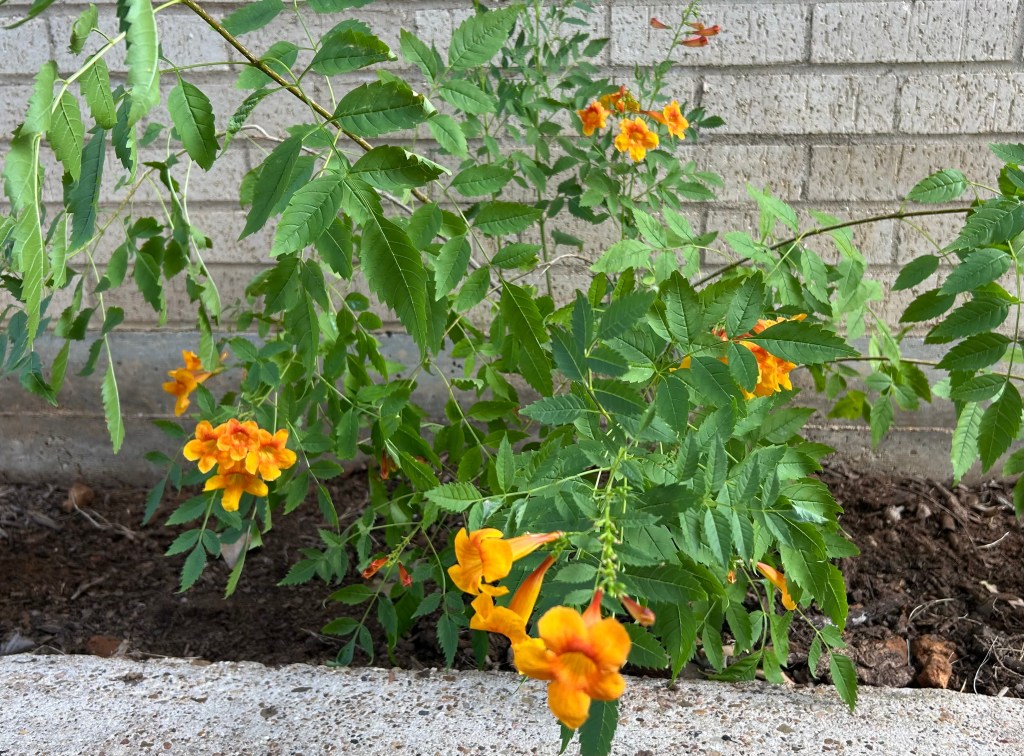
Orange esperanza (Tecoma stans) drooping a bit after getting transplanted into its new home in the soil.
Reason 7: Stress from Transplanting
The Problem:
Moving plants can shock their root systems, slowing growth.
Solution:
• Transplant in the early morning or evening when temperatures are milder. If moving plants from indoors to outdoors, acclimate the plants first to outdoor temperatures by setting them outside in a sheltered area for several hours a day first and gradually increasing exposure over a few days.
• Water well before transplanting and give the roots a good soak after planting in a new location.
• Disturb roots as little as possible when moving plants. If plants are in the ground, dig a large diameter around the plant to avoid cutting into its roots. If transplanting a potted plant, bend the sides of the container to loosen it, use a small tool to loosen roots from the sides of the container and never pull the plant itself. Instead place your hand on the soil around the stem to hold it and gently tilt the plant using gravity to facilitate its removal from the container.
Final Thoughts
Plants fail for predictable reasons, but with a few adjustments, you can bring them back to life—or prevent problems before they start. By watering wisely, improving the soil, and choosing the right plants for the right places in your landscape, you can enjoy a thriving, low-stress garden.
Remember: every setback is a learning experience, and even seasoned gardeners still troubleshoot along the way. It may feel discouraging to kill a few plants, but every experienced gardener has certainly done it. Just keep trying and you will find the right plants for your microclimate and soils and have a beautiful garden that many butterflies will agree is great too.
If you are new to butterfly gardening, the Butterfly Garden Cheat Sheet outlines the basic conditions butterflies look for when choosing a garden.
Related Guides:
How to Start a Garden From Scratch
How to Create a Butterfly Garden Right in Your Backyard (Step-by-Step)
Monarch Host Plants vs. Nectar Plants: A Simple Beginner Guide
 Butterfly garden paradise
Leave a comment