
Protect Your Plants Using Natural, Non-Toxic Methods
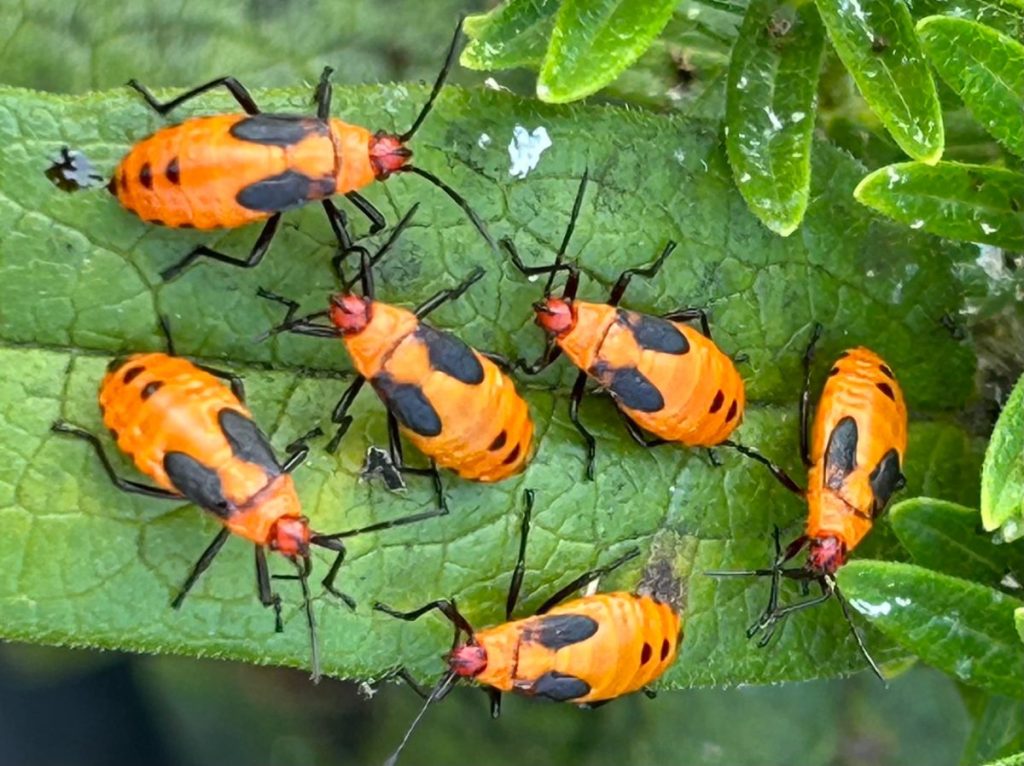
Cover photo: Large milkweed bugs (Oncopeltus fasciatus) are not a major threat to milkweed plants, but they do eat milkweed seeds. They are harmless to butterflies and their caterpillars so it is best to let them be.
Every gardener knows the frustration of pests chewing through leaves or damaging flowers. But reaching for chemical sprays can do more harm than good — especially when you are trying to support butterflies, feed caterpillars and help pollinators. The good news is that there are still safe, natural ways to prevent and manage pests while keeping your garden healthy and pollinator-friendly.

Lacewings are beneficial insects that eat aphids and mites.
1. Encourage Beneficial Insects
Ladybugs, lacewings, and parasitic wasps are nature’s pest control, preying on harmful insects like aphids and caterpillars. You can invite these helpers by planting nectar-rich flowers such as dill, fennel, and sweet alyssum. Avoid chemical sprays, which indiscriminately harm all bugs, both the pests and the beneficial insects.

Marigolds interplanted with kale to deter pests with their repelling odor.
2. Use Companion Planting
Some plants naturally repel pests, while others act as decoys. Basil planted near tomatoes helps keep aphids away, marigolds release compounds that deter nematodes, and nasturtiums draw aphids away from more valuable crops. This method reduces pest damage while increasing biodiversity in your garden.

3. Use Neem Oil or Insecticidal Soap
If you have an infestation or fungal infection you really cannot control, neem oil and insecticidal soaps are the safest, natural options for tackling pests like aphids, mites, and whiteflies. Just be sure not to use them near your caterpillar host plants as they are toxic to caterpillars. Apply in the evening when bees and butterflies are less active to prevent accidental harm. Do not forget to spray the undersides of leaves, where many pests hide and feed for maximum effect.
4. Add Physical Barriers
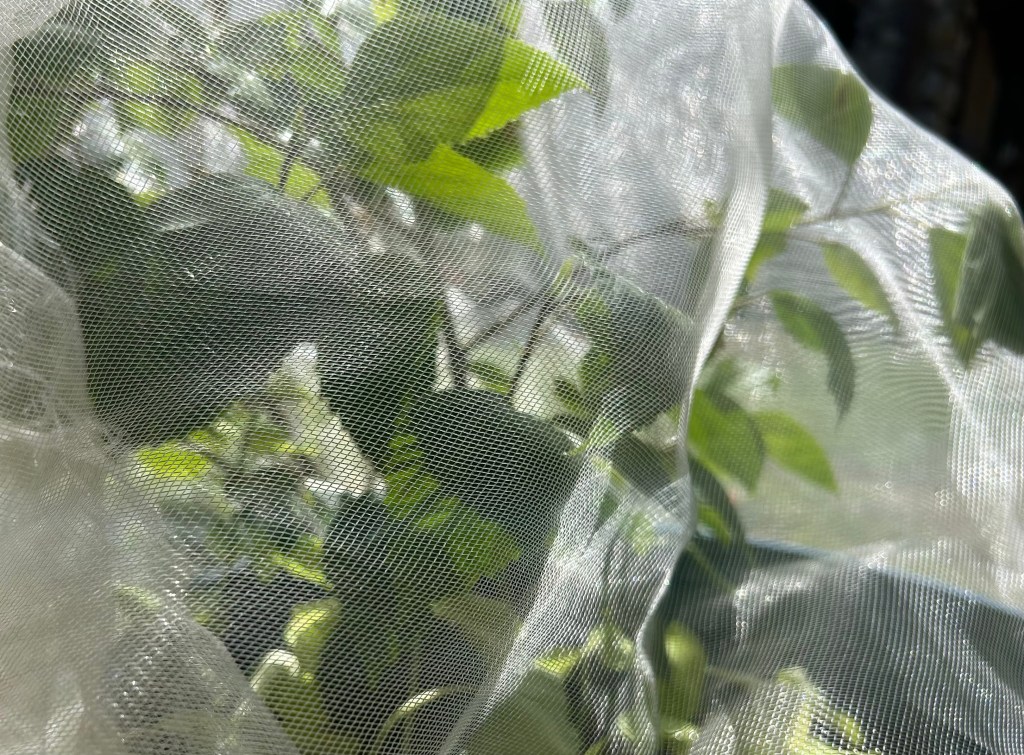
Sometimes the easiest solution is simply to block pests from reaching your plants. Lightweight row covers protect tender seedlings, while netting shields brassicas from cabbage moths. Stem collars can even stop cutworms from chewing at the base of young plants.
5. Build Healthy Soil
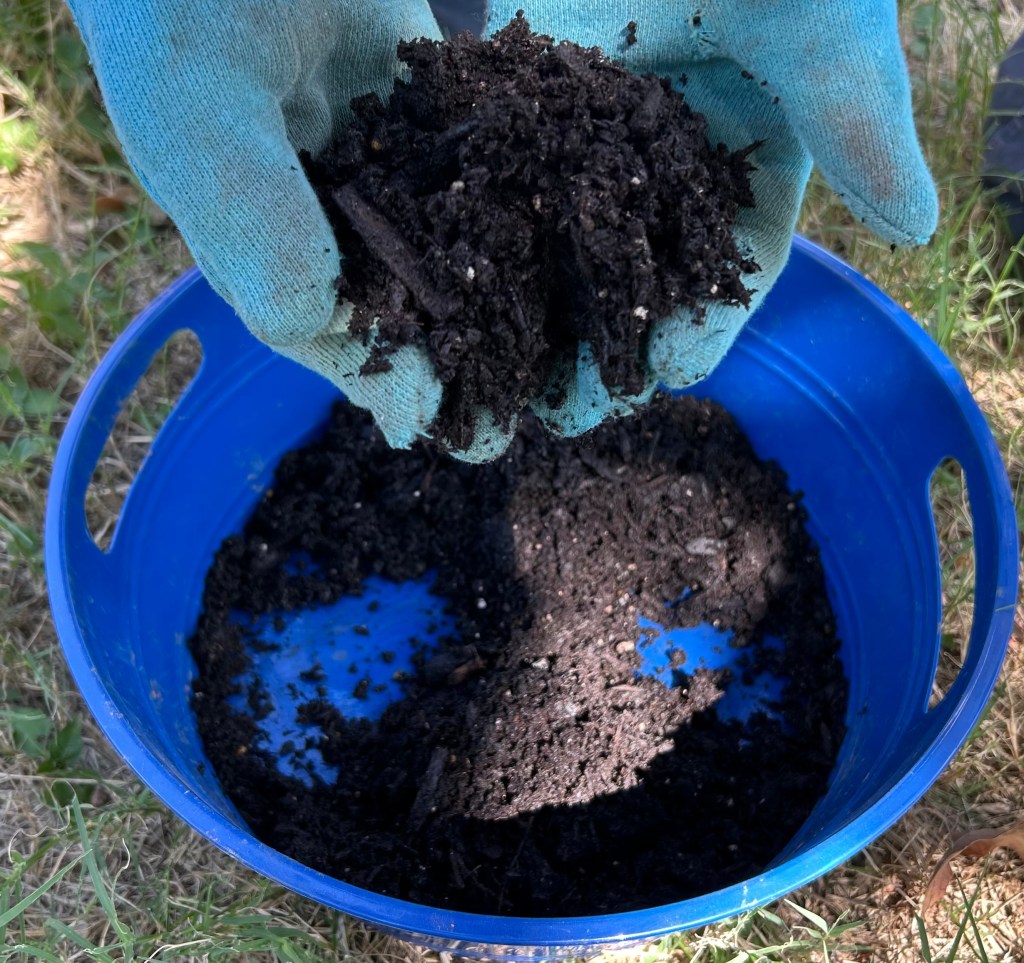
Healthy soil leads to strong, pest-resistant plants. Adding compost improves fertility, while mulch helps retain moisture, suppress weeds and regulate temperature. Watering at the base of plants instead of overhead keeps leaves dry, reducing fungal diseases that can weaken plants.
Learn how to create healthy soil using the leaves already in your yard that will naturally fertilize your plants.
Conclusion
A natural approach to pest management not only protects butterflies and pollinators, but also makes your garden more resilient in the long run. By combining beneficial insects, smart planting strategies, safe sprays if necessary, and good soil practices, you can enjoy a thriving garden without sacrificing the wildlife it supports.
This article covers one part of butterfly gardening. The Butterfly Garden Cheat Sheet shows how these elements fit together at a basic level.
Related Guides:
How to Start a Garden from Scratch
Smart, Safe, Sustainable: The Complete Guide to Integrated Pest Management (IPM)
 Butterfly garden paradise
Leave a comment