

Using Native Plants
Shade gardens in hot, dry climates present a unique challenge. While many landscapes are dominated by sun-loving plants, shady areas under trees or along fences can be transformed into cool, drought-tolerant native oases. By using native plants adapted to your region’s heat and low rainfall, you can create a garden that thrives with minimal watering while supporting local wildlife.
1. Understanding Shade Types
Shade varies depending on location and time of day. Identify your shade type before selecting plants:
• Full Shade
Less than 2 hours of direct sunlight per day.
• Partial Shade
2–4 hours of sun, usually morning light.
• Dappled Shade
Filtered sunlight through trees, typical under oaks and mesquites.
Observing your garden at different times helps you choose the best natives for each spot.

Variations of shade are created under large trees such as these live oak trees.
2. Soil Preparation for Shade Gardens
Shade areas in hot, dry climates often have compacted soils or tree root competition.
• Add Organic Matter
Compost or leaf litter improves soil structure and moisture retention.
• Minimal Digging Near Tree Roots
Work carefully to avoid damaging established roots.
• Mulch Lightly
2–3 inches of native leaf litter or wood chips conserves moisture without smothering plants.
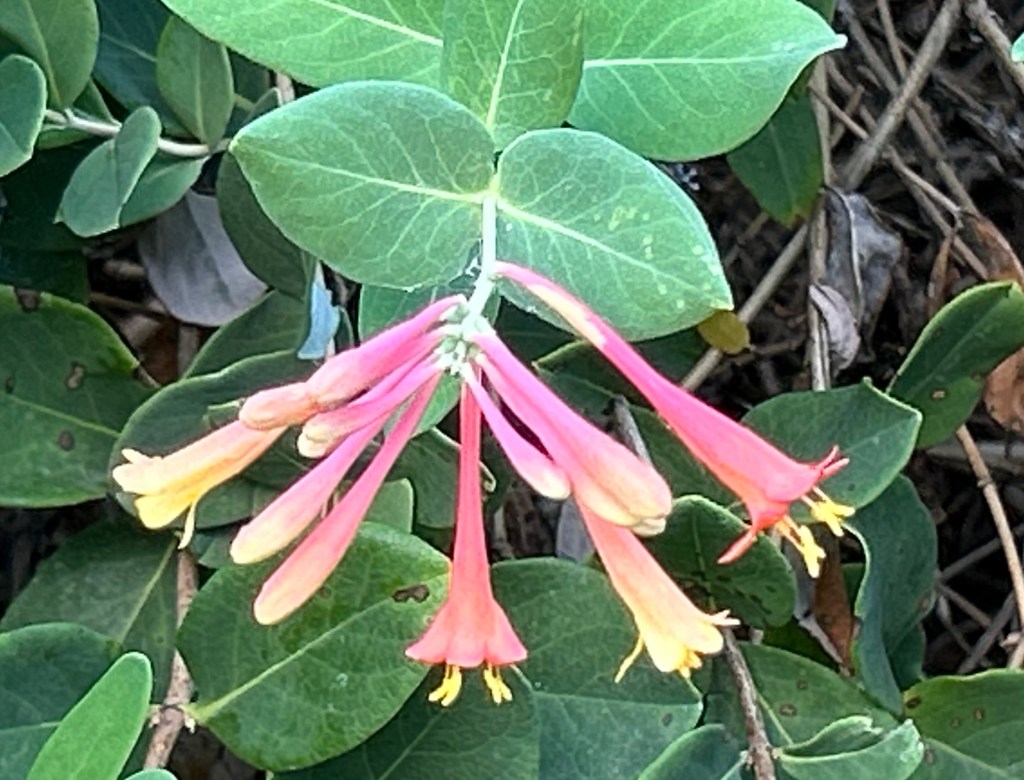
Coral honeysuckle is native vine with pretty blooms loved by butterflies and hummingbirds.
3. Examples of Native Plants for Hot, Dry Shade Gardens
Shade-Tolerant Perennials:
• Coral Honeysuckle (Lonicera sempervirens)
Tolerant of part shade, a climbing native vine that attracts many pollinators.
• Turk’s Cap (Malvaviscus arboreus var. drummondii)
Thrives in filtered light; blooms all summer, great for attracting bees, butterflies, and hummingbirds alike.
• Ferns like Rattlesnake Fern (Botrychium dissectum)
Hardy in shady, dry conditions; adds unique color and texture.
Flowering Natives:
• Prairie Asters (ex. Symphyotrichum oblongifolium)
looms late, attracts butterflies and bees.
• Frostweed (Verbesina virginica)
Tolerates dappled shade, provides nectar for pollinators, especially monarch butterflies.
• Goldenrod (Solidago species)
Handles partial shade well, supports various late-season pollinators.
Ground Covers and Understory Plants:
• Wild Ginger (Asarum canadense)
Evergreen ground cover for shaded corners.
• Foamflower (Tiarella wherryi)
Spring blooms and textured foliage.
• Native Grasses like Little Bluestem (Schizachyrium scoparium)
Provide structure and winter interest.
Coral honeysuckle is native vine with pretty blooms loved by butterflies and hummingbirds.
4. Garden Design Tips
• Layering
Tall shrubs near tree trunks, medium perennials in mid-zone, and groundcovers at the front.
• Clusters
Plant in groups for visual impact and to attract wildlife.
• Seasonal Interest
Mix early, mid, and late-season bloomers for year-round color.
• Microhabitats
Include rocks or logs for butterflies, lizards, and other pollinators.
5. Watering and Mulching
Even drought-tolerant natives need water during establishment:
• New Plants
Deep soak 2–3 times per week in the first month.
• Established Plants
Water deeply but infrequently; most can thrive on seasonal rainfall once established.
• Mulch
Conserves moisture, prevents soil temperature extremes, and reduces weeds.
For complete details on how to water native plants to help them thrive, visit this next guide.
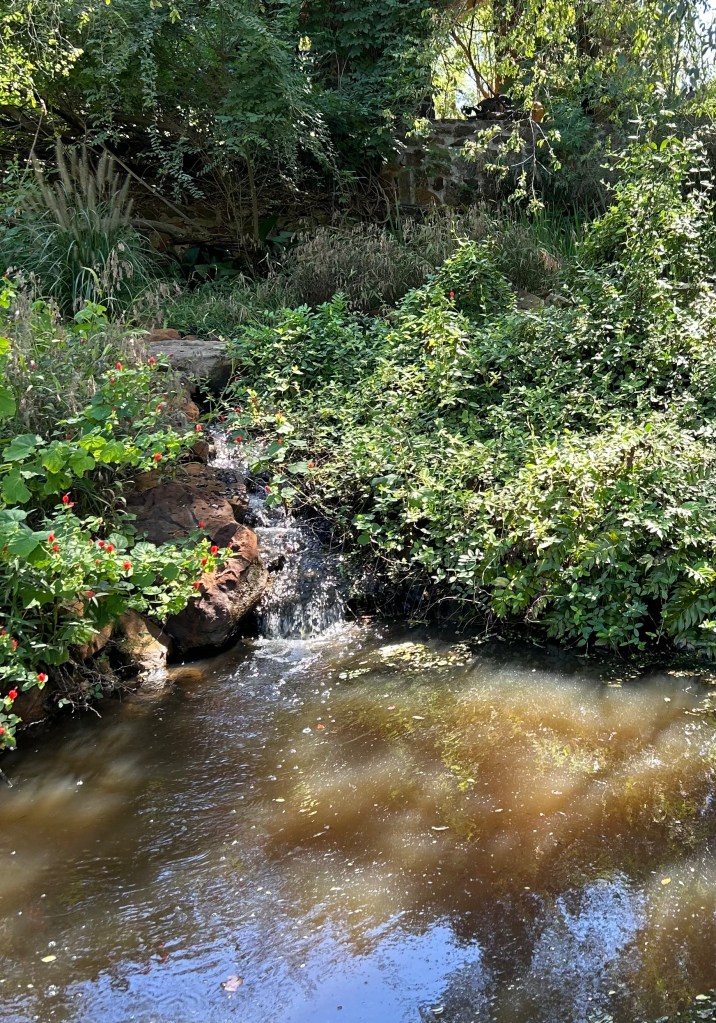
One way to create a microclimate is to build a pond or water feature and add shade plants around it.
6. Managing Heat Stress
• Morning Sun
Place more sensitive species in spots with early sun and afternoon shade.
• Wind Protection
Use shrubs or garden walls to shelter plants from drying winds.
• Observe Foliage
Yellowing or scorched leaves may indicate sun or drought stress.
Final Thoughts
Shade gardens in hot, dry regions can be lush, wildlife-friendly spaces when designed with native plants in mind. By layering plants, choosing heat-tolerant species, preparing the soil thoughtfully, and watering appropriately, you can create a low-maintenance oasis that flourishes even under the harsh sun and intense summer heat.
For a simple starting framework adapted to Texas conditions, the Butterfly Garden Cheat Sheet summarizes the basic habitat elements to focus on first.
Related Guides:
The Ultimate Texas Zone 8 Garden Guide: What to Plant and When
How to Keep Butterfly Plants Alive in Extreme Heat
Understanding Sun, Shade, and Soil: A Beginner’s Guide for Texas Zone 8 Gardening
 Butterfly garden paradise
Leave a comment