

Have you ever watched a butterfly drift through your garden and wondered what drew it there? The secret is simple: the right plants.
Butterflies are on a quest for more than just nectar—they are searching for host plants where they can reproduce by laying eggs and continuing their life cycle. By planting for both adults and caterpillars, you turn your yard into a true sanctuary instead of a quick pit stop.
Here are twelve of the most common and beloved butterflies in the United States—and exactly which native plants they cannot resist.
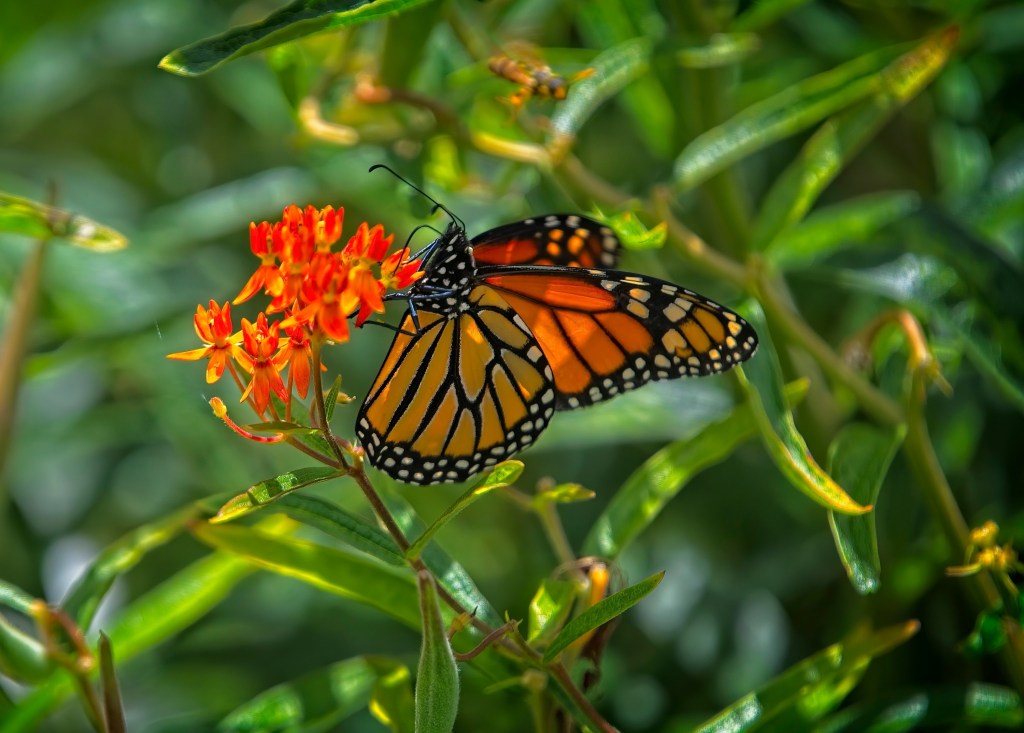
Monarch butterfly sipping nectar from its host plant Orange milkweed (Asclepias tuberosa)
1. Monarch (Danaus plexippus)
Why It’s Special
The monarch’s orange and black wings are iconic, and its cross-country migration is legendary.
Host Plants
Native milkweeds (Asclepias species) like butterfly milkweed, swamp milkweed, common milkweed, and more.
Nectar Favorites
Lantana, Gregg’s mistflower, echinacea, and blazing star.
Extra Tip: Avoid tropical milkweed—it can disrupt migration in warm regions and spread disease. Native species die back naturally in winter.

Eastern tiger swallowtail butterfly feeding on nectar from a zinnia flower.
2. Eastern Tiger Swallowtail (Papilio glaucus)
Why It’s Special
One of the largest butterflies in the East, often seen gliding gracefully through tree canopies.
Host Plants
(Trees) Tulip tree, wild cherry, sweetbay magnolia, and ash.
Nectar Favorites
Zinnias, phlox, and joe-pye weed.
Design idea: If you have room for a small native tree, plant a tulip poplar—it feeds dozens of pollinators, not just swallowtails.
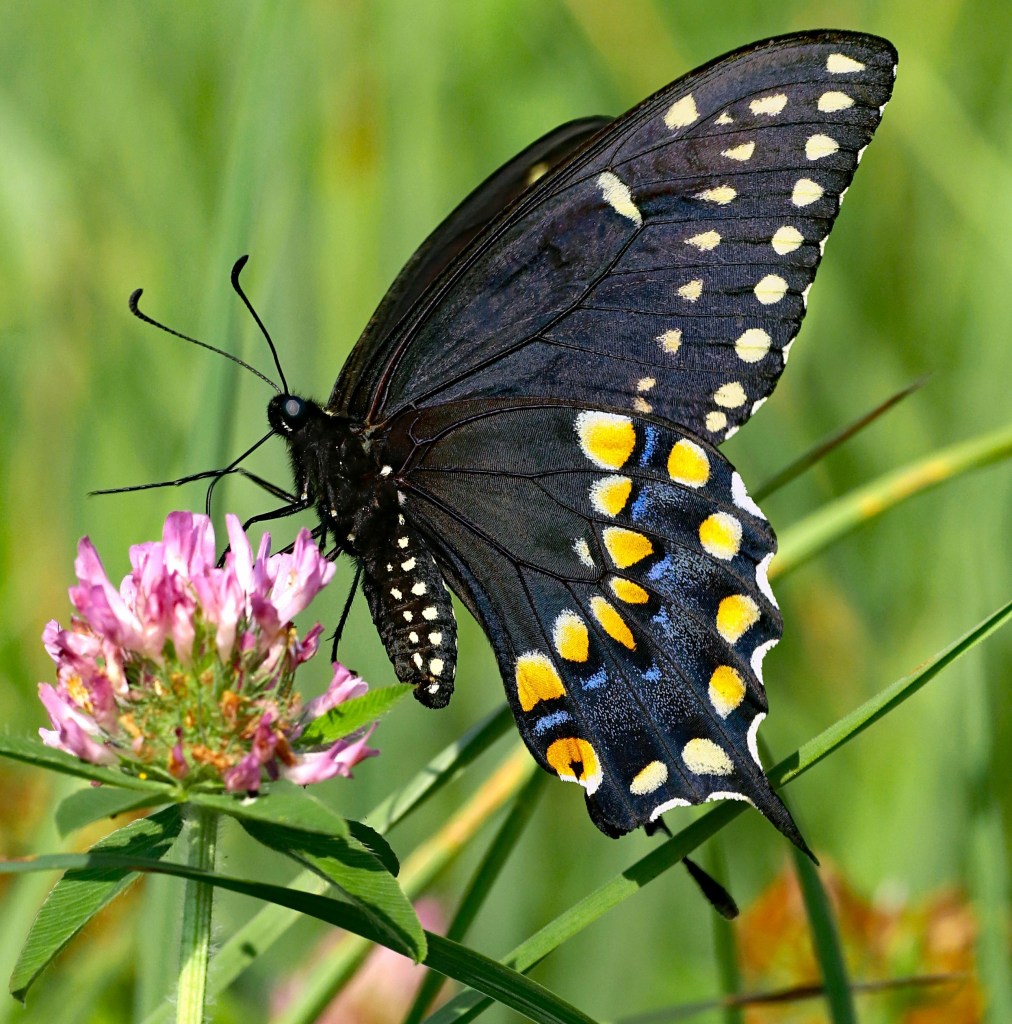
Black swallowtail butterfly feeding on clover flower
3. Black Swallowtail (Papilio polyxenes)
Why It’s Special
Their caterpillars look like tiny green tigers and love herb gardens.
Host Plants
Parsley, dill, fennel, and native meadow rue (Thalictrum spp.).
Nectar Favorites
Coneflowers, verbena, and milkweed.
Extra Tip: Planting extra herbs is never a bad idea. If your parsley looks chewed— just remember those striped caterpillars will soon turn into beautiful butterflies!

Painted lady butterfly on white mealy cup sage (salvia farinacea) flowers.
4. Painted Lady (Vanessa cardui)
Why It’s Special
One of the most widely distributed butterflies in the world. It is found on every continent except Antartica and is known for its global migrations.
Host Plants
Thistles, mallows, and legumes like lupine and vetch.
Nectar Favorites
Asters, zinnias, and lantana.
Bonus fact: Painted ladies are among the first butterflies to appear each spring, often before monarchs return.

Common buckeye butterfly on white aster wildflowers
5. Common Buckeye (Junonia coenia)
Why It’s Special
The imitation eyespots on their wings are real show-stoppers, and they help scare off predators.
Host Plants
Plantain, toadflax, and butterfly pea.
Nectar Favorites
Mistflower, verbena, and goldenrod.
Extra Tip: Buckeyes love open, sunny areas—keep some rocks or bare patches between plantings for basking.
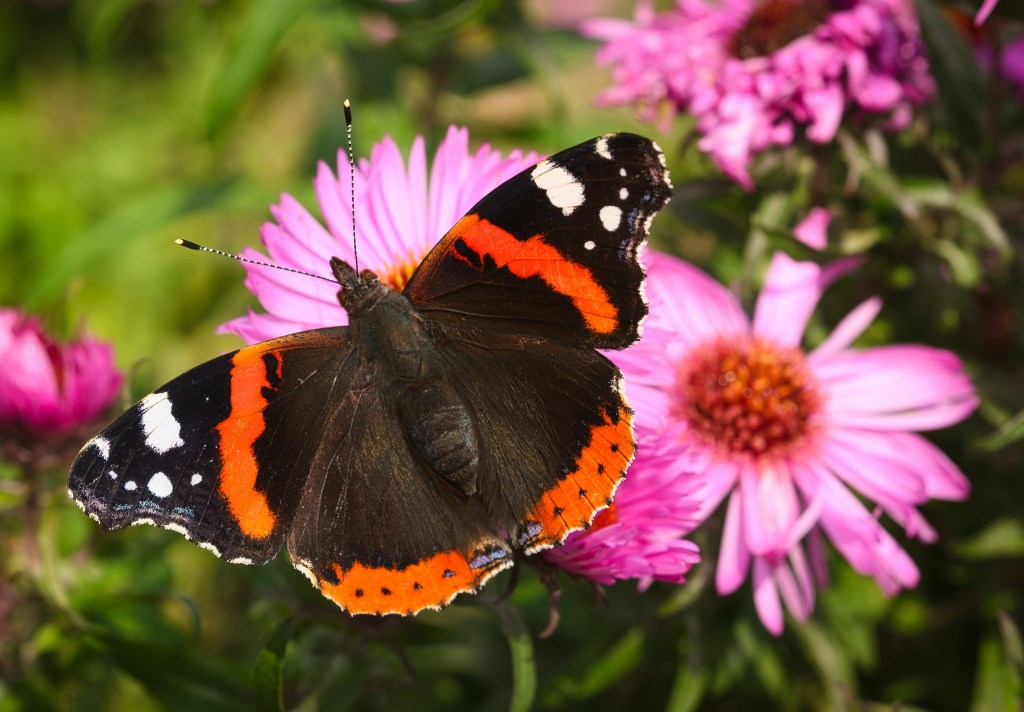
Red admiral butterfly on pink aster flowers
6. Red Admiral (Vanessa atalanta)
Why It’s Special
Bold and fast-flying, they will often land right on you if you stay still enough.
Host Plants
Nettles (Urtica spp.).
Nectar Favorites
Sap flows, overripe fruit, and asters.
Fun fact: Red admirals are one of the few butterflies equally drawn to sugar sources other than flowers.

Sulphur butterfly on clover leaf next to native frog fruit flowers.
7. Sulphurs (Clouded, Orange, and Cloudless)
Why They Are Special
These yellow or golden butterflies add movement and color to open meadows.
Host Plants
Legumes—clovers, alfalfa, senna, and partridge pea.
Nectar Favorites
Lantana, pentas, and verbena.
Extra Tip: Partridge pea is an annual native that reseeds freely—great for low-maintenance butterfly meadows.

Gulf fritillary butterfly on lantana flowers
8. Gulf Fritillary (Agraulis vanillae)
Why It’s Special
Brilliant orange wings with silver undersides that flash like mirrors in the sun.
Host Plants
Passionvines (Passiflora incarnata, P. lutea).
Nectar Favorites
Lantana, zinnias, and salvias.
Extra Tip: Passionvine can sprawl—train it on a fence or trellis to keep it tidy while feeding dozens of caterpillars.

Pipevine swallowtail butterfly on a budding flower
9. Pipevine Swallowtail (Battus philenor)
Why It’s Special
Its velvety black wings shimmer with blue in the sunlight. Flashes of iridescent blue on the upper wings distinguish Pipevine swallowtails from other swallowtail species.
Host Plants
Native pipevines (Aristolochia tomentosa, A. watsonii).
Nectar Favorites
Phlox, lantana, and thistles.
Note: Avoid non-native pipevines—they can be toxic to caterpillars.

Cabbage white butterfly feeding on Phlox flowers
10. Cabbage White (Pieris rapae)
Why It’s Special
Common but underrated; a good introduction to butterfly gardening.
Host Plants
Mustard family plants—broccoli, kale, and wild mustard.
Nectar Favorites
Alyssum, lavender, and yarrow.
Extra Tip: If you would rather not share your veggies, plant wild mustard nearby as a decoy host.
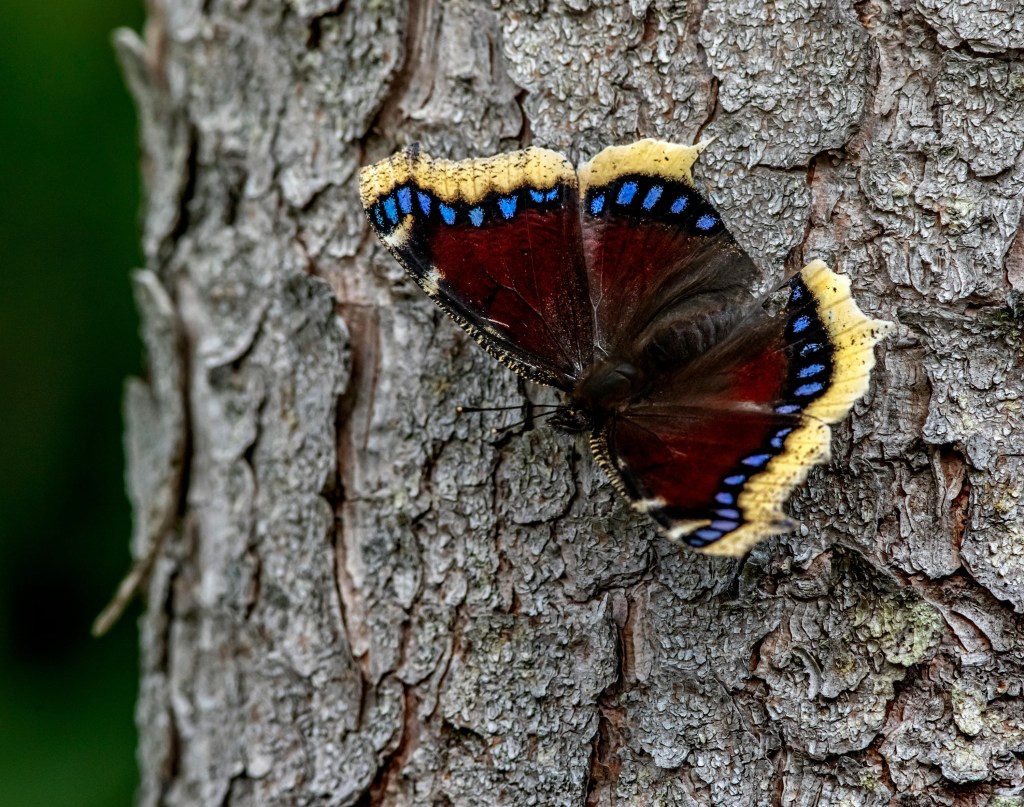
Mourning cloak butterfly perching on a tree
11. Mourning Cloak (Nymphalis antiopa)
Why It’s Special
One of the longest-lived butterflies—adults can overwinter and reappear in early spring. (As pictured above, its wings are often tattered, showing it has been around a while).
Host Plants
Willow, elm, and poplar trees.
Nectar Favorites
Tree sap and rotting fruit more than flowers.
Fun fact: Mourning cloak caterpillars are social—they feed in groups before scattering to pupate.

Skipper butterfly on white coneflower (echinacea) flower
12. Skippers (Family Hesperiidae)
Why They Are Special
Tiny, quick, and often overlooked; they make up a huge portion of pollinator biodiversity.
Host Plants
Native grasses—little bluestem, sideoats grama, switchgrass, and buffalograss.
Nectar Favorites
Mistflower, gaura, and native lantana.
Extra Tip: Leave a few small grass clumps unmowed and watch; it is the easiest way to host dozens of skipper species naturally.
Plant Once, Host for Life
Butterflies rely on native plants that naturally adapted alongside them. A single milkweed or passionvine can host an entire new generation every year. Even if you only have space for a few containers or a small border, choosing the right mix of host and nectar plants turns your garden into a living classroom—and a refuge for wildlife.
Pro Gardening Tip:
Pair each nectar favorite with at least one host plant nearby. Adult butterflies prefer to lay eggs where their offspring will have food waiting, so this simple pairing keeps them lingering in your garden longer.
If you are new to butterfly gardening, the Butterfly Garden Cheat Sheet outlines the basic conditions butterflies look for when choosing a garden.
Related Guides:
The Complete Guide to Butterfly Gardening: How to Attact, Feed, and Protect Butterflies All Year
Common Mistakes That Scare Butterflies Away: How to Keep Your Garden Butterfly-Friendly
Monarch Host Plants vs. Nectar Plants: A Simple Beginner Guide
Photo credits: Monarch on orange milkweed- James Peacock, Tiger swallowtail on pink zinnia and Sulphur butterfly- Joshua J. Cotten, Black swallowtail on clover- Thomas Elliott, Painted lady on sage – Jeffrey Hamilton, Common buckeye on aster- Jan Haerer, Red admiral on pink aster (2) – Ian Kelsall, Gulf fritillary on lantana – Shanna Roberts, Pipevine swallowtail – Preston A Larimer, Cabbage white butterfly on phlox – Nancy Hughes, Mourning cloak butterfly – Erik Karits
 Butterfly garden paradise
Leave a comment