
Few natural transformations are as magical as the metamorphosis of a butterfly. From a tiny egg to a voracious caterpillar and finally to a delicate butterfly, each stage is extraordinary. Yet the most dramatic transformation occurs inside the chrysalis, where the caterpillar essentially dissolves and reorganizes itself into a completely new organism.
In this guide, we will explore the science behind butterfly chrysalises, including what happens inside, how long the process takes, and fascinating facts about this natural marvel. Whether you’re a gardener hoping to attract butterflies or simply curious about nature, understanding the chrysalis stage will deepen your appreciation for these incredible insects.
What is a Chrysalis?
A chrysalis (also called a pupa) is the protective casing in which a caterpillar transforms into a butterfly. Unlike a cocoon, which is made of silk, a chrysalis is formed from the caterpillar’s own skin, hardened into a shell that shields the developing butterfly from predators and environmental stress.
Key characteristics of a chrysalis:
• Smooth, often green, brown, or metallic gold to blend into surroundings
• Strong enough to protect the developing butterfly
• Houses a complex metamorphic process inside

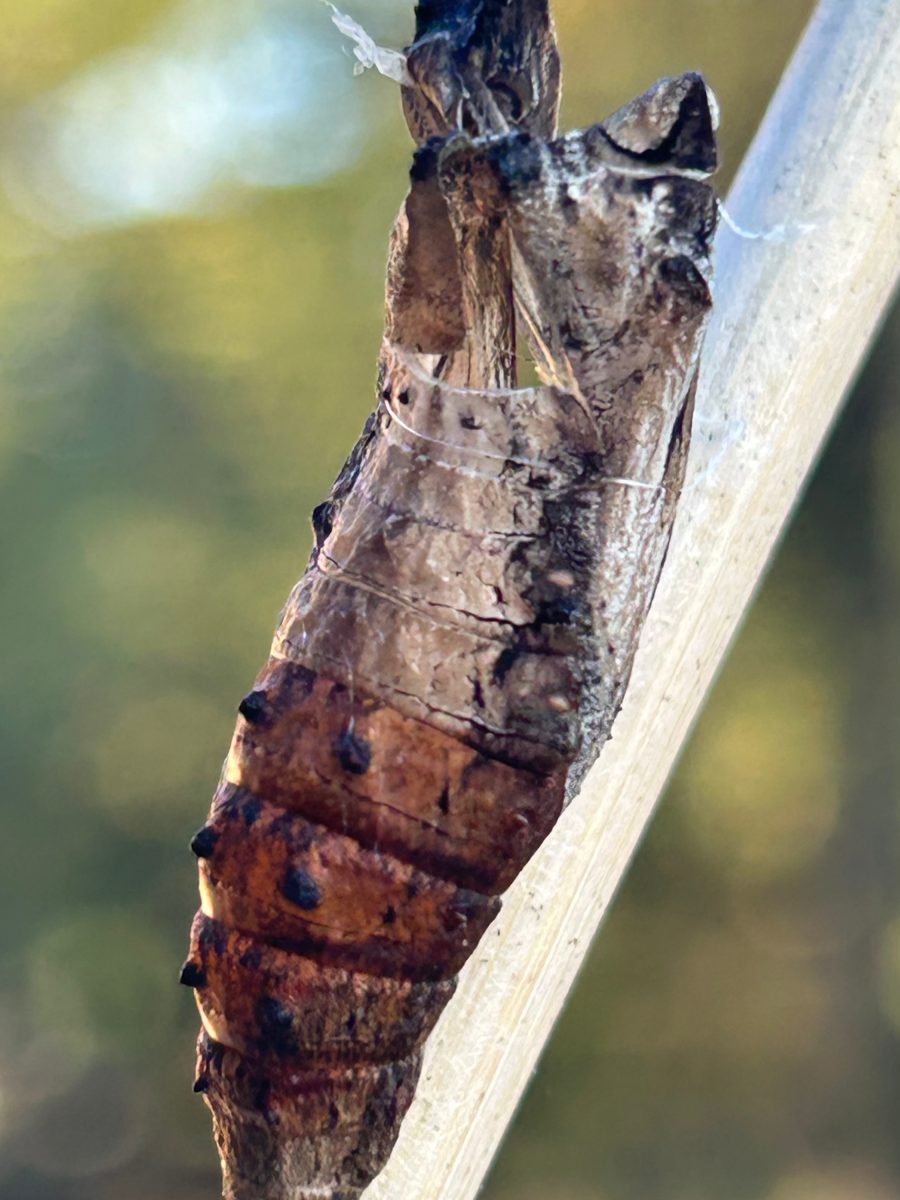
Swallowtail butterfly chrysalis attached to side of a plant pot.
The Metamorphosis Process
Metamorphosis is one of the most remarkable biological processes in the animal kingdom. Inside the chrysalis, the caterpillar undergoes cellular breakdown and reorganization:
1. Caterpillar Prep:
Before forming a chrysalis, the caterpillar stops eating and finds a secure place to attach itself, usually hanging upside down or clinging to a stem.
2. Molting into a Chrysalis:
The caterpillar sheds its last larval skin, revealing the chrysalis underneath. This outer shell hardens within hours.
3. Histolysis – Breaking Down Cells:
Inside, most of the caterpillar’s tissues are broken down into a nutrient-rich soup. Specialized clusters of cells called imaginal discs survive and hold the blueprint for the adult butterfly’s body parts.
4. Histogenesis – Building the Butterfly:
Imaginal discs develop into wings, legs, eyes, antennae, and other adult structures. The caterpillar’s body essentially reorganizes itself from scratch.
5. Final Stages:
Pigments form, wings expand, and body structures solidify. The chrysalis often becomes more transparent and the wings or body can start to become visible through it about a day before emergence.
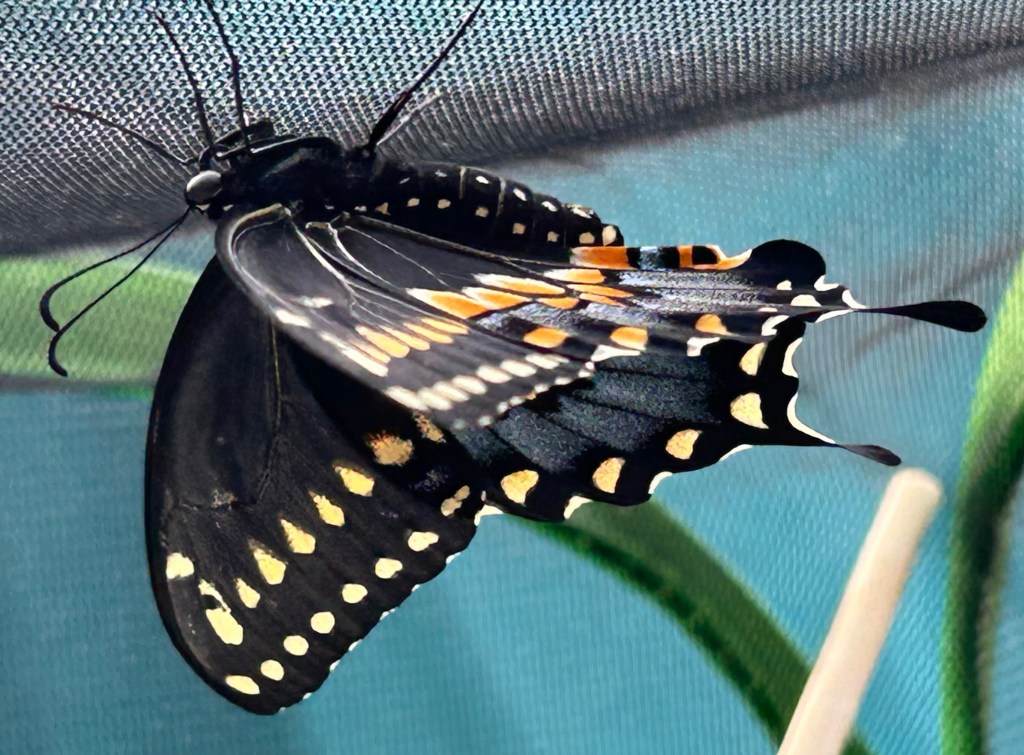
Black swallowtail butterfly with vibrant colors newly emerged from its chrysalis.
Learn about the entire process of Raising Black Swallowtail Butterflies.
How Long Does the Process Take?
The duration inside a chrysalis varies depending on species, temperature, and environmental conditions:
• Monarch butterflies: ~10–14 days
• Swallowtail butterflies: ~7–14 days
• Some species in temperate regions: Can overwinter in the chrysalis for several months
Temperature plays a significant role — warmer conditions speed up development, while cooler conditions slow it down, allowing butterflies to time their emergence with favorable weather.
The Role of the Chrysalis in Survival
The chrysalis is not just a container — it is a strategic adaptation:
• Protection
The hard casing shields the vulnerable metamorphosing butterfly from predators and pathogens.
• Camouflage
Many chrysalises resemble leaves, twigs, or even bird droppings to avoid detection.
• Energy Storage
The caterpillar’s body is broken down into nutrients, sustaining the butterfly until it emerges and begins feeding on nectar.
Some species even develop metallic or reflective patches on their chrysalises to mimic sunlight glinting off surfaces, further confusing predators. Monarch chrysalises are an example with their gold embellishments.
Fascinating Facts About Chrysalises
1. Butterflies can “freeze” development: Some species enter diapause, delaying emergence for months, which helps survive winter or drought conditions.
2. Color changes signal readiness: As the butterfly nears emergence, the chrysalis may darken or become transparent, revealing wing patterns.
3. Some butterflies vibrate inside the chrysalis: This movement helps position wings correctly for emergence.
4. Tiny muscles and structures are built from scratch: Legs, antennae, and wings are entirely reorganized from imaginal discs.

A monarch butterfly chrysalis after emergence. This one was found approximately 50 feet away from the nearest milkweed host plant.
Observing Chrysalises in Your Garden
Gardening with butterflies in mind gives you a front-row seat to this transformation:
• Plant Host Plants
Milkweed for monarchs, parsley, dill, or fennel for swallowtails.
• Provide Safe Spaces
Avoid heavy pruning or spraying insecticides near chrysalises.
• Minimal Disturbance
Watch, do not touch — even slight pressure can damage the fragile pupa.
Tip: If you raise butterflies indoors, use a ventilated container with a branch or stick for chrysalises to hang from. Keep them in a quiet, warm area away from direct sunlight.
See this beginner’s guide on How to Create a Garden for Butterflies, including plant suggestions and tips.
Common Misconceptions
• “Nothing happens inside the chrysalis.” – False. A complete body transformation occurs.
• “All caterpillars spin silk cocoons.” – False. Butterflies form chrysalises; only some moths spin cocoons.
• “You can accelerate emergence by opening the chrysalis.” – False. Premature emergence almost always kills the butterfly.
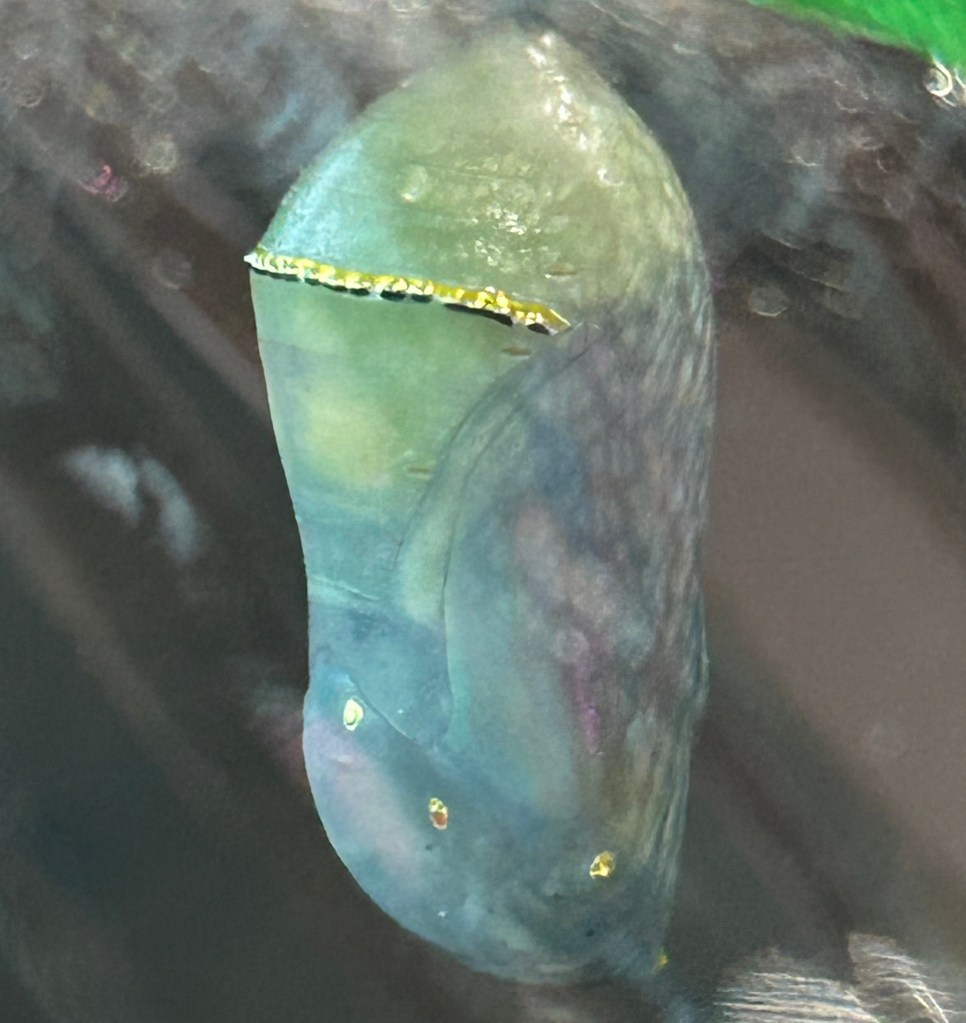
Monarch butterfly chrysalis pre-emergence with wing patterns visible through chrysalis.
Conclusion
The chrysalis stage is one of the most extraordinary moments in nature — a period of complete transformation that demonstrates the incredible ingenuity of evolution. By understanding the science behind butterfly chrysalises, gardeners and nature enthusiasts can appreciate the patience, resilience, and precision required for a caterpillar to become a butterfly.
Observing this process, whether in the wild or your garden, is a reminder of the beauty of life cycles and the delicate balance of ecosystems.
This article covers one part of butterfly gardening. The Butterfly Garden Cheat Sheet shows how these elements fit together at a basic level.
Related Guides:
How to Start a Garden from Scratch
How to Raise Black Swallowtail Butterflies
The Complete Guide to Butterfly Gardening: How to Attract, Feed, and Protect Butterflies All Year
 Butterfly garden paradise
Leave a comment