

Butterflies are a delightful addition to any garden, bringing color, movement, and life. But despite your best intentions, many gardeners unintentionally create conditions that scare butterflies away or make your garden less inviting.
Understanding what deters these delicate pollinators can help you design a garden that encourages butterflies to stay, feed, and reproduce. In this guide, we’ll cover the most common mistakes gardeners make, why they matter, and practical strategies to keep your butterfly population thriving.
Mistake 1: Overusing Pesticides
Why It’s A Problem:
Butterflies are extremely sensitive to chemicals. Even organic insecticides can harm adult butterflies, caterpillars, and their host plants. Spraying insecticides on nectar plants or host plants can wipe out local butterfly populations.
How to Fix It:
• Use integrated pest management (IPM) techniques. Visit our guide to natural pest control here.
• Encourage beneficial insects like ladybugs and lacewings to control pests naturally.
• Apply any treatment early in the morning or late evening, when butterflies are less active.
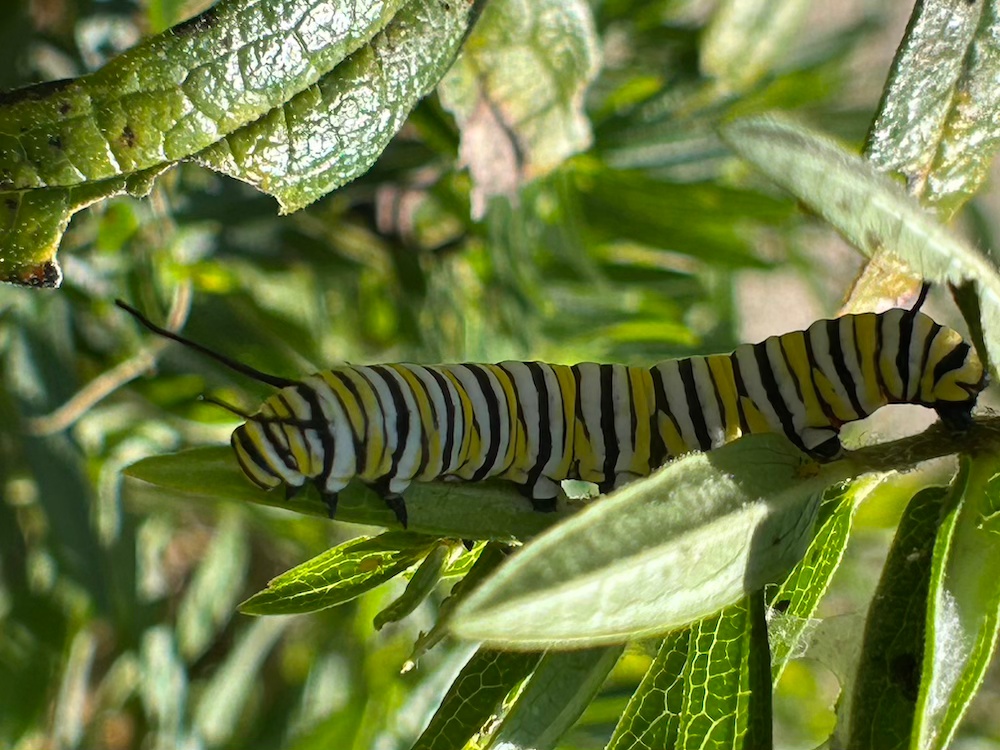
Monarch butterfly caterpillar on milkweed host plant. Any chemicals used in gardens can be detrimental to caterpillars.
Mistake 2: Planting Non-Native or Non-Nectar Plants
Why It’s A Problem:
Butterflies prefer plants they can feed from and lay eggs on. Non-native ornamentals often provide little to no nectar, and they may not support caterpillar development.
How to Fix It:
• Include native nectar plants such as milkweed, purple coneflower, lantana, and black-eyed Susan.
• Provide host plants for caterpillars, such as parsley, dill, fennel, and butterfly weed.
• Choose a variety of bloom times to provide nectar throughout the season.

Small sulphur butterfly warming itself in a sunny spot in the garden.
Mistake 3: Neglecting Shelter and Sunlight
Why It’s A Problem:
Butterflies need sun and shelter. Too much exposure to wind or lack of resting spots can make your garden inhospitable.
How to Fix It:
• Include shrubs, tall grasses, or rocks to give butterflies places to perch and hide.
• Plant flowers in sunny areas; butterflies rely on sunlight to warm their bodies and stay active.
• Avoid overly exposed areas without cover.
Mistake 4: Overcrowding Plants
Why It’s A Problem:
While butterflies love dense flowers, overcrowded plants can create poor airflow, encourage disease, and reduce access to nectar. Butterflies may avoid gardens that are too tangled or congested.
How to Fix It:
• Space plants according to their mature size.
• Keep paths or open areas so butterflies can land easily.
• Maintain a mix of low-growing and taller plants for vertical diversity.

Ironweed blooming; long considered a weed, it is now recognized as an important nectar source for butterflies and other pollinators.
Mistake 5: Removing All “Weeds”
Why It’s A Problem:
Some weeds are actually essential butterfly food. Plants like clover, dandelions, and thistles provide nectar for adults and sometimes serve as host plants for larvae.
How to Fix It:
• Identify pollinator-friendly weeds and leave them in parts of your garden.
• Avoid blanket herbicide use.
• Incorporate native wildflowers to provide similar benefits without creating a “messy” look.

Mistake 6: Ignoring Water Sources
Why It’s A Problem:
Butterflies need water and minerals, often through shallow puddles or damp soil. Without water, they may avoid your garden altogether.
How to Fix It:
• Provide puddling stations: shallow dishes with sand, soil, or gravel moistened with water. Learn how to make an easy butterfly puddling station.
• Keep them in sunny spots to encourage butterflies to drink and warm themselves.
• Change water regularly to avoid mosquito breeding.
Mistake 7: Lack of Seasonal Blooms
Why It’s A Problem:
If your garden only blooms briefly in spring or summer, butterflies will leave when nectar becomes scarce.
How to Fix It:
• Plant a mix of species that bloom at different times: early spring, summer, and fall. Examples:
• Spring: Black-eyed Susan, purple coneflower
• Summer: Milkweed, lantana, Mexican sunflower
• Fall: Goldenrod, salvias, blanket flower
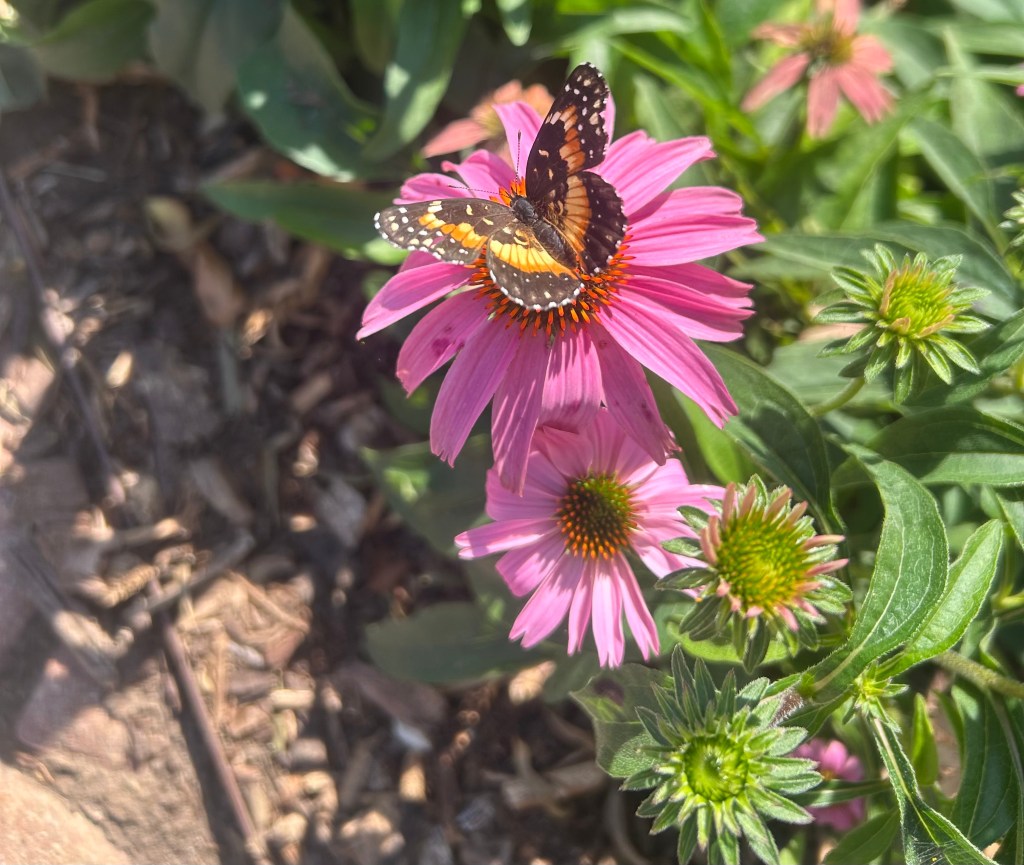
Bordered patch butterfly feeding from purple coneflower (Echinacea purpurea).
Full guide to flowers to plant for nectar sources throughout the seasons for butterflies.
Mistake 8: Frequent Disturbances
Why It’s A Problem:
Excessive movement, mowing, or trimming near flowers can scare butterflies away. Butterflies are sensitive to vibrations and sudden motion.
How to Fix It:
• Minimize garden disturbances during peak butterfly activity (late morning to early afternoon).
• Avoid pruning nectar-rich plants while butterflies are feeding.
• Use separate paths to access garden areas without crushing plants.
Mistake 9: Not Providing Night-Time Shelter
Why It’s A Problem:
While butterflies are active during the day, they need safe resting places at night. Without them, nocturnal predators can reduce populations.
How to Fix It:
• Keep shrubs and tall plants for night-time cover.
• Avoid removing dead plant material entirely; some serve as winter shelters.
• Consider planting a butterfly hedge or small bushy areas for safe overnight roosting.
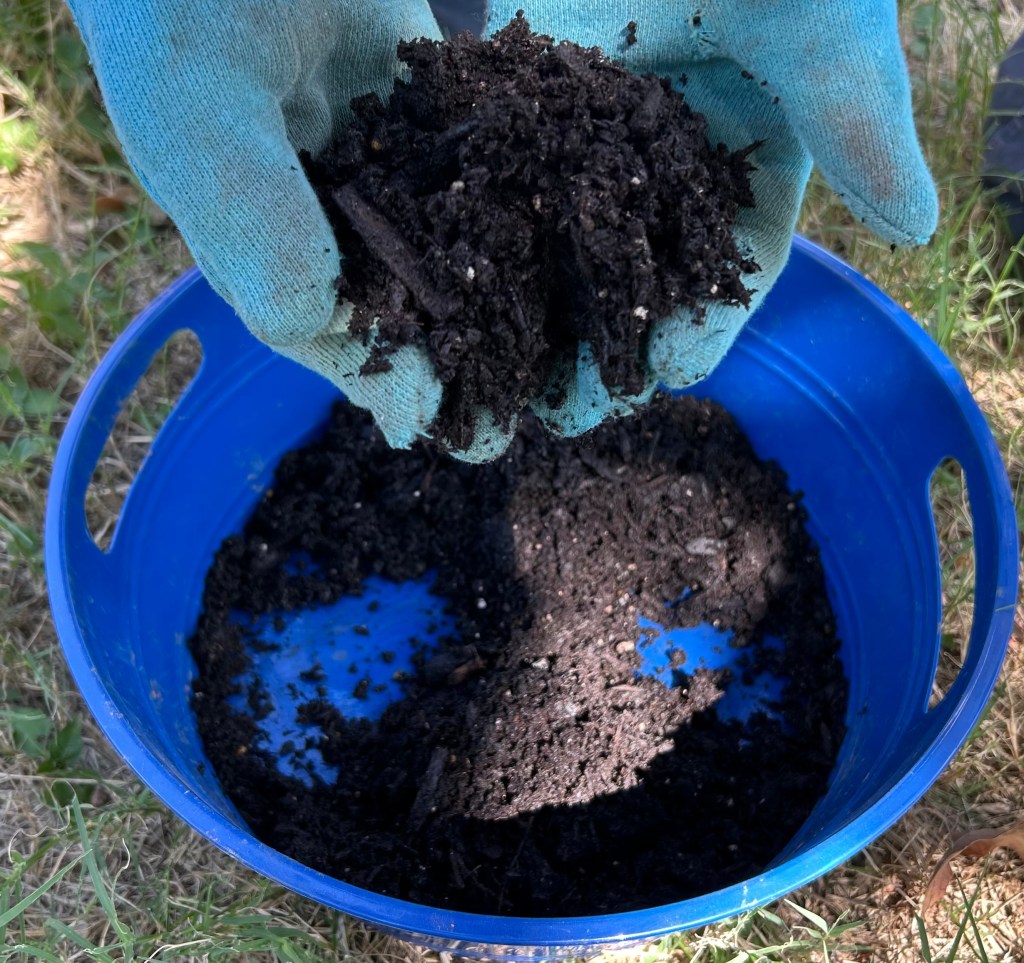
Healthy garden soil. Learn how to create it from leaves from your yard here.
Mistake 10: Forgetting Soil Quality
Why It’s A Problem:
Butterflies rely on healthy plants for nectar and larval development. Poor soil produces weak plants with fewer blooms and less nutrition.
How to Fix It:
• Test and amend soil for proper pH, nutrients, and organic matter.
• Mulch to retain moisture and moderate soil temperature.
• Avoid synthetic fertilizers that may harm pollinators.
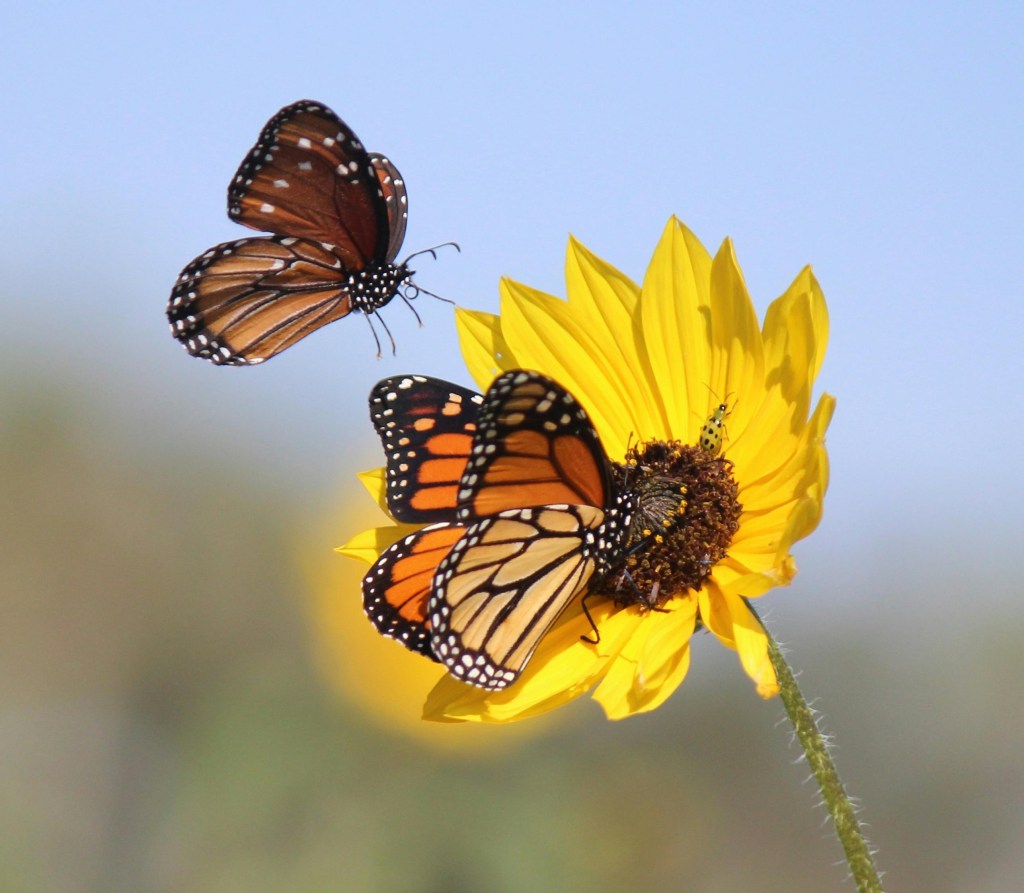
Monarch and Queen butterflies attracted by sunflowers
Creating a Butterfly-Friendly Garden That Works
1. Mix Nectar and Host Plants
Feed adults and caterpillars.
2. Provide Sun, Shelter, and Water
Essential for survival and comfort.
3. Maintain Continuous Blooms
Early spring to fall ensures food year-round.
4. Avoid Chemicals
Let nature do the work with predator insects and pollinator-friendly practices.
5. Observe and Adapt
Watch butterfly behavior; adjust planting and garden layout accordingly.
By combining these strategies, you’ll create a garden that not only attracts butterflies but keeps them coming back year after year.
To learn how to attract, feed, and protect butterflies all year, see the Complete Guide to Butterfly Gardening.
Common Questions About Butterfly Gardens
Why aren’t butterflies visiting my garden?
Butterflies are picky about both food and shelter. Make sure your garden includes nectar-rich flowers in bloom, host plants for caterpillars, and sunny areas for basking. Avoid pesticides, and give them a safe space to rest and lay eggs.
How can I prevent caterpillars from dying?
Caterpillar survival often depends on proper host plants, regular monitoring, and protection from predators. Plant multiple host species, keep leaves fresh and pesticide-free, and provide some sheltered spots to help caterpillars pupate safely.
Which plants attract the most butterflies?
Native plants are best, as local butterflies adapted with them. For Texas Zone 8, consider milkweed species, golden alexander, lantana, and zinnias. A mix of nectar plants and host plants ensures butterflies visit and stay in your garden.
My caterpillars disappeared — did they die?
Not necessarily. Many caterpillars wander off their host plant to find a safe spot to pupate. Check nearby leaves, stems, or sheltered areas — often, they are just getting ready for the next stage. If you want more detail on raising black swallowtail caterpillars, including timelines and what to expect, check out the full step-by-step guide here.
Conclusion
Butterflies are more than just beautiful garden visitors — they are pollinators that support local ecosystems. Avoiding common mistakes like overusing pesticides, planting non-native species, neglecting shelter, and providing insufficient nectar ensures your garden is a welcoming environment. With careful planning and attention, your garden can become a butterfly haven that thrives even in challenging conditions.
If you are new to butterfly gardening, the Butterfly Garden Cheat Sheet outlines the basic conditions butterflies look for when choosing a garden.
Related Guides:
The Complete Guide to Butterfly Gardening: How to Attact, Feed, and Protect Butterflies All Year
The Best Host Plants for Caterpillars in Zone 8
Monarch Host Plants vs. Nectar Plants: A Simple Beginner Guide
Photo credits: hand reaching – Swapnil Sharma, Monarch and queen on sunflower – Reagon Ross
 Butterfly garden paradise
Leave a comment