

(Cover photo showing native flower Gaillardia pulchella or blanket flower, a tough pollinator favorite.)
Gardening in Texas comes with its unique challenges, and one of the biggest is heat and drought. High temperatures and limited rainfall can make it difficult to grow flowers that thrive while still supporting pollinators like bees, butterflies, and hummingbirds. Fortunately, nature provides us with a wealth of drought-tolerant pollinator plants that can survive harsh conditions while feeding essential wildlife.
In this guide, we will explore the best Texas-friendly plants for heat and drought, explain why they are beneficial to pollinators, and give practical tips for planting and maintaining a resilient, eco-friendly garden. Whether you are gardening in Austin, Dallas, Houston, or the Texas Hill Country, these plants will help you create a sustainable and colorful landscape.

Pearl crescent butterfly feeding from the native milkweed called yellow butterfly weed (Asclepias tuberosa), a drought-tolerant plant that also handles clay soils well and serves as a Monarch butterfly host plant.
Why Choose Drought-Tolerant Pollinator Plants?
1. Conserve Water
Texas gardens often face water restrictions during peak summer months. Choosing plants adapted to low-water conditions reduces irrigation needs and keeps your garden thriving even in dry spells.
2. Support Pollinators
Pollinators are crucial for the ecosystem and our food supply. Native, drought-tolerant plants often produce nectar and pollen that are more nutritious and reliable than non-native ornamentals.
3. Reduce Maintenance
These plants are resilient, needing less fertilizer, pruning, and care, which makes them perfect for gardeners who want a beautiful garden without constant attention.
4. Adapted to Local Climate
Native or adapted plants are naturally resilient to Texas heat, clay soils, and high sun exposure, meaning they thrive where others struggle.
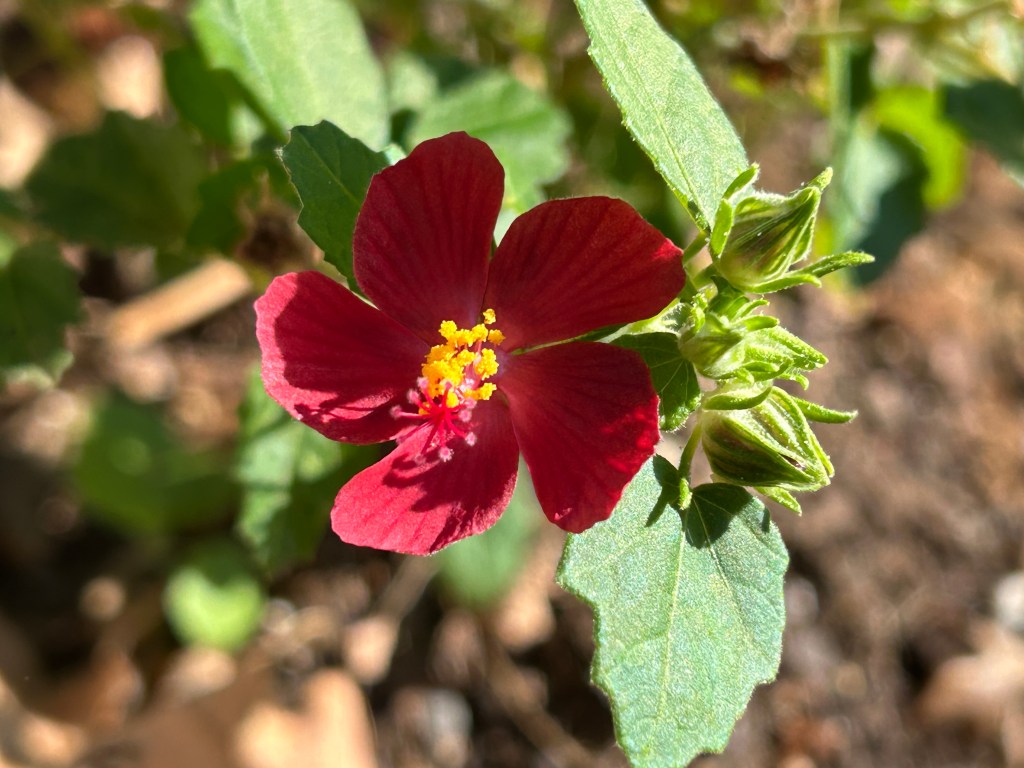
This variety of native rock rose (Pavonia lasiopetula) is called Ellen’s legacy with deep red blooms.
Top Drought-Tolerant Pollinator Plants for Texas
1. Black-eyed Susan (Rudbeckia hirta)
• Description: Bright yellow petals with dark centers.
• Pollinators Attracted: Bees, butterflies.
• Growing Tips: Full sun, tolerates clay soil, drought-resistant once established.
2. Purple Coneflower (Echinacea purpurea)
• Description: Tall, vibrant purple flowers with large seed heads.
• Pollinators Attracted: Bees, butterflies, hummingbirds.
• Growing Tips: Full sun to partial shade, well-draining soil, very drought-tolerant.
3. Mexican Sunflower (Tithonia rotundifolia)
• Description: Orange or red blooms that radiate heat energy.
• Pollinators Attracted: Butterflies, bees, hummingbirds.
• Growing Tips: Full sun, moderately dry soil, annual in colder areas but reseeds readily.
4. Milkweed (Asclepias species)
• Description: Essential host plant for monarch butterflies. Varieties include tropical milkweed and butterfly weed.
• Pollinators Attracted: Monarchs, bees, other butterflies.
• Growing Tips: Full sun, well-drained soil, drought-tolerant once established.
Visit this guide for the Best Native Milkweed Types for Texas.
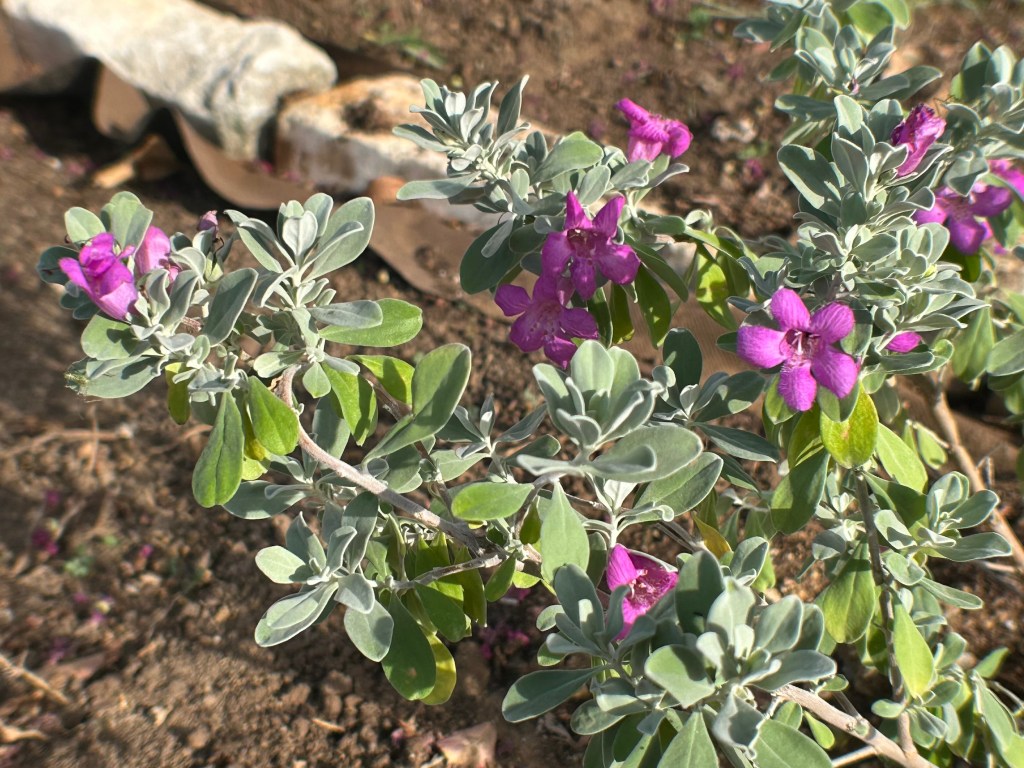
Texas sage, a tough native shrub with nectar for pollinators also called Cenizo.
5. Texas Sage (Leucophyllum frutescens)
• Description: Silvery foliage with purple blooms, native shrub.
• Pollinators Attracted: Bees, butterflies.
• Growing Tips: Full sun, extremely drought-tolerant, minimal maintenance.
6. Lantana (Lantana urticoides)
• Description: Bright multi-colored clusters of flowers.
• Pollinators Attracted: Butterflies, bees, hummingbirds.
• Growing Tips: Full sun, well-drained soil, very heat and drought-tolerant.
7. Blanket Flower (Gaillardia species)
• Description: Red and yellow daisy-like flowers.
• Pollinators Attracted: Bees, butterflies.
• Growing Tips: Full sun, sandy or well-draining soil, drought-resistant once established.
8. Salvia (Salvia greggii)
• Description: Spikes of purple, pink, or red flowers.
• Pollinators Attracted: Bees, butterflies, hummingbirds.
• Growing Tips: Tough in full sun, well-drained soil, has low water needs.
9. Rock Rose (Pavonia lasiopetala) (pictured above)
• Description: Compact pink or red flowers, thornless and spreading.
• Pollinators Attracted: Bees and butterflies.
• Growing Tips: Full to part-sun, gritty/rocky freely draining soil, drought-tolerant.

Gulf fritillary butterfly on Mexican sunflower (Tithonia rotundifolia) a heat and drought-tolerant annual nectar source that never fails to draw in the butterflies.
Planting Tips for a Drought-Tolerant Pollinator Garden
1. Group Plants by Water Needs
Planting drought-tolerant species together makes irrigation easier and prevents overwatering.
2. Use Mulch to Retain Moisture
Organic mulch reduces evaporation, keeps soil cooler, and suppresses weeds.
3. Choose Native Plants Whenever Possible
Native species are more resilient to heat and require less care while providing high-quality nectar and pollen.
4. Provide Shelter for Pollinators
Add small brush piles, rocks, or native shrubs to give pollinators safe resting spots.
5. Plan for Continuous Bloom
Plant a mix of species that flower at different times to ensure pollinators have nectar throughout the growing season.
6. Avoid Pesticides
Even natural insecticides can harm pollinators. Use integrated pest management and focus on encouraging beneficial insects.
Common Mistakes in Drought-Tolerant Pollinator Gardening
• Overwatering
Even drought-tolerant plants can suffer if their roots stay soggy. For useful tips see the Right Way to Water Native Plants to help them thrive.
• Ignoring Soil Preparation
Amend heavy clay or poor-draining soils to improve plant health.
• Planting Too Close Together
Adequate spacing improves airflow and prevents disease.
• Skipping Bloom Diversity
A garden with only one species may look pretty but will not support diverse pollinators.

Black-eyed susans (Rudbeckia hirta), colorful native flowers that are heat and drought tolerant and loved by pollinators.
Seasonal Considerations
• Spring
Plant early bloomers like black-eyed Susan and purple coneflower to provide early nectar.
• Summer
Heat-tolerant plants like milkweed, lantana, and Mexican sunflower shine.
• Fall
Extend the season with late bloomers like salvia and blanket flower to support migrating butterflies.
Conclusion
Creating a drought-tolerant pollinator garden in Texas is both practical and rewarding. By choosing the right plants, grouping them for water efficiency, and planning for continuous bloom, you can support bees, butterflies, and other pollinators while conserving water and thriving in the heat. Even small gardens or container setups can make a significant difference for local pollinator populations.
This article covers one part of butterfly gardening. The Butterfly Garden Cheat Sheet shows how these elements fit together at a basic level.
Related Guides:
The Ultimate Texas Zone 8 Garden Guide: What to Plant and When
How to Create Shade Gardens in Hot, Dry Climates
How to Keep Butterfly Garden Plants Alive in Extreme Texas Heat
 Butterfly garden paradise
Leave a comment