
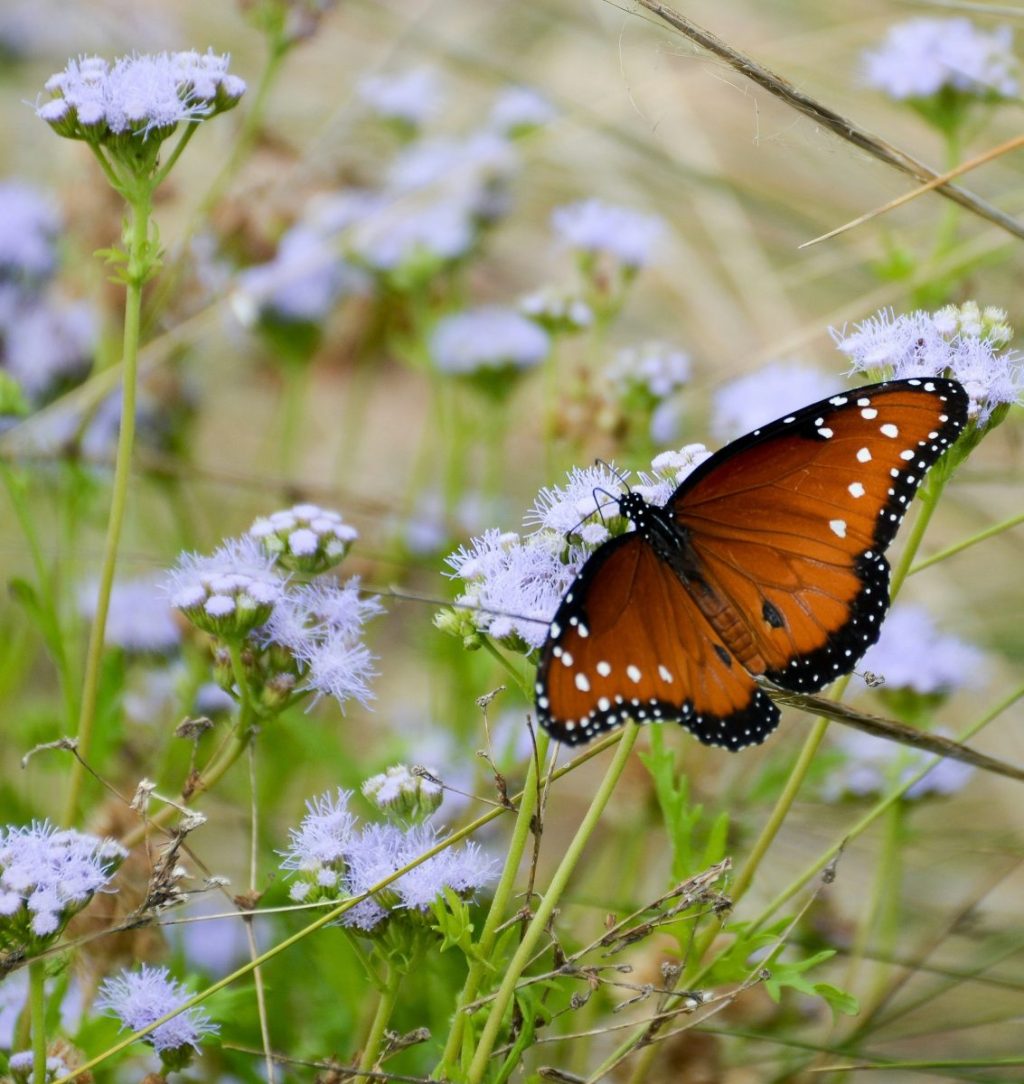
(Cover photo showing a Queen butterfly visiting Gregg’s mistflower)
Butterflies are one of the most charming and beneficial visitors to any garden. Not only do they bring color and movement, but they also play an essential role as pollinators. For gardeners in Texas Zone 8, supporting butterflies year-round means planting the right nectar-rich flowers that bloom across the seasons. From the first arrivals in early spring to late-fall migratory visitors, a thoughtful selection of nectar plants ensures your garden is always buzzing with activity.
In this guide, we will explore the top nectar plants for butterflies by season in Texas Zone 8, how to care for them, and tips for creating a garden that attracts butterflies consistently throughout the year.
Why Nectar Plants Matter for Butterflies
Adult butterflies primarily feed on nectar. Nectar provides the energy needed for flying, mating, and laying eggs. Without a steady supply of nectar-rich flowers, butterflies may bypass your garden altogether.
By planting a variety of nectar plants that bloom at different times of the year, you can:
• Attract more species of butterflies
• Encourage longer visits to your garden
• Support the life cycle of caterpillars and butterflies alike
Pairing nectar plants with host plants creates a fully functional butterfly habitat. (Learn more about host plants for butterflies in Texas).
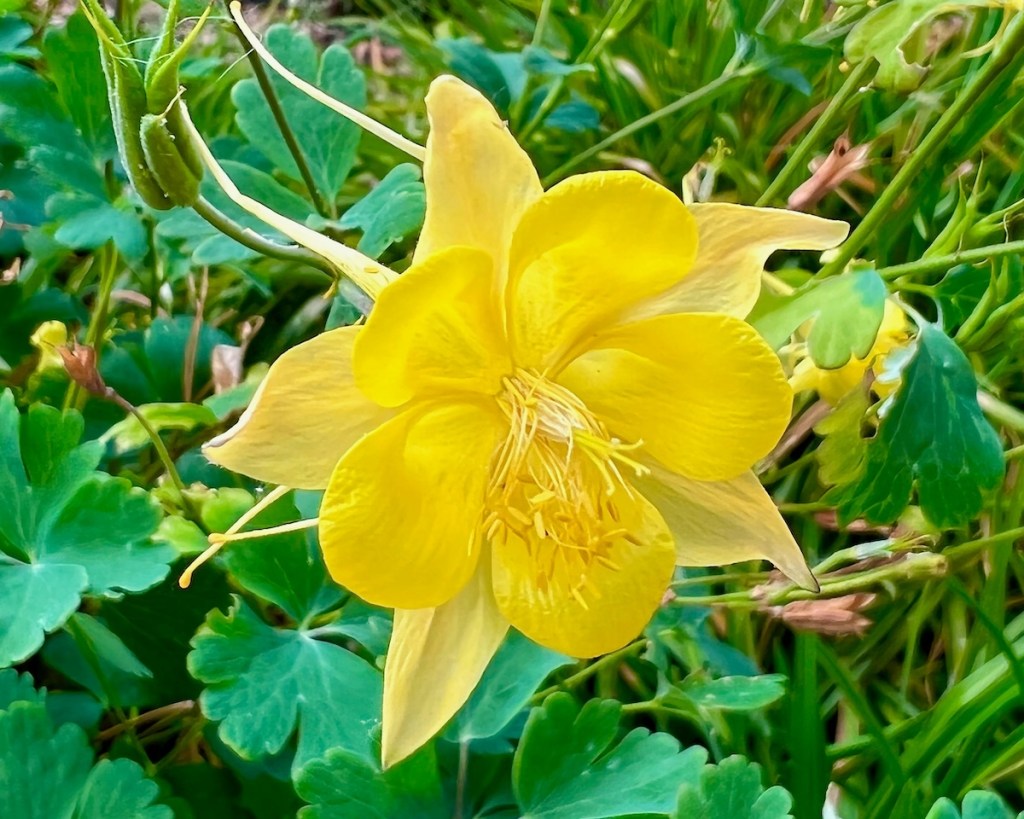
Golden columbine, an early spring nectar source for butterflies, the Hinckley variation is called ‘Texas Gold’.
Early Spring Nectar Plants (March–April)
As the first butterflies arrive from their wintering grounds or emerge locally, early-blooming nectar plants are critical for their survival. Consider these Texas-friendly options:
Texas Redbud (Cercis canadensis var. texensis)
A native small tree with bright pink blooms in early spring. Its flowers attract butterflies and other pollinators while adding structure and color to the garden.
Golden Columbine (Aquilegia chrysantha)
A Texas native columbine with cheerful yellow, nectar-rich flowers in early spring. Butterflies and hummingbirds readily visit these blooms.
Drummond Phlox (Phlox drummondii)
Early spring blooming with bright colors, reseeding annual.
Salvia Greggii (Autumn Sage)
Can bloom sporadically even in late winter in milder areas; provides early nectar for butterflies.
Extra tip: Plant early bloomers in sunny areas and ensure the soil is well-draining. Even a few clusters can make a noticeable difference in attracting spring butterflies.

Black swallowtail butterfly feeding on nectar from Wild Bergamot bee balm (Monarda fistulosa).
Late Spring Nectar Plants (May–June)
By late spring, the butterfly population is increasing, and more nectar sources are needed to sustain them. Recommended plants to attract butterflies include:
Blue Mistflower (Conoclinium coelestinum)
Blooms in April-May and well into summer, supporting monarchs and sulphur butterflies. Great for shadier locations with some moisture.
Blanket Flower (Gaillardia spp.)
Heat-tolerant, drought-tolerant fiery blooms that attract various species of butterflies.
Coneflower (Echinacea purpurea)
Hardy perennials that bloom reliably and provide easy access for butterfly feeding.
Wild Bergamot (Monarda fistulosa)
Bursts into lavender blooms from June to August for bees and butterflies.
Extra tip: Late spring flowers should be planted in groups to make them easier for butterflies to locate. Water regularly, especially in dry, hot conditions.
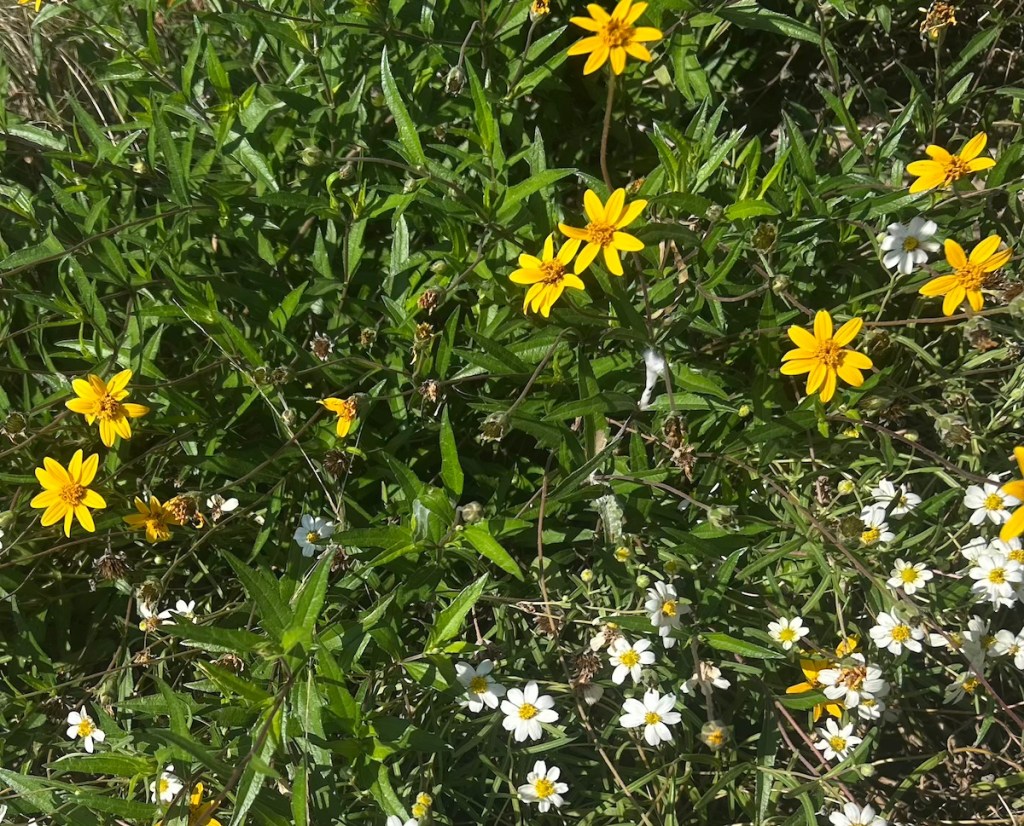
Yellow Zexmenia flowers make a great pairing with Blackfoot daisies, another native flower for butterflies that blooms May through August.
Summer Nectar Plants (July–August)
Summer in Texas can be intense, but butterflies remain active during early mornings and late afternoons. Nectar plants that withstand heat are crucial:
Coreopsis (Coreopsis species)
Bright yellow blooms that thrive in heat and attract a variety of butterflies.
Zinnias (Zinnia elegans)
Fast-growing annuals with bright flowers that bloom continuously through summer.
Buttonbush (Cephalanthus occidentalis)
Native shrub with globe-shaped flowers that attract butterflies, bees, and hummingbirds.
Zexmenia (Wedelia texana or hispida)
Heat-loving and low-maintenance perennial with bright yellow daisy-like flowers loved by butterflies and other pollinators.
Extra tip: Provide water nearby to help butterflies cope with the heat. Mulching around summer perennials helps retain soil moisture and keep plants thriving.
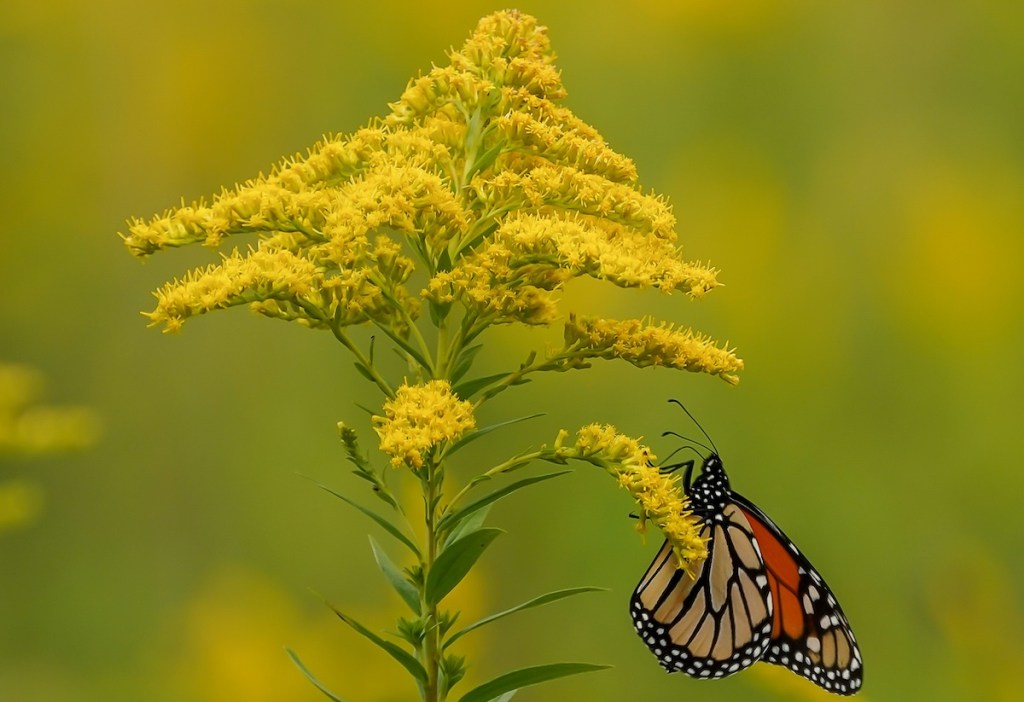
Monarch butterfly feeding from goldenrod, an important late-season nectar source for them and other pollinators.
Fall Nectar Plants (September–October)
Fall is an important time for migratory butterflies, especially monarchs heading south. Nectar-rich plants at this time help fuel long journeys:
Goldenrod (Solidago species)
Provides late-season nectar when other plants are dwindling.
Aromatic Asters (Symphyotrichum species)
Fall-blooming varieties extend the flowering season.
Mexican Sunflower (Tithonia rotundifolia)
Tall, bright orange flowers that are irresistible to monarchs and swallowtails.
Lantana (Lantana urticoides)
Heat-tolerant, blooms abundantly, and attracts a wide range of butterfly species.
Extra tip: Leave some flowers uncut through late fall so migratory butterflies have access. Avoid pesticide use during this time to prevent harming passing pollinators.

Autumn sage (Salvia greggii) is a drought and heat-tolerant native plant that blooms March-November in Texas.
Creating a Year-Round Butterfly Garden
To ensure butterflies have food year-round:
1. Plant in Clusters:
Grouping the same species together helps butterflies find nectar more easily.
2. Mix Bloom Times:
Incorporate early, late, and long-blooming varieties to keep nectar available from March through October.
3. Provide Shelter and Water:
Small brush piles, dense shrubs, and shallow water dishes help butterflies survive extreme heat or wind.
4. Avoid Chemicals:
Follow Integrated Pest Management (IPM) principles to protect butterflies while controlling pests. (Full IPM Guide).
5. Combine with Host Plants:
For example, milkweed supports monarch and queen caterpillars, while lantana and coneflowers feed adults. Linking nectar and host plants maximizes the garden’s ecological value.

This yellow milkweed (Asclepias tuberosa) doubles as a nectar plant for pollinators and a host plant for Monarch butterfly caterpillars. Butterfly shown feeding is a pearl crescent.
See the Texas Native Milkweed: The Best Species to Plant for Monarchs for more, including planting tips and bloom times.
Seasonal Planting Tips for Texas Zone 8
Spring
Plant annuals and perennials that bloom early, like native flowering trees and columbine.
Summer
Focus on heat-tolerant plants, such as lantana, coreopsis, and zinnias.
Fall
Incorporate goldenrod, late-blooming asters, and Mexican sunflower to help migrating butterflies.
By staggering plantings and selecting species adapted to Zone 8, you create a continuous food supply that keeps butterflies visiting your garden all season long.
Conclusion
Creating a butterfly-friendly garden that blooms throughout the seasons is a rewarding way to support pollinators and enjoy their beauty in your Texas Zone 8 yard. By choosing nectar plants for early spring, late spring, summer, and fall, you provide a consistent energy source that attracts a variety of butterfly species. Combine these plants with host plants, shelter, water, and careful pest management, and your garden will flourish with pollinator activity.
A vibrant butterfly garden is not just aesthetically pleasing—it is an ecological oasis, supporting the life cycles of butterflies and other pollinators while enhancing your garden’s overall health.
If you are planning or planting this season, the Butterfly Garden Cheat Sheet can help you check that the basic habitat pieces are in place.
Related Guides:
The Complete Guide to Butterfly Gardening: How to Attract, Feed, and Protect Butterflies All Year
The Best Host Plants for Caterpillars in Zone 8
Common Mistakes that Scare Butterflies Away: How to Keep Your Garden Butterfly-Friendly
Photo credits: cover queen butterfly with mistflower – Tom Rogers, gold columbine – Steve & Barb Sande, Black swallowtail butterfly – Thomas Elliott, monarch on goldenrod – Jackie Best.
 Butterfly garden paradise
Leave a comment