

Healthy soil is the foundation of any thriving garden. Without it, even the most carefully selected plants may struggle, your vegetables may produce poorly, and your flowers may fail to bloom. The good news is that you can build fertile, nutrient-rich soil without relying on chemical fertilizers or synthetic additives. By focusing on natural amendments, soil biology, and smart garden practices, you can create soil that sustains plants, supports pollinators, and improves over time.
This guide will walk you through the principles of chemical-free soil building, explain how to assess and improve your soil, and give practical, actionable steps for gardeners in Texas Zone 8 and beyond.
Why Healthy Soil Matters
Soil is more than just dirt—it is a living ecosystem. Healthy soil:
• Provides nutrients and water to plants efficiently
• Supports beneficial microorganisms, worms, and insects that help plants grow
• Improves structure, aeration, and drainage
• Reduces the need for chemical fertilizers, pesticides, or herbicides
Without a strong soil foundation, your garden will always be fighting an uphill battle. By focusing on natural methods, you not only grow stronger plants but also protect the environment, reduce garden maintenance, and support local pollinators like butterflies and bees. (Learn more about planting butterfly-friendly gardens).
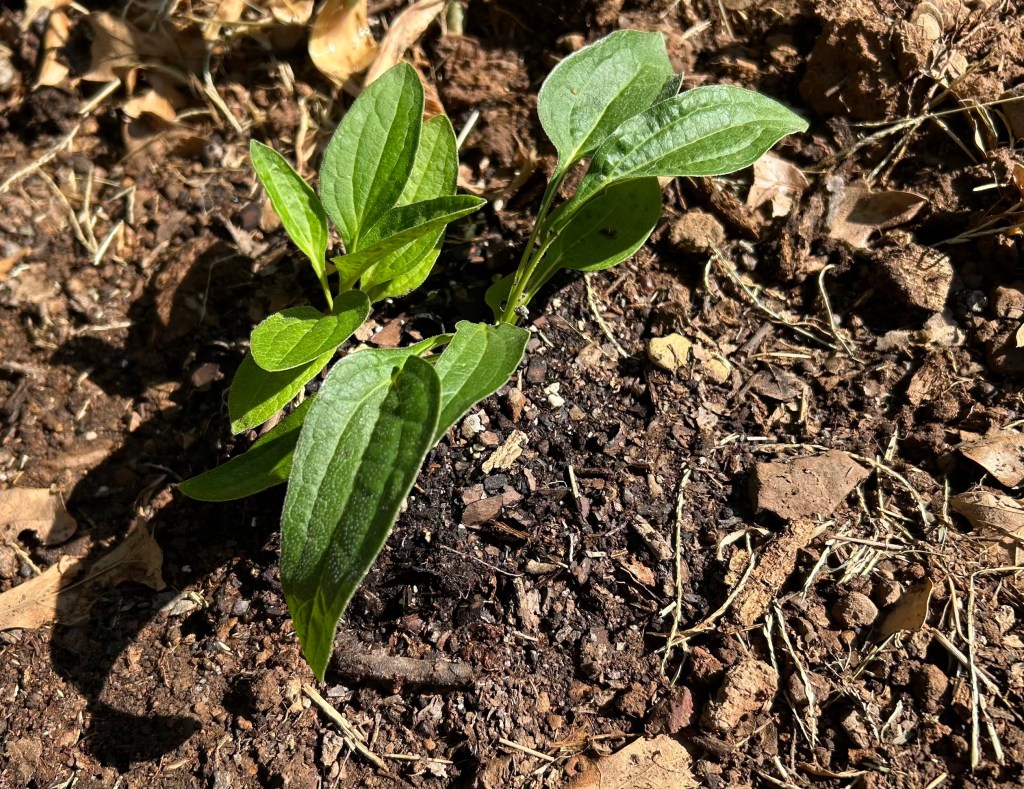
Echinacea purpurea transplanted into native soil amended with organic matter to improve structure and drainage.
Step 1: Know Your Soil
Before adding amendments, it is important to understand your starting point. Soil varies widely depending on location, and Texas Zone 8 is known for clay soils mixed with rock and sandy areas.
How to Test Your Soil
1. Soil Texture
Take a small handful, wet it, and roll it between your fingers. Clay feels sticky, sand feels gritty, and silt is smooth.
2. PH Level
Test kits are inexpensive and measure whether your soil is acidic, neutral, or alkaline. Most plants prefer pH 6–7, but some native and drought-tolerant plants tolerate slightly higher or lower.
3. Nutrient Content
Optional but helpful, a lab test can reveal nitrogen, phosphorus, potassium, and trace mineral levels.
Tip: Your soil test results will guide which natural amendments are most useful. For example, clay soil benefits from organic matter to improve aeration, while sandy soil retains water better with compost and mulch.
Step 2: Add Organic Matter
Organic matter is the cornerstone of healthy, chemical-free soil. It improves structure, retains moisture, and feeds beneficial microorganisms.
Sources of Organic Matter
• Compost
Decomposed plant material, kitchen scraps, and garden debris. Apply a 2–3 inch layer and mix into the top 6–8 inches of soil.
• Leaf Litter
Mulch with shredded leaves in fall or spring. Slowly breaks down, adding nutrients. Learn how to make leaf mold to naturally improve your soil from leaves and yard waste here.
• Manure (Aged):
Use well-aged manure from cows, horses, or chickens. Avoid raw manure to prevent burning plants and introducing pathogens.
• Grass Clippings
Use in moderation, preferably dried or composted.
Tip for Zone 8: During Texas summers, organic matter helps soil retain moisture and buffer against heat stress, which is critical for both vegetables and pollinator-friendly plants like milkweed and coneflowers.
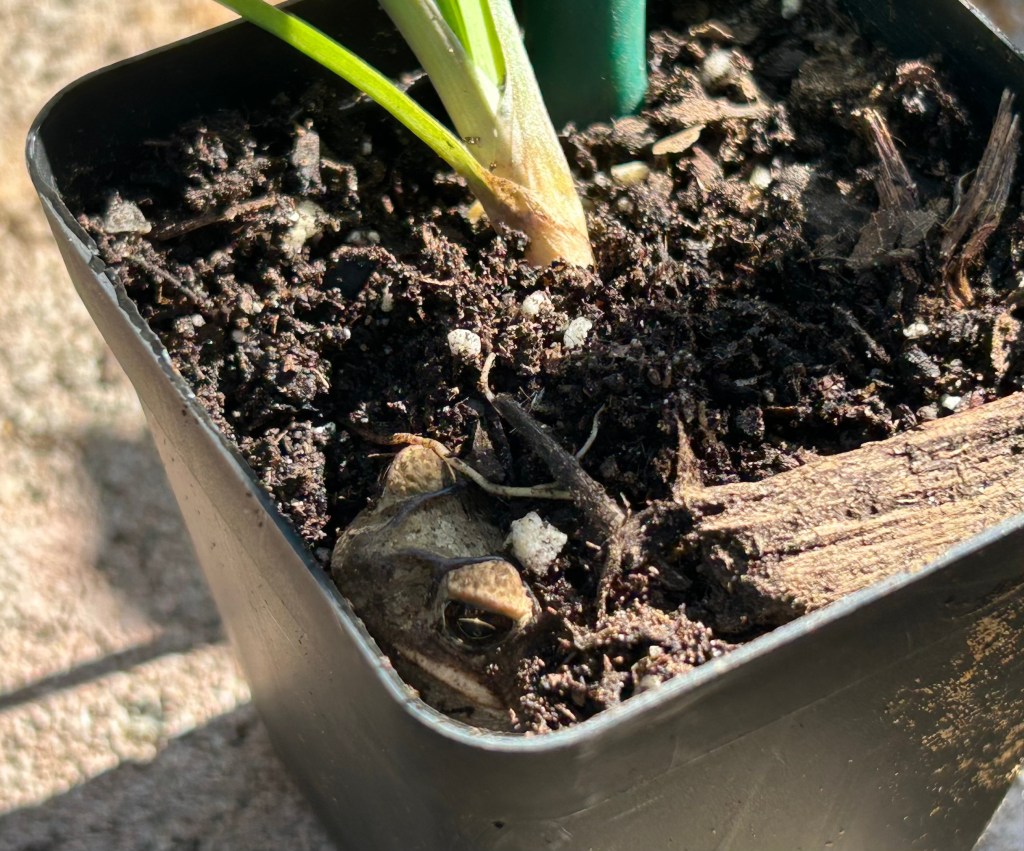
This toad is not quite the type of soil life I was hoping for in a small plant pot.
Step 3: Encourage Soil Life
Healthy soil is alive with microorganisms, fungi, and insects. These creatures break down organic matter, release nutrients, and improve soil structure.
How to Boost Soil Life
• Avoid Chemical Fertilizers and Pesticides
These can kill beneficial organisms.
• Add Compost Teas or Worm Castings
Introduces helpful microbes.
• Plant Cover Crops
Clover, vetch, and rye improve soil nitrogen, protect from erosion, and provide habitat for soil life.
• Mulch
Keeps soil temperature stable, retains moisture, and feeds decomposers.
Tip: Even in small gardens or containers, soil life is essential. A teaspoon of healthy topsoil contains billions of microorganisms—support them, and your plants will thrive naturally.
Step 4: Practice Crop Rotation and Plant Diversity
Growing the same plant in the same spot repeatedly can deplete specific nutrients and encourage pests. Instead:
• Rotate Crops
Move vegetables to different beds each season.
• Plant Diversity
Mix flowers, herbs, and vegetables to create a balanced ecosystem. Butterflies and bees also benefit from diverse plantings.
• Interplanting
Companion planting can enhance nutrient uptake and naturally deter pests.
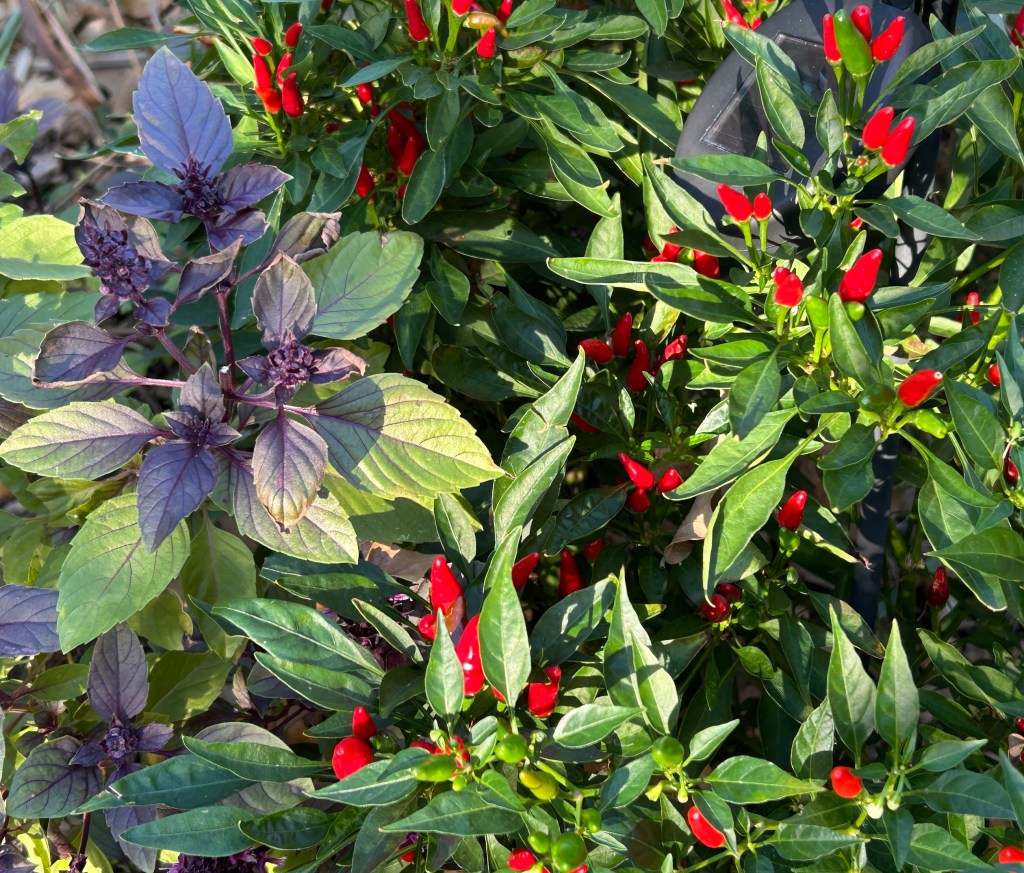
Companion planting of purple basil and Thai peppers in the vegetable garden.
Step 5: Mulch and Cover the Soil
Mulching is a chemical-free way to protect soil, retain moisture, and gradually build fertility.
Types of Mulch
• Organic Mulches
Straw, wood chips, shredded leaves, pine needles
• Cover Crops
Protect bare soil and add organic matter when tilled in
• Living Mulch
Low-growing groundcovers that suppress weeds and enrich the soil
Zone 8 Tip: Mulch reduces evaporation during the hot Texas summer and keeps clay soils from drying out too fast. Replenish organic mulch annually for best results.
Step 6: Water Wisely
Watering practices directly affect soil health:
• Deep, Infrequent Watering
Encourages roots to grow deep and improves soil structure.
• Drip Irrigation or Soaker Hoses
Minimizes surface erosion and keeps water in the root zone. Timers can be added to these as well.
• Avoid Waterlogging
Heavy clay soils are prone to compaction and anaerobic conditions, which harm soil life.
More detailed information on how to water native plants the right way.

Autumn leaves can be turned into excellent garden soil, learn the easy steps to do it here.
Step 7: Avoid Chemicals and Synthetic Fertilizers
The most important rule for chemical-free soil is: do not rely on synthetic inputs. These can:
• Kill beneficial microbes and fungi
• Alter natural nutrient cycles
• Lead to dependency on fertilizers for future crops
Instead, focus on organic amendments, mulch, compost, and crop rotation. Over time, your soil will become self-sustaining, rich in nutrients, and resilient.
Bonus Tips for Texas Gardeners
• Amend Gradually
Large sudden changes can shock soil life. Add 1–2 inches of compost or organic matter per year, and adjust based on soil tests.
• Use Raised Beds if Needed
Improves drainage and soil structure in heavy clay areas. Our guide to building a keyhole garden is coming soon.
• Incorporate Local Materials
Leaves, yard waste, and native plant debris are ideal for building chemical-free soil.
• Be Patient
Healthy soil is built over seasons, not weeks. Observe, adjust, and continue feeding soil life naturally.

Common buckeye butterfly feeding on a lantana shrub that grew large in healthy soil and attracts many pollinators.
Conclusion
Building healthy soil without chemicals is the foundation of a thriving, sustainable garden. By testing your soil, adding organic matter, encouraging soil life, practicing crop rotation, mulching, watering wisely, and avoiding synthetic inputs, you can create a rich, fertile environment for all your plants.
For Texas Zone 8 gardeners, chemical-free soil practices are especially important because they help plants withstand heat, drought, and clay-heavy soils while supporting local pollinators, including butterflies, bees, and other beneficial insects. Over time, your garden will become more resilient, productive, and environmentally friendly—without ever touching a bag of synthetic fertilizer.
This article covers one part of butterfly gardening. The Butterfly Garden Cheat Sheet shows how these elements fit together at a basic level.
Related Guides:
How to Start a Garden from Scratch
The Ultimate Texas Zone 8 Garden Guide: What to Plant and When
The Complete Guide to Butterfly Gardening: How to Attract, Feed, and Protect Butterflies All Year
 Butterfly garden paradise
Leave a comment