

(With Texas Butterflies as Examples)
Cover: Pearl crescent butterfly which overwinter as caterpillars in leaf litter.
It may appear that butterflies simply vanish when the weather turns cold. As we cease to see them fluttering around our gardens, it is easy to wonder, where did they go? But in Texas, winter does not always mean butterflies have gone away — they have just changed how they survive in winter. Different species use different approaches to ride out the chilly months, and many are still right in your yard if you know where to look.
Here is the inside scoop on how butterflies survive winter — using examples of butterflies commonly seen around Texas:
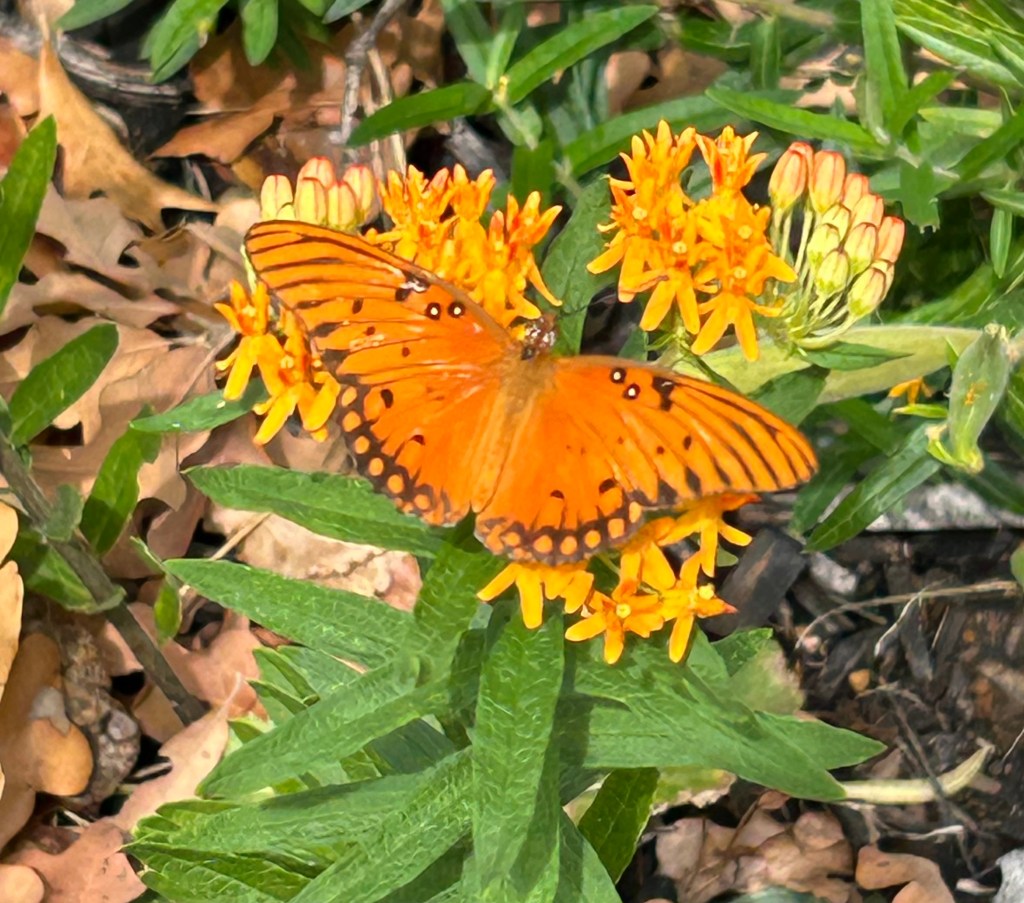
Gulf fritillary butterfly feeding on nectar from native orange milkweed
1. Gulf Fritillaries: Hiding in Plain Sight
Gulf Fritillaries are surprisingly tough. These bright orange butterflies overwinter as adults, but they do not just float around aimlessly — they tuck themselves into cozy, hidden spots, including:
• Leaf piles in your garden
• Hollow plant stems
• Dense shrubs or climbing vines
• Fence corners or garden trellises
When temperatures dip into the 40s or high 30s, Gulf Fritillaries enter torpor, a temporary state of slowing their metabolism and conserving energy. Brief freezes into the 20s usually will not harm them if they are dry and well-hidden. On warm winter afternoons, you might even see one come out and flutter around as if it forgot it is the middle of winter.
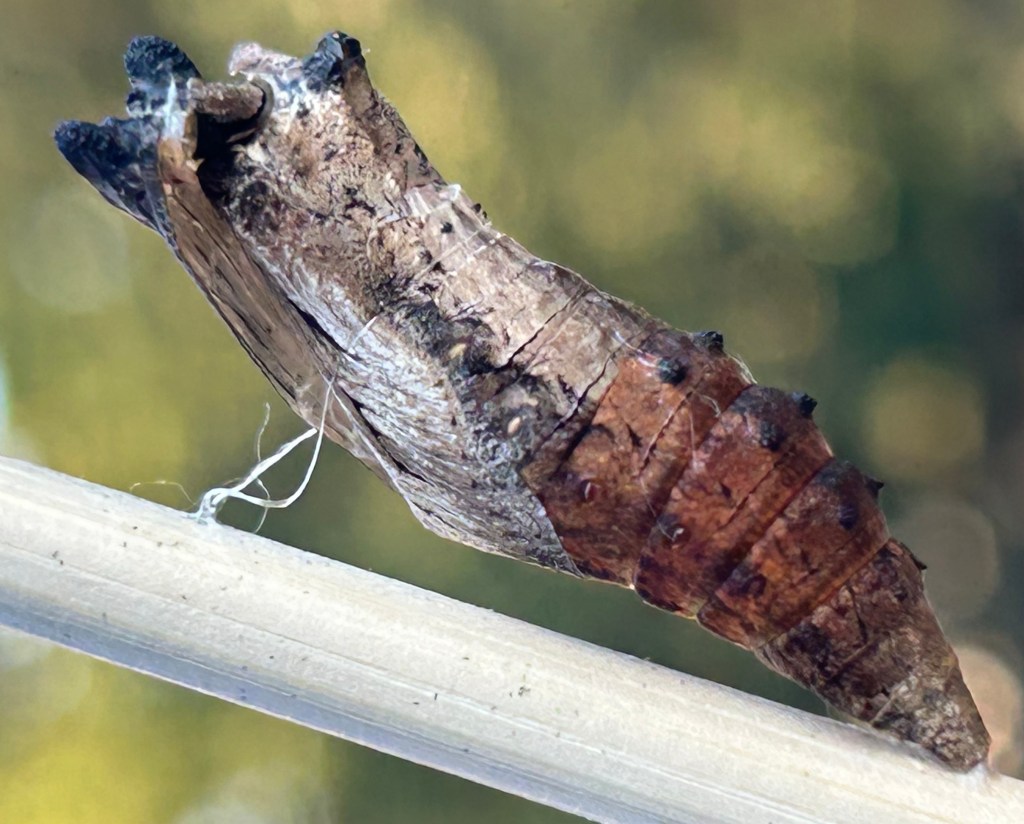
Black swallowtail butterfly chrysalis. Learn how to raise black swallowtail caterpillars.
2. Swallowtails: Nature’s Cold-Proof Pods
Black, Pipevine, Giant, and Eastern Tiger Swallowtails survive winter as chrysalises, which are shockingly resilient. These pupae can withstand:
• Gradual cooling down to about 20°F
• Slightly lower temperatures if protected under leaves or mulch
• Brief freezes into the teens if conditions are dry
Look closely, and you might find brown or green swallowtail chrysalises attached to fences, twigs, or siding — seemingly exposed spots that are actually perfect microhabitats. Think of them as tiny, armored survival pods, ready to reawaken when spring returns.
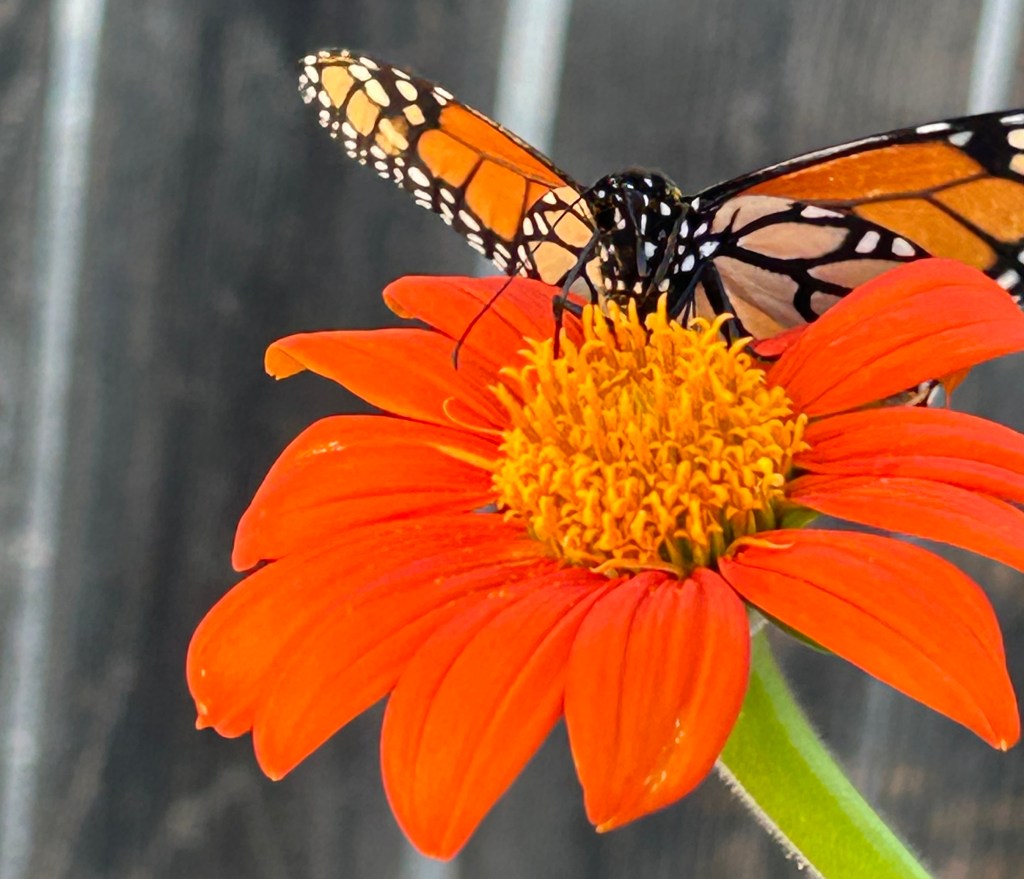
Last of the monarch butterflies for the season feeding from Mexican sunflower
3. Monarchs: Residents vs. Migrants
Texas is a unique spot for monarchs because it hosts both migratory and resident populations:
• Migratory monarchs pass through Texas in fall on their way to overwinter in Mexico.
• Resident monarchs sometimes stay in Central and South Texas during mild winters.
So if you spot a monarch in January in Austin or San Antonio, it is probably a local resident making the most of winter nectar sources — not a long-distance traveler.
4. Skippers: Caterpillars Rolled Up in Grass
Many Texas skippers, like Fiery Skippers, Sachems, and Clouded Skippers, overwinter as caterpillars tucked inside grass blades.
The grass blade becomes a tiny, protective tent, keeping them safe from cold snaps and predators. If you peek inside, you might actually see one (though, of course, don’t because then it would not survive). Leaving some grass longer through winter is an easy way to support these hidden caterpillars. Even a small patch of native or lawn grass can make a big difference.
Planting native grasses is a great way to support skipper butterflies and others that use it for habitat and shelter. For more information on butterfly-friendly grasses for Texas, see our upcoming guide (coming soon!).
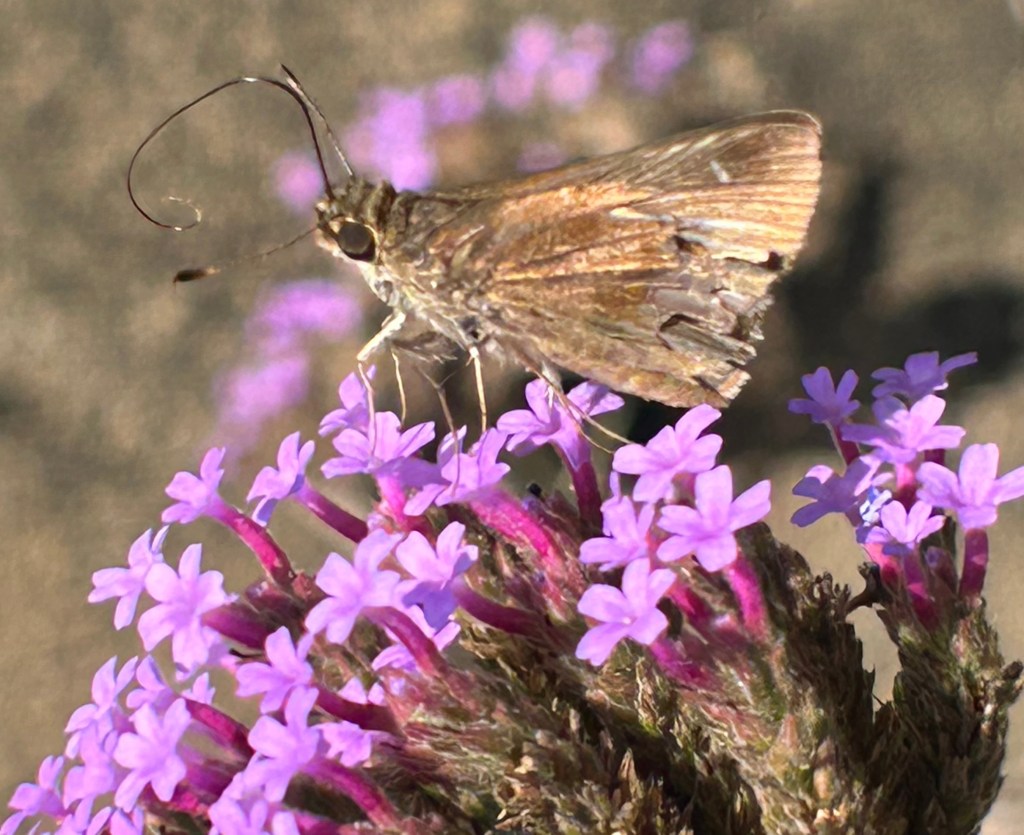
Skipper butterfly on tall verbena flowers
5. Hairstreaks: Eggs That Wait
Hairstreaks take patience to the extreme. Species like the Gray Hairstreak, Juniper Hairstreak, and Mallow Scrub Hairstreak lay eggs on stems in late fall. These eggs survive freezes, wind, and ice storms, then hatch when spring host plants push out new growth.
It is a true ‘wait it out’ strategy — silent, invisible, and extremely effective.
Winter Is Not Empty — It Is Layered
If you zoom out, winter is not lifeless. It is a season of waiting and preparation:
• Eggs resting on stems
• Caterpillars rolled in grasses
• Chrysalises camouflaged on twigs and fences
• Adults tucked under leaves, vines, and shrubs
• Monarchs quietly waiting or passing through
Even when you do not see butterflies, they are still out there, quietly persisting until spring arrives.

Indiangrass is an example of a native grass that can provide habitat and shelter for butterflies.
How You Can Help Winter Butterflies
Supporting these hidden populations is simpler than you think:
• Leave some leaf litter until early spring, especially around known host plants such as asters (hosts for pearl crescent and painted lady caterpillars)
• Grow native grasses as host plants for skipper butterflies: bluestem grasses, sideoats grama, switchgrass and muhly grass
• Keep patches of grasses unmown
• Add evergreen or semi-evergreen shrubs for shelter
• Grow Mexican plum, agarita, or Texas redbud and other early spring nectar sources
Small, intentional choices make winter survival much easier for local butterflies.
To Sum it Up
Winter may look calm on the surface, but butterflies are far from gone. Butterflies are overwintering in clever, almost hidden ways—some flying thousands of miles, others waiting patiently in leaves, bark, or tucked away as tiny eggs.
Butterflies have four main strategies for making it through winter:
Migration, overwintering as adults, sheltering as caterpillars, or waiting out the cold as chrysalises or eggs.
And honestly? It is incredible how many different paths they take to survive. Each species has its own strategy—and these diverse strategies all weave together to create a fluttering show of beauty come springtime. When you protect the wild, slightly messier corners of your garden, you are helping all those unique strategies play out. And when spring returns, you will see the payoff in the form of more wings, more color, and a garden that feels alive again.
This article covers one part of butterfly gardening. The Butterfly Garden Cheat Sheet shows how these elements fit together at a basic level.
Related Guides:
The Complete Guide to Butterfly Gardening: How to Attract, Feed, and Protect Butterflies All Year
When Butterflies Return to Texas and How to Prepare Your Garden
 Butterfly garden paradise
Leave a comment