
A Complete Guide to Keeping Nectar Available January–December in Texas Zone 8
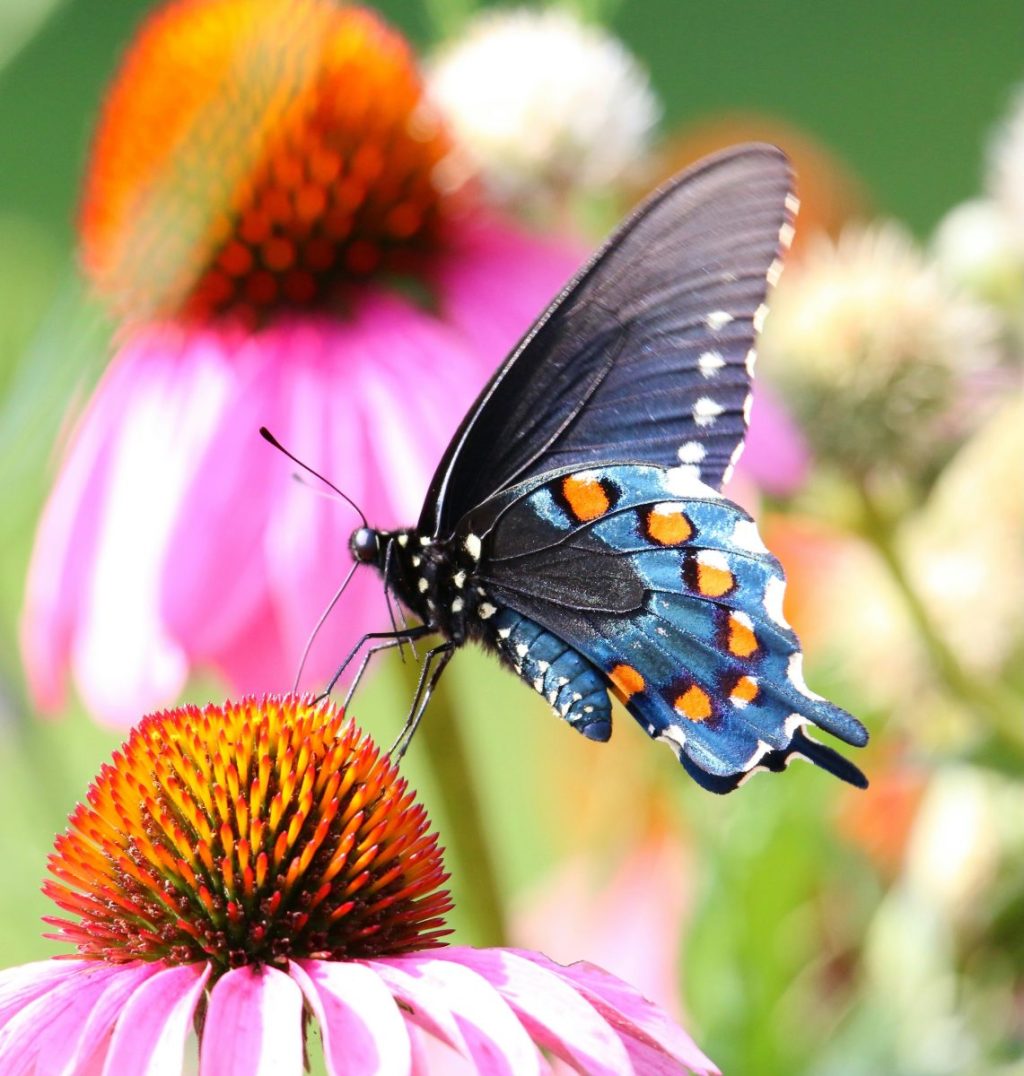
Cover photo: Pipevine swallowtail butterfly feeding on purple coneflower (Echinacea purpurea)
Butterflies don’t just need flowers in spring. They need nectar every single month of the growing season — including the surprise warm spells in January, the crushing heat of August, and the much-needed late-fall flush when monarchs migrate through Texas.
But most gardening guides skip the most important detail:
WHEN Do These Plants Actually Bloom?
Below is your complete month-by-month nectar map for Texas Zone 8, so you can keep butterflies fed all year long — and make your garden one of the most reliable resources in your neighborhood.

Prairie verbena (Glandularia bipinnatifida) a native early spring bloomer that provides nectar for butterflies.
JANUARY – FEBRUARY
Winter: scarce but powerful nectar
Even though it feels like nothing blooms, a few natives start early and give butterflies, bees, and moths the first sugars of the year.
Top Early-Nectar Producers
• Texas Redbud (Cercis canadensis var. texensis)
A crucial nectar tree for the earliest pollinators. Pink blossoms appear long before leaves, offering a burst of spring in late winter.
• Agarita (Mahonia trifoliata)
One of the earliest bloomers in Texas. Tiny yellow blossoms provide nectar during warm spells when butterflies briefly take flight.
• Carolina Jessamine (Gelsemium sempervirens)
Evergreen vine. Bright yellow flowers open as early as February and give creamy-sweet nectar.
• Prairie Verbena (Early bloom)
Some years it wakes up shockingly early and becomes one of the first consistent nectar sources.
Why Winter Nectar Matters
This early energy helps overwintered butterflies (especially swallowtails) break dormancy in better condition and gives bees their first meals of the year.
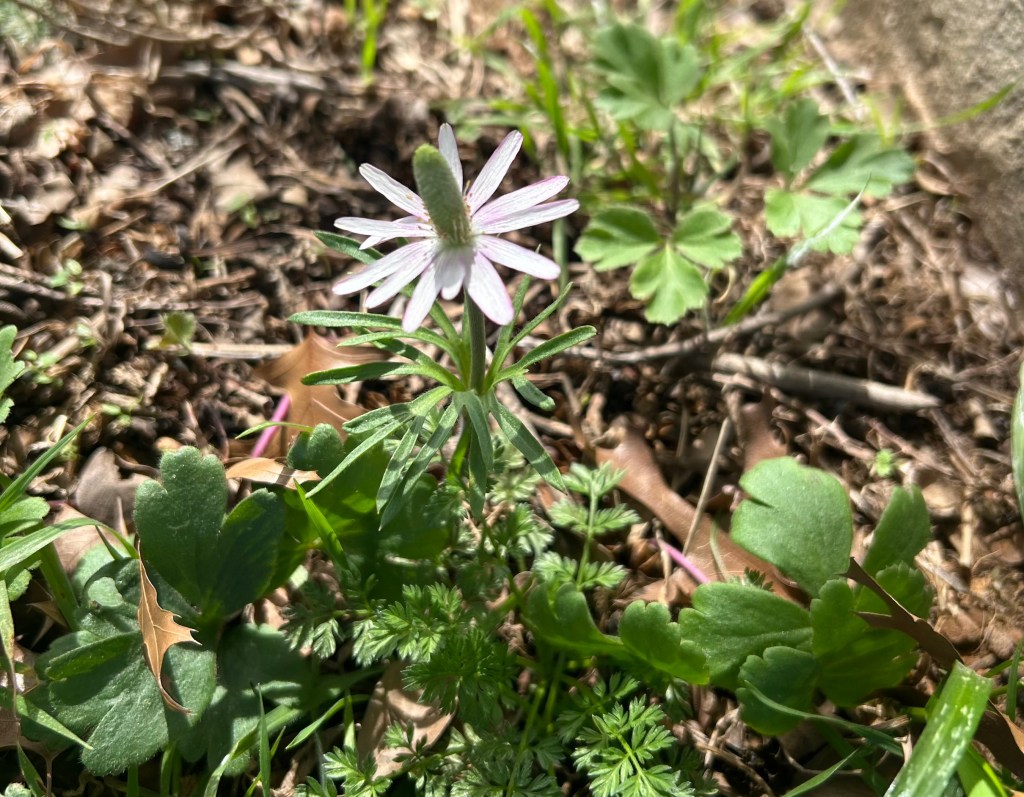
Native to Texas: Ten-petal anemone blooming in early spring. (Anemone berlandieri).
MARCH – APRIL
Spring: the season that sets the tone for the whole year
This is when your nectar foundation should begin — a mix of low-growing flowers, daisies, and early-blooming perennials.
Top Spring Nectar Plants
• Prairie Verbena (Glandularia bipinnatifida)
Heavy spring nectar production; butterflies visit constantly.
• Indian Blanket (Gaillardia pulchella)
Starts early and doesn’t stop blooming until frost. A quintessential Texas powerhouse.
• Winecup (Callirhoe involucrata)
A groundcover that fills gaps between larger plants and blooms reliably in spring.
• Engelmann Daisy
Bright yellow daisies that last for weeks, becoming a favorite nectar source.
• Ten-Petal Anemone
Short-lived bloom but very early.
Early Flowering Shrubs & Vines
• Coral honeysuckle (native, red/orange blooms)
• Agarita (evergreen with yellow flowers)
Plant These Now for Next Spring:
• Milkweed
• Gregg’s Mistflower
• Blackfoot Daisy
• Lantana
• Salvias
These establish roots now and explode next spring.
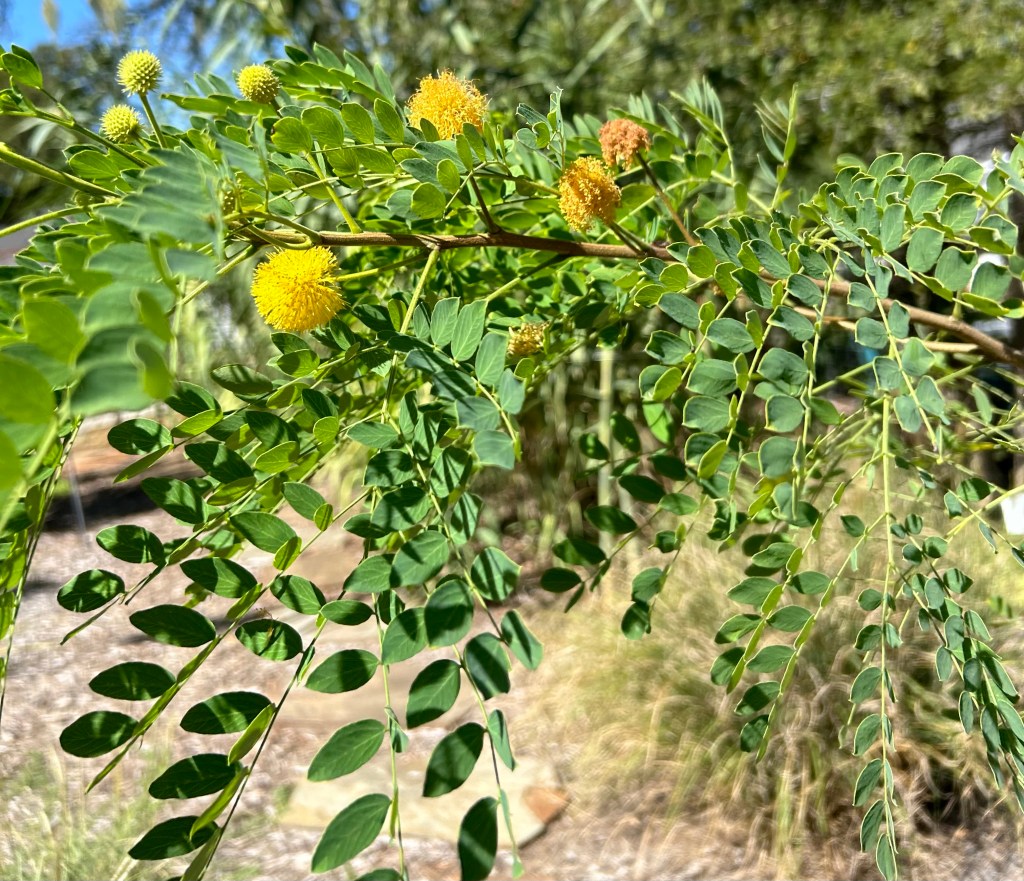
Goldenball leadtree with its yellow puffball flowers begins blooming in May.
MAY – JUNE
Late Spring: nectar in every direction
This is when gardens hit that lush, vibrant phase — and when butterflies start showing up in higher numbers.
Late Spring Nectar All-Stars
• Blackfoot Daisy
Constant bloom, drought tolerant, sweet nectar scent.
• Gaura (Lindheimer’s Beeblossom)
Dances in the breeze; irresistible to swallowtails and skippers.
• Four-nerve Daisy
Heat-proof and long-blooming.
• Purple Coneflower (Echinacea)
A major nectar source, especially for migrating species.
• Standing Cypress
Vertical red flowers also attract hummingbirds.
Excellent Shrubs for May–June
• Buttonbush
One of the top 5 pollinator shrubs in the entire U.S. Produces spherical ‘pom-pom’ nectar balls butterflies swarm.
• Goldenball Leadtree (Leucana retusa)
Fast growing with yellow pom-pom blooms.
• Desert Willow
Loved by hummingbirds & butterflies.
• Rock Rose (Pavonia lasiopetala)
Blooms daily through heat waves.

Mealycup sage (salvia farinacea) keeps blooming in the summer heat and is loved by bees and butterflies (like this silver spotted skipper).
JULY – AUGUST (The Heat Months)
Where most gardens fail — but natives thrive
Texas heat wipes out many nectar plants, but native species are adapted for it.
Top Heat-Tough Nectar Plants
• Gregg’s Mistflower
Queen butterflies’ #1 plant. Explodes with blooms in heat.
• Lantana urticoides (Texas Lantana)
A major nectar source and one of the toughest survivors.
• Zexmenia (Wedelia texana)
Thrives in full, scorching sun. Spreads into soft mounds of yellow blooms.
• Skeletonleaf Goldeneye (Viguiera stenoloba)
Blooms despite drought. A highly underrated butterfly plant.
• Purple Prairie Clover (Dalea purpurea)
Deep-rooted, colorful, and great mid-summer nectar.
• Mealy Blue Sage (Salvia farinacea)
Long bloom window and extremely heat tolerant.
Why Summer Nectar Matters
Butterflies will only stay in your garden if there is summer nectar. Without it, they feed and leave.

Monarch butterfly feeding on frostweed (Verbesina virginica) in fall in Texas.
SEPTEMBER – OCTOBER
Fall migration: the most important nectar window of the year
Texas is a migration funnel. Monarchs need your garden in early fall.
Top Fall Nectar Plants (Critical for Monarchs)
• Frostweed (Verbesina virginica)
The most important monarch nectar plant of the fall. Attracts clouds of butterflies.
• Maximilian Sunflower
Tall, dramatic, full of pollen and nectar.
• Goldenrod (Solidago spp.)
The backbone of fall nectar; supports dozens of species.
• Gayfeather / Blazing Star (Liatris)
Purple spikes full of nectar. Monarchs often stay on a single stem for minutes.
• Gregg’s Mistflower
Peaks again in fall — your garden will hum with activity.
• Native Asters
Late-season, cool-weather nectar.
Texas Peak Migration Window:
Late September → Late October
Your garden may feed thousands of traveling monarchs without you even seeing all of them.
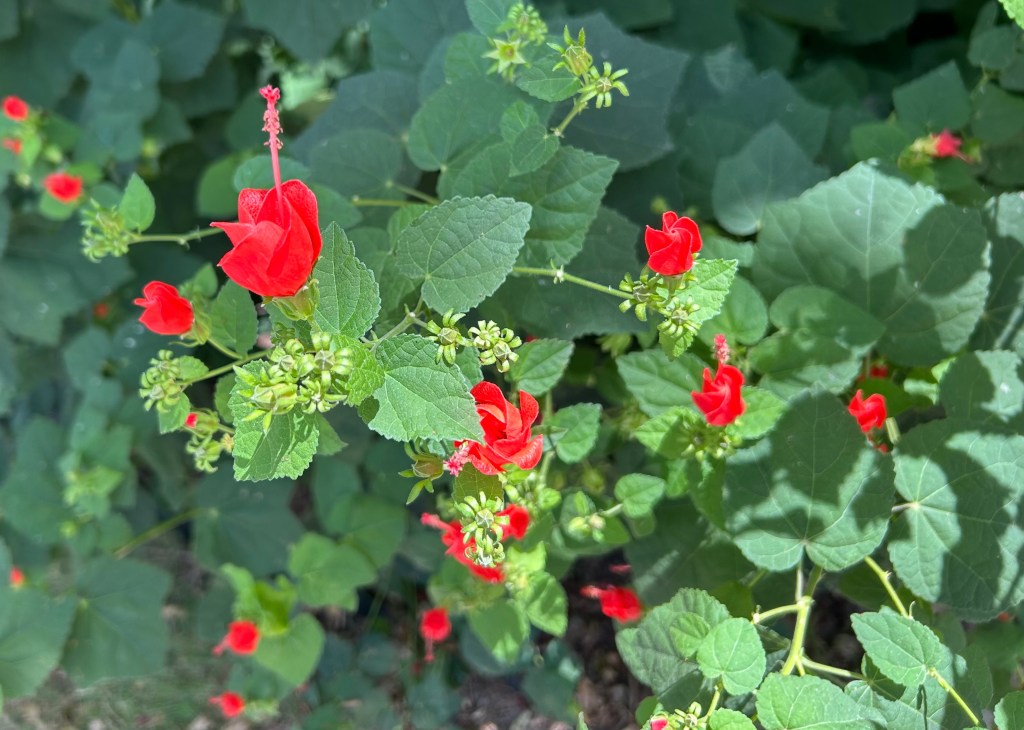
Turk’s cap blooming late into Fall.
NOVEMBER – DECEMBER
Late-fall nectar: small but meaningful
Butterflies slow down in winter, but some stay as late as possible and still come out on warm days.
Top Late-Fall Nectar Producers
• Fall Asters
Another important fall nectar source for butterflies.
• Frostweed (late blooms)
Continues until the first freeze.
• Cowpen Daisy
Extremely dependable, warm-season bloom.
• Turk’s Cap
Nectar & berries for wildlife.
Why Late Nectar Matters
Not every butterfly migrates — some overwinter as adults or late-stage caterpillars.
Even a little nectar helps them survive longer.
HOW TO BUILD A YEAR-ROUND NECTAR GARDEN
A simple strategy for beginners, busy people, or small yards.
Choose 3–4 Spring Bloomers:
• Prairie verbena
• Indian blanket
• Engelmann daisy
• Winecup
Choose 3–4 Heat-Loving Summer Bloomers:
• Gregg’s mistflower
• Lantana
• Zexmenia
• Purple prairie clover
Choose 3–4 Fall Nectar Sources:
• Frostweed
• Goldenrod
• Maximilian sunflower
• Liatris
Add At Least 1 Shrub or Vine:
• Buttonbush
• Coral honeysuckle
• Desert willow
• Texas redbud
This gives you flowers for 10+ months with very little effort!

Giant swallowtail butterfly feeding on nectar from lantana flowers.
Common Problems That Interrupt Nectar (and How to Fix Them)
1. Too Much Shade
Many nectar plants need 6–8+ hours of sun.
Fix: Move shade lovers (mistflower, turk’s cap) to shaded beds and put daisies and coneflowers in open sun.
2. Overwatering
Texas natives prefer deep, infrequent watering.
Fix: Water deeply once a week until established.
3. Not Enough Diversity
Butterflies need shallow, tubular, and composite blooms.
Fix: Plant at least 3 flower shapes.
4. Gaps Between Bloom Periods
Fix: Use this month-by-month guide to plug holes.
Conclusion
Texas butterflies rely on nectar more than anything else you grow — and with this month-by-month guide, you can keep food available January through December.
A garden with steady nectar becomes a migration rest stop, a breeding ground, and an overwintering shelter all at once.
If you are planning or planting this season, the Butterfly Garden Cheat Sheet can help you check that the basic habitat pieces are in place.
Related Guides:
The Complete Guide to Butterfly Gardening: How to Attract, Feed, and Protect Butterflies All Year
The Best Host Plants for Caterpillars in Zone 8
The Ultimate Texas Zone 8 Garden Guide: What to Plant and When
Photo credits: Cover pipevine swallowtail – Paul Crook, Skipper on blue sage – Jeffrey Hamilton
 Butterfly garden paradise
Leave a comment