

Even in the quiet of winter, your butterfly garden is still shaping the spring season. In Texas Zone 8, the choices you make now—what you plant, protect, and prepare—directly determine how many monarchs, swallowtails, gulf fritillaries, and other butterflies find your yard when they first arrive. Winter is not just downtime; it is your secret weapon for a thriving butterfly garden. By following these simple, proven tasks, you can give your garden a head start and ensure butterflies not only visit but also lay eggs, hatch caterpillars, and keep coming back all season long.
1. Inspect and Protect Your Milkweed
Milkweed is the essential host plant for monarchs, and in Zone 8, common native species include:
• Green Milkweed (Asclepias viridis)
• Butterfly Milkweed (Asclepias tuberosa)
• Swamp Milkweed (Asclepias incarnata) for wetter areas
Even if your milkweed is dormant, winter is a good time to check for damage, pests, or signs of disease. Here is what to do:
• Remove dead stems carefully – Cut back old, brittle stalks, but leave crowns intact to avoid harming roots.
• Protect young or potted plants from freezing temperatures – Potted plants have less insulation from the cold. Cover them with frost cloths or sheets when temps dip near 28–29°F, or bring them into an unheated garage or porch if colder.
• Ensure soil drains well – Winter rains plus poor drainage can rot crowns.
Tip: Healthy, protected milkweed crowns are the first thing monarchs notice when they arrive. A little care now can mean a lot of eggs and caterpillars in early spring.
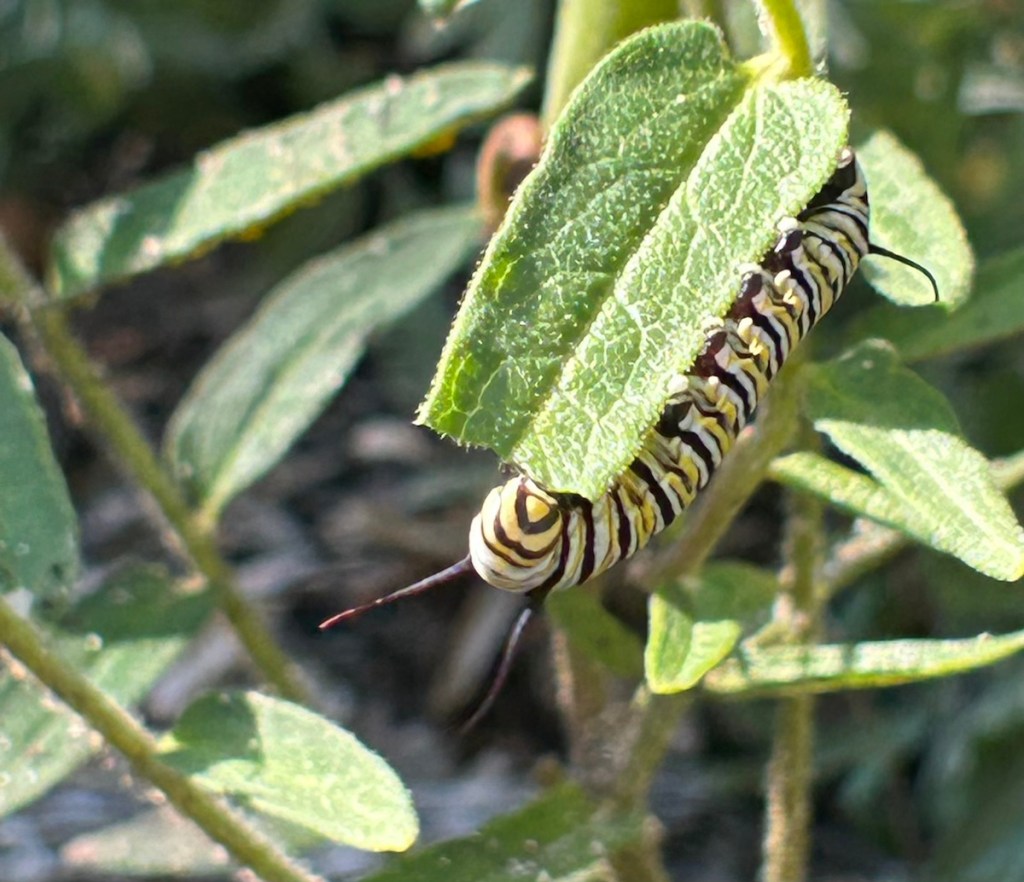
Monarch caterpillar munching down a milkweed leaf in my garden.
See the complete guide to growing healthy milkweed plants for monarchs.
2. Start Early Nectar Plants Indoors or in Sheltered Spots
Butterflies need nectar as soon as they emerge, so planting early-blooming nectar sources now gives you an edge. In Zone 8, consider:
• Blanketflower (Gailliardia species) – bloom early, attract a variety of butterflies
• Drummond Phlox (Phlox drummondii) – blooms in March/April into summer with nectar-rich flowers
• Coreopsis – easy to grow from seed, heat-tolerant, flowers attract butterflies
Steps:
1. a.Start seeds in a bright indoor spot or under grow lights 6-8 weeks before last frost (sow mid-January in Zone 8).
b. Alternatively, sow them in containers outside using a winter sowing method.
2. Harden them off in late winter before planting outdoors.
3. Group them near host plants for convenience and visibility to butterflies.
The earlier your nectar sources are ready, the longer butterflies stay in your yard instead of wandering to neighboring gardens. See the top 12 nectar plants for early spring in Texas.

Gregg’s mistflower trimmed up and ready for spring.
3. Prune and Manage Host Plant Beds
Winter is ideal for tidying your garden without disturbing wintering insects:
• Prune overgrown Passionvine, cut back hops to 6-12 inches, remove old stems and trim Pipevine – these are important host plants for swallowtails and fritillaries.
• Important nectar plants such as lantana can be pruned by cutting back old woody growth to 12-18 inches, and mistflower can be trimmed for bushier growth next year.
• Avoid removing all foliage – some butterflies or eggs may still be present. Leave 10–20% as shelter.
• Clear debris carefully – it reduces pests and improves airflow without disturbing dormant plants.
Proper pruning now encourages strong new growth in early spring, which attracts butterflies and provides healthy leaves for caterpillars.
4. Water Perennials and Host Plants During Dry Winter Periods
Even in winter, Zone 8 can experience dry spells. Healthy soil and roots mean your plants will wake strong and leafy in early spring.
• Water deeply but infrequently if no rain to encourage robust roots.
• Avoid overwatering, which can encourage fungal growth.
• Mulch lightly to conserve moisture and regulate soil temperature, but do not smother crowns.
Strong, hydrated plants are more likely to be noticed by monarchs and other butterflies first.

Gaillardias, also called blanketflower or firewheels, blooming and ready for butterfly visits.
5. Plan Your Early Spring Planting
Think ahead about the sequence of blooms:
• Milkweed rosettes – early visibility for monarchs
• Dill, parsley, and Golden Alexanders – swallowtail host plants
• Passionvine – host for gulf fritillaries
• Early nectar plants – Gaillardias, phlox, prairie verbena
Planning now ensures a continuous supply of host and nectar plants, so your garden is ready when butterflies arrive.
6. Check Soil and Add Nutrients if Needed
Healthy soil = healthy plants = happy butterflies. Winter is perfect for light amendments:
• Add compost, leafmold, or organic matter to milkweed and nectar beds. (DIY Leaf Mold Guide).
• Test pH if unsure; most native Texas milkweed prefers neutral to slightly alkaline soil.
• Native plants do not need strong fertilizers that promote lush foliage but low flower production — you want balanced growth to support both eggs and nectar.
7. Prepare Garden Beds for Early Planting
Even if you are not planting everything now, make beds ready for early spring:
• Remove weeds that compete with host plants.
• Loosen soil to improve drainage and root penetration.
• Leave space for clusters of host plants with nectar nearby — butterflies notice patterns.
Strategic layout makes your yard more ‘visible’ and attractive to arriving butterflies.

When cleaning up your garden keep in mind, some insects may be overwintering in places you do not expect, such as this swallowtail butterfly chrysalis attached to a plant pot.
8. Winter Pest and Disease Checks
Be careful not to assume winter is a safe period:
• Look for aphids, scale, or fungal issues on milkweed crowns and Passionvine just in case.
• Remove infected leaves and dispose of them (do not put in compost).
• Healthy plants in winter = strong early spring growth.
9. Bonus Tip: Consider Protective Mulching
• A light layer of straw or shredded leaves can insulate roots and crowns during brief freezes.
• Avoid heavy mulch directly on the crowns of milkweed or Passionvine — this can trap moisture and cause rot.
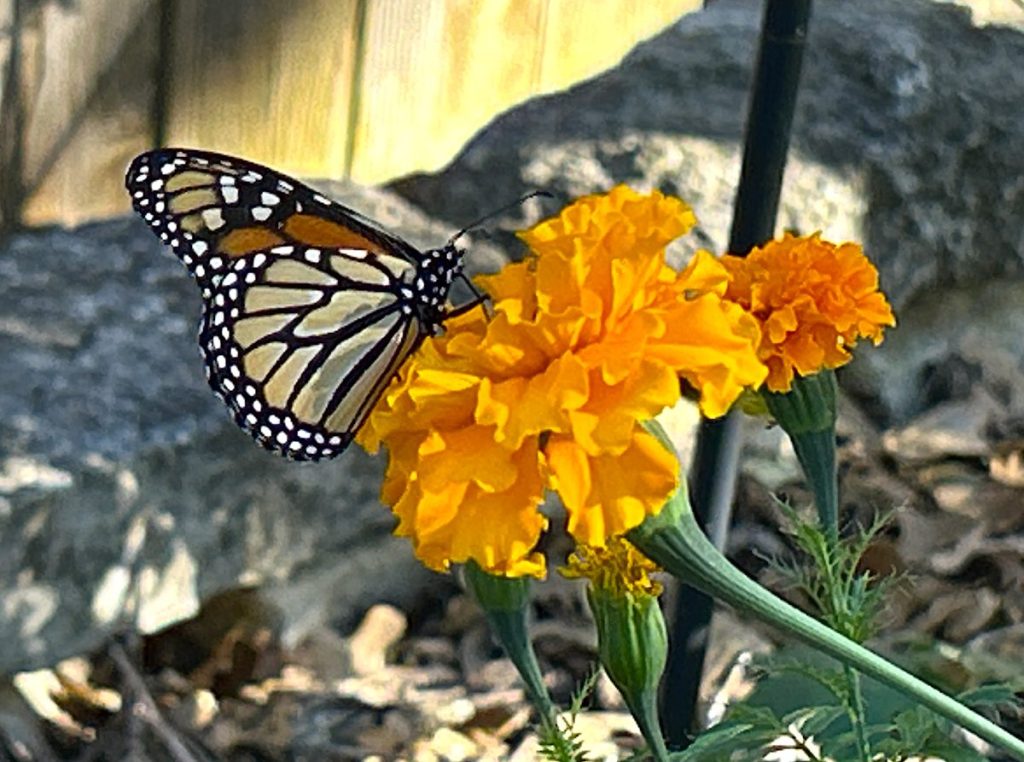
Monarch butterfly feeding on marigold nectar
Winter Work = Spring Success
Butterflies in Zone 8 do not choose where to land randomly — they follow the plants that are ready for them. Winter preparation is your chance to ensure your garden stands out:
• Protected, healthy milkweed and host plants
• Early nectar sources
• Proper pruning, watering, and soil care
By doing these tasks now, you are setting yourself up for a butterfly-rich spring that starts weeks earlier than unprepared yards.
If you are planning or planting this season, the Butterfly Garden Cheat Sheet can help you check that the basic habitat pieces are in place.
Related Guides:
The Complete Guide to Butterfly Gardening: How to Attract, Feed, and Protect Butterflies All Year
 Butterfly garden paradise
Leave a comment