

Winter in Texas does not have to mean a dull, brown garden. With the right selection of native plants, your Zone 8 garden can stay vibrant, attract wildlife, and maintain visual interest all season long. Native plants are naturally adapted to Texas’ hot summers, rocky clay soils, and occasional winter freezes, making them low-maintenance, eco-friendly choices for long-lasting beauty.
In this guide, we will explore evergreen and deciduous shrubs, trees, grasses, groundcovers, and berry-producing plants that can bring life to your garden even during the colder months.
Why Winter Interest Matters in a Texas Garden
Adding winter interest to your garden isn’t just about aesthetics—it is about creating a thriving ecosystem and ensuring your landscape looks appealing year-round.
Benefits for Wildlife
Many native birds, pollinators, and small mammals rely on winter food sources such as berries and seeds. By planting native species, you provide essential sustenance and shelter for wildlife during a season when resources are scarce. (Learn how to help overwintering bees and butterflies.)
Visual Appeal During the Dormant Season
Most gardeners focus on spring and summer blooms, but strategic planting can maintain color, texture, and structure in your garden even when many plants are dormant.
Layered Texture for Design
Winter is the perfect time to showcase your garden’s structural elements. Evergreen leaves, textured bark, and ornamental grasses can add depth and interest to your landscape when flowers are not in bloom.

Texas mountain laurel or Mescal remains evergreen in winter and produces pretty purple blooms in Spring.
Evergreen Shrubs & Trees for Winter Structure
Evergreens are a backbone of a winter garden. They provide constant foliage, texture, and sometimes colorful berries to brighten your landscape.
Yaupon Holly (Ilex vomitoria)
This Texas native shrub produces vibrant red berries in winter while maintaining glossy, dark green leaves. It’s highly adaptable to Zone 8b conditions, tolerates drought, and makes a perfect hedge or specimen plant. Yaupon Holly also attracts birds, making it both beautiful and functional.
Texas Mountain Laurel (Sophora secundiflora)
Famous for its intoxicating grape-like fragrance, Texas Mountain Laurel is a slow-growing evergreen small tree or large shrub. Its dark green leaves maintain a rich backdrop in the garden throughout winter. While blooms appear in spring, the plant’s structure and foliage make it a winter standout.
Dwarf Palmetto (Sabal minor)
This hardy palm-like shrub thrives in Texas gardens with minimal care. Its large, fan-shaped evergreen leaves add dramatic texture and vertical interest to your winter landscape. Dwarf Palmetto is especially useful for southern or shaded areas where other shrubs might struggle.
American Beautyberry (Callicarpa americana)
Known for its clusters of bright purple berries, this deciduous shrub provides vibrant winter color. Birds flock to the berries, and the plant’s arching form adds visual movement and elegance to a winter garden.

Red cedar is an evergreen tree with blue cones that appear like berries that birds enjoy to eat.
Deciduous Shrubs and Trees with Winter Appeal
Even plants that lose their leaves can contribute to winter interest through form, bark, and berries.
Redbud (Cercis canadensis)
While Redbuds are best known for their spring flowers, their distinctive branching pattern adds sculptural appeal in winter. Mature trees display interesting bark and a broad canopy that complements other garden elements.
Blackhaw Viburnum (Viburnum rufidulum)
This shrub produces dark blue-black berries in winter that attract birds. Its multi-stemmed structure and rich bark provide a pleasing contrast to evergreen neighbors, enhancing overall garden texture.
Eastern Red Cedar (Juniperus virginiana)
A versatile evergreen tree, Eastern Red Cedar offers dense foliage that provides shelter for birds and wildlife. Its blue-green needles and red berry-like cones add subtle color and structure to a winter garden.
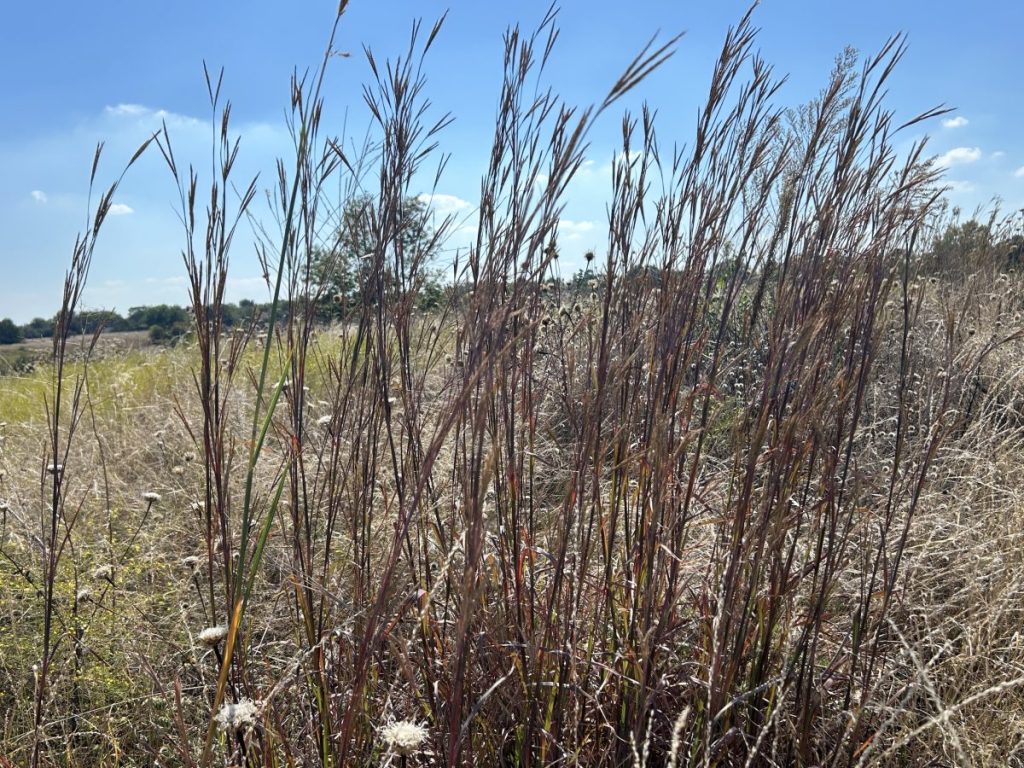
Big bluestem is a native tallgrass that adds seasonal interest and has value for wildlife.
Native Grasses for Winter Texture
Grasses are excellent for adding movement, color, and texture during the dormant season. They require minimal maintenance and can anchor garden design with natural form.
Little Bluestem (Schizachyrium scoparium)
This grass turns a beautiful reddish-bronze in winter, providing contrast against green shrubs or bare garden beds. Its fine texture and upright growth habit create vertical interest and gentle sway in the wind.
Big Bluestem (Andropogon gerardii)
Big Bluestem’s tall, golden seed heads maintain winter appeal while providing seeds for wildlife. Its strong, arching form adds dimension and structure to large beds or prairie-style gardens.
Switchgrass (Panicum virgatum)
Switchgrass is a versatile native grass with soft, airy seed heads that move elegantly in the wind. Winter coloration ranges from golden tan to copper, adding warmth to cooler garden palettes.
See also: Texas Native Grasses That Support Butterflies (and Why They Matter More Than You Think) to learn about the best native grasses to grow for butterflies and how they support them.
Groundcovers and Perennials That Last Through Winter
Low-growing plants and perennials can fill in garden beds, prevent erosion, and add winter greenery.
Green-and-Gold (Chrysogonum virginianum)
A tough, evergreen groundcover that spreads naturally, Green-and-Gold maintains lush green foliage in winter and adds subtle yellow flowers in spring. It’s drought-tolerant and excellent for slopes or shaded areas.
Salvia Species (S. greggii, S. farinacea)
Many native Salvias bloom sporadically through mild Texas winters, offering nectar for pollinators. Their evergreen leaves and compact form make them useful for borders, rock gardens, or mass plantings.
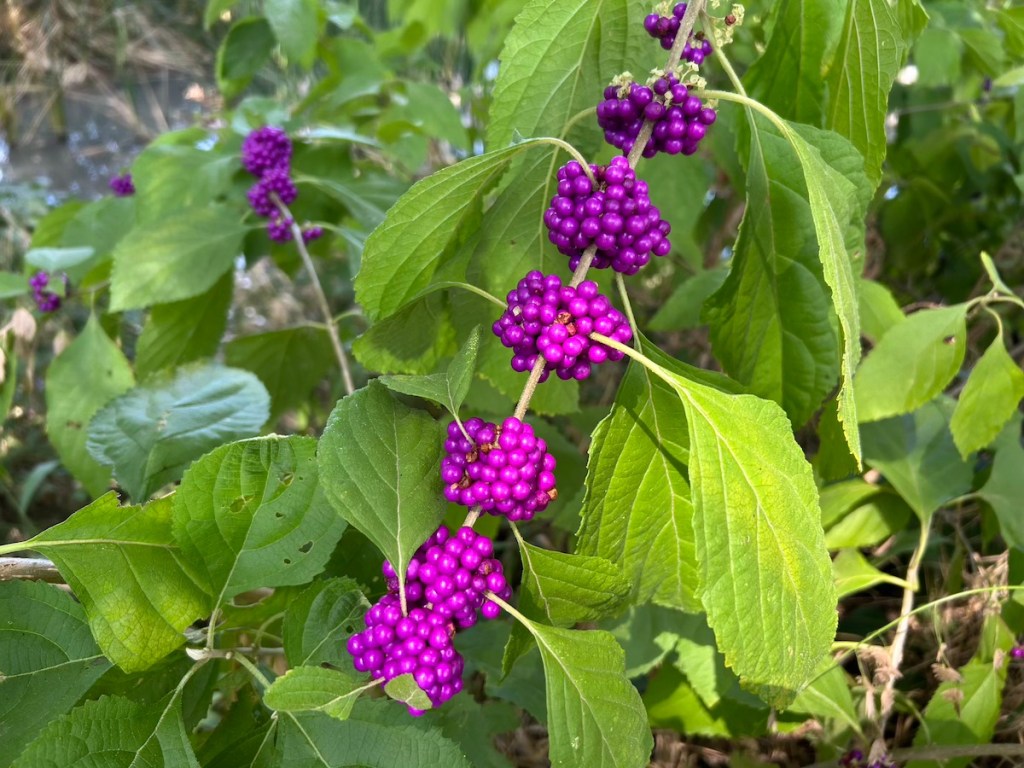
American beautyberry shrub with its attractive purple berries and foliage.
Berry-Producing Plants for Wildlife
Berries are not only visually striking; they provide critical winter food for birds and small mammals. Incorporating several berry-bearing natives ensures continuous color and wildlife support.
• Beautyberry
Vibrant purple clusters that attract birds.
• Yaupon Holly
Evergreen shrub with red berries for winter interest.
• Possumhaw (Ilex decidua)
Deciduous holly with bare branches in winter adorned with red berries.
• Elderberry (Sambucus canadensis)
Late fall/winter berries that provide nutrition for wildlife and can be used for jams or syrups.
Tips for Designing a Winter Garden
Winter garden design is about combining structure, color, and wildlife value. Here are expert tips for creating a compelling winter landscape in Zone 8:
1. Mix Textures
Combine evergreen and deciduous plants with native grasses to create layered visual interest.
2. Include Berry-Producing Plants
Strategically plant shrubs that bear berries to attract birds and provide focal points.
3. Highlight Branching and Form
When leaves are gone, branch patterns and bark become primary visual elements.
4. Plan for Early Spring Blooms
Include bulbs and early-flowering natives such as Texas Bluebonnets, Golden Groundsel, or prairie wildflowers to transition smoothly from winter to spring.

Colorful Blackhaw viburnum leaves with blue berries.
Final Thoughts
A Texas garden does not have to hibernate in winter. By choosing the right native plants, you can maintain year-round beauty, provide food and shelter for wildlife, and enjoy a textured, vibrant landscape even during the colder months. From evergreen shrubs like Yaupon Holly and Texas Mountain Laurel to deciduous treasures like Redbud and Blackhaw Viburnum, and from ornamental grasses to berry-producing groundcovers, your Zone 8 garden can be a dynamic, living space throughout the year.
This article covers one part of butterfly gardening. The Butterfly Garden Cheat Sheet shows how these elements fit together at a basic level.
Related Guides:
The Complete Guide to Butterfly Gardening: How to Attract, Feed, and Protect Butterflies All Year
The Ultimate Texas Zone 8 Garden Guide: What to Plant and When
Where Do Butterflies Go In Winter?
Photo credit: cover – Yaupon holly – Gualberto Valderrama
 Butterfly garden paradise
Leave a comment