

Cover photo: large prickly pear cactus thriving even in the intense sun.
Summer in Texas can be brutal. Temperatures soar past 100°F, sun beats down relentlessly, and even the hardiest plants can struggle to survive. For gardeners trying to attract butterflies, extreme heat can feel like an impossible obstacle: nectar plants wilt, host plants stop growing, and caterpillars may disappear entirely. But with the right strategies, you can keep your butterfly garden thriving, even during the hottest months in Zone 8.
This guide will walk you through the best heat-tolerant nectar plants and host plants, watering and soil strategies, mulching and shade tactics, and summer rescue techniques. By the end, you will know exactly how to keep your butterfly plants alive—and maintain a garden that butterflies actually use—even during the peak Texas heat.
1. Understanding How Heat Affects Butterfly Plants
Butterflies need more than just flowers—they rely on a functioning ecosystem. Extreme heat affects both the plants and the butterflies themselves:
• Nectar plants can stop producing blooms or collapse under stress, leaving butterflies with no food.
• Host plants (milkweed, passionvine, fennel) may go dormant or develop scorched leaves, which impacts caterpillar survival.
• Pollinator behavior changes: butterflies may avoid gardens during midday heat, reducing natural pollination.
Just knowing these effects helps you plan for success. The key is plant selection, microclimates, and summer maintenance.
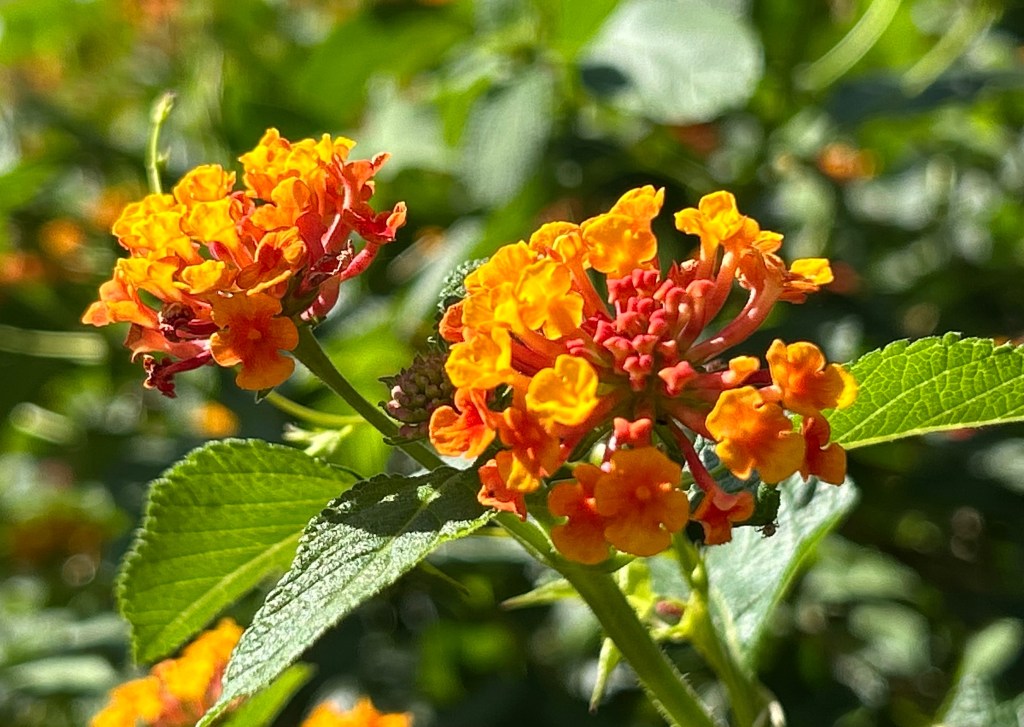
Native Texas lantana (urticoides) is a heat loving plant.
2. Choose Heat-Tolerant Nectar Plants
Not all flowering plants survive 100°F+ conditions. In Zone 8, stick with native or adapted species that can take heat and still attract butterflies:
Spring-Summer Bloomers
• Gregg’s mistflower (Conoclinium greggii) – blooms early summer, thrives in partial shade, drought-tolerant.
• Mealy blue sage (Salvia farinacea) – attracts hummingbirds and butterflies, heat-hardy.
• Lantana urticoides – classic butterfly magnet, tolerates full sun and dry soil.
• Desert willow (Chilopsis linearis) – tree or large shrub, blooms summer, heat and drought tolerant.
• Coneflower (Echinacea species) – tough perennial, tolerates heat and drought once established.
Tips for Nectar Plants in Extreme Heat:
• Choose plants with deep root systems to survive periods without rain.
• Native plants often have the natural edge in handling heat and drought.
• Plant in clusters rather than single specimens—butterflies prefer patches of color.
• Deadhead spent flowers to encourage continuous bloom.
• Mulch around roots to conserve moisture.

Common rue (graveolens) is a heat-tolerant mediterranean herb and a host plant for the giant swallowtail butterfly. Learn more about the best host plants for caterpillars in Zone 8 here.
3. Choose Heat-Tolerant Host Plants
Host plants are the foundation of your butterfly garden—they give caterpillars food so they can mature into butterflies. Some heat-tolerant host plants for Zone 8 include:
Milkweed Species
• Antelope-horn milkweed (Asclepias asperula) – extremely drought and heat tolerant.
• Green milkweed (Asclepias viridis) – survives in rocky clay, thrives in full sun.
• Zizotes milkweed (Asclepias oenotheroides) – small, bushy, and ideal for pathways.
Other Host Plants
• Passionvine (Passiflora incarnata) – excellent for Gulf fritillaries, tolerates heat with some afternoon shade.
• Fennel (Foeniculum vulgare) – grows quickly, provides caterpillar food, tolerates heat once established.
• Prairie parsley (Polytainia nuttalli) – native biennial, supports swallowtail larvae, thrives even in heat.
Tips for Host Plants in Heat:
• Plant milkweed in full sun with well-drained soil.
• Water deeply only when necessary; shallow watering encourages weak roots.
• Leave some leaves even if scorched—they still provide food for caterpillars.

See this guide on watering native plants the right way.
4. Watering Strategies for Extreme Texas Heat
Watering correctly is critical. Overwatering in heat can harm plants more than it helps. Follow these rules:
1. Deep, infrequent watering – water until the soil is soaked 6–8 inches deep.
2. Morning watering – reduces evaporation and prevents fungal issues.
3. Avoid overhead watering – wet leaves in extreme sun can scorch plants.
4. Use drip irrigation or soaker hoses – keeps roots hydrated without wetting foliage.
5. Check soil before watering – stick your finger 2–3 inches in; only water if dry.
5. Mulching and Soil Preparation
Mulch keeps roots cool, retains moisture, and reduces plant stress:
• Apply 2–4 inches of organic mulch (shredded leaves, pine bark, or compost) around plants.
• Leave a small gap near stems to prevent rot.
• In clay soil, amend with coarse sand or expanded shale to improve drainage.
• For raised beds, a mix of compost, topsoil, and decomposed granite works well for drainage and fertility.
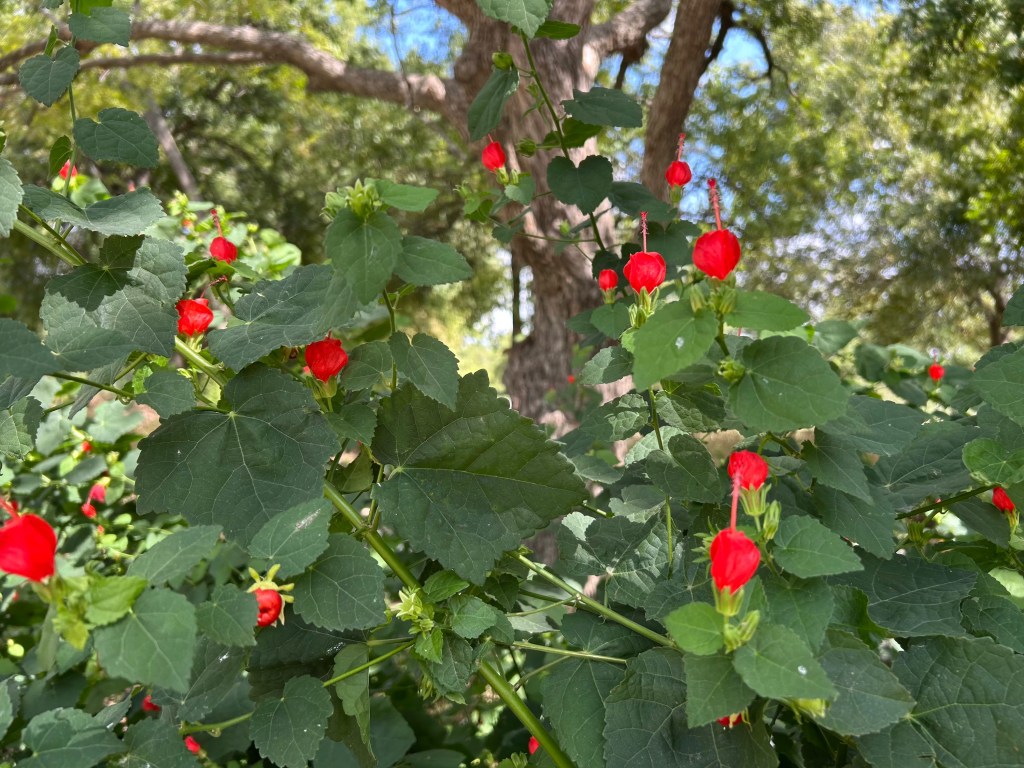
Many Texas plants benefit from at least part shade, such as this native Turk’s cap thriving under a tree.
6. Shade and Microclimate Management
Even heat-tolerant plants benefit from partial shade during the hottest hours:
• Plant taller shrubs or trees on the west side to shield smaller plants from afternoon sun.
• Use temporary shade cloth for small, young plants during heatwaves.
• Position stones or logs to create sun and shade pockets for both plants and butterflies.
Microclimates—slightly cooler spots created by rocks, mulch, or dense foliage—can save plants during consecutive 100°F+ days.
7. Rescue Tactics During Heatwaves
Even with planning, some heat waves may stress plants. Here is how to rescue them:
• Pinch back flowers that have wilted completely to redirect energy to roots.
• Water deeply at sunrise and mulch immediately afterward.
• Transplant to temporary shade if possible (potted milkweed or lantana).
• Check for pests like aphids or spider mites, which thrive on heat-stressed plants.
• Do not fertilize heavily—fertilizer encourages growth that may burn in extreme sun.
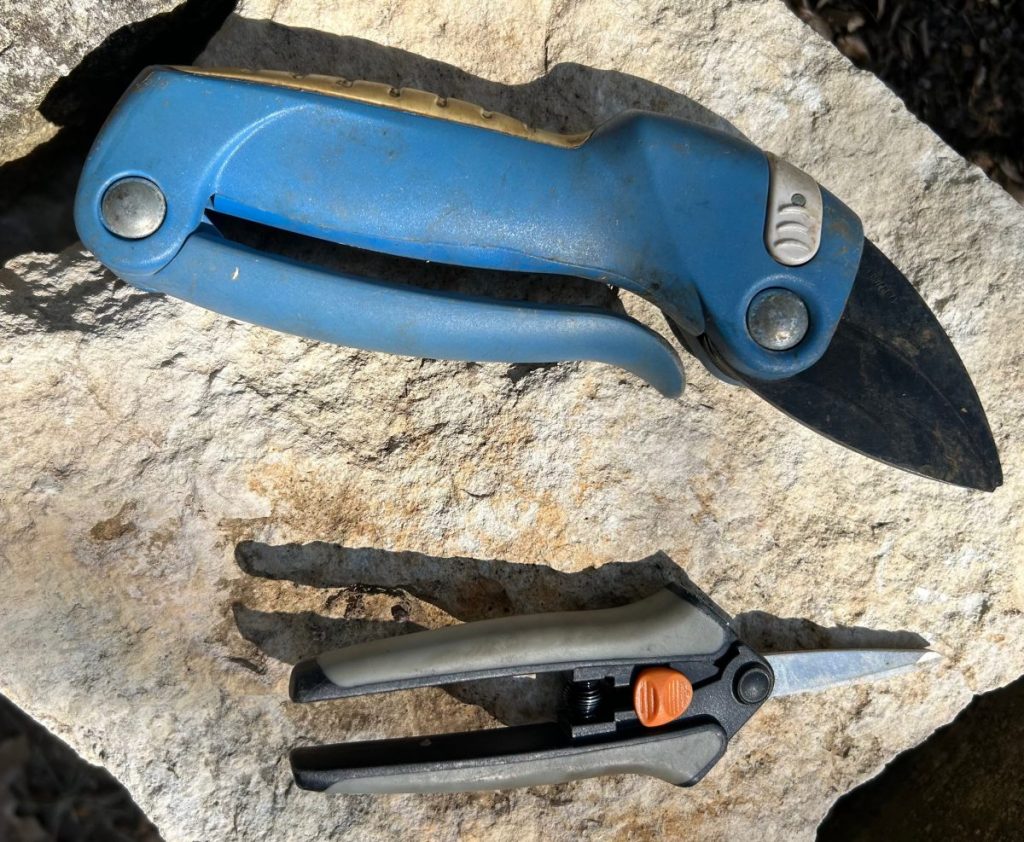
Pruning plants well before the heat arrives can reduce stress during peak summer temperatures.
8. Seasonal Maintenance Tips
• Early summer: Prune spent blooms, check irrigation, apply mulch if missing.
• Mid-summer: Monitor for leaf scorching; use shade or temporary watering as needed.
• Late summer/fall: Reduce watering to help plants prepare for dormancy, collect seeds for next year, keep host plants for caterpillars.
9. Companion Planting for Heat Survival
Planting certain combinations helps reduce stress:
• Mix deep-rooted perennials with shallow annuals to reduce competition.
• Include native grasses like little bluestem or sideoats grama for shade, structure, and butterfly resting areas.
• Aromatic herbs like rosemary, lemon beebalm (Monarda citriodora), and Mexican mint marigold deter pests and thrive in heat.
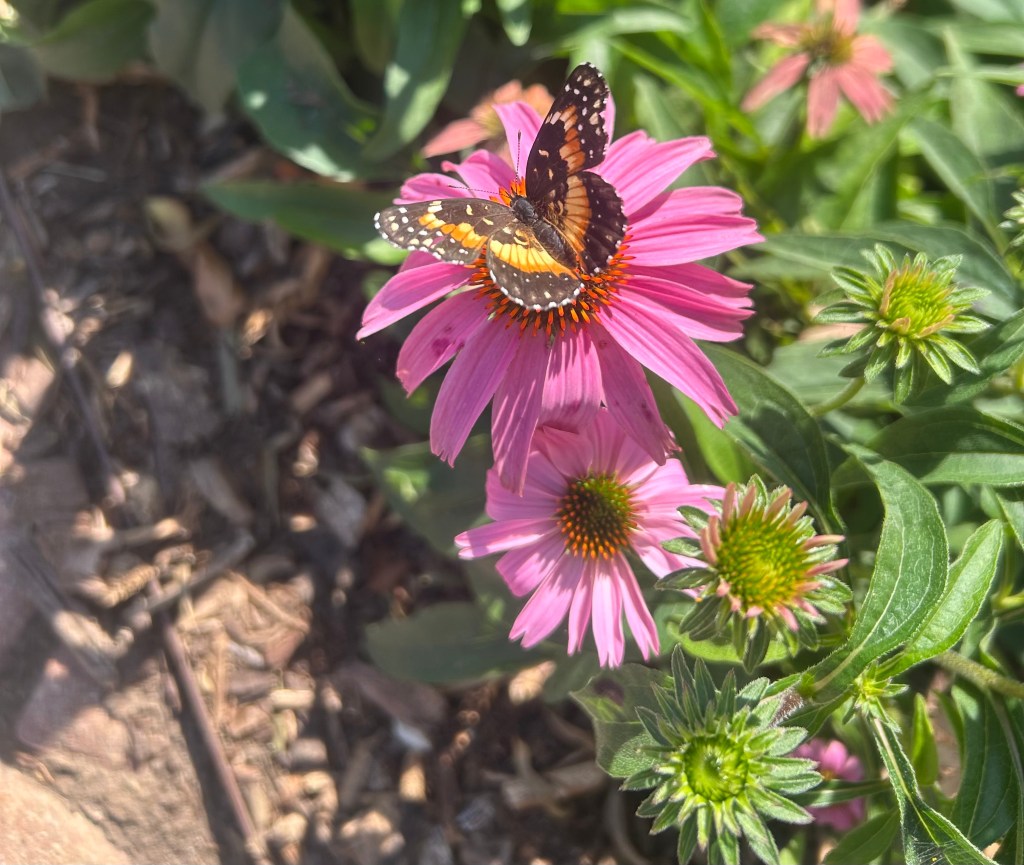
Coneflower (Echinacea purpurea) drawing in butterflies even during the summer heat. (Bordered patch butterfly shown).
10. Key Takeaways for Heat-Surviving Butterfly Gardens
1. Select heat-tolerant nectar and host plants.
2. Water deeply, infrequently, and in the morning.
3. Mulch generously to protect roots and retain moisture.
4. Provide partial shade or microclimates.
5. Monitor plants for stress and take early rescue action.
6. Maintain habitat structure—grasses, logs, and stones provide temperature buffers.
7. Plan for continuous bloom from spring to fall to feed butterflies year-round.
By designing with heat in mind, you can maintain a thriving butterfly garden even in the harshest Texas summers. The combination of native nectar plants, host plants, proper watering, mulching, and microclimate management will make your garden a dependable oasis for butterflies—and a joy for you.
Conclusion: Keep Butterflies Coming Despite the Heat
Extreme Texas heat doesn’t have to mean a dead garden. With careful plant selection, watering strategy, shade and mulch management, and summer rescue tactics, your butterfly plants will not just survive—they will flourish. Your yard can become a reliable butterfly oasis through the hottest months, supporting adult butterflies, caterpillars, and even pollinating insects.
Even in Zone 8, with rocky clay soil and long dry spells, a little planning can make your butterfly garden a summer sanctuary.
This article covers one part of butterfly gardening. The Butterfly Garden Cheat Sheet shows how these elements fit together at a basic level.
Related Guides:
The Complete Guide to Butterfly Gardening: How to Attract, Feed, and Protect Butterflies All Year
The Ultimate Texas Zone 8 Garden Guide: What to Plant and When
 Butterfly garden paradise
Leave a comment