
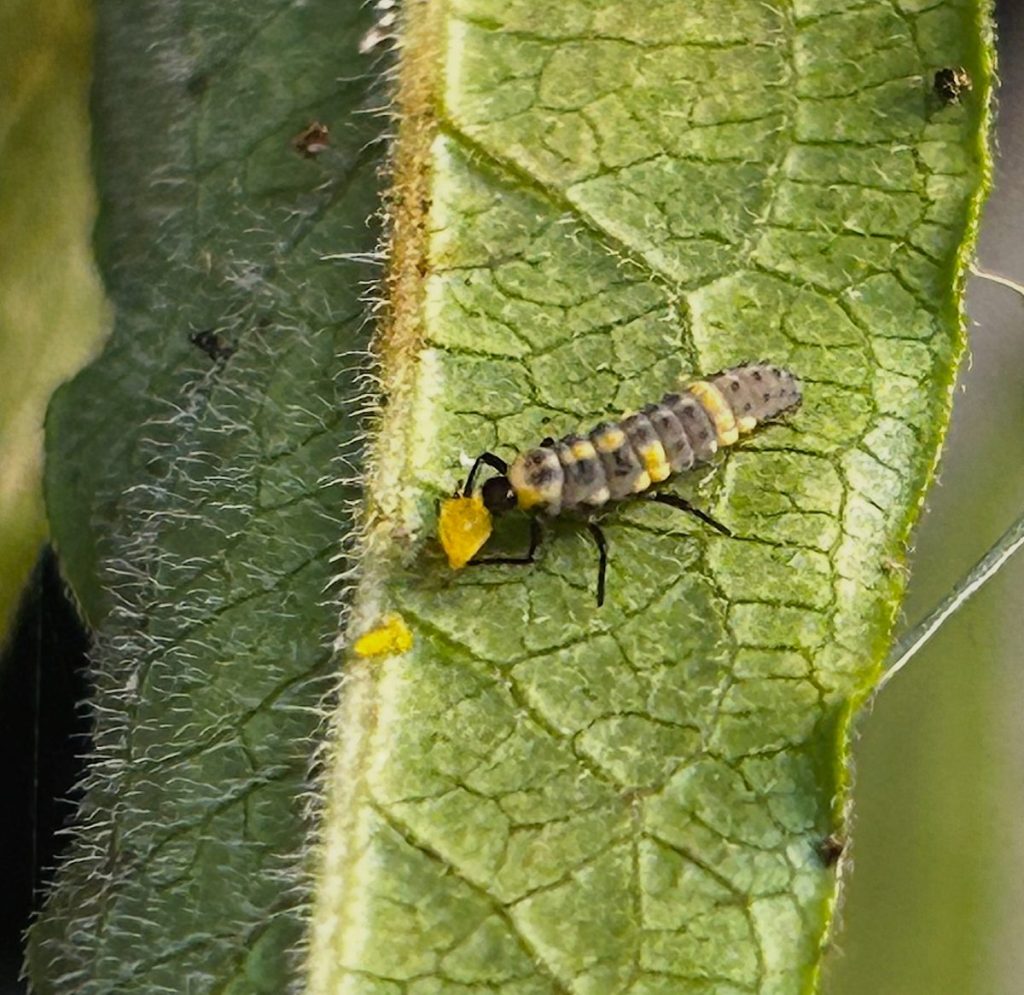
Cover photo: Ladybird beetle larvae love to eat oleander aphids and are an example of nature’s pest control.
A Better Way to Protect Your Garden
If you have ever battled aphids on milkweed, spider mites on hibiscus, or armyworms mowing down fresh growth overnight, you know how quickly garden pests can turn a healthy landscape into a discouraging mess. Most new gardeners reach for pesticides first—but that approach often backfires. Chemicals can kill beneficial insects, harm pollinators, contaminate soil, and create pesticide-resistant pests over time.
Integrated Pest Management (IPM) offers a smarter, more sustainable, and more effective way to protect your garden. Instead of reacting to problems with chemicals, IPM teaches you how to prevent issues, monitor your plants, and use targeted solutions only when necessary. It is the gold standard for organic gardening, ecological gardening, and pollinator-friendly landscapes.
In this guide, you will learn exactly how to practice IPM in a Texas Zone 8 garden, step by step, with practical examples, seasonal tips, and specific tools that make pest control manageable and low-stress.

In IPM, chemical control, such as this neem oil, is used only after other management techniques fail.
What Is Integrated Pest Management?
Integrated Pest Management (IPM) is an approach to controlling pests using a combination of prevention, monitoring, identification, and targeted intervention. It focuses on minimal harm to beneficial insects, wildlife, soil life, and the environment.
IPM is based on four main pillars:
1. Prevention – Healthy gardens are the least pest-prone.
2. Monitoring – You catch problems early before they explode.
3. Identification – Knowing the pest means using the right strategy.
4. Control – Using the least harmful method that will actually work.
IPM is not anti-pesticide; it is smart pesticide use. Chemicals are always the last resort—not the first reaction.
1. Prevention: Build a Garden Pests Do Not Want to Live In
Prevention is the heart of IPM. When your garden is well-designed and plants are thriving, pests struggle to get a foothold.
Healthy Soil = Fewer Pests
Soil rich in organic matter helps plants resist damage naturally.
• Add compost every season.
• Mulch to keep moisture stable.
• Avoid chemical fertilizers—they create weak, pest-prone growth.
• Use raised beds or mounds to prevent waterlogging.
See the full guide on building healthy soil for your garden.
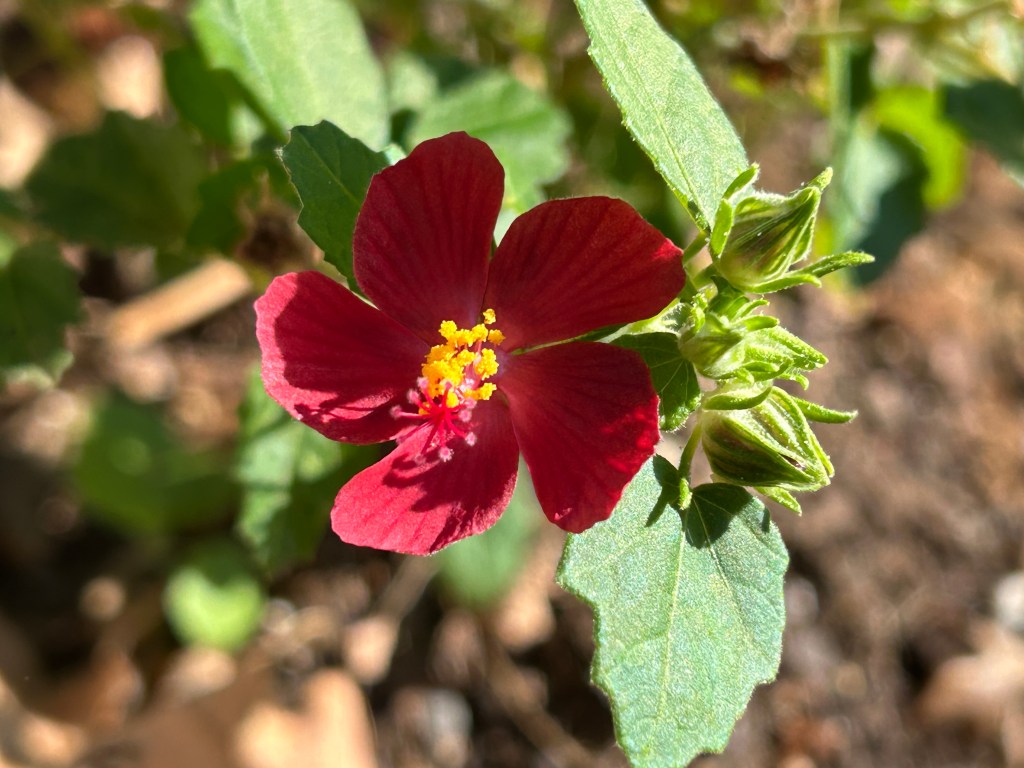
I’ve never had good luck with non-native roses. But I’ve had no problems with this native rock rose (Pavonia lasiopetala).
Choose the Right Plants
Plants suited to Texas heat and drought are naturally more resistant and less prone to pests. Native species adapted to the local climate naturally thrive here with less fuss than exotics or ornamentals. Plus, they benefit the insects, soil and wildlife that already live here. Learn why native plants are preferable to nonnatives, especially for pollinators.
Examples of tough, resilient Texas-native perennials:
• Autumn sage (Salvia greggii)
• Lantana
• Gregg’s mistflower
• Texas-native milkweed species
• Texas sage or cenizo
• Coreopsis
• Gaillardia or Blanket Flower
If your plants struggle every year, they may simply be the wrong species for the local climate.
Plant Diversity = Natural Pest Balance
Monocultures (planting the same species over a large area) attract pests. Mixed plantings confuse and reduce pest populations.
• Add herbs among ornamentals (basil, thyme, dill, parsley).
• Combine heights—groundcovers, perennials, shrubs.
• Use interplanting (ex. marigolds near tomatoes, dill near roses).
Water Smart
Overwatered plants are weak and soft—they can quickly become pest magnets.
• Water deeply but infrequently.
• Water at the base, not overhead.
• Use drip or soaker hoses when possible.
The complete guide to watering native plants correctly can be found here.

Marigolds interplanted with kale as a pest deterrent.
2. Monitoring: Catch Problems Early
IPM only works when you know what is happening in your garden.
How to Monitor Effectively
Check your plants 2–3 times a week for:
• Chewed leaves
• Sticky residue (honeydew)
• Discoloration or curling
• Webbing
• Clusters of soft-bodied insects
• Holes in stems or buds
Use Simple Tools
• A hand lens (10x) for tiny pests
• A phone flashlight to check undersides of leaves
• Yellow sticky traps to monitor flying pests
• A notebook or garden app to track outbreaks
Know the Difference Between Damage and Decline
Some damage is normal and harmless. Examples:
• A few holes from grasshoppers
• Cosmetic leaf spots
• Natural seasonal yellowing
IPM teaches you: not all damage needs intervention.

This assassin bug is an example of a beneficial insect that hunts aphids and other bugs for prey. Just do not touch them as they can bite.
3. Identification: Know Your Enemy and Your Allies
Before treating anything, you must identify the pest correctly.
The Big Rule of IPM:
Never treat a pest you have not yet confidently identified.
Misidentification can lead to:
• Killing beneficial insects
• Worsening the pest problem
• Wasting money and time
Common Texas Garden Pests
• Aphids
• Spider mites
• Whiteflies
• Cabbageworms
• Leaf-footed bugs
• Fire ants
• Bagworms
• Wasps
Beneficial Insects to Protect
• Ladybugs
• Lacewings
• Parasitic wasps
• Assassin bugs
• Hoverflies
• Dragonflies
• Tachinid flies
• Mantids
If you spray first and ask questions later, you risk wiping out the very insects that would’ve solved the problem for you.
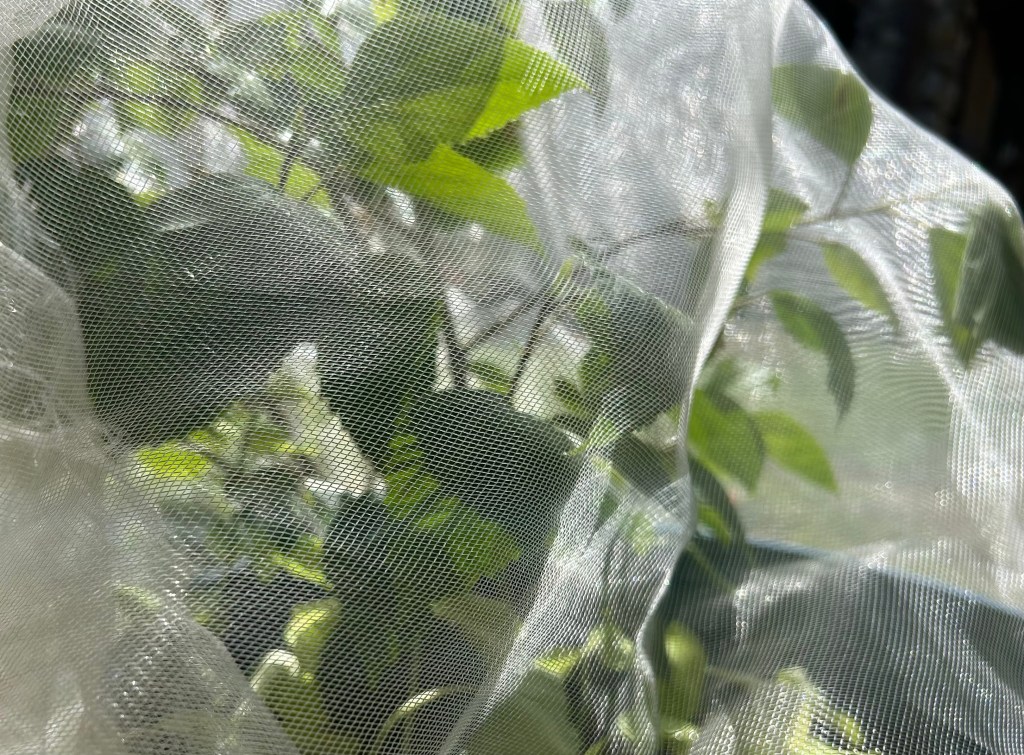
Physical barriers like netting can be used for vegetables and ornamentals.
4. Control Methods: Always Least Harmful to Most Effective
After prevention, monitoring, and identification, only then do you act. IPM control tools move from gentle → strong.
Level 1: Physical & Mechanical Controls
These methods are safe, cheap, and effective:
• Hand-picking caterpillars and beetles
• Blasting aphids with a hose
• Removing heavily infested leaves
• Using row covers on vegetables
• Pruning out mealybug clusters
Often, these fix the problem alone.
Level 2: Cultural Controls
Changing garden environment to make it less hospitable:
• Improving airflow (prune dense plants)
• Reducing watering
• Removing diseased plant debris
• Switching to drip irrigation
• Rotating crops
Level 3: Biological Controls
Using beneficial organisms to reduce pests:
• Releasing ladybugs or lacewings
• Encouraging wasps with nectar-rich flowers
• Applying Bacillus thuringiensis (Bt) for caterpillars
• Applying nematodes for soil-borne pests
Level 4: Chemical Controls (Last Resort)
If everything else fails, use the least toxic option first:
• Insecticidal soap
• Horticultural oil
• Neem oil
• Spinosad
Avoid broad-spectrum chemicals like permethrin, bifenthrin, and imidacloprid in pollinator gardens. They kill bees, butterflies, larvae, and beneficial insects.
Integrated Pest Management Implementation Table
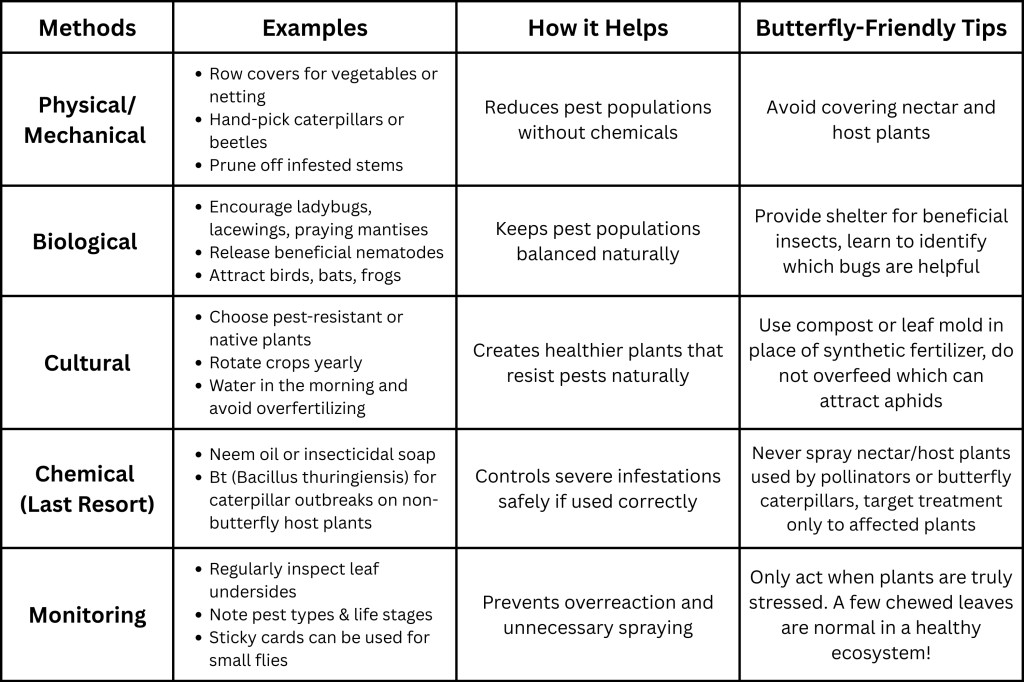
Real Texas Pest Problems and IPM Solutions:
Example 1: Aphids on Milkweed
• Blast with hose and scrape them off (physical)
• Trim worst stems (cultural)
• Wait for ladybugs (biological)
• Only if still bad → insecticidal soap
Example 2: Spider Mites on Tropicals in Summer
• Increase water + humidity
• Rinse undersides of leaves
• Improve airflow
• Apply horticultural oil
Example 3: Bagworms on Shrubs
• Hand-pick bags
• Predatory wasps help naturally
• Spray Bt if larvae are active
Example 4: Fireants (compete against native ants)
• Use baits around mounds to kill colonies.
• Pour boiling water on small mounds or disturb soil to collapse tunnels.
• Apply diatomaceous earth or mulch to make soil less inviting.
• Water deeply and less often; incorporate compost to encourage natural predators.
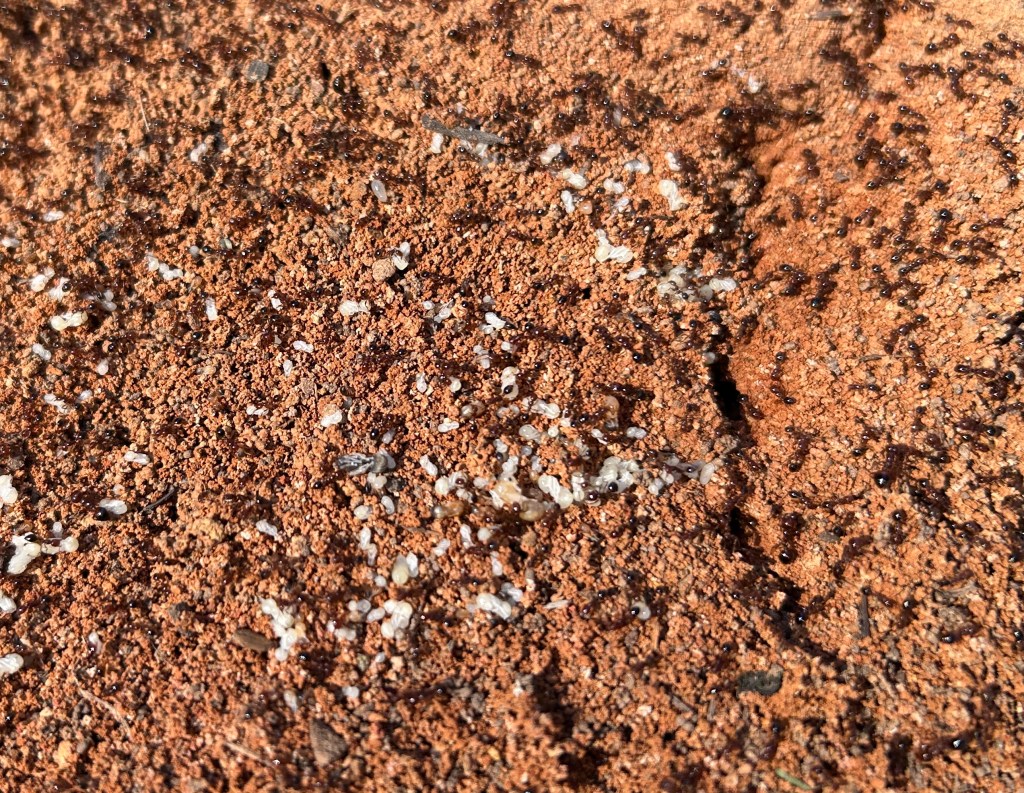
Fire ants swarm fast when disturbed and offer a painful sting.
Example 6: Wasps
• Only remove if nests are a problem. Keep beneficial wasps where possible for pest control and pollination.
• Remove starter nests early in spring; knock down unsafe nests at night.
• Use peppermint oil or soap sprays if needed.
• Avoid broad insecticides to protect your garden’s natural balance and prevent harm to other insects.
Seasonal IPM Tips for Texas Zone 8
Spring
• Inspect tender new growth twice weekly.
• Watch for aphids, mites, whiteflies.
• Add mulch early.
Summer
• Heat stress shows up as pests.
• Deep water, avoid overhead irrigation.
• Mist leaves gently to reduce mite pressure.
Fall
• Caterpillars peak.
• Use Bt only on plants you are protecting.
• Remove diseased leaves before winter.
Winter
• Dormant oil on fruit trees and shrubs.
• Clean tools and sanitize pots.
• Plan crop rotation and new beds.
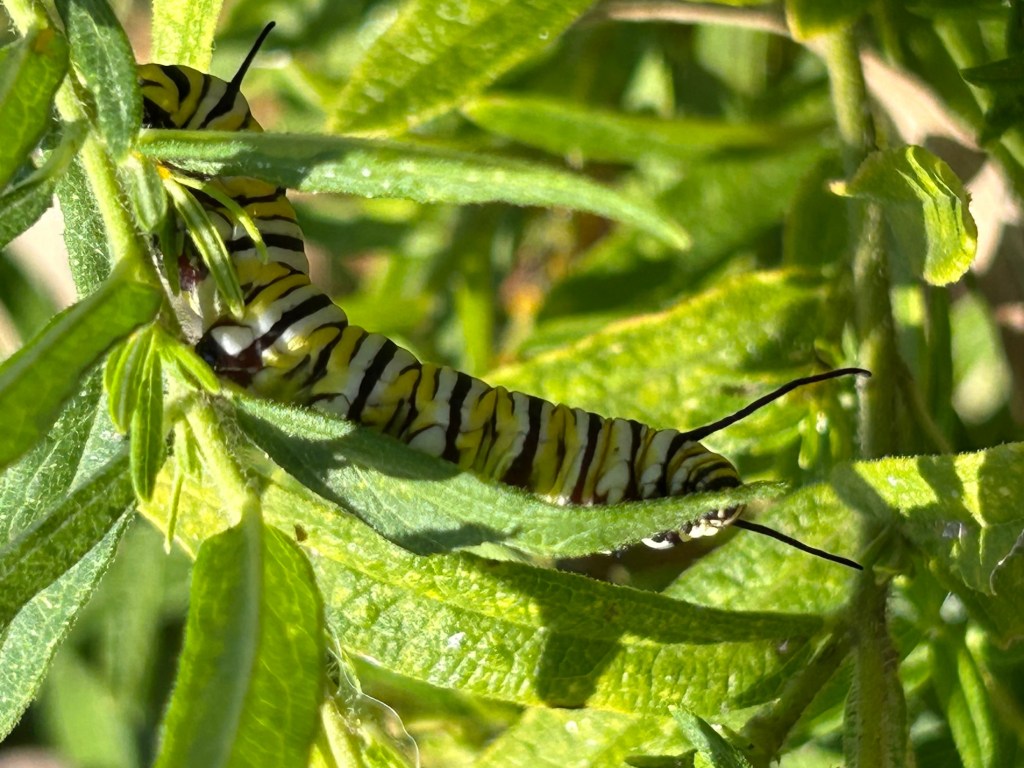
Monarch caterpillar chewing milkweed. Remember that even natural pesticides are toxic to butterfly caterpillars so keep them away from any host plants that butterflies may use to reproduce.
Conclusion: IPM Makes You a More Confident Gardener
Integrated Pest Management transforms gardening from reactive and stressful to strategic and calm. You will lose fewer plants, attract more beneficial insects, and build a resilient, thriving ecosystem right in your yard.
By practicing prevention, monitoring your plants, identifying pests accurately, and choosing smart control methods, you will handle pest problems with confidence every season.
This article covers one part of butterfly gardening. The Butterfly Garden Cheat Sheet shows how these elements fit together at a basic level.
Related Guides:
The Complete Guide to Butterfly Gardening: How to Attract, Feed, and Protect Butterflies All Year
How to Protect Butterfly Caterpillars from Predators without Chemicals
 Butterfly garden paradise
Leave a comment