

Texas gardens are tricky — our winters are mild, springs come early, and summers are scorching. For butterfly gardeners, timing is everything. Plant too early, and frost may hit. Plant too late, and you miss early migrants.
This month-by-month guide shows exactly what to plant and when, so your Texas butterfly garden thrives from January through December.

Using a moist paper towel in a baggie in the fridge to cold stratify milkweed seeds.
A detailed step-by-step tutorial on how to successfully germinate milkweed seeds can be found here.
January – Prepare & Plant Early Hosts
What to Do
• Cold stratify your native seeds that require a chilling period.
This includes native milkweed seeds such as butterflyweed, antelope horn, and green milkweed.
(See the full guide on Texas Native Milkweed: The Best Species to Plant for Monarchs).
• Prep soil for spring planting
Loosen clay soil, add compost
• Plant early herbs for Black Swallowtails
Parsley, dill, cilantro can start indoors
What to Expect
• Early monarch scouts may start arriving in southern Texas
• Caterpillars are rare this month — focus on preparation
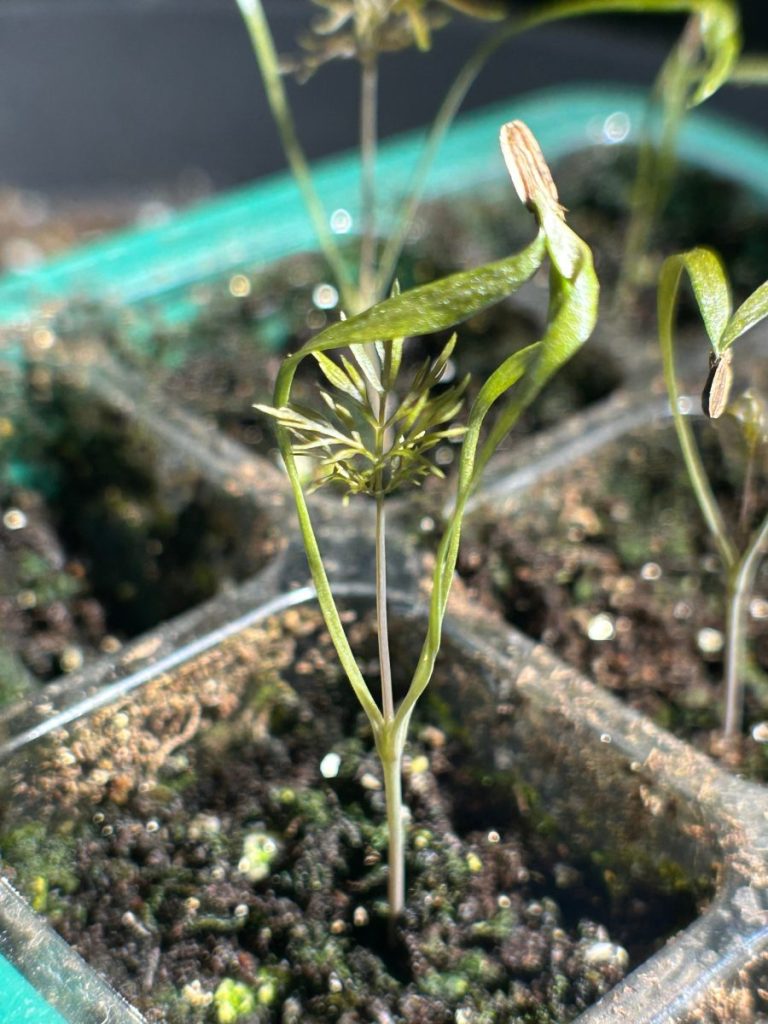
Bronze fennel seedlings with their first true leaves, started indoors.
February – Start Seedlings & Check Host Plants
What to Plant
• Continue milkweed indoors
• Bronze fennel (start in pots or garden)
• Cilantro & parsley indoors or under row cover
What to Expect
• Swallowtails may begin scouting on warm days
• Plan layout for spring nectar beds
• Check perennials like lantana or mistflower for overwintering survival

Red admiral butterfly on plum tree blossoms in spring. (They are one of the earliest butterflies to appear in Spring).
March – Spring Planting Begins
What to Plant
Harden off milkweed seedlings and transplant.
Early nectar plants:
• Lantana
• Verbena
• Autumn sage
• Coreopsis
• Fennel, parsley, dill in pots or garden beds
What to Expect
• Monarchs start arriving from south
• Early eggs may appear on milkweed
• Adult butterflies feeding on early blooms

Monarch feeding from a pink zinnia in spring.
April – Full Spring Bloom
What to Plant
Heat-tolerant spring flowers:
• Zinnias
• Pentas
• Gaillardia
• Black Swallowtail host plants: bronze fennel, cilantro, parsley
What to Expect
• Increased butterfly activity
• Caterpillars on host plants
• Nectar feeders actively patrolling flowers
Tip: Rotate potted herbs to prevent bolting, especially cilantro. Your experience with cilantro being the “workhorse” after fennel was eaten applies perfectly here.

Pipevine swallowtail butterfly drinking nectar from Turk’s cap flower.
May – Early Summer Care
What to Plant
• Summer bloomers:
• Mexican sunflower (Tithonia)
• Black-eyed Susan
• Turk’s cap
• Salvias
What to Expect
• Caterpillars continue feeding
• Heat stress can begin on non-heat-tolerant plants
• Water deeply, mulch well
Tip: Keep parsley as backup for swallowtail caterpillars — it tolerates Texas heat better than cilantro.

Bordered patch butterfly on purple coneflowers.
June – Manage Heat & Watering
What to Plant
• Only very heat-tolerant plants survive; focus on maintenance
• Add new nectar plants in shade if possible
What to Expect
• Butterflies may be less active during midday heat
• Caterpillars on heat-tolerant host plants like parsley and fennel
• Continue watering deeply 2–3× per week

Gulf fritillary butterfly on orange milkweed blooming in July.
July – Peak Summer Survival
What to Plant
• Plant heat-tolerant nectar plants if replacing spent blooms
• Avoid new milkweed planting — it struggles in extreme heat
What to Expect
• Caterpillars slow down during extreme heat
• Adult butterflies feed in early morning and late afternoon
• Use shade cloth or potted plants for sensitive herbs
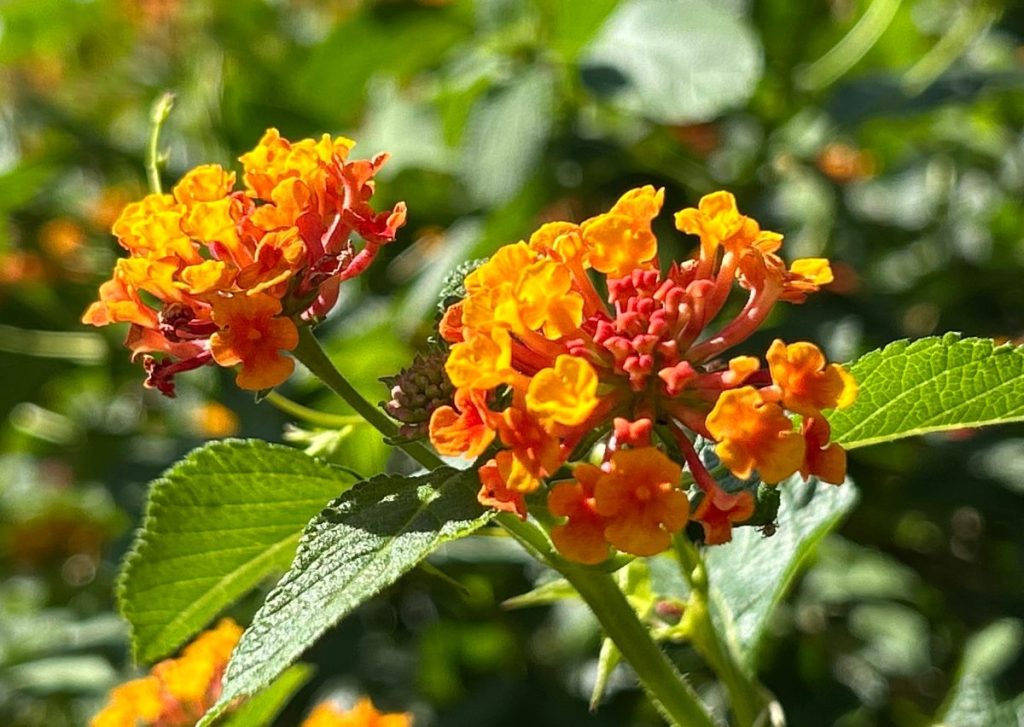
Native Texas lantana flowers still blooming in the late summer heat.
August – Prep for Fall Migration
What to Plant
Late-summer nectar flowers:
• Lantana
• Frostweed
• Salvia
• Pentas
What to Expect
• Monarchs and queens preparing for southward migration
• Caterpillars feeding on remaining host plants
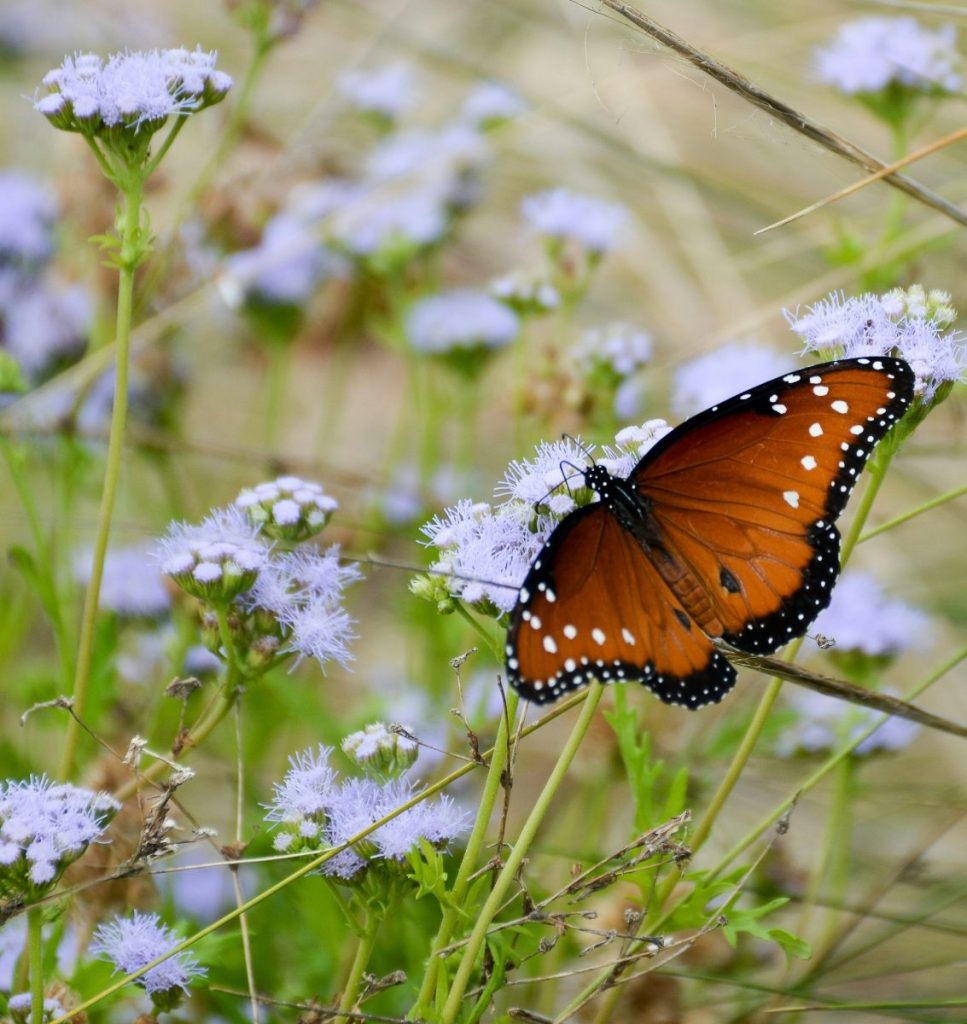
Queen butterfly sipping on nectar from its favorite source, Gregg’s mistflower.
September – Fall Nectar & Hosts
What to Plant
• Frost-tolerant nectar plants
• Reseed milkweed for fall hatching if desired
What to Expect
• Monarchs passing through for migration
• Adult butterflies actively refueling on nectar-rich flowers
• Late Black Swallowtail generations
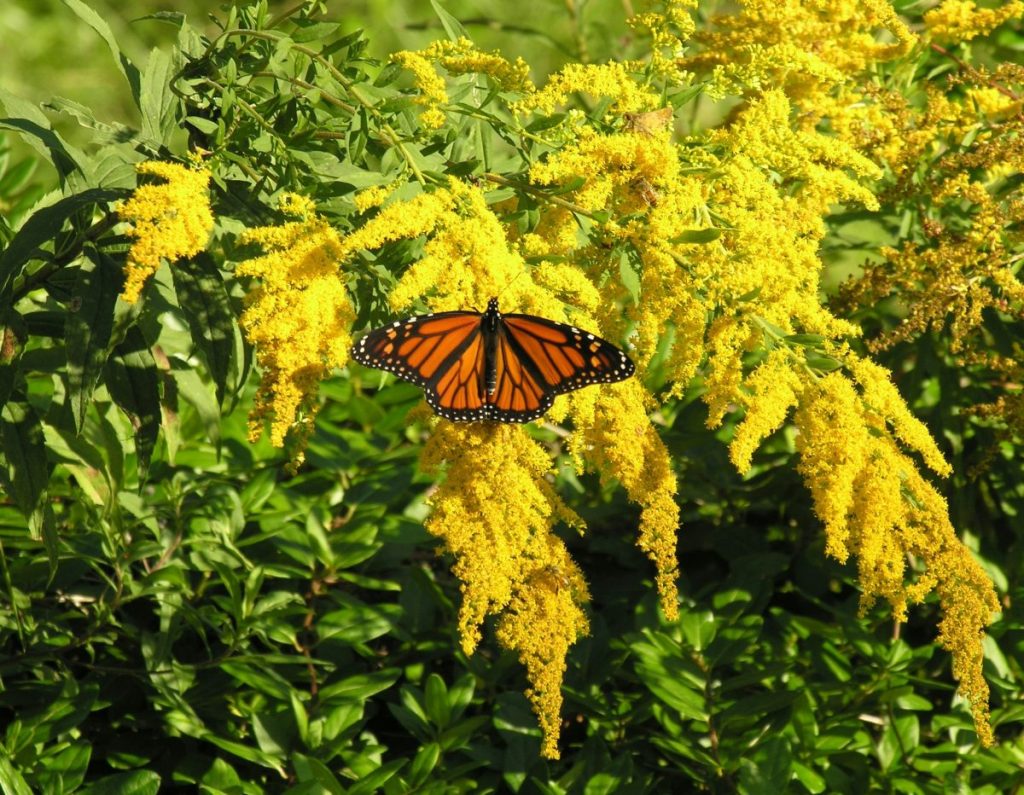
Migrating monarch using goldenrod flowers to fuel itself for the long journey.
October – Monarch Peak Migration
What to Plant
• Frostweed and late-blooming perennials for migrating monarchs. (Learn the best ways to support monarchs during their migration here).
• Remove tropical milkweed if planted (to reduce OE parasites)
What to Expect
• Monarch migration at peak
• Large numbers of butterflies feeding on nectar
• Caterpillars finishing late-season development
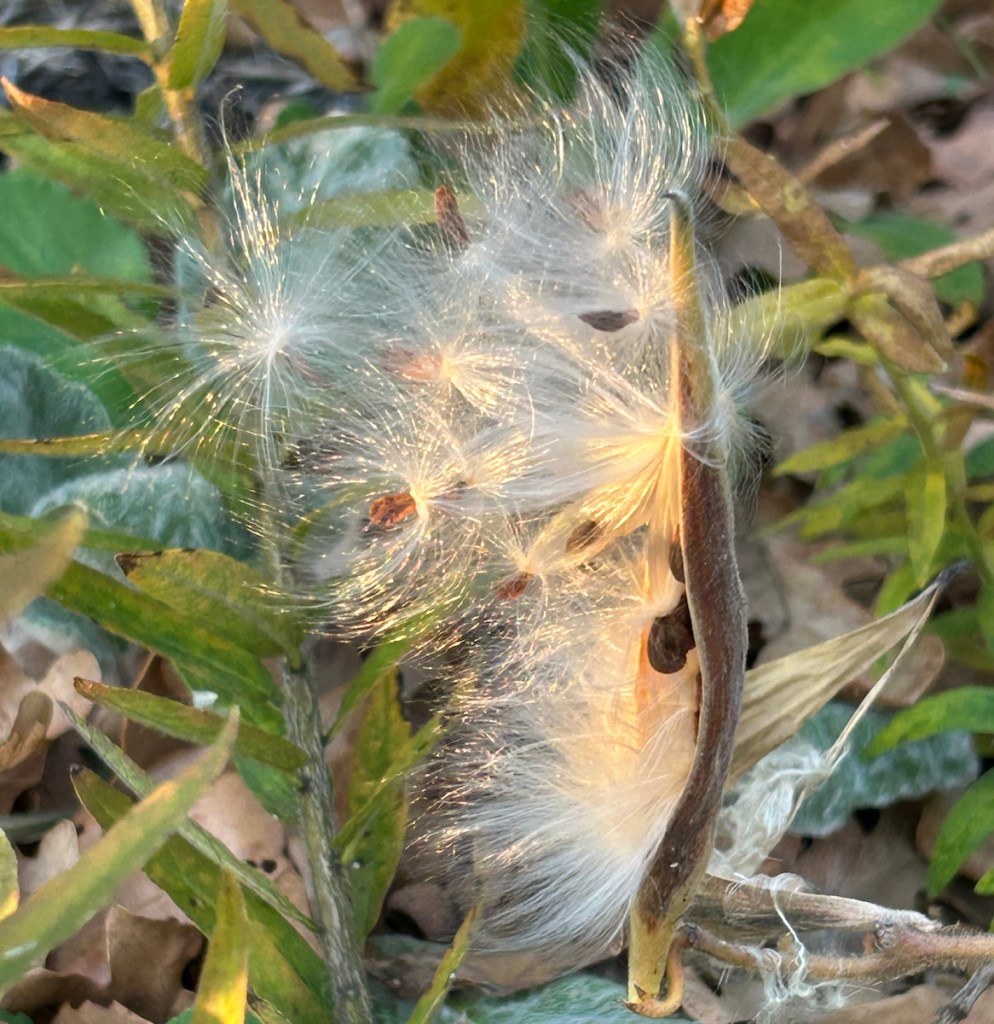
Milkweed seed pods with fluff glowing in the November sunlight.
November – Prepare for Winter
What to Plant
• No major planting; focus on maintenance
• Clean up spent nectar plants
• Protect host plants from early cold snaps
What to Expect
• Butterfly activity slows
• Winter-hardy perennials survive (e.g., lantana, Gregg’s mistflower)
• Caterpillars rare

December is a great time to start winter sowing native seeds for butterflies next year.
December – Winter Prep & Planning
What to Plant
• Trees are dormant in winter and can be planted as long as soil is not frozen. Host trees for butterflies include elms and black cherry.
• Take a little break and plan next year’s butterfly garden
• Start milkweed seeds indoors if you want an early head start
What to Expect
• Adult butterflies mostly gone
• Host plants overwinter dormant
• Garden stays low-maintenance
For detailed winter maintenance tips to ensure butterflies choose your garden next year: Your Winter Tasks that Determine How Many Butterflies Visit Your Texas Garden in Spring.
Tips for Year-Round Success in Texas Zone 8
1. Cluster host plants to reduce predator impact.
2. Rotate potted herbs like cilantro to prevent bolting.
3. Use a mix of native and heat-tolerant nectar plants to ensure blooms spring through fall.
4. Water deeply and mulch to protect roots in summer.
5. Observe butterflies — note which species visit, what plants they use, and adjust for next year.
Following this month-by-month guide ensures your garden supports all stages of butterflies, from egg-laying to adult feeding, without being overwhelming.
If you are planning or planting this season, the Butterfly Garden Cheat Sheet can help you check that the basic habitat pieces are in place.
Related Guides:
The Complete Guide to Butterfly Gardening: How to Attract, Feed, and Protect Butterflies All Year
The Best Host Plants for Caterpillars in Zone 8
Top Nectar Plants for Butterflies by Season
Photo credits: Red admiral butterfly – Marian Hayes, monarch on zinnia – Mike Lewinski, Queen butterfly on mistflower – Tom Rogers
 Butterfly garden paradise
Leave a comment