
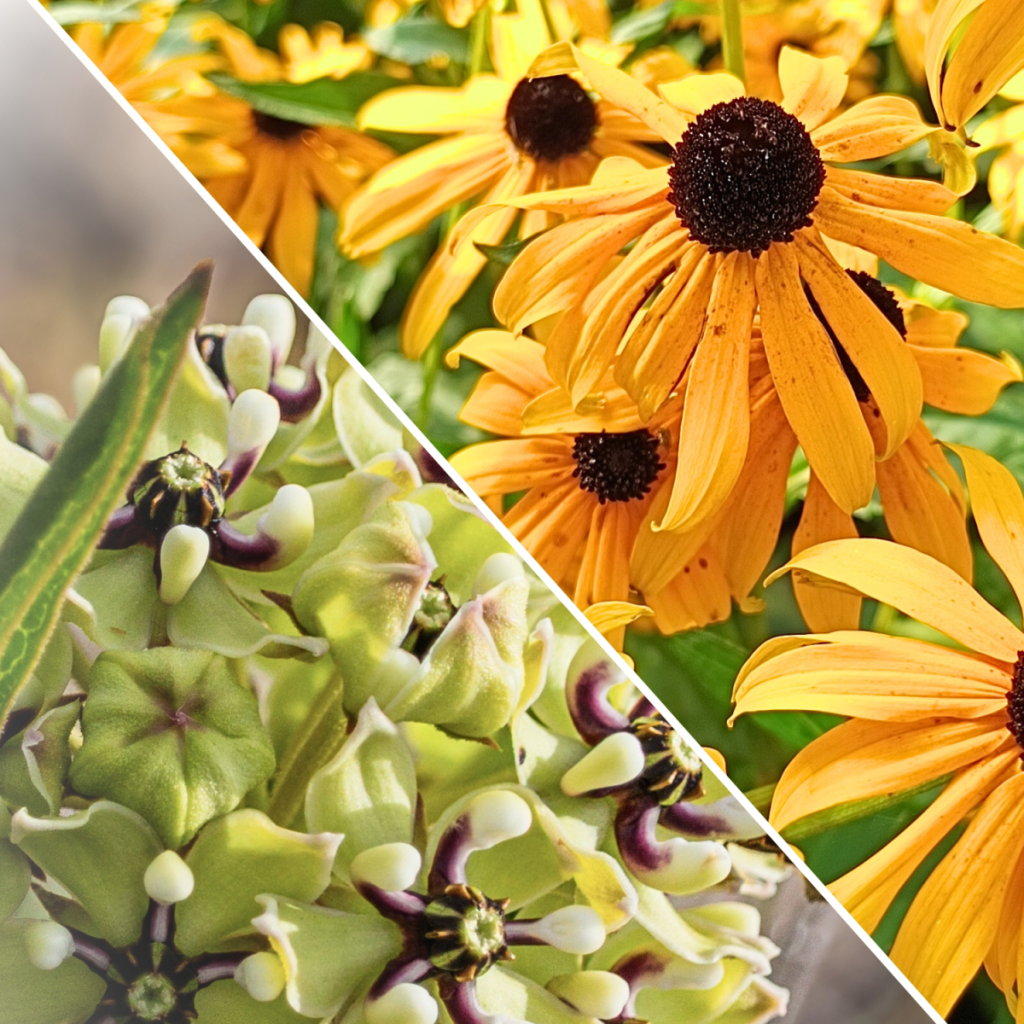
One of the most common frustrations in butterfly gardening sounds like this:
“I planted flowers for butterflies, but they don’t stay.”
Gardeners notice butterflies visiting briefly, then disappearing. The plants are blooming. The space looks active. And yet, something feels incomplete.
In most cases, the issue isn’t effort or plant quality. It’s a misunderstanding of what butterflies actually need from a garden.
Butterflies rely on two very different kinds of plants, and both are essential. Understanding the difference between host plants and nectar plants—and how they function together—changes how butterfly gardens behave over time.
The Butterfly Life Cycle Changes Everything
Butterflies are easiest to notice as adults, but they make decisions based on their entire life cycle.
A butterfly’s needs change as it moves through four stages:
- caterpillar
- egg
- chrysalis
- adult
Nectar plants support adult butterflies.
Host plants support reproduction and survival.
A garden that provides only nectar may attract visitors.
A garden that provides host plants supports presence.
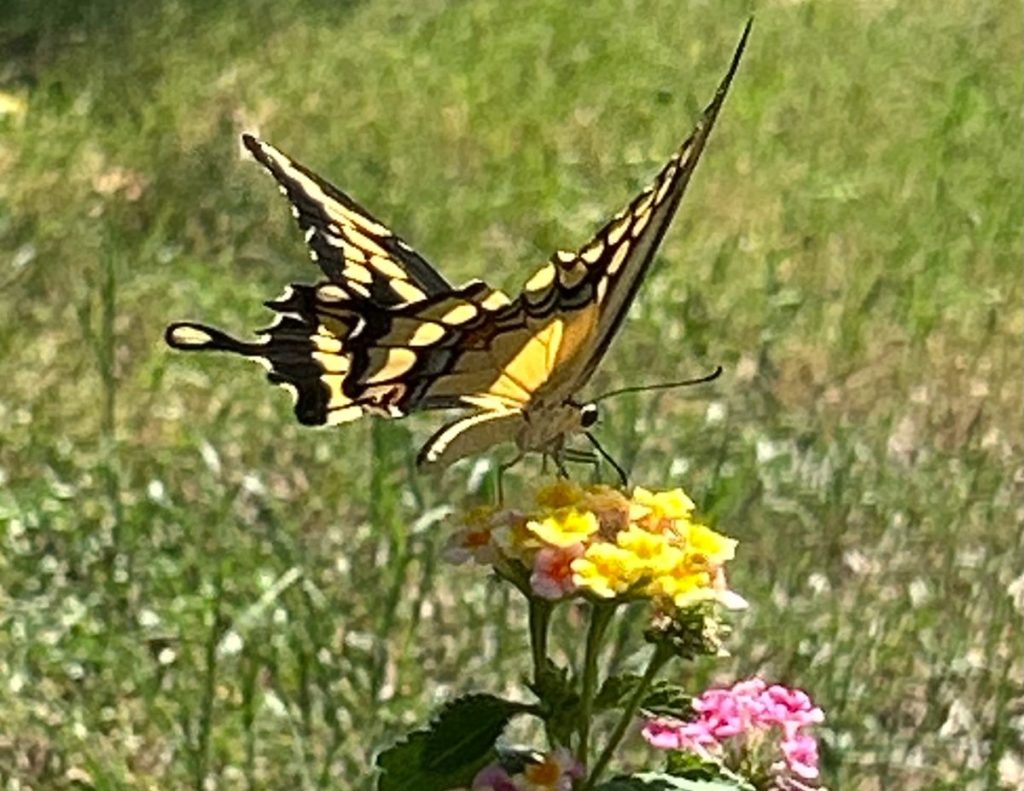
Giant swallowtail butterfly feeding on nectar from lantana camara flowers.
What Nectar Plants Do (and Don’t Do)
Nectar plants provide sugar-rich food for adult butterflies. These are often the plants gardeners start with because they’re visible, colorful, and satisfying.
In Texas gardens, common nectar plants include:
- Gregg’s mistflower
- Zexmenia
- Coneflowers
- Lantana
- Goldenrod
- Frostweed
These plants are valuable. They fuel flight, mating, and migration. They often draw a wide range of butterfly species.
But nectar alone doesn’t tell butterflies that a garden is a place to stay.
Adult butterflies may feed briefly, then move on in search of suitable host plants nearby. When those plants aren’t present—or aren’t healthy—the life cycle stops.
What Host Plants Do (and Why They’re Overlooked)
Host plants are where butterflies lay eggs. They are also the only food source for caterpillars.
Most caterpillars are highly specific. They can eat only a narrow range of plants, often within a single plant family. Nectar plants cannot substitute for host plants, no matter how abundant or attractive they are.
This specificity is why host plants are often overlooked:
- they may not be showy
- they may not bloom for long
- they may look “messy” once caterpillars arrive
But without host plants, a butterfly garden cannot sustain life beyond brief visits.
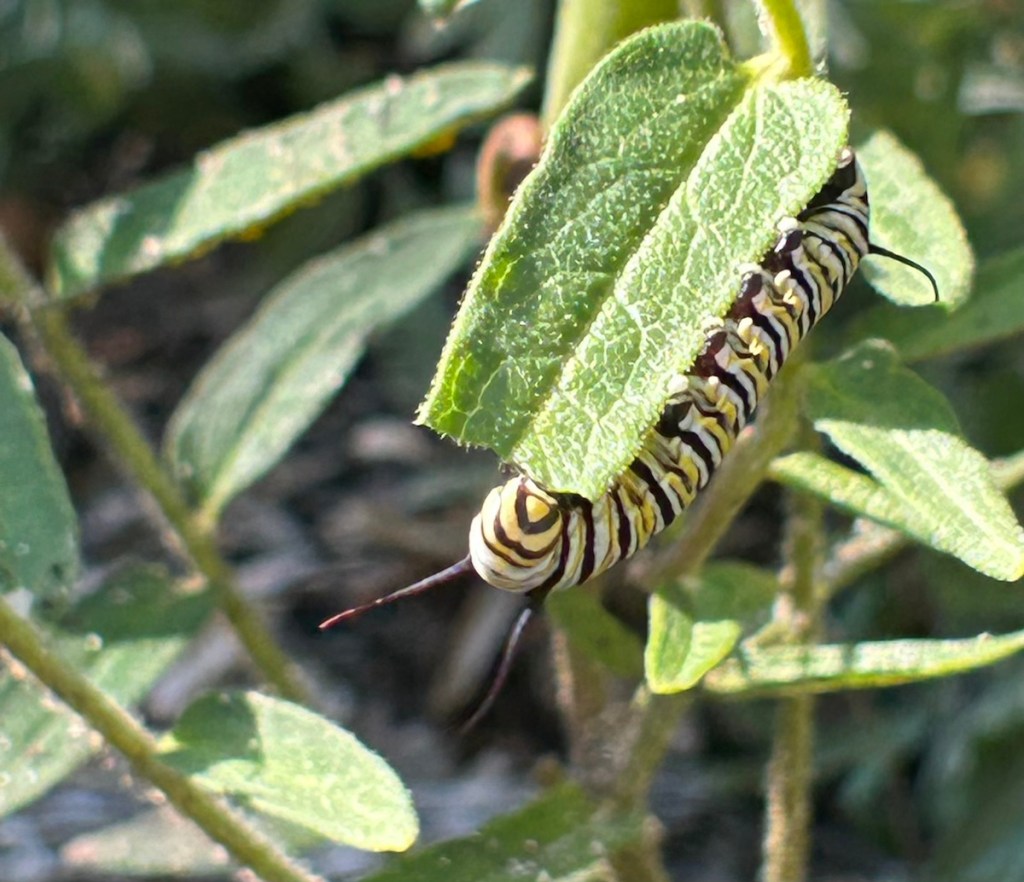
Monarch caterpillar eating a leaf of orange milkweed, its host plant.
Texas Examples: Host, Nectar, or Both
Understanding how real plants function in Texas landscapes helps clarify the difference.
Milkweeds
Milkweeds are host plants for monarchs and queens.
They also provide nectar for adult butterflies and other insects.
Because they serve both roles, milkweeds are often overplanted. When placed without shelter or context, they can struggle in heat or attract predators. Milkweed works best as part of a plant community, not as a standalone solution.
Gregg’s Mistflower
Mistflower is a strong nectar plant, especially in fall.
It supports adult butterflies but is not a host plant.
Gardeners often notice heavy butterfly activity around mistflower and assume reproduction is happening nearby. Without host plants, butterflies may feed and leave.
Golden Alexanders
Golden Alexanders function as both host and nectar plants.
They support early-season butterflies and offer nectar when few other plants are blooming.
Plants like this quietly do more ecological work than their appearance suggests.
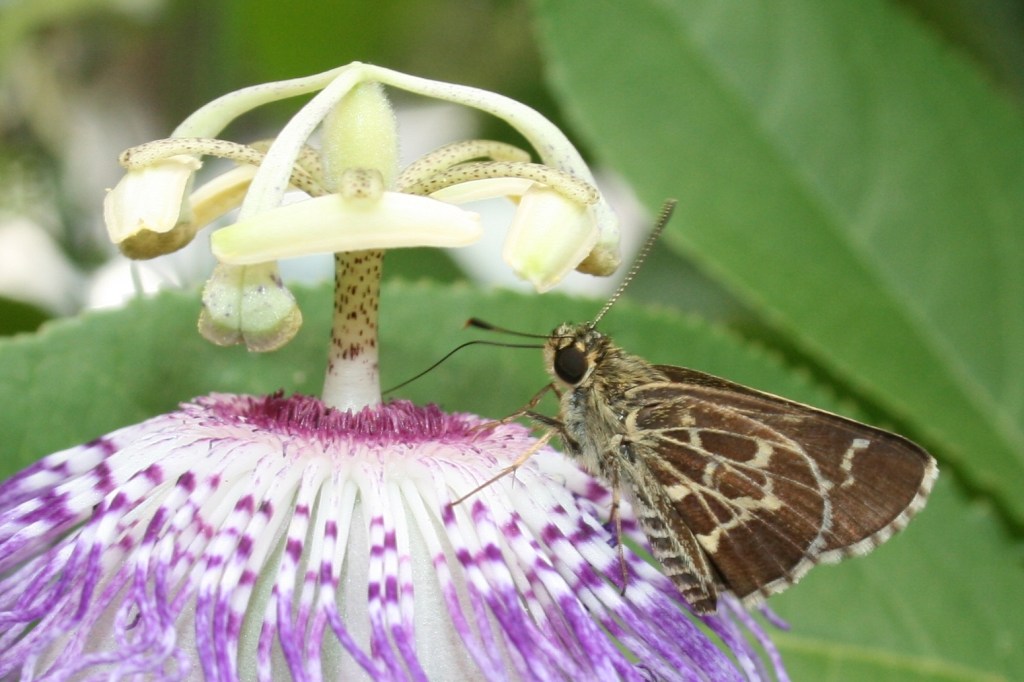
Passionflower vine is the only host plant for gulf fritillary butterflies, but the nectar from its flowers can be used by other butterflies, like this skipper. It functions as both a nectar and a host plant.
Why Nectar-Only Gardens Feel Disappointing
A nectar-heavy garden can look successful at first. Butterflies appear. Flowers are active. Movement catches the eye.
But over time, patterns emerge:
- visits are brief
- numbers fluctuate wildly
- caterpillars are rarely seen
- butterflies don’t return consistently
This leads gardeners to add more flowers, water more, or change plants repeatedly. The garden becomes reactive rather than stable.
The missing piece is usually host plant presence and placement, not effort.
Why Host Plants Alone Aren’t Enough Either
Learning about host plants often triggers an understandable overcorrection.
Milkweed gets planted everywhere. Fennel takes over. Host plants are added repeatedly without considering:
- scale
- exposure
- shelter
- balance with nectar sources
Host plants placed in full, reflected heat may struggle. Large concentrations without surrounding structure can increase predation. Gardens can lose coherence and resilience.
Butterflies respond best when host plants are:
- healthy
- supported by surrounding vegetation
- near nectar sources
- protected from extremes
Host plants work best within systems, not as isolated gestures.
How Butterflies Use Plant Communities
Butterflies don’t evaluate individual plants. They respond to conditions.
When host and nectar plants are grouped thoughtfully:
- caterpillars find shelter near food
- adults feed without traveling far
- multiple life stages overlap in the same space
- activity becomes steadier over time
This is why gardens built around plant communities—rather than individual specimens—feel calmer and more alive.
The goal isn’t to maximize butterflies at every moment. It’s to create conditions that allow life cycles to unfold without constant correction.
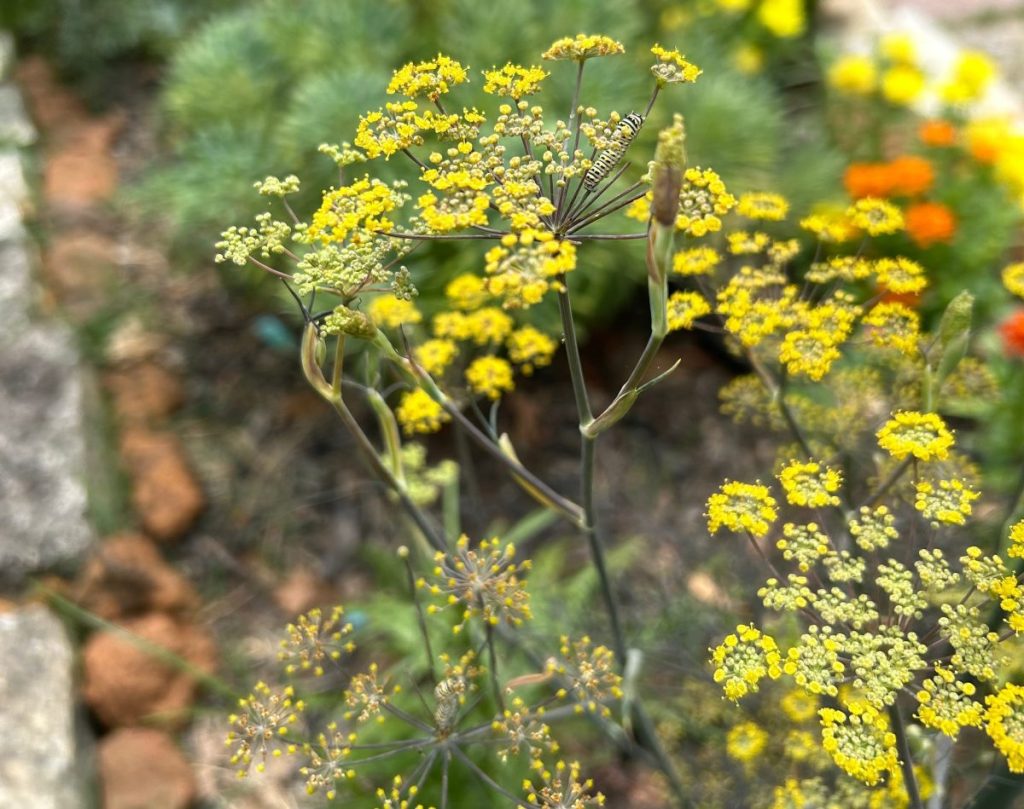
Bronze fennel planted together with zinnias in a garden. Look closely for the black swallowtail caterpillar.
A Common Misconception: “I Never See Caterpillars”
Caterpillars are small, well-camouflaged, and often feed at night or early morning. Their absence doesn’t always mean failure.
However, gardens with no host plants rarely support caterpillars at all.
When gardeners understand the role of host plants, the question shifts from:
“Why aren’t butterflies staying?”
to
“What does this space currently support?”
That shift reduces frustration and unnecessary intervention.
Building Gardens That Support the Whole Life Cycle
A butterfly garden doesn’t need dozens of host species.
It needs the right plants, placed with intention, and supported by nectar and structure.
When both roles are present:
- butterflies return more predictably
- activity feels less chaotic
- the garden stabilizes over time
This balance doesn’t happen instantly. It emerges as plants establish and communities settle.
Understanding the difference between host and nectar plants doesn’t add complexity—it removes confusion.
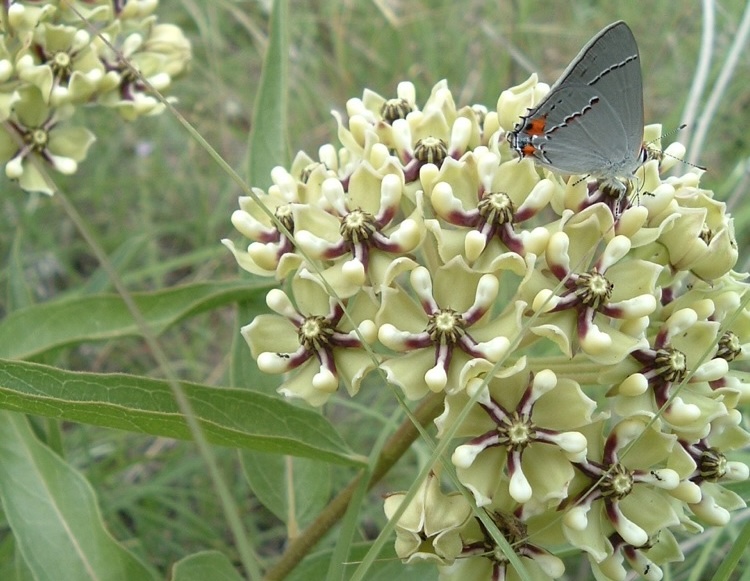
Gray hairstreak butterfly nectaring on antelope horn milkweed, a host plant for monarchs.
Why This Distinction Matters Going Forward
Many spring frustrations trace back to this misunderstanding. Gardeners do the right things, but expect the wrong outcomes.
By recognizing how butterflies actually use gardens, you begin to:
- interpret patterns more accurately
- intervene less often
- trust the process unfolding
This perspective will matter even more as the season progresses and visibility changes.
Butterfly gardens are not about constant presence.
They are about continuity.
And continuity depends on supporting the full life cycle—not just the most visible part.
If you want a simple way to see how host and nectar plants fit together, the Butterfly Garden Cheat Sheet lays it out in one place.
Related Guides:
The Complete Guide to Butterfly Gardening: How to Attract, Feed , and Protect Butterflies All Year
Common Mistakes that Scare Butterflies Away: How to Keep Your Garden Butterfly-Friendly
The Best Host Plants for Caterpillars in Zone 8
Photo credits: Lace-winged roadside skipper on passionflower – Lonnie Huffman, CC BY 3.0, via Wikimedia Commons, gray hairstreak on antelope horn milkweed –
En el nido (Nest), CC BY 3.0, via Wikimedia Commons
 Butterfly garden paradise
Leave a comment