
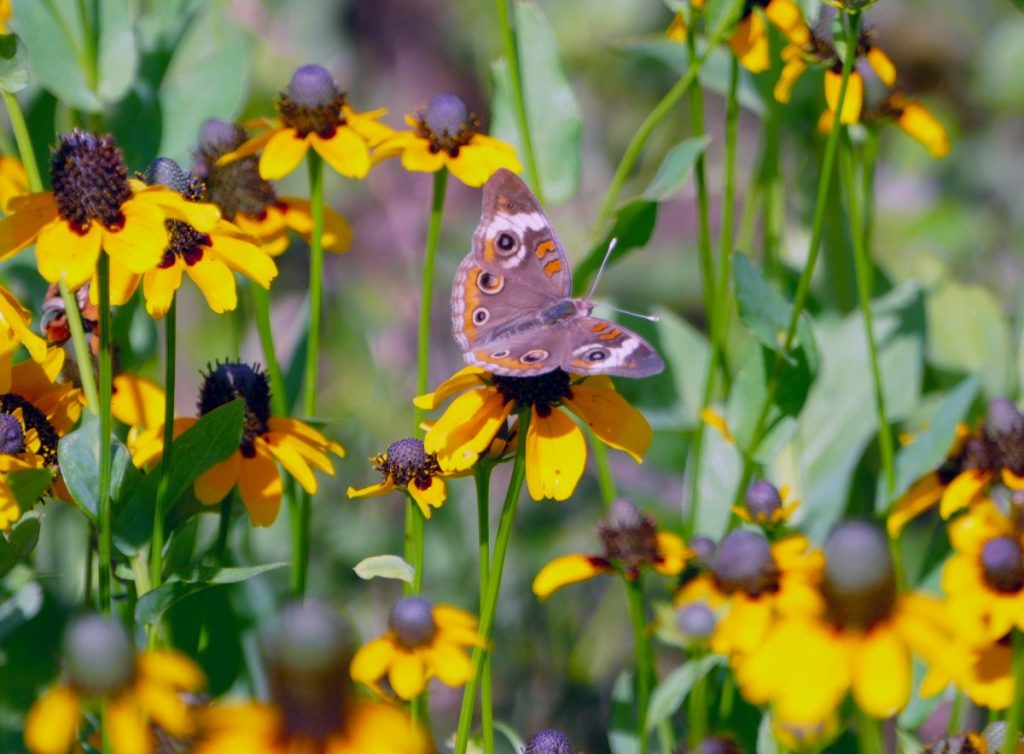
Cover photo: common buckeye butterfly on clasping coneflowers blooming in spring.
Early in the season, butterfly gardens often feel uneven.
A few butterflies appear while others are nowhere to be seen. Familiar species return, but diversity feels limited. Gardeners begin to wonder whether something is missing or whether the garden is behind.
In most cases, what’s happening is neither failure nor delay. It’s sequence.
Some butterflies always show up first. Understanding why helps make sense of early spring activity—and prevents unnecessary concern before the season has fully unfolded.
Early Butterflies Aren’t Random
The first butterflies to appear each year are not early by accident. They are species adapted to cooler temperatures, limited nectar availability, and unpredictable conditions.
They emerge when:
- temperatures fluctuate widely
- food sources are still sparse
- vegetation is just beginning to wake up
These butterflies are equipped for early-season uncertainty. Others simply are not.
Seeing them is often a sign that the garden is functioning normally.
Different Butterflies, Different Timelines
Butterflies do not operate on a shared schedule. Their emergence depends on:
- overwintering strategy
- host plant availability
- temperature thresholds
- life cycle length
Some species overwinter as adults and are ready to fly as soon as conditions allow. Others overwinter as eggs, caterpillars, or chrysalises and require time for host plants to grow before they can complete their life cycle.
This staggered timing is a feature of healthy systems, not a flaw.
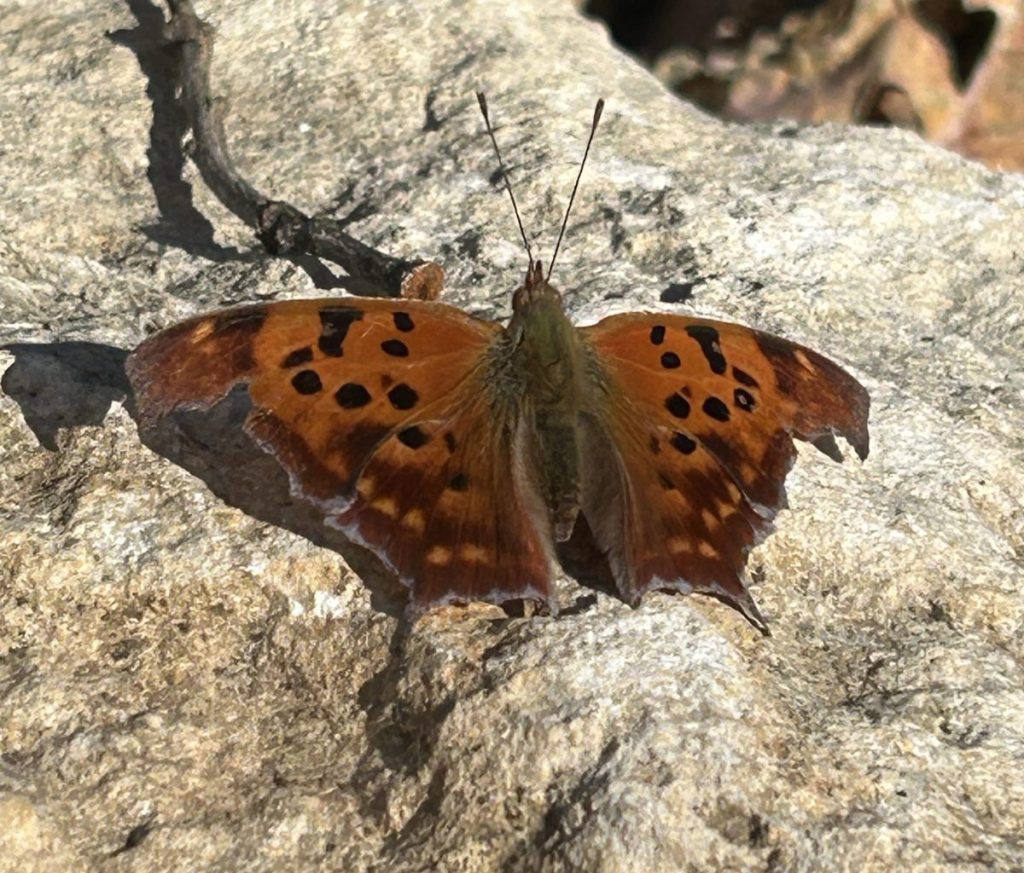
Question Mark butterfly basking on a rock in February.
Common Early Arrivals in Texas Gardens
In Texas and similar climates, early spring butterflies often include:
- sulphurs
- skippers
- buckeyes
- question marks
- red admirals
These species are generalists or early specialists. They can use early-season nectar sources and tolerate cooler mornings and variable weather.
Their presence doesn’t mean other butterflies won’t arrive. It means the conditions they need are already in place.
Why Monarchs and Others May Lag Behind
Some of the most anticipated butterflies arrive later for good reasons.
Monarchs, for example, depend on milkweed growth and migration timing. Even if milkweed is present, monarchs may not appear until:
- migration progresses
- temperatures stabilize
- milkweed growth is sufficient for egg-laying
Other butterflies require:
- fully leafed-out host plants
- longer daylight
- consistent warmth
Their absence early in the season reflects biological pacing, not garden inadequacy.
Early Butterflies Are Information
Instead of asking, “Why are these the only butterflies I’m seeing?”, it can be more useful to ask:
What does this tell me about current conditions?
Early butterflies indicate:
- nectar sources are available
- shelter exists
- temperatures are crossing key thresholds
- the landscape is becoming usable
They are signals, not verdicts.
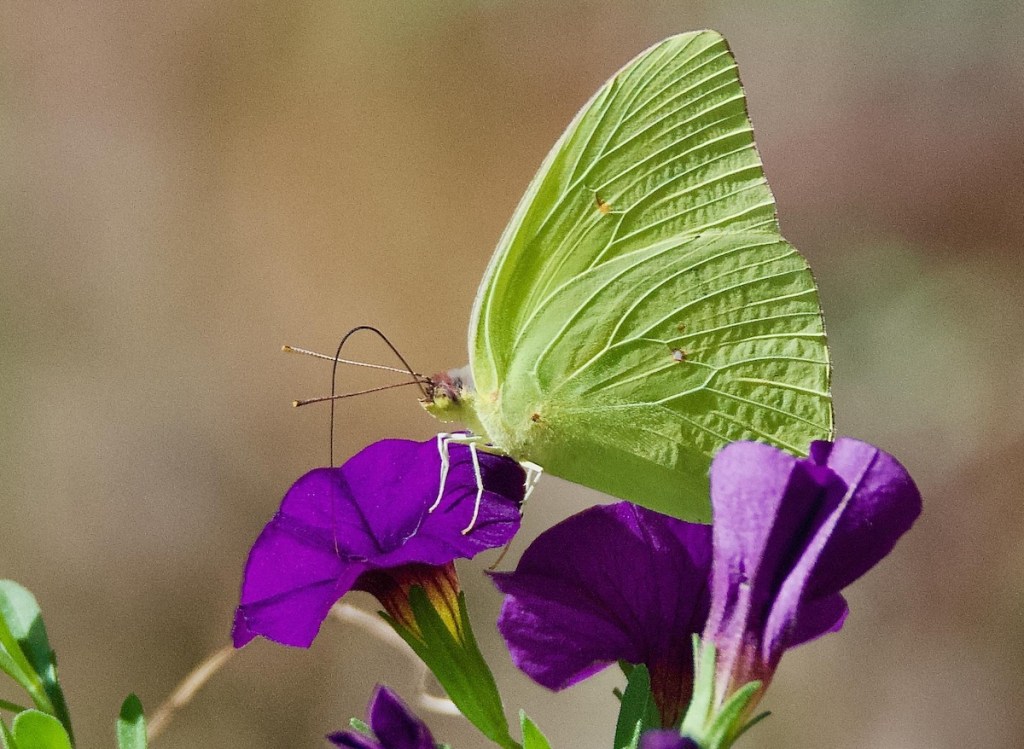
Cloudless sulphur taking advantage of nectar from petunias. Non-native annuals provide short-term nectar, but they do not provide all the elements butterflies need to stay.
Why Early Activity Can Feel Misleading
Early spring activity often creates unrealistic expectations.
A few visible butterflies can make gardeners assume the season has fully begun. When activity dips or diversity remains low, disappointment follows.
This is especially common in nectar-heavy gardens, where flowers bloom before host plants fully develop. Butterflies may visit briefly, then disappear again.
This pattern doesn’t mean progress has stalled. It means the life cycle is still assembling.
What “Good Signs” Actually Look Like
A healthy early-season garden often shows:
- a small number of species returning consistently
- brief visits rather than constant activity
- butterflies resting more than feeding
- activity concentrated in warmer parts of the day
These signs suggest that the garden is becoming usable—but hasn’t reached peak capacity yet.
That transition takes time.
Why Restraint Matters Early in the Season
Early unevenness often triggers intervention:
- adding more plants
- watering aggressively
- rearranging beds
- assuming something is wrong
In most cases, restraint is the better response.
Butterfly gardens gain stability as:
- host plants leaf out
- plant communities fill in
- shelter improves naturally
- temperatures settle
Early butterflies arrive first because they can, not because they’re the only ones who will.

Gulf fritillary presence peaks later in north Texas, around late-May to September.
The Season Builds in Layers
Butterfly activity accumulates rather than appears all at once.
Early species arrive first.
Mid-season species follow.
Late-season species peak when conditions are stable and resources abundant.
This layered arrival mirrors how plants grow and how gardens mature. Expecting uniformity early often leads to misreading what is actually a positive trajectory.
A Shift in Perspective
When gardeners understand that early butterflies are part of a sequence, spring becomes less anxious.
The question shifts from:
“Why aren’t more butterflies here yet?”
to
“What stage is this garden in right now?”
That shift reduces urgency and allows patterns to emerge without constant correction.

This monarch was still around gathering fuel for migration in mid-November in Texas Zone 8.
Looking Ahead
As the season progresses, butterfly presence will change again. Some species will disappear briefly. Others will arrive suddenly. Visibility will fluctuate.
These changes are not setbacks. They are responses to conditions.
Learning to read early butterflies as information—not evaluation—builds confidence that carries through the more challenging months ahead.
Butterfly gardens do not announce success all at once.
They reveal it gradually.
If you want a clearer sense of how these early patterns fit into the rest of the season, the Butterfly Garden Cheat Sheet puts it into a simple framework.
Related Guides:
The Complete Guide to Butterfly Gardening: How to Attract, Feed , and Protect Butterflies All Year
Common Mistakes that Scare Butterflies Away: How to Keep Your Garden Butterfly-Friendly
Photo credits: Cover – buckeye on clasping coneflower – Michael Herren, sulphur on petunias – unknown
 Butterfly garden paradise
Leave a comment