
Be Part of the Monarchs’ Incredible Journey
Every year, monarch butterflies make one of the most extraordinary migrations in the animal kingdom. Traveling thousands of miles between Canada, the United States, and Mexico, they rely on gardens, meadows, and wild spaces along the way for food and shelter. Sadly, monarch populations have declined drastically in recent decades, making it more important than ever for gardeners and nature lovers to step in and help.
Why are Monarchs Declining?
Monarchs are declining because they are facing multiple threats at the same time. Habitat destruction, chemical use, climate stress, disease, and migration hurdles all add up. Monarchs have always been resilient, but their survival strategy depends on huge numbers. With fewer monarchs surviving each stage, the population as a whole shrinks.
The good news is that even small actions can make a big difference. Here are some ways you can support monarch butterflies during their migration:

Monarch butterfly feeding on nectar from native aster flowers.
Plant Fall-Blooming Nectar Flowers
Monarchs need plenty of fuel for their long journey south, especially in late summer and fall. While milkweed is essential for breeding, migrating monarchs depend on nectar-rich flowers for energy.
Plant these best nectar plants for migration:
• Lantana
• Zinnias
• Cosmos
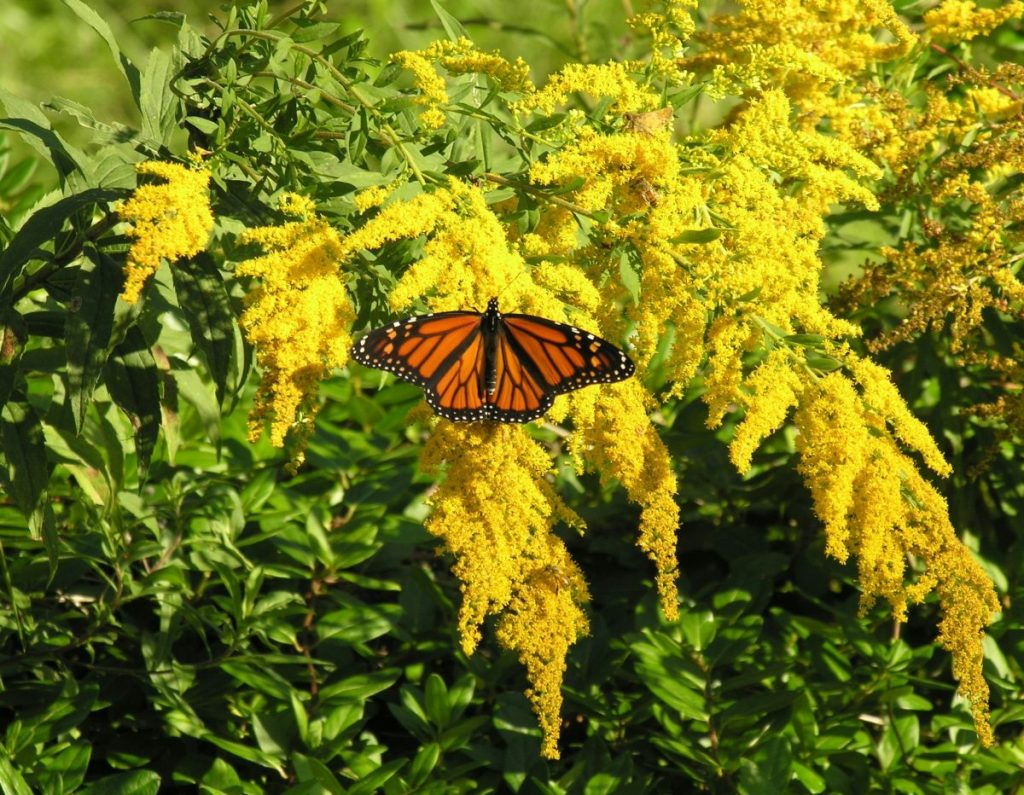
• Goldenrod
• Asters
• Mexican sunflower (Tithonia rotundifolia)
• Frostweed
• Blazing star (Liatris species)
Try to plant varieties that blooms from late summer through fall to feed monarchs when they are migrating. Bright, clustered flowers are easiest for monarchs to spot from the air.
Provide Continuous Blooms
Staggering plant varieties ensures something is always in bloom. Monarchs migrate in waves, and having nectar sources available across weeks or even months can help sustain them throughout their journey.

Official monarch habitat sign from monarchwatch.org. For the full guide on How to Create a Monarch Waystation visit this guide.
Create Pesticide-Free Habitats
One of the biggest threats to monarchs is pesticide exposure. Even “butterfly-friendly” gardens can become deadly if insecticides are used.
• Avoid all pesticides and herbicides. Both are toxic to monarch caterpillars.
• Encourage natural pest control by planting diverse species that attract beneficial insects.
• If you must treat plants, use safe, manual methods like hand-picking pests or hosing off aphids.
• See our guide on Natural Pest Control for more solutions for managing garden pests without chemicals.
Offer Shelter From Wind and Predators
Monarchs need safe resting spots along the way. You can help by:
• Planting shrubs, tall native grasses, or dense perennials to provide windbreaks.
• Creating layers in your garden (short flowers + medium plants + taller shrubs).
• Avoiding overly manicured yards — messy corners often make the best butterfly shelters.

Orange butterfly milkweed plant (Asclepias tuberosa)
Plant Milkweed Strategically
While monarchs do not rely heavily on milkweed during migration, females may still lay eggs if conditions are right. Having milkweed scattered throughout your yard gives monarchs options and helps sustain late-season caterpillars.
Choose native milkweed varieties adapted to your region so they thrive without extra care. (Read about the best native milkweed varieties for Texas).
Provide Water and Minerals
Butterflies can benefit from shallow water sources and minerals during migration. Create a puddling station by:
• Filling a shallow dish with wet sand or mud.
• Adding a few flat rocks for perching.
• Keeping it moist so butterflies can sip water and absorb minerals.
• Complete instructions on making a DIY Butterfly Puddler for your yard.

Monarch butterfly just emerging from its chrysalis
Participate in Monarch Conservation Efforts
Your garden is not the only way to help. You can also:
• Join monarch tagging programs (like Monarch Watch) to track migration.
• Support conservation groups that protect overwintering habitats in Mexico.
• Report monarch sightings to citizen science projects to aid researchers.
• Encourage your friends and others you know to plant pollinator-friendly gardens
Conclusion
Supporting monarchs during migration is a powerful way to make a difference for this iconic species. By planting nectar-rich flowers, avoiding pesticides, and offering safe resting spots, your garden becomes part of a vast network of waystations that help monarchs complete their incredible journey and bring back their populations to previous numbers.
Every bloom, every pesticide-free yard, and every safe resting place contributes to the survival of this iconic species. With your help, monarch butterflies can have a better chance of survival — so that future generations can continue to marvel at this migration miracle.
This article covers one part of butterfly gardening. The Butterfly Garden Cheat Sheet shows how these elements fit together at a basic level.
Related Guides:
How to Attract Monarch Butterflies to Your Garden
Fall-Blooming Plants to Fuel Butterflies at the End of the Season
Photo credits: cover – Michael Barrick, Monarch on aster – Esperanza Doronila, Monarch chrysalis – Julissa Helmuth
 Butterfly garden paradise
Leave a comment