

Cover image showing American beautyberry, a native shrub providing food and shelter for wildlife. Its berries are eaten by birds, squirrels and other small mammals, but these are just a few of its benefits.
One of the most important decisions in building a pollinator garden is choosing the right plants. While many gardeners want bright, showy flowers from around the world, research shows that native plants are generally the best option for pollinators. This post breaks down why natives are superior all around, when non-natives can be used, and how to make informed choices.
Native Plant Species Definition: a species that originated and evolved naturally in a specific geographic area and existed there prior to significant human intervention. Native plants are adapted to the local climate, soil, and ecological conditions, and they support indigenous wildlife, including pollinators and other species that rely on them for food and habitat.

Texas bluebonnet flowers are a native part of the prairie ecosystem.
7 Reasons to Choose Native Plants:
Adaptation to Local Climate and Soil:
• Native plants evolved with local weather patterns — heat, cold, rainfall, humidity, and season length.
• They often require less supplemental water and fertilizer because they are genetically adapted to local soils and microclimates.
• Non-natives can struggle in extremes or require constant human intervention to survive.
Example: Texas natives like Texas bluebonnet and whorled milkweed thrive in hot, clay-rich soils and survive droughts, while many tropical ornamentals need frequent watering and shade.
Support for Local Wildlife:
• Native plants provide food and habitat for native insects, birds, and mammals.
• Their leaves, flowers, nectar, and seeds have co-evolved with local pollinators, herbivores, and predators.
• Non-natives may offer nectar or shelter, but often fail to support native insects or caterpillars, which are the critical food for birds and other wildlife.
Example: Monarch butterflies rely almost exclusively on native milkweeds for laying eggs. Planting tropical milkweed can disrupt their migration and spread disease.
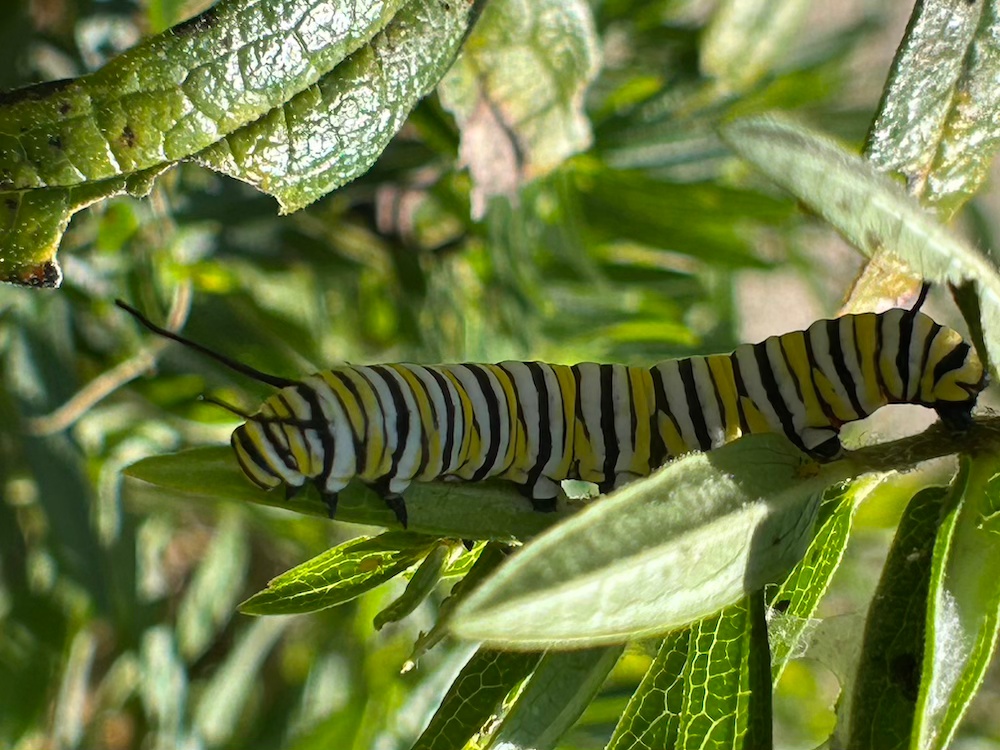
Monarch caterpillar filling up on its host plant native milkweed.
Resistance to Local Pests and Diseases:
• Native plants have co-evolved with local pests, which often means they are more resilient and require fewer chemical interventions.
• Non-native plants can either succumb to unfamiliar pests or become invasive because they lack natural predators.
Example: Eastern redbud and oak species can thrive with minimal disease pressure locally, while imported ornamentals may need repeated pesticide treatments.
Lower Maintenance & Sustainability:
• Natives often need less pruning, fertilizing, watering, or soil amendments because they are matched to their local environment.
• Non-natives may demand intensive care to survive, which increases resource use (water, fertilizer, pesticides) and cost over time.
See How to Water Native Plants the Right Way for more information.

This native prairie Indiangrass (Sorghastrum nutans) grown from seed is small now, but it will grow up to 8 feet tall, with roots extending up to 9 feet into the soil. (Beside it is the Bermuda grass now growing in parts of my lawn, an introduced and invasive species.)
Soil and Water Health:
• Native plants improve soil structure and water infiltration because their roots are adapted to the local ecosystem.
• Deep-rooted natives like prairie grasses prevent erosion and enhance groundwater recharge.
• Non-natives can disrupt these processes, especially if they have shallow or dense fibrous roots.
Example: Big bluestem grass (Andropogon gerardii), native to American prairies, sends its roots down into the soil up to 12 feet deep. Its extensive root system allows it to endure drought, store carbon, support microbes, improve soil structure and prevent soil erosion.
Biodiversity and Ecosystem Stability:
• Planting a variety of natives maintains local biodiversity, supporting a range of pollinators, birds, fungi, and soil microbes.
• Non-natives may spread uncontrollably, reducing habitat diversity.
Invasive Plant Species Definition: a non-native organism that establishes, spreads rapidly, and causes ecological or economic harm by outcompeting native species and disrupting natural habitats. Unlike introduced species, invasive species alter ecosystem balance and often reduce biodiversity.
Cultural and Evolutionary Significance:
• Native plants reflect local natural history and cultural heritage.
• They preserve genetic diversity, which is critical for resilience against climate change, disease, and environmental stressors.
• Non-natives may have ornamental appeal, but they fail to preserve local relationships developed through generations of natural selection.

Blackfoot daisy, Zexmenia and Mexican feathergrass weaving together in a garden landscape.
When Non-Native Plants Can Be Useful
• Pollinator-Friendly Introductions: Some non-invasive exotic plants provide nectar for generalist pollinators (bees, butterflies) but are not host plants.
• Urban Gaps: In urban areas with few native options, non-invasive flowering plants can provide short-term nectar sources.
• Ornamental Value: Certain colorful perennials or annuals may attract pollinators and complement the garden visually.
Caution: Avoid aggressive or invasive non-natives; they can outcompete native species, reduce biodiversity, and actually harm local ecosystems. Surprisingly, some of these species are still widely available for sale with no warning, so make sure to do a little research beforehand.
Example: Zinnias are really only native to the southwestern U.S. and Mexico. However, they make attractive annual flowers that do not spread aggressively. They can serve as a helpful supplemental nectar source for various pollinators. Just keep in mind, they are not critical to survival for many insects as a native plant may be.
Top Native Plant Choices for Pollinators
Here are just a few, but if you are looking for more options and details like planting conditions, feel free to reference my other guides.
• Milkweeds (Asclepias spp.) – Monarch butterflies’ host plant. Crucial to their survival. Also for Queen butterflies.
• Coneflowers (Echinacea spp.) – Bees and butterflies adore it for nectar. Its uniquely large seed heads aid accessibility.
• Goldenrods (Solidago spp.) – Fall nectar source. Blooms in fall at a critical time when other nectar sources are low.
• Asters (Symphyotrichum spp.) – Late-season butterflies. Also provides critical nectar in fall. A host plant for smaller butterflies.
• Wild Bergamot (Monarda spp.) – Abundant nectar for hummingbirds and bees. Spreads into a large clump.
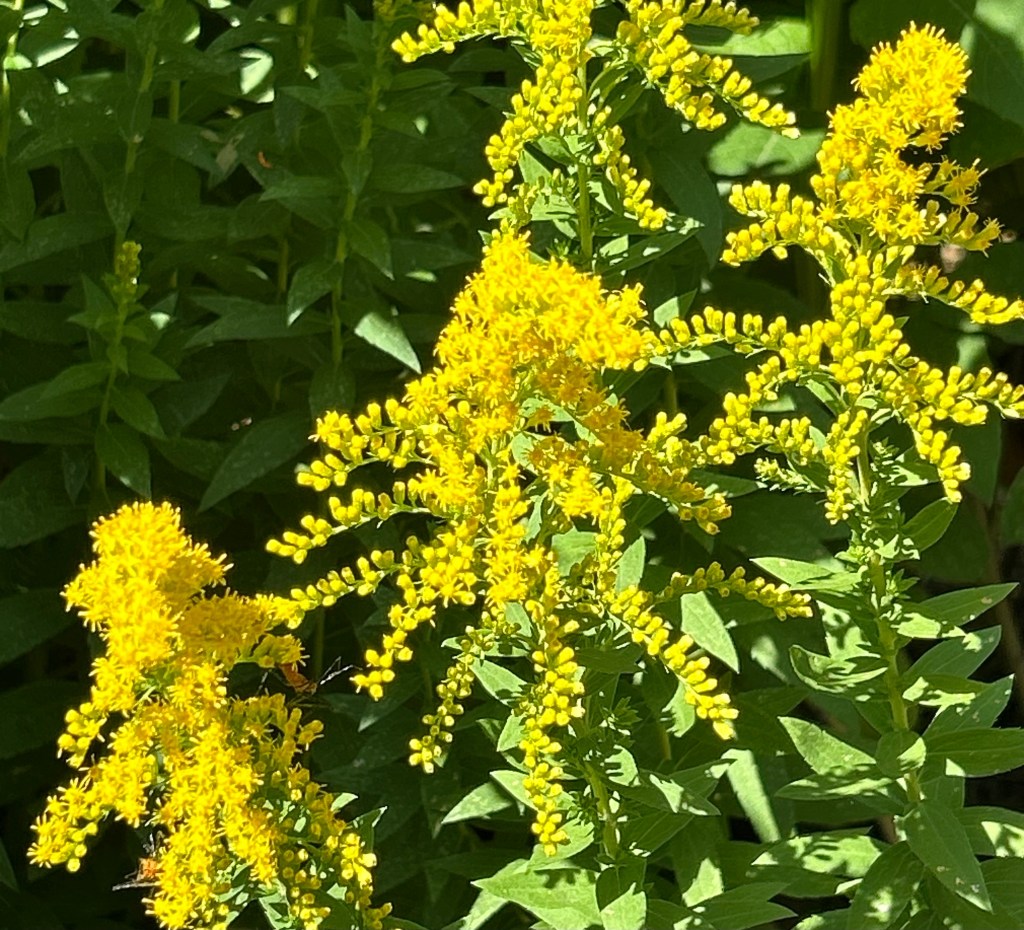
The underrated beauty of native goldenrod.
Tips for Choosing Between Native and Non-Native
1. Prioritize its value to bees, butterflies and other wildlife. Is it a butterfly host plant? Does it provide nectar to bees and/or hummingbirds? Does it produce berries for birds or shelter wildlife?
2. Use non-natives only as supplemental nectar sources, not replacements. Bright blooms can attract butterflies for nectar, but native host plants keep them in your yard and give them a home.
3. Research local native plant lists; many regions provide free guides for pollinator-friendly natives. Cooperative extensions, native plant societies and other local organizations often have lots of information to sift through on local ecology.
4. Avoid hybrids that do not produce nectar or pollen accessible to pollinators. Double blooms are pretty, but some have been breed to lack the nectaries in the center where pollinators can access their food.
Recap:
Native plants are preferable to non-natives because they:
• Thrive naturally with minimal input
• Support native wildlife and food webs
• Resist pests and disease naturally
• Reduce resource use and maintenance
• Protect soil and water health
• Preserve biodiversity and evolutionary heritage

Pearl crescent butterfly sipping nectar from butterfly milkweed (Asclepias tuberosa).
While non-natives can add short-term beauty and nectar, native plants are the cornerstone of a sustainable, pollinator-friendly garden. By focusing on natives, you are creating a garden that supports butterflies, bees, birds and more animals year-round and promoting a thriving ecosystem in the best way you can.
This article covers one part of butterfly gardening. The Butterfly Garden Cheat Sheet shows how these elements fit together at a basic level.
Related Guides:
The Best Native Milkweed Species to Plant in Texas Zone 8
The Ultimate Texas Zone 8 Garden Guide: What to Plant and When
Personal Note (P.S.): I have to add, I just love plants in general and I enjoy the exotic look and blooms of some non-native plants in my own landscape, along with a few more indoors as houseplants too! But the more experience I gain as a gardener, the more joy I get from seeing the ecological and wildlife benefits of the plants I select and spend my time nurturing. That is much of the reason why I created this website: to share that joy of helping butterflies and bees and other creatures thrive while adding something natural and harmonious with the land surrounding that extends beyond my own backyard. So while I am not personally forbidding the use of non-native plants, my desire is to share the subtle beauty and broader impact I have discovered through the use of native plants.
Photo credit: Texas blue bonnets – Caleb Oquendo
 Butterfly garden paradise
Leave a comment