
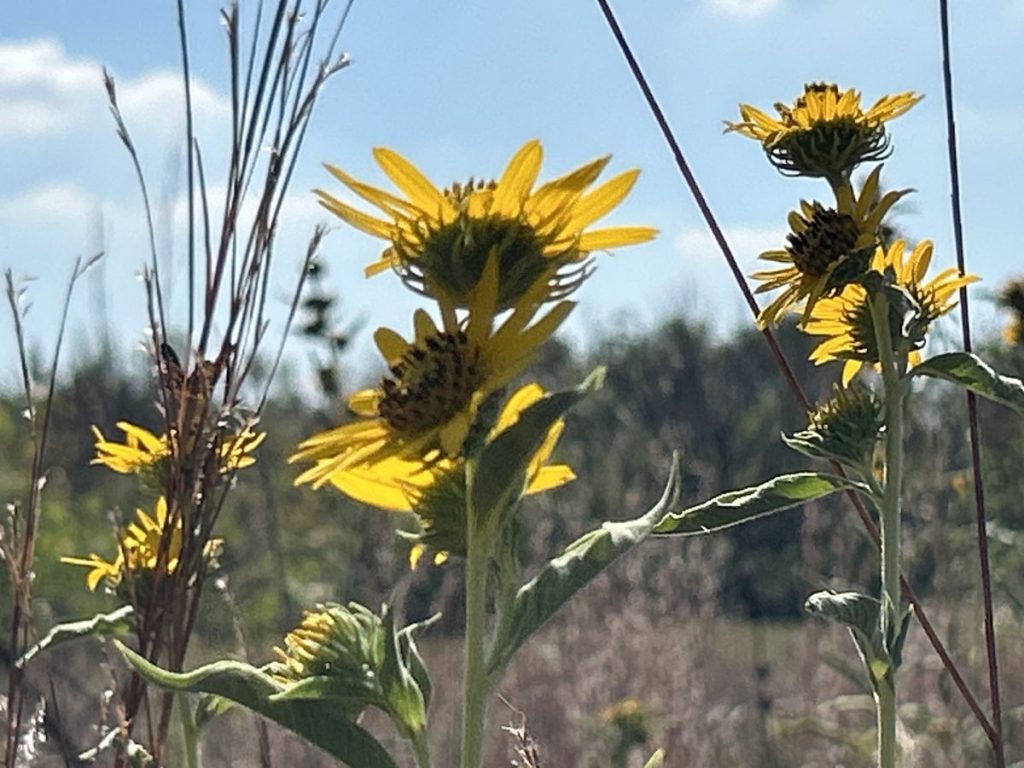
When most people think about native plants, they picture wildflowers, grasses, and shrubs that support pollinators above ground. But the most impressive part of these plants often lies below the surface — their roots. Native plant root systems are the quiet engineers of ecosystems, shaping soil health, water cycles, and even the survival of wildlife.
The Unseen Life Underground
Unlike many ornamental or non-native plants, native species evolved over thousands of years in response to their local climate and soil conditions. This long adaptation process gave rise to extensive and specialized root systems that allow them to thrive without constant human care.
While turfgrass roots rarely exceed 6 inches deep, many native prairie species reach 6–15 feet into the ground. These roots not only draw up deep moisture during drought but also anchor soil, prevent erosion, and create intricate networks that feed life both above and below the surface.
In essence, when you plant a native species, you aren’t just planting a flower — you are restoring an underground ecosystem.
Here are four examples of valuable ecosystems in the United States along with their pillar plants and unique benefits to the environment.
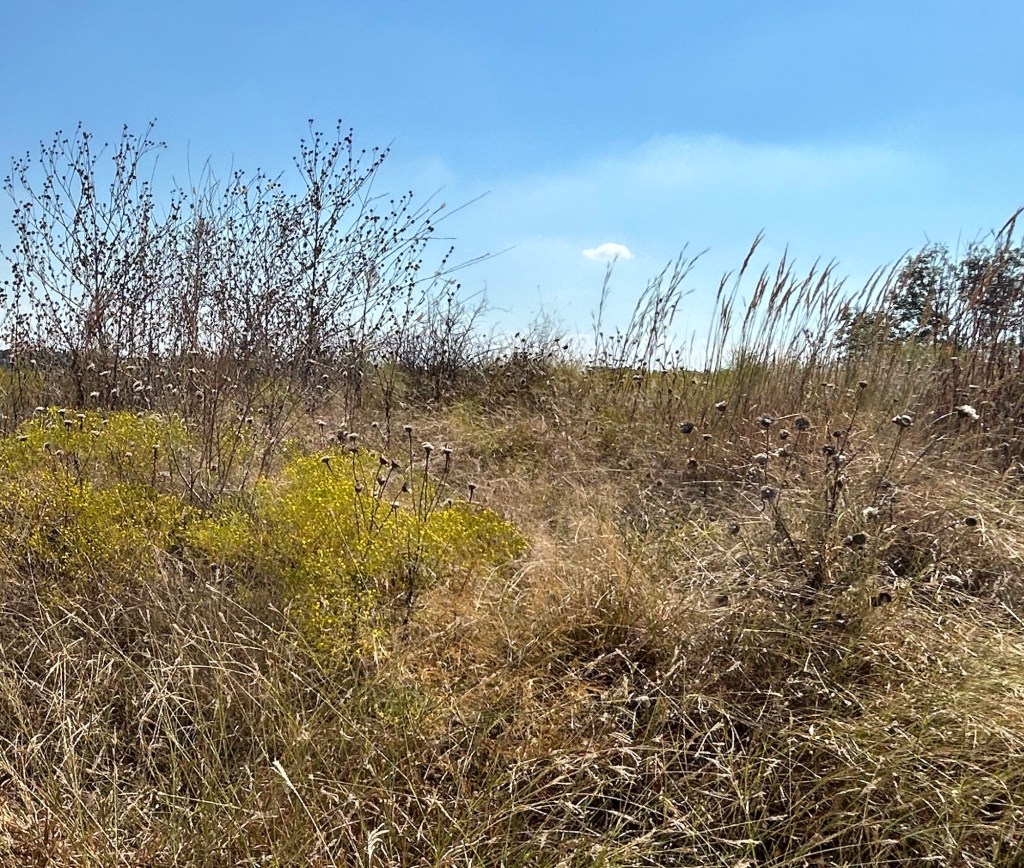
Example of Texas native prairie grasses, shrubs and wildflowers in the fall.
Prairie Ecosystems: Nature’s Living Infrastructure
In grassland ecosystems, native plants form some of the most complex root networks found anywhere on Earth. Species like big bluestem (Andropogon gerardii) and switchgrass (Panicum virgatum) can send roots 10–12 feet into the soil. These roots create vertical channels that improve water infiltration and provide pathways for oxygen, microbes, and earthworms.
Over centuries, this process built the rich, dark prairie soils of North America. Even today, remnant prairies act as massive carbon sinks, locking away atmospheric carbon within deep root tissues and surrounding soil.
The same principle applies to restoration projects — when native grasses return, the soil begins to heal.
Woodland and Savanna Systems: Anchoring Life in the Margins
In oak savannas and open woodlands, native perennials and shrubs fill ecological roles between trees and open prairie. Deep-rooted species like leadplant (Amorpha canescens) and New Jersey tea (Ceanothus americanus) stabilize slopes and dry uplands, while enriching the soil with nitrogen through symbiotic bacteria in their root nodules.
These plants are especially valuable on degraded sites, rocky soils, and old pastures where conventional garden plants struggle. By holding soil in place and rebuilding microbial diversity, they prepare the ground for other species to return — including trees, pollinators, and beneficial fungi.
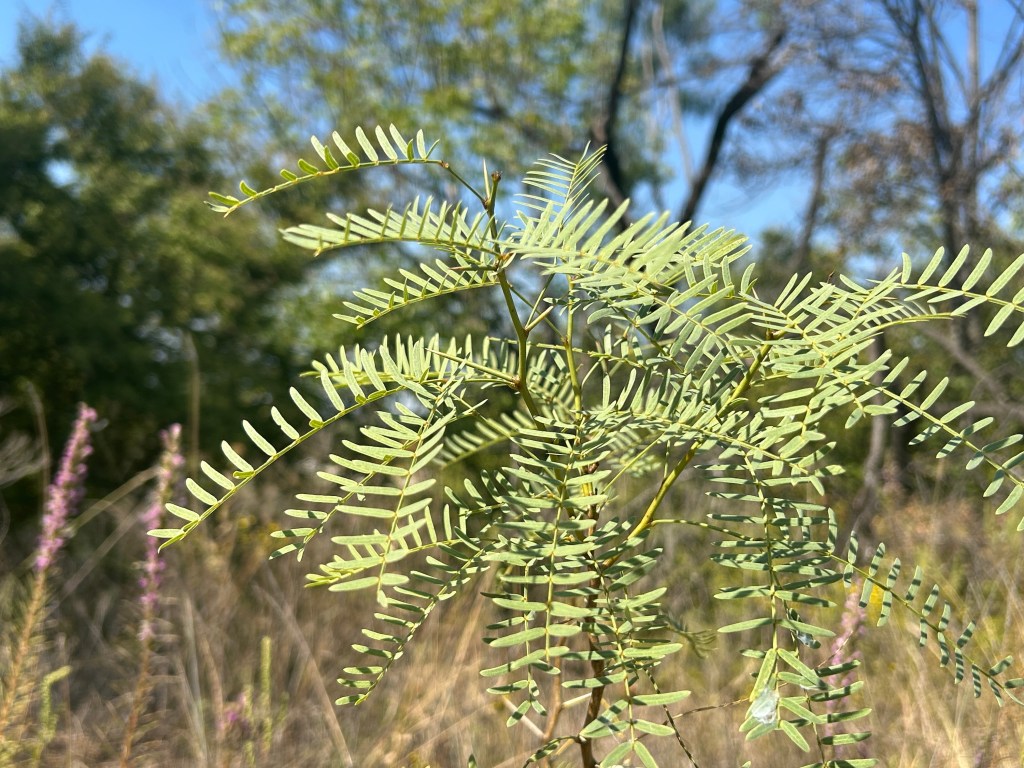
Closeup of the fine leaves and thorns on a small honey mesquite tree.
Desert and Arid Regions: Survival Through Depth
In the arid Southwest, native shrubs and perennials rely on deep taproots to locate scarce water reserves. Mesquite (Prosopis glandulosa), for example, can extend roots 30–40 feet underground, tapping moisture from deep aquifers.
Desert milkweed (Asclepias subulata) and blackfoot daisy (Melampodium leucanthum) also develop long, drought-adapted roots that allow them to survive even in extreme heat while providing essential nectar for desert pollinators. These adaptations make native desert plants ideal for climate-resilient landscaping in dry regions.
Wetlands and Riparian Corridors: Filtering and Holding Water
In wetter regions, deep and fibrous root systems serve a different but equally vital function — filtration and flood control. Native sedges (Carex spp.), rushes (Juncus spp.), and swamp milkweed (Asclepias incarnata) create dense mats of roots that trap sediment, absorb excess nutrients, and slow runoff.
These species literally clean water as it moves through their root zones, acting as living biofilters for ponds, rain gardens, and natural waterways. Their role in preventing erosion along stream banks and stabilizing shorelines cannot be overstated.

Rushes and sedges controlling erosion, filtering sediment and providing wildlife habitat along a pond.
Soil Regeneration and Carbon Storage
Deep roots do not just anchor plants — they change the soil itself. Each year, portions of these roots die back and decompose, adding organic matter to lower soil layers where it remains protected from rapid oxidation. This process steadily increases soil carbon and fertility over time.
A study by the USDA found that native prairie grasses can store up to five times more carbon below ground than most agricultural crops or shallow-rooted ornamentals. That means native gardens are not only beautiful — they directly increase climate resilience in a measurable way.
You can also help build healthy soil and recycle carbon and other nutrients in your own yard with this guide on how to make DIY Leaf Mold.
Examples from Across Ecosystems:

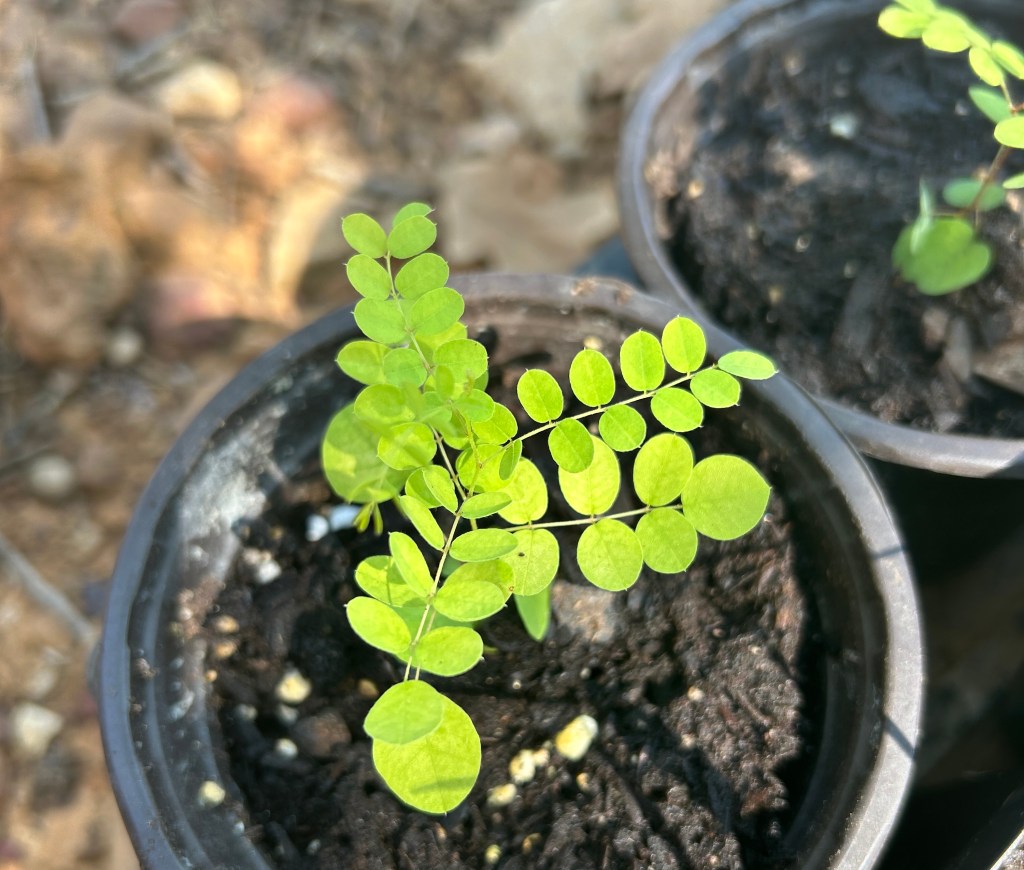
One way to restore the soil is to plant native species. Leadplant has been considered a weed by some, but I will be planting it for its deep roots that make it resistant to drought stress and its purple flowers to feed my local pollinators.
Seeing the Whole Picture
Native plant gardening is often framed around flowers and pollinators — but a huge transformation also occurs underground. By choosing species that grow deep, diverse roots, gardeners and land stewards help rebuild the living foundation of ecosystems: healthy soil.
Every root tunnel, fungal thread, and decomposed fiber contributes to a larger story of resilience — one where ecosystems heal themselves from the ground up. So next time you plant a coneflower, milkweed, or bluestem grass, remember that the most powerful part of your garden may be the part you never see.
This article covers one part of butterfly gardening. The Butterfly Garden Cheat Sheet shows how these elements fit together at a basic level.
Related Guides:
How to Water Native Plants The Right Way
The Ultimate Texas Zone 8 Garden Guide: What to Plant and When
 Butterfly garden paradise
Leave a comment