
Native plants are often marketed as “low-maintenance” or “drought-tolerant,” but they still need proper watering — especially when newly planted. Overwatering, under-watering, or watering at the wrong time can stress plants, reduce blooms, or even kill them. This guide shows you how to water native plants effectively, whether you live in a hot, dry region or a wetter climate.
Why are native plants so awesome? Learn why here.
1. Understand Your Plants’ Needs
• New vs. Established Plants
Newly planted natives need consistent moisture for root establishment, while mature plants often thrive on rainfall alone.
• Soil Type Matters
Sandy soils drain quickly and require more frequent watering; clay soils and organically rich soils hold water longer and take longer to dry out.
• Sun Exposure and Microclimates
Shaded areas retain moisture, sunny or windy spots dry out faster.

A moisture meter showing the soil is dry next to newly planted white mealy cup sage (Salvia farinacea)
2. Watering New Plants
At Planting:
• Water generously immediately after planting.
• Use a slow, deep soak rather than a quick spray to encourage deep root growth.
First Few Weeks:
• Water 2–3 times per week in hot or dry conditions.
• Check the soil regularly and keep the top 2–3 inches slightly damp but not soggy.
• Apply mulch to conserve moisture and moderate soil temperature to reduce the shock from transplanting.
3. Watering Established Plants
• Many native plants require minimal supplemental watering once established.
• Water during prolonged dry periods or heatwaves.
• Deep, infrequent watering encourages strong roots and drought resilience.
• Avoid shallow, daily watering — it encourages surface roots and weak plants.

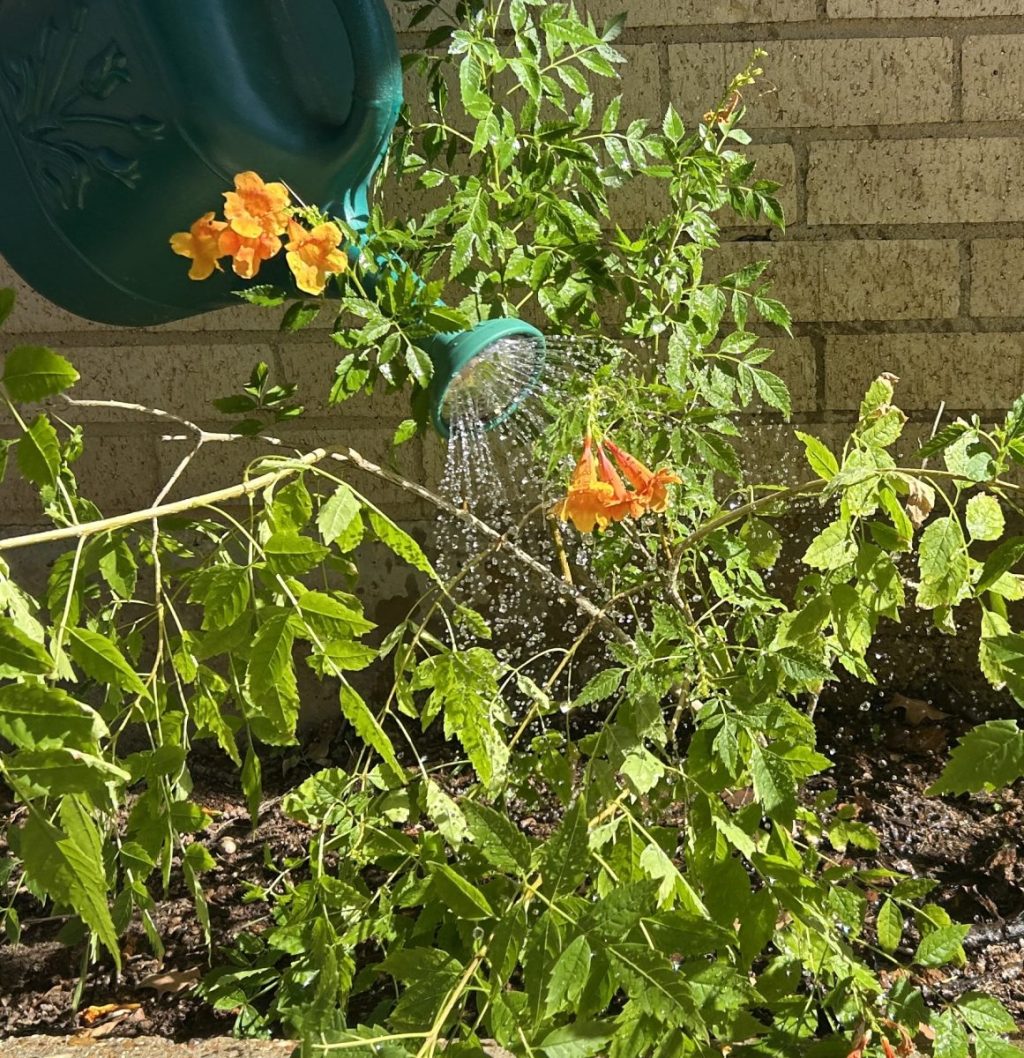
A hose sprayer with adjustable settings is a handy tool for watering. Most natives prefer to be watered at their base, not as shown.
4. Seasonal Watering
Spring
• Moderate watering encourages new growth.
• Mulch helps retain soil moisture and regulate temperature.
Summer
• Deep watering once or twice per week during dry spells.
• Watering in the morning helps plants to absorb it before the heat of the day.
• Monitor for stress: drooping, leaf scorch, or slowed growth.
Fall
• Gradually reduce supplemental watering as temperatures cool.
• Naturally occurring rainfall is often sufficient this time of year.
• Focus water on actively flowering or fruiting plants.
Winter
• Most natives go semi-dormant; water sparingly.
• Avoid water-logging in cool, wet months when plants are not actively growing.
5. Best Practices
• Check Soil
Stick your finger 2–3 inches into the soil; if dry, it is time to water. Alternatively, use a moisture meter.
• Group Plants by Water Needs
Avoid overwatering drought-tolerant species.
• Use Mulch
Conserves moisture, reduces weeds, and moderates soil temperature.
• Water Roots, Not Leaves
Helps prevent disease and encourages deep rooting.

This newly planted Texas sage shrub is very drought-tolerant after established. Overwatering this tough native could actually harm it more than help it.
6. Encouraging Drought Tolerance
• Gradually reduce watering after the first growing season and water only when the plant is showing visible signs of needing water such as wilting leaves and drooping stems.
• Native plants naturally develop deep roots to survive dry periods.
• Combine with companion plants with similar water needs to reduce overall water use.
7. Common Mistakes to Avoid
• Overwatering young plants, causing root rot.
• Ignoring soil type — watering frequency should match soil drainage.
• Watering only foliage instead of the root zone.
• Failing to mulch — leads to faster evaporation and temperature swings.
Final Thoughts
Watering native plants the right way ensures strong growth, abundant blooms, and long-term resilience. By observing soil and plant needs, adjusting for season, and using proper techniques like deep watering and mulching, anyone can maintain a thriving native garden that supports local wildlife and looks beautiful with minimal effort.
This article covers one part of butterfly gardening. The Butterfly Garden Cheat Sheet shows how these elements fit together at a basic level.
Related Guides:
How to Start a Garden from Scratch
How to Build Healthy Soil without Chemicals
The Ultimate Texas Zone 8 Garden Guide: What to Plant and When
 Butterfly garden paradise
Leave a comment