
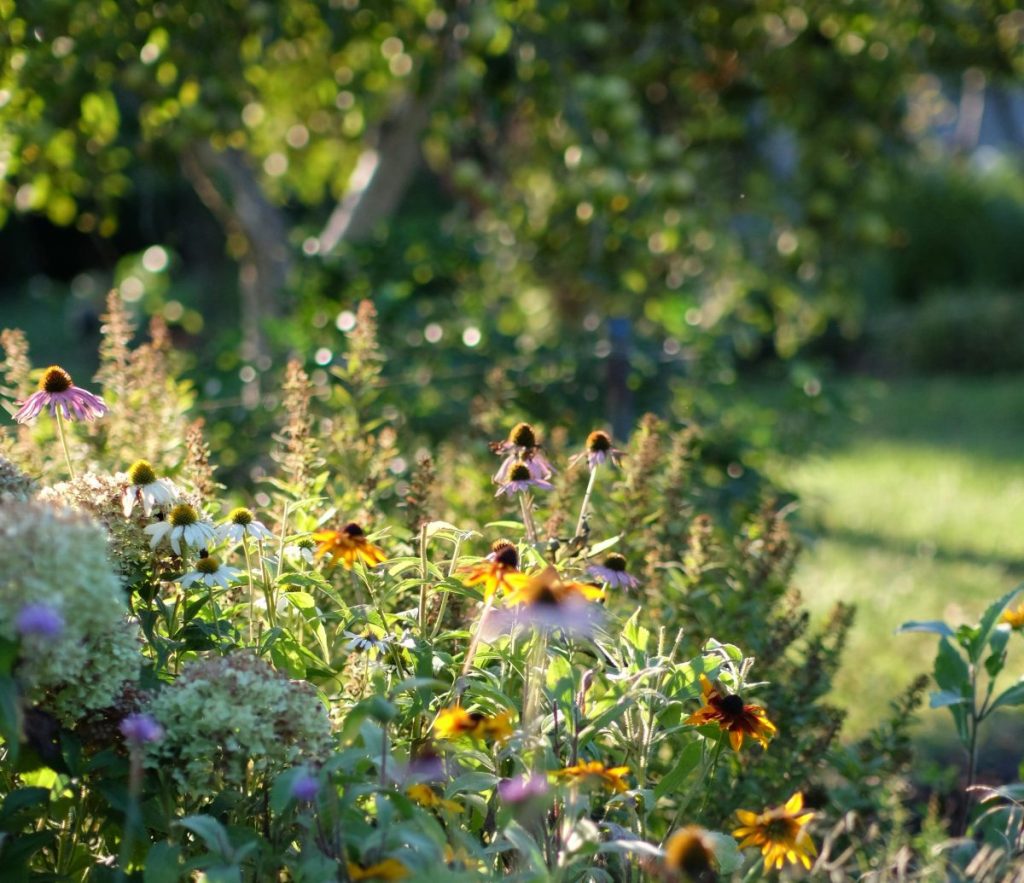
Practical, Pollinator-Friendly Garden Plans for Texas Zone 8 Homeowners
Design Matters for Butterfly Gardens
Planting a garden filled with milkweed, lantana, and coneflowers is one thing — arranging them so butterflies thrive is another. In Texas Zone 8, the heat, soil conditions, and seasonal rainfall patterns influence how plants grow and how butterflies interact with your garden.
The layout of your garden affects:
• Butterfly traffic — adults need easy access to nectar
• Caterpillar safety — larvae need shelter near host plants
• Plant health — spacing and sun exposure prevent disease and stress
In this post, we will explore three simple, realistic butterfly garden designs that work in Texas yards of all sizes.
You will get planting tips, host and nectar plant pairings, and ideas to create gardens that look beautiful while functioning ecologically.
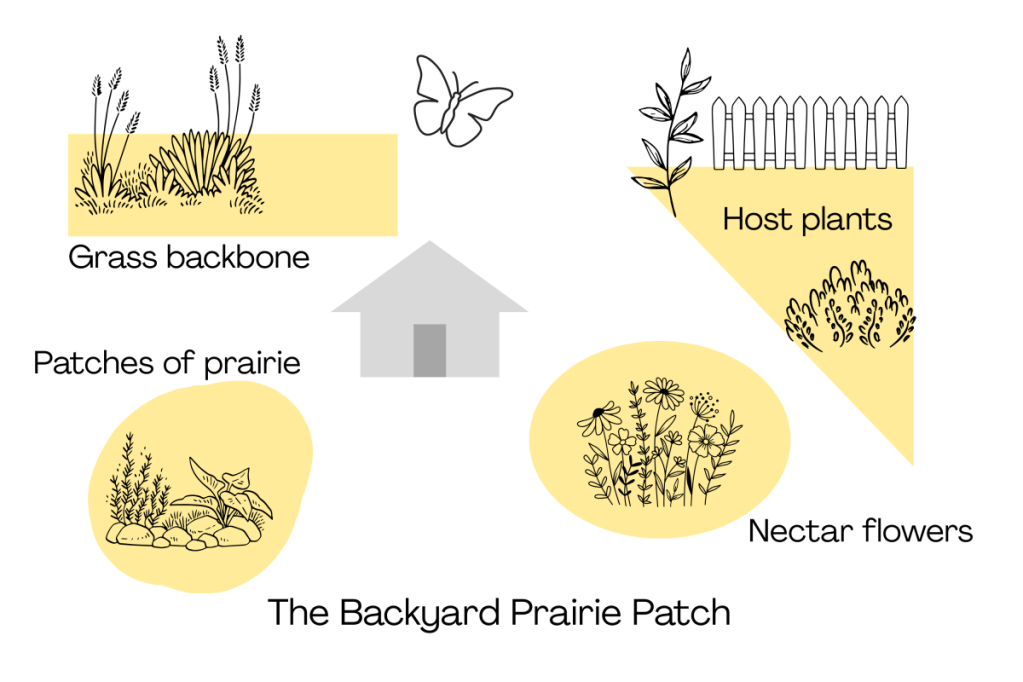
Design 1: The Backyard Prairie Patch
Ideal For:
Medium to large yards with full sun and native soil
Key Concept:
Naturalized, prairie-style beds with clusters of grasses and perennials
Layout Tips
1. Grass Backbone
Use Little Bluestem, Indiangrass, and Sideoats Grama as the structural core. These tall, clumping grasses provide shelter and pupation sites for skippers and other small butterflies.
2. Host Plant Islands
Surround grasses with milkweeds, Gregg’s Mistflower, and Turk’s Cap. Cluster them in small groups to encourage butterfly landings.
3. Layered Plant Heights
Place taller grasses in the back or center, medium perennials around them, and shorter groundcovers (like Zexmenia or Partridge Pea) at the front. This creates visual depth and functional habitat.
4. Pathways and Viewing Areas
Add a simple mulch or stepping-stone path winding through the patch. Butterflies feel safe landing on nectar plants when paths provide access for gardeners without stepping on delicate roots.
Benefits:
• Mimics Texas prairies, giving butterflies familiar habitat
• Low-maintenance once established
• Supports both nectar and host plant needs
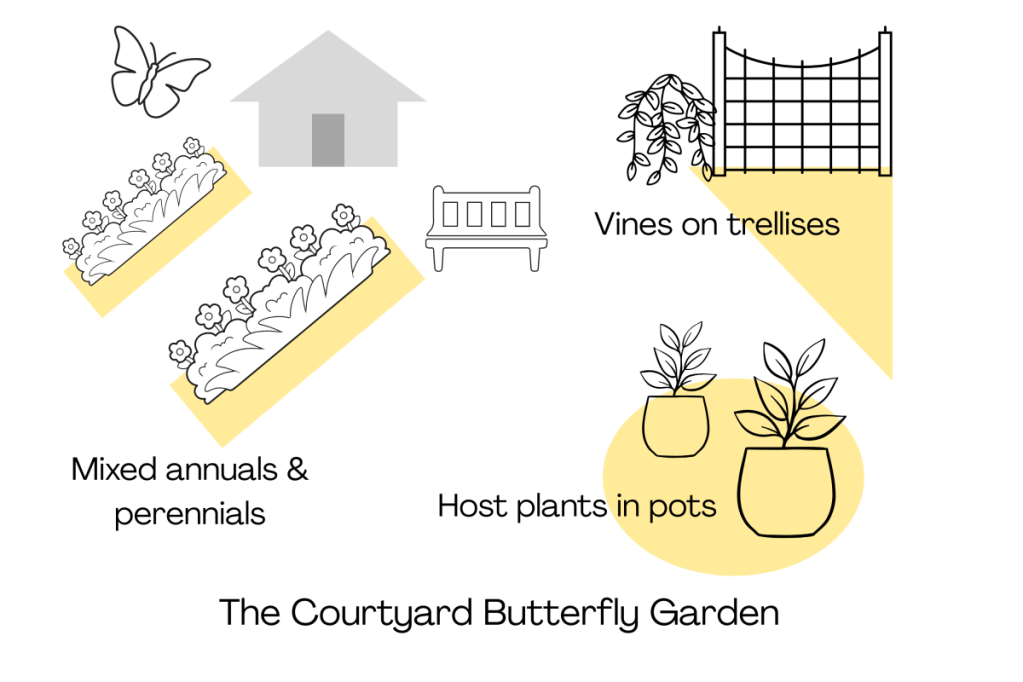
Design 2: The Courtyard Butterfly Garden
Ideal For:
Small to medium yards, patios, or urban spaces
Key Concept:
Compact, high-impact garden using containers and small beds
Layout Tips
1. Host Plant Containers
Place milkweed, Gregg’s Mistflower, or small native shrubs in decorative pots. Containers let you control soil quality, moisture, and spacing, crucial in urban yards.
2. Vertical Interest
Use trellises or small stakes to grow climbing native vines like coral honeysuckle (Lonicera sempervirens). These provide additional perching and nectar spots without taking up much ground space.
3. Seasonal Nectar Rotation
Mix perennials and annuals to ensure continuous bloom from spring to fall. Consider lantana, Zexmenia, and Frostweed for fall and milkweed, Turk’s Cap, and coneflowers for summer.
4. Seating and Observation
Include a small bench or table — a courtyard butterfly garden doubles as a relaxing retreat while letting you observe butterfly behavior.
Benefits:
• Fits small urban yards and patios
• Flexible — you can rotate containers and nectar plants seasonally
• Butterfly-friendly without needing a large lawn
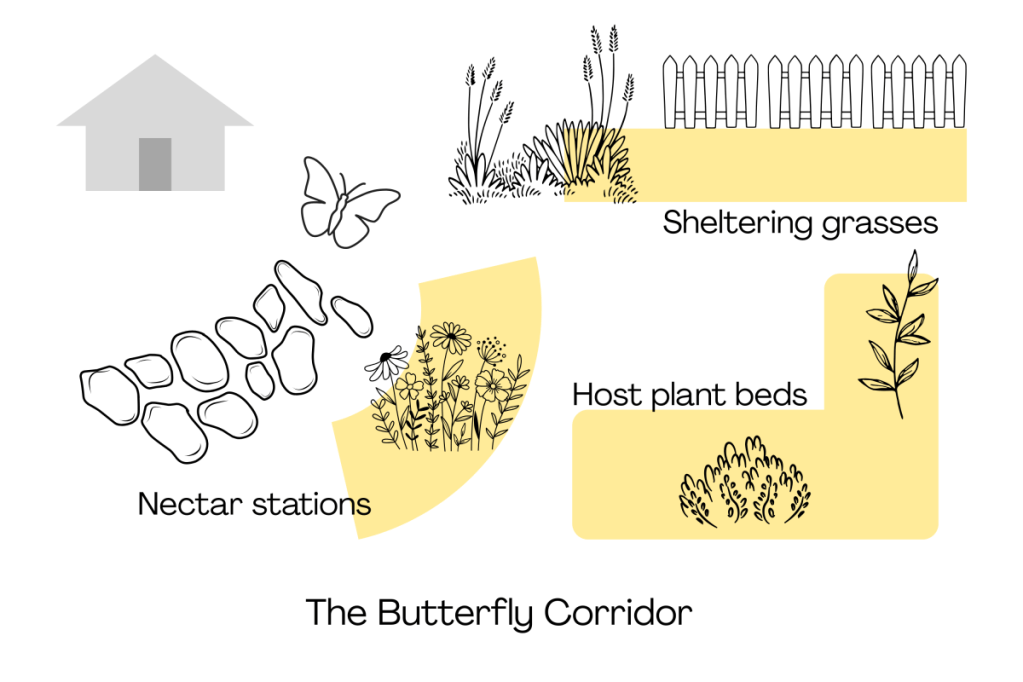
Design 3: The Butterfly Corridor
Ideal For:
Narrow yards, fences, or side gardens
Key Concept:
Linear planting that guides butterflies along a garden path
Layout Tips
1. Linear Host Plant Beds
Plant milkweeds, Swamp Milkweed, and Liatris in a line along fences or walkways. This creates a “highway” for caterpillars and adults to travel safely through the yard.
2. Mixed Nectar Stations
Intermingle tall nectar plants like Gregg’s Mistflower or Maximilian Sunflower with shorter blooms. Butterflies prefer clustered nectar sources along their path.
3. Add Sheltering Grasses
Include Little Bluestem, Gulf Muhly, or Switchgrass along the edge of the corridor to provide hiding spots for skippers and pupating larvae.
4. Seasonal Layering
Plant a mix of spring, summer, and fall bloomers to support butterfly activity throughout the year.
Benefits:
• Works well in narrow or awkward spaces
• Protects butterflies from open yard hazards like wind or pets
• Creates an eye-catching feature along fences or property lines
Key Design Principles for All Butterfly Gardens
Regardless of layout, successful butterfly gardens share some universal traits:
1. Sun and Shade Balance
Most Texas-native butterflies need full sun for nectar feeding, but shaded areas help them rest and avoid overheating.
2. Host Plant Proximity
Caterpillars need host plants near nectar plants. Avoid isolating milkweeds or other host species too far from nectar sources.
3. Layering for Habitat
Combine grasses, shrubs, and perennials to provide height, cover, and microclimates.
4. Continuous Bloom
Choose plants that stagger bloom times, ensuring butterflies have food from early spring through late fall.
5. Low Chemical Use
Avoid pesticides, herbicides, and fungicides. Even “safe” chemicals can harm larvae or adult butterflies.
6. Water Strategically
A shallow puddler or damp area is appreciated by butterflies for hydration and mineral intake.
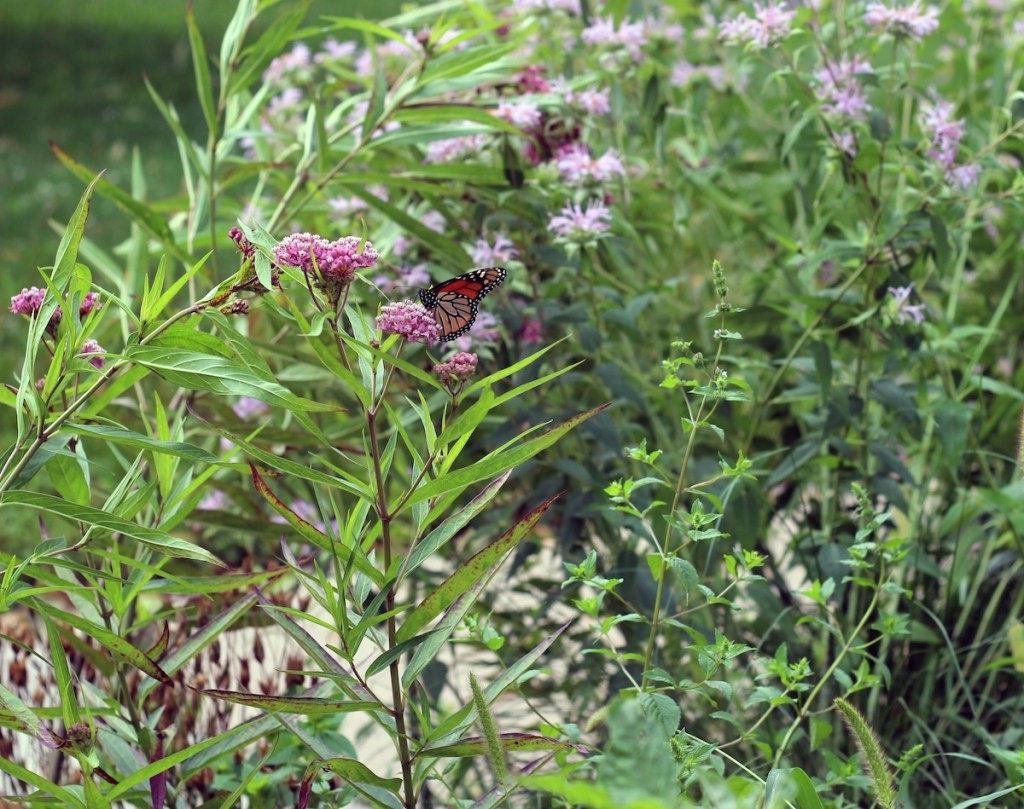
Monarch butterfly on swamp milkweed in a butterfly garden with both nectar and host plants.
Bonus Tips for Realistic Texas Yards
• Edge Planting:
Plant nectar sources near fences or walls to create windbreaks and safe landing areas.
• Native Soil Advantage:
Texas-native plants thrive best in local soil conditions; amend minimally to avoid over-fertilization.
• Use Clusters:
Grouping three to five of the same species increases butterfly activity more than planting singles.
• Overwintering Preparation:
Leave some dried stalks, leaves, or grasses for caterpillars and pupae to survive winter.
Sample Plant Combinations for Each Layout table
Conclusion
A butterfly garden is not just about pretty flowers — it is about creating a functional habitat where caterpillars can thrive, adults can feed safely, and the ecosystem is balanced.
Whether you choose a naturalized prairie patch, a cozy courtyard, or a linear butterfly corridor, the key is:
• Host plants for larvae
• Nectar plants for adults
• Grasses and shrubs for shelter and microclimates
• Thoughtful layout that matches your space
With a little planning, even a small Texas Zone 8 yard can support dozens of butterfly species, create visual interest, and provide year-round pollinator benefits.
This article covers one part of butterfly gardening. The Butterfly Garden Cheat Sheet shows how these elements fit together at a basic level.
Related Guides:
The Complete Guide to Butterfly Gardening: How to Attract, Feed, and Protect Butterflies All Year
Texas Butterfly Garden Calendar: Month-by-Month What to Plant and What to Expect
How to Create a Monarch Waystation in Texas Zone 8
Photo credits: cover garden – Roman Biernacki, Monarch in milkweed garden – USFWS Midwest, Public domain, via Wikimedia Commons
 Butterfly garden paradise
Leave a comment