
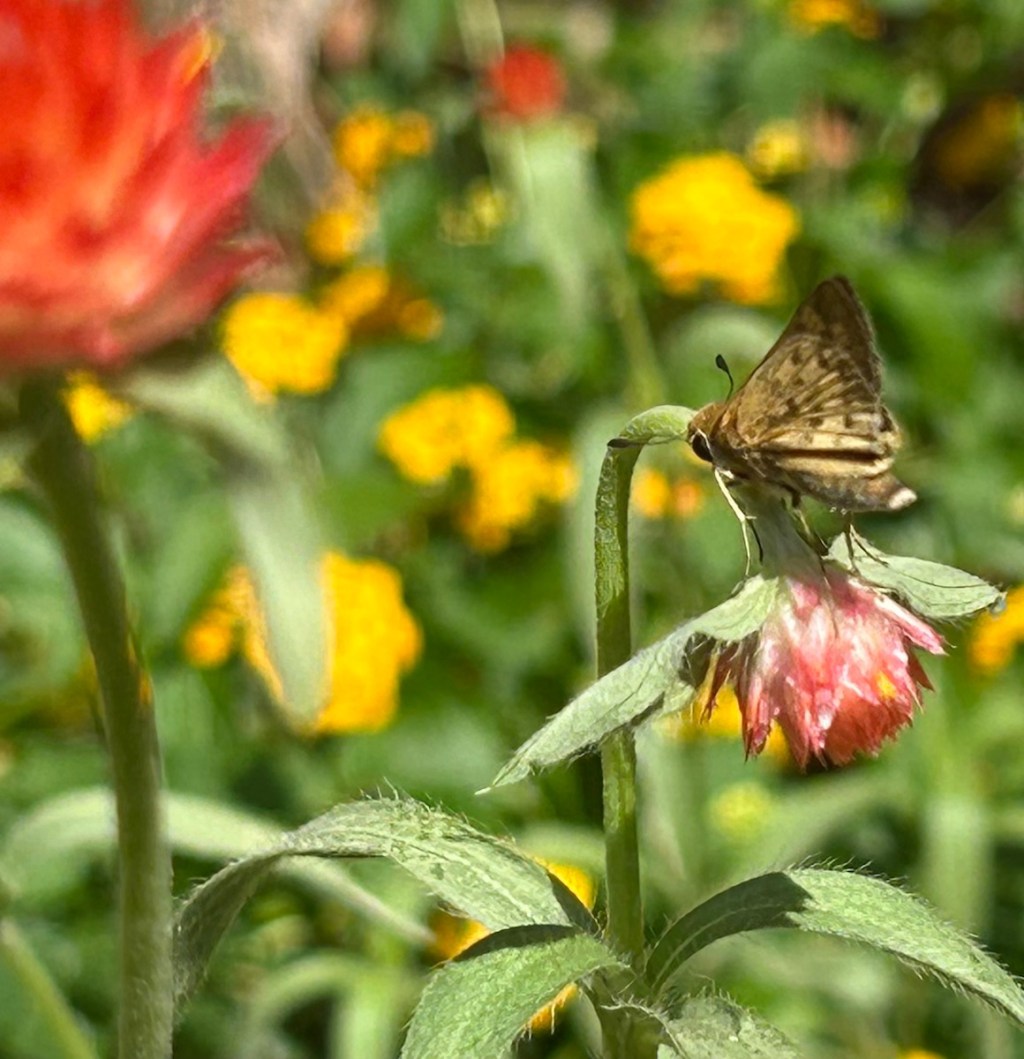
Support Skippers, Hairstreaks, Sulphurs, and More With the Right Native Plants in Your Zone 8 Garden
Why Gardeners Forget These Butterflies
Most gardeners focus on monarchs and swallowtails — the big, colorful butterflies everyone recognizes. But Texas is home to dozens of smaller, less flashy butterflies that rely on very specific native plants to survive. These include:
• Skippers
• Hairstreaks
• Sulphurs
• Brush-footed types (such as Red admirals and more)
• Anglewings
While they may be small, these butterflies are critical to healthy ecosystems. They pollinate native plants, feed birds, and maintain the balance of your garden’s food web. Yet, because they are overlooked, sometimes gardeners unintentionally remove or fail to plant the host plants these species need.
This guide will help you:
• Identify lesser-known butterflies in Texas
• Choose host plants that support their larvae
• Strategically plant your garden to attract them
• Avoid common mistakes that prevent them from thriving
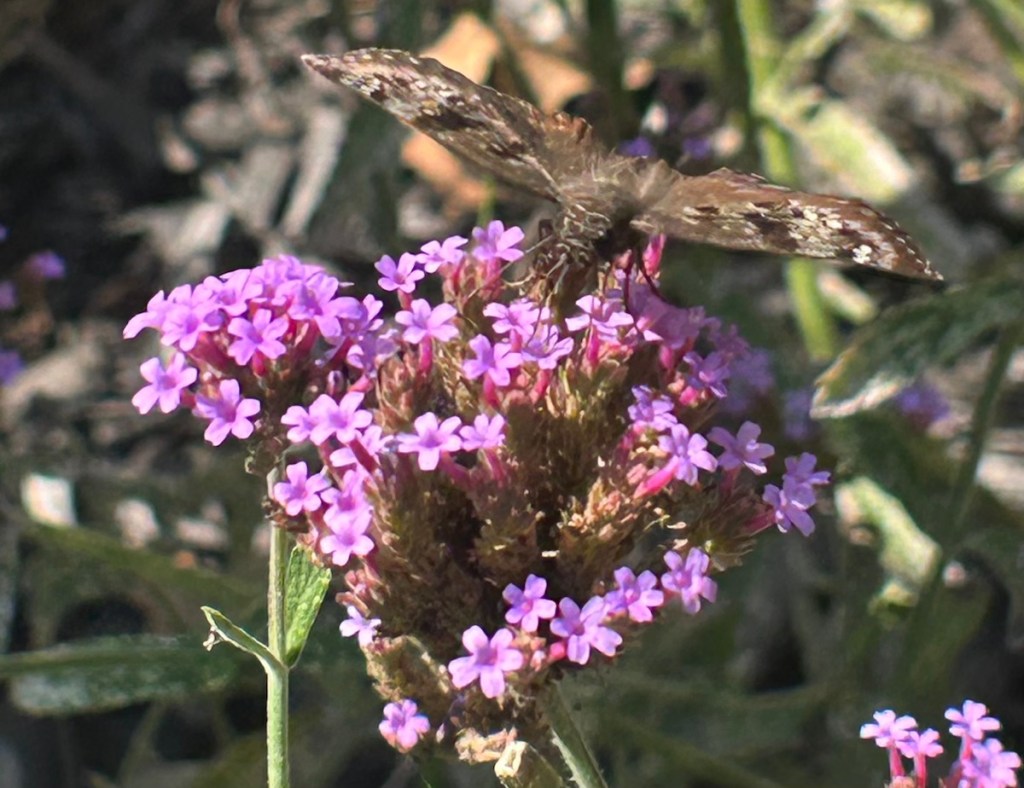
Horace’s duskywing a type of skipper butterfly feeding on tall verbena flowers.
1. Skippers (Family Hesperiidae)
Skippers are fast, darting butterflies that are easy to miss. Many species are grass specialists, meaning their caterpillars feed exclusively on certain native grasses.
Key Host Plants for Skippers:
• Little Bluestem (Schizachyrium scoparium) – supports many grass skippers
• Sideoats Grama (Bouteloua curtipendula) – hides pupae and larvae in its clumping foliage
• Switchgrass (Panicum virgatum) – tall, upright blades create microhabitats
Tips for Skipper Success:
• Plant grasses in clusters rather than single rows
• Leave stems intact over winter for overwintering pupae
• Provide nearby nectar sources like lantana, Gregg’s mistflower, or zexmenia
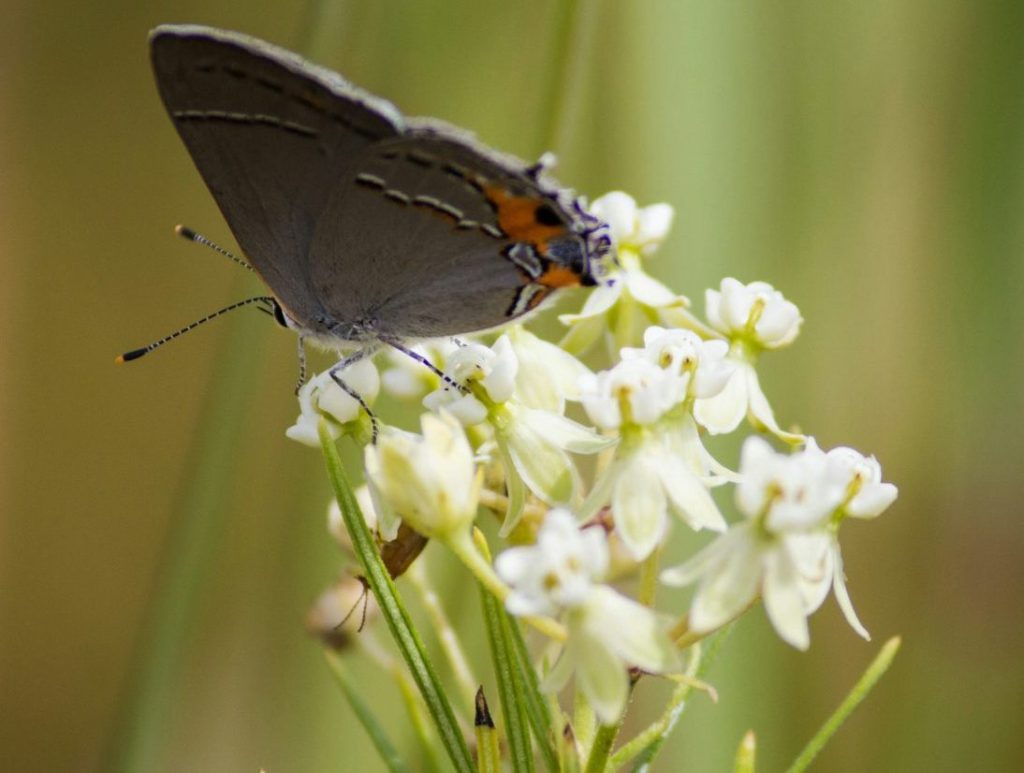
Gray hairstreak butterfly on whorled milkweed flowers. See the best native milkweed species to plant in Texas for monarchs.
2. Hairstreaks (Family Lycaenidae)
Hairstreaks are small, often iridescent butterflies with intricate patterns and delicate tails. Many of their caterpillars feed on shrubs and small trees rather than flowers or grasses.
Notable Hairstreak Host Plants:
• Texas Persimmon (Diospyros texana) – supports gray hairstreak caterpillars
• Elderberry (Sambucus nigra ssp. canadensis) – feeds multiple hairstreak larvae
• Prickly Ash (Zanthoxylum fagara) – supports the giant swallowtail (and also a rare hairstreak host)
Tips for Hairstreak Gardening:
• Plant shrubs along garden edges or in small groves
• Avoid over-pruning — hairstreak caterpillars feed on young leaves and shoots
• Include nectar plants nearby to encourage adult activity
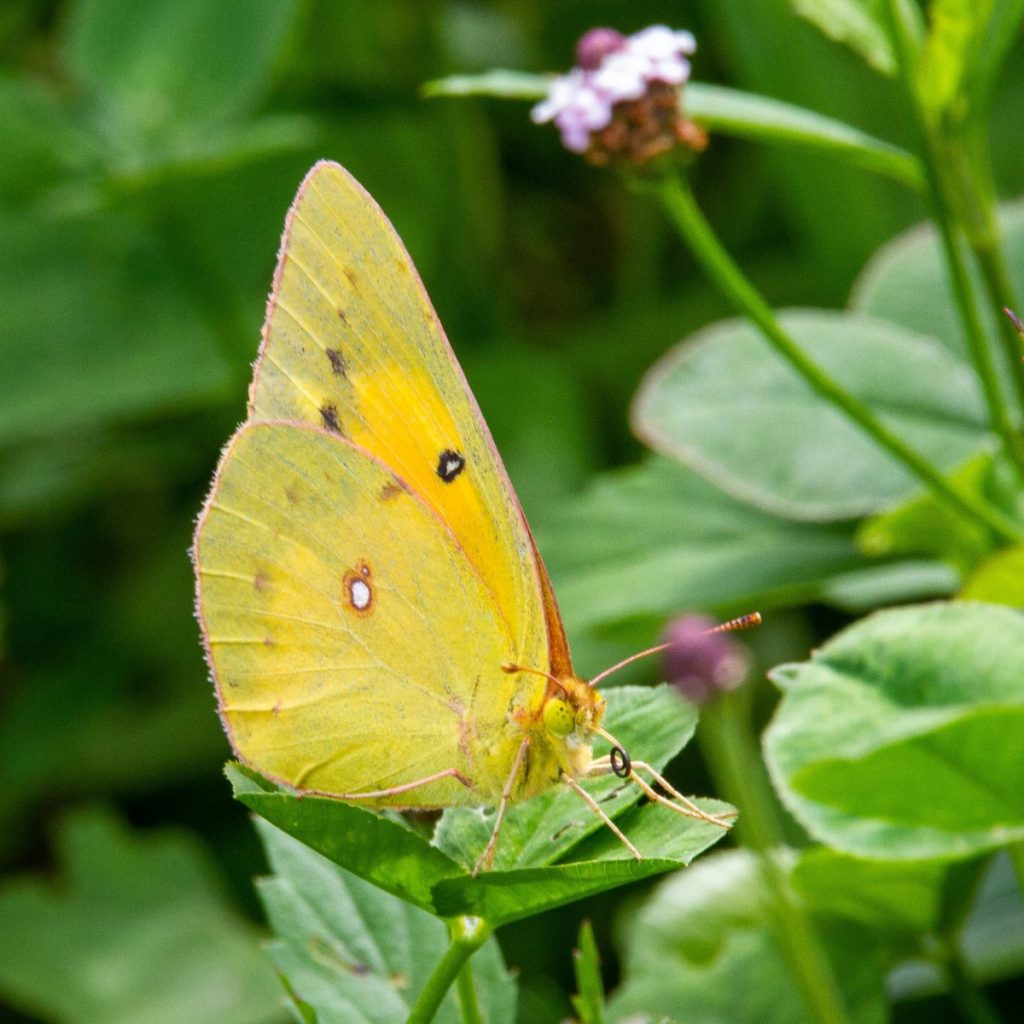
Orange sulphur butterfly on a clover leaf with frogfruit flowers in the background.
3. Sulphurs (Family Pieridae)
Sulphur butterflies are usually light yellow or whitish, and many gardeners mistake them for moths. Their caterpillars are specialized, feeding on legumes (pea family) and certain low-growing plants.
Best Host Plants for Sulphurs:
• Partridge Pea (Chamaecrista fasciculata) – bright yellow flowers feed adults and larvae
• Black Locust (Robinia pseudoacacia) – host for multiple sulphur species
• Desmodium (Desmodium spp.) – supports small sulphurs and long-tailed skippers
Sulphur Gardening Tips:
• Plant in sunny spots for vigorous growth
• Avoid excessive fertilization — natural soils favor larvae development
• Include flat, open flowers nearby for adults to feed
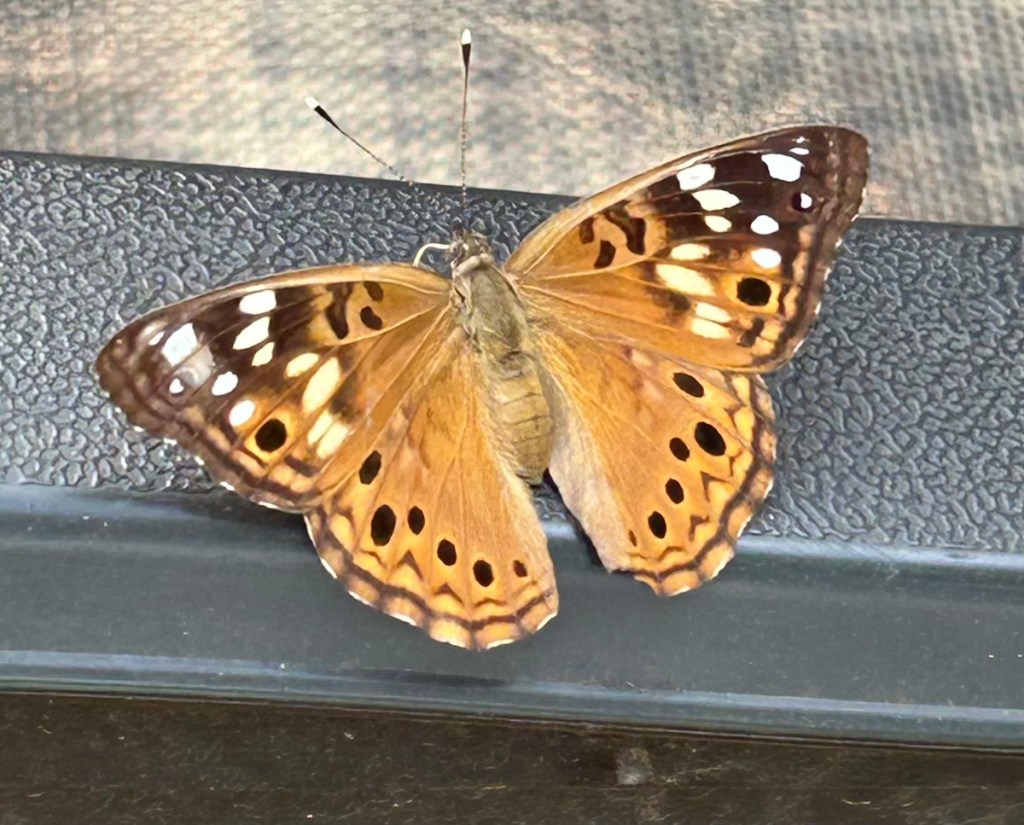
Hackberry emperor butterflies love rotting fruit and even sweat from this chair arm
4. Brush-Footed (Family Nymphalidae)
Brush-footed butterflies—like Red Admirals, Painted Ladies, Hackberry Emperors, and Mourning Cloaks—tend to use trees, shrubs, and tough wild plants as their host species rather than delicate herbs. Many rely on specific natives such as nettles, hackberry, elm, or various thistles for their caterpillars. Because these plants are often already present in Texas landscapes, these butterflies can be surprisingly common once you know what to look for.
Brush-footed Host Plants:
• Nettles (Urtica, Boehmeria, Laportea species) – host plants for red admirals
• Hackberry/ Sugarberry tree (Celtis species) – exclusive hosts for tawny & hackberry emperors
• False/ Heartleaf Nettles – Red admiral and painted lady host plants
• Thistles (Cirsium species) and Mallows (Malva and Alcea species) – primary hosts for painted ladies
• Willows (Salix ), Poplar/Cottonwood (Populus) – key hosts for viceroys
Planting even a few of these hosts can quietly support an incredible amount of hidden butterfly diversity in a Texas garden.
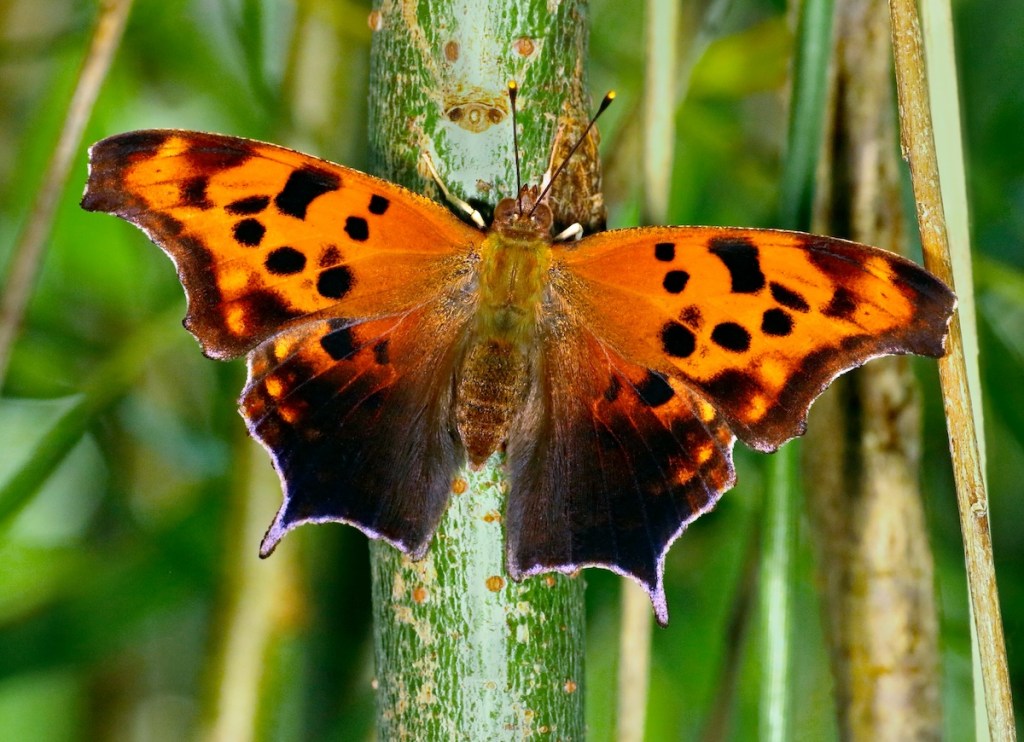
Question mark butterfly resting on a stem.
5. Anglewings (Family Nymphalidae)
Anglewings like eastern comma and question mark butterflies both have beautiful patterns and are named for their distinct angular outline. Their caterpillars feed on nettles and elm tree leaves, making them easy to miss in a garden dominated by showy blooms.
• Elms (Ulmaceae family) – American elm, Cedar elm, Slippery elm
• False/ Heartleaf Nettles (Urtica species), Hops (Humulus species)
• Hackberry/ Sugarberry trees (Celtis species) – host for question mark butterflies
Gardening Tips for Brush-footed/Angelwings:
• Plant host shrubs/trees in partial shade or edges
• Avoid chemical sprays — anglewing larvae are extremely sensitive
• Incorporate fallen leaves as overwintering habitat
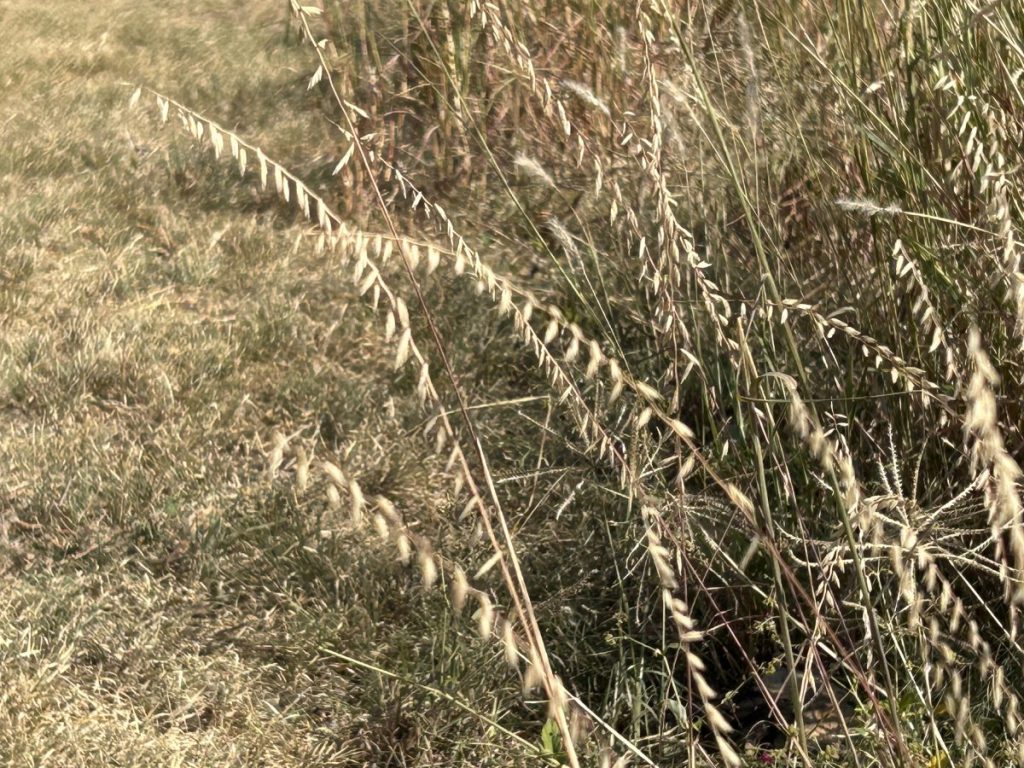
Sideoats grama is a host plant for skippers. Native grasses also provide shelter and habitat and are a great addition to a butterfly garden. Visit this list of native grasses that support butterflies.
Creating a Garden That Supports Lesser-Known Butterflies
1. Plant Diversity Is Key
Mix grasses, shrubs, perennials, and trees. A diverse garden ensures food for multiple species.
2. Leave Some Wild Areas
Lesser-known butterflies thrive where gardens are not manicured. Leave a corner of tall grasses, fallen leaves, or low shrubs for shelter and pupation. Learn exactly how Texas butterflies survive the winter.
3. Nectar Plants Matter, Too
Even if the host plant provides food for larvae, adults need nectar. Include milkweed, mistflower, lantana, and coneflowers to support all stages. For more planting options see top nectar plant for butterflies including maintenance tips.
4. Seasonal Planting
Plant fall bloomers like Gregg’s mistflower and frostweed to support migrating or late-season butterflies. Spring perennials like purple coneflower and Turk’s cap help early-season species.
5. Avoid Common Pitfalls
• Pesticides: Even organic sprays can harm caterpillars
• Over-trimming shrubs or grasses: Remove too much, and you remove hiding spots
• Ignoring soil and sunlight requirements: Most natives prefer well-draining soil and full sun
Strategic Garden Layout Ideas
• Grasses in the back or center: Provide shelter and pupation sites for skippers
• Shrubs along edges: Hairstreaks and anglewings use these for larvae and protection
• Perennials throughout: Ensure nectar for adult butterflies everywhere
• Cluster host plants near nectar sources: Caterpillars feed safely while adults feed nearby
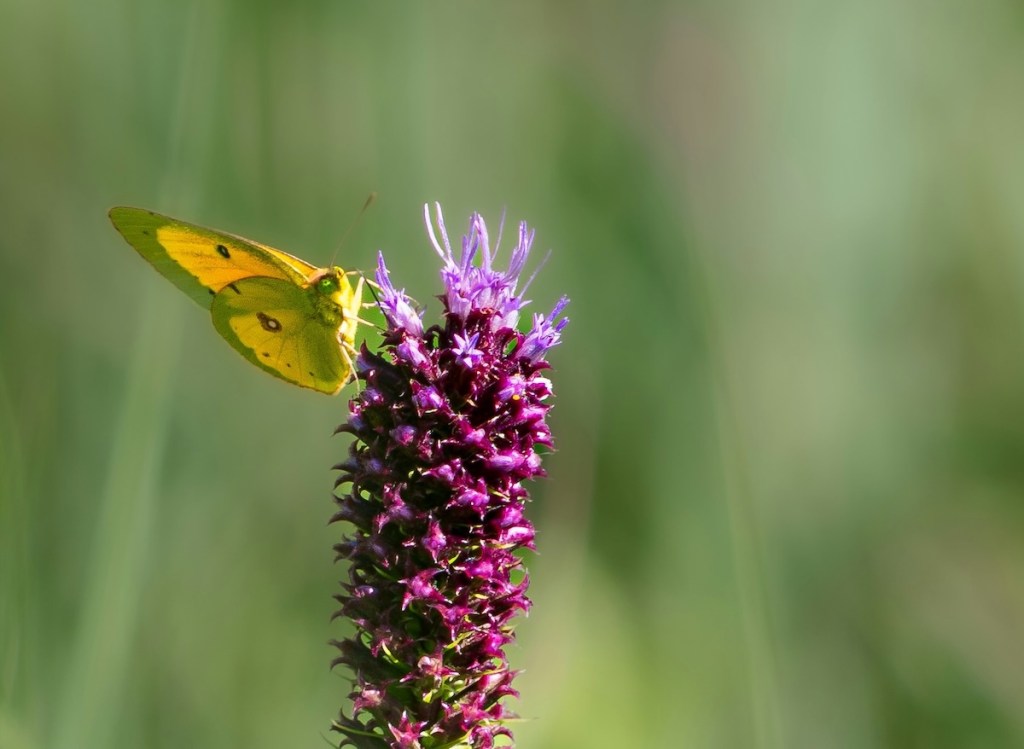
Southern dogface sulphur butterfly drinking nectar from liatris flowers.
Bonus Tip: Tracking Your Garden’s Lesser-Known Butterflies
• Keep a journal of host plants and sightings
• Photograph caterpillars and adults to identify species
• Share observations with local native plant societies or iNaturalist to help conservation efforts
Even small gardens can have remarkable diversity once you plant the right hosts. A few overlooked shrubs or grasses can transform a standard butterfly garden into a thriving ecosystem.
Conclusion
Supporting lesser-known butterflies is not difficult — it just requires intention and diversity. By adding:
• Native grasses for skippers
• Shrubs for hairstreaks and anglewings
• Legumes for sulphurs
• Nearby nectar plants for adults
… your Texas Zone 8 garden becomes a mini wildlife refuge, helping these overlooked species survive, reproduce, and thrive.
Your garden will not only look beautiful, it will function as a real ecological hub. In my own garden, I really enjoy the multitude of small butterflies and the diversity and extra cuteness they provide.
This article covers one part of butterfly gardening. The Butterfly Garden Cheat Sheet shows how these elements fit together at a basic level.
Related Guides:
The Complete Guide to Butterfly Gardening: How to Attract, Feed , and Protect Butterflies All Year
Common Mistakes that Scare Butterflies Away: How to Keep Your Garden Butterfly-Friendly
The Ultimate Texas Zone 8 Garden Guide: What to Plant and When
Photo credits: Gray hairstreak butterfly, southern dogface sulphur – Jeffrey Hamilton, question mark butterfly- Thomas Elliott
 Butterfly garden paradise
Leave a comment