
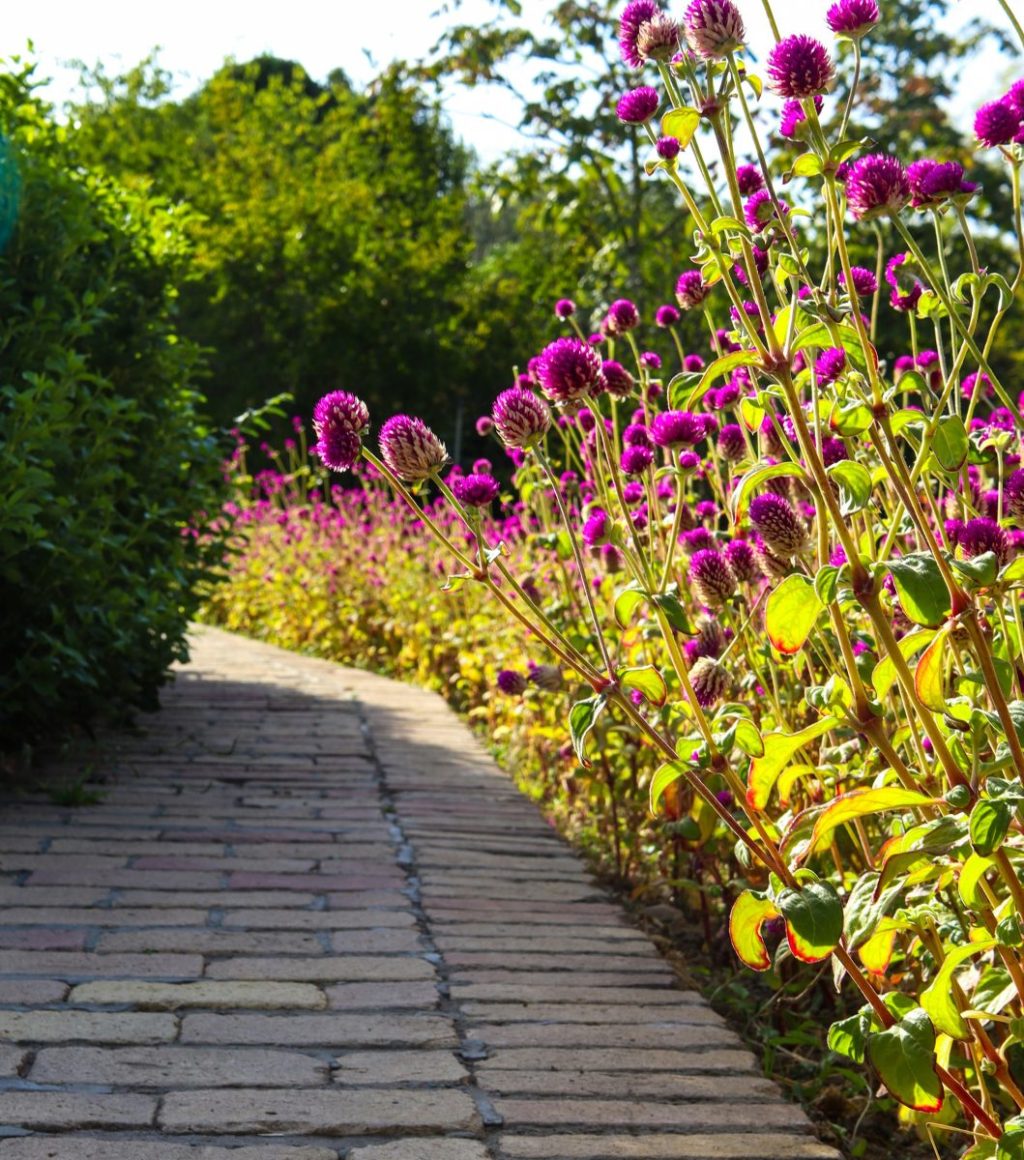
Butterfly gardening in Texas can be more than planting pretty flowers—it is about creating pathways. In nature, butterflies do not stay in one spot for long. They travel… they search… they follow scent trails, patches of color, sun pockets, and nectar corridors that lead them across the landscape.
When you design your space as a butterfly pathway garden, you’re not just making a beautiful backyard—you’re creating a functional route where butterflies can refuel, breed, rest from the heat, and continue their journey across Texas.
This guide will walk you through exactly how to design a pathway garden that butterflies naturally follow, with simple steps and plant recommendations specific to Zone 8 and Texas conditions (clay soil, drought, extreme heat).
1. What Is a Butterfly Pathway Garden?
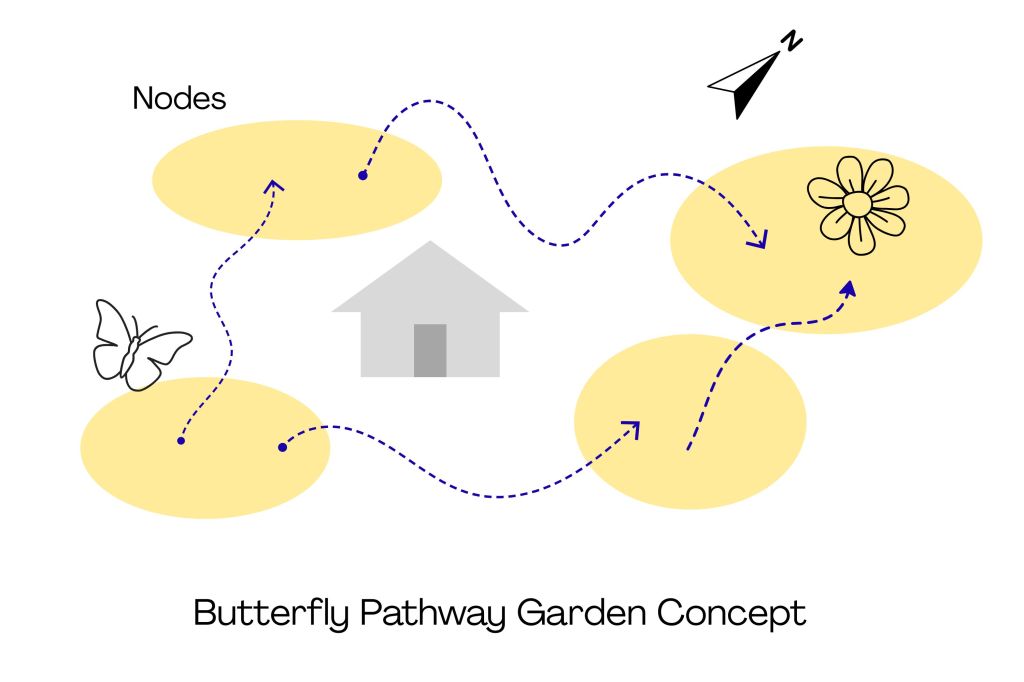
A butterfly pathway garden is a landscape design that uses continuous nectar sources, host plants, and connected planting pockets to create a “trail” butterflies can follow from one end of your yard to the other.
Think of it as:
• A nectar corridor
• A butterfly highway
• A migratory rest-stop system
• A guided path of color and scent
Instead of isolated flowerbeds, you create linked patches spaced 10–20 feet apart. Butterflies are naturally drawn to patches of flowers (in contrast to single plants), so this pattern supports their movement and increases sightings dramatically.
2. Why Pathway Gardens Work Better Than Regular Beds
Butterflies search for nectar differently than bees—they do not systematically search every plant. Instead, butterflies will:
• Follow color clusters
• Move toward sunny open spaces
• Navigate by warmth, scent, and shape
• Flutter in zigzag patterns looking for the next resource
A normal garden bed is a destination. A pathway garden is a journey.
Benefits:
• Higher butterfly traffic
• Better habitat for migrants (monarchs, queens, painted ladies)
• More egg-laying because host plants are easier to find
• Lower pest pressure because plants are more spaced and mixed
• More natural, meadow-like look without losing structure
This approach also matches how Texas butterflies actually forage—in short bursts, moving from patch to patch.
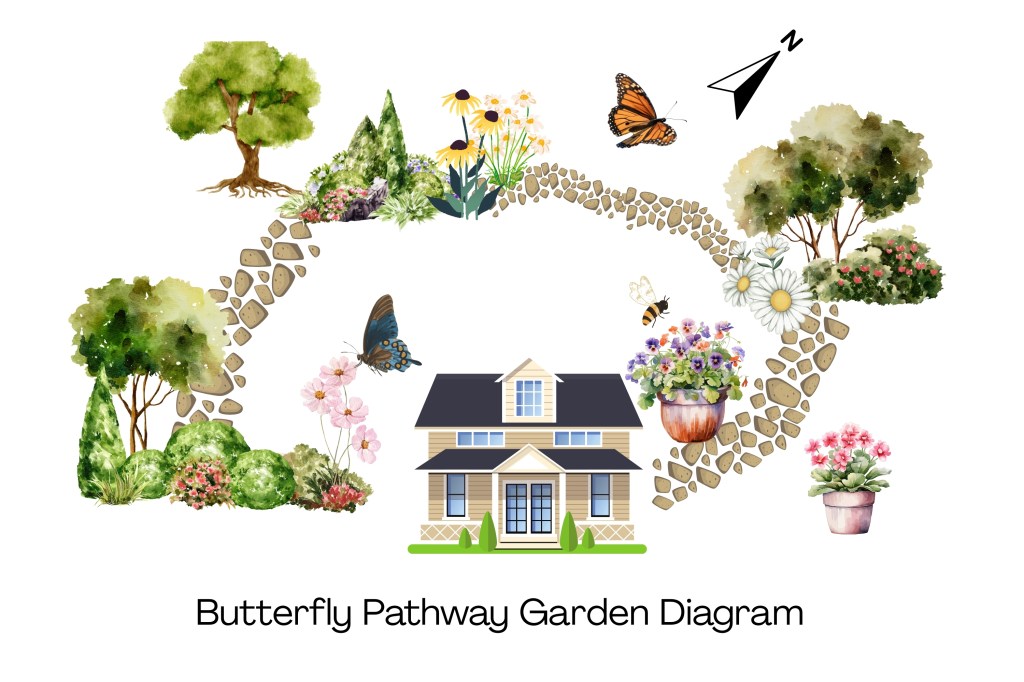
Example of butterfly-friendly nodes around a backyard connected by pathways and oriented north to south.
3. The Formula: How to Lay Out a Butterfly Pathway Garden
Here is the simplest 4-step design formula to follow:
Step 1: Choose a Direction
Butterflies move according to:
• Sun
• Open flight lanes
• Wind patterns
So map a path that follows:
• A south-to-north line (monarch-friendly)
• Or an east-to-west line with morning and afternoon sun
Your path can curve, zigzag, or encircle the yard.
Step 2: Create Planting “Nodes” Every 10–20 Feet
Each node should have:
• 1–2 host plants
• 3–5 nectar plants
• 1 structural plant (something tall or architectural)
Examples:
• 3 Gregg’s mistflower + 1 milkweed + 1 salvia
• 5 mealy blue sage + 1 passionvine
• 3 coneflower + 1 frostweed + 1 native grass
Nodes are the “stepping stones” butterflies follow.
Step 3: Connect Nodes Visually
You can connect nodes using:
• Stones
• A mowed grass path
• Mulched walkway
• Short native grasses
• Low creeping groundcovers (frogfruit is perfect for this and nectar-rich)
Butterflies do not need a literal path. The path serves visually to break up the space and give your eye a route. Plus, it is helpful for you and others to have an access-way for tending to and enjoying your garden.
Step 4: Include Resting and Hiding Areas
Rest-stop elements:
• Flat stones (warming pads for early mornings)
• Bushes or mini-shrubs (cenizo, sage) for shelter
• Small log piles
• Partial shade pockets
Butterflies are cold-blooded and cannot regulate their temperature. Your pathway becomes their climate control.
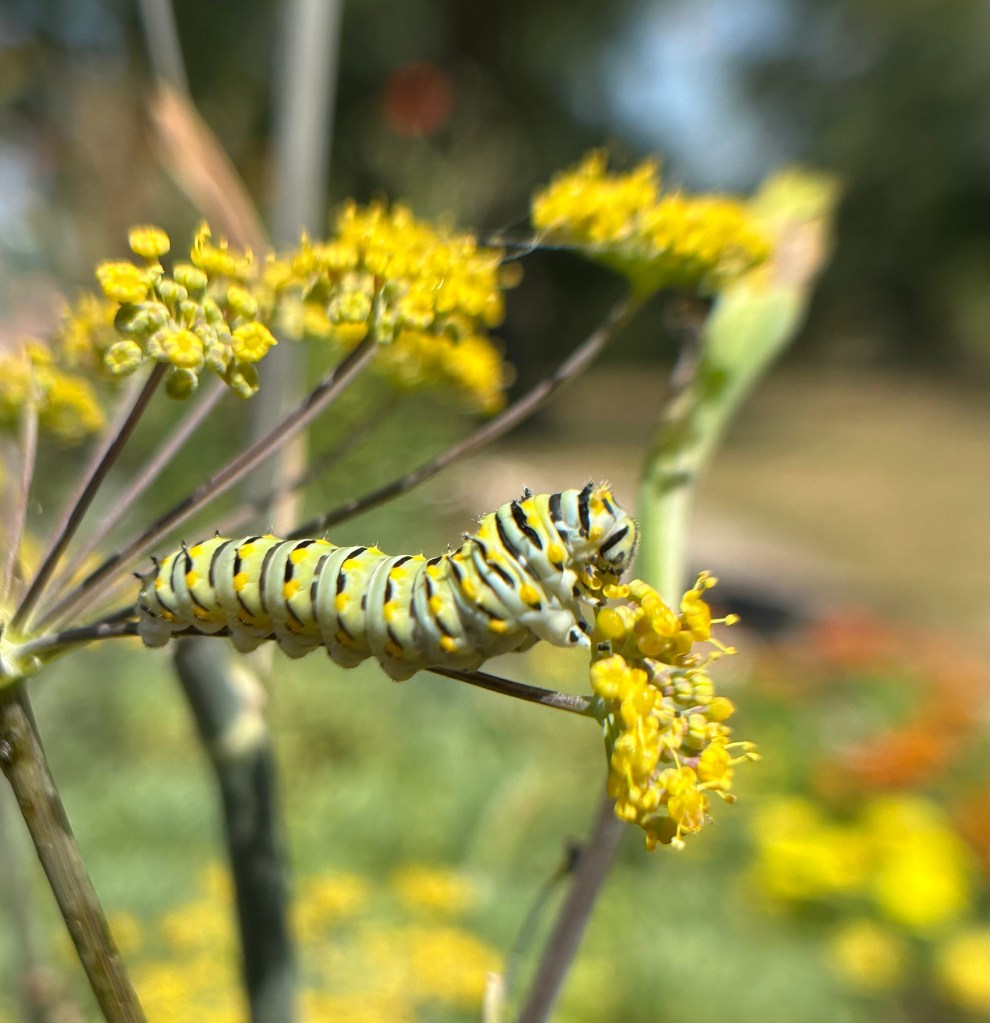
Black swallowtail butterfly caterpillar eating one of its host plants, bronze fennel.
4. The Best Plants for a True Butterfly Pathway Garden (Texas Zone 8)
Below is a curated plant list intentionally chosen to survive Texas summers, rocky clay soil, and erratic rains.
HOST PLANTS (Egg-Laying Plants)
Monarchs & Queens
• Antelope-horn milkweed (A. asperula)
• Green milkweed (A. viridis)
• Zizotes milkweed (A. oenotheroides)
Swallowtails
• Rue
• Fennel
• Prairie parsley
• Hop tree
Gulf Fritillary & Variegated Fritillary
• Passionvines (ex. P. incarnata)
Painted Ladies
• Globe mallow
• Thistles
Skippers & Hairstreaks
• Native grasses
• Oaks (as anchor trees)
NECTAR PLANTS BY SEASON
Spring
• Prairie verbena
• Blackfoot daisy
• Bluebonnets
• Spiderwort
• Coral honeysuckle
• Coneflower
Summer
• Mealy blue sage
• Rock rose
• Desert willow
• Lantana urticoides
• Echinacea purpurea
Fall (the critical migration season)
• Frostweed
• Goldenrod
• Maximilian sunflower
• Gregg’s mistflower
• Cowpen daisy
• Blazing star a.k.a. Gayfeather (liatris species)
Use these species or similar to create a seamless nectar corridor from March through November.
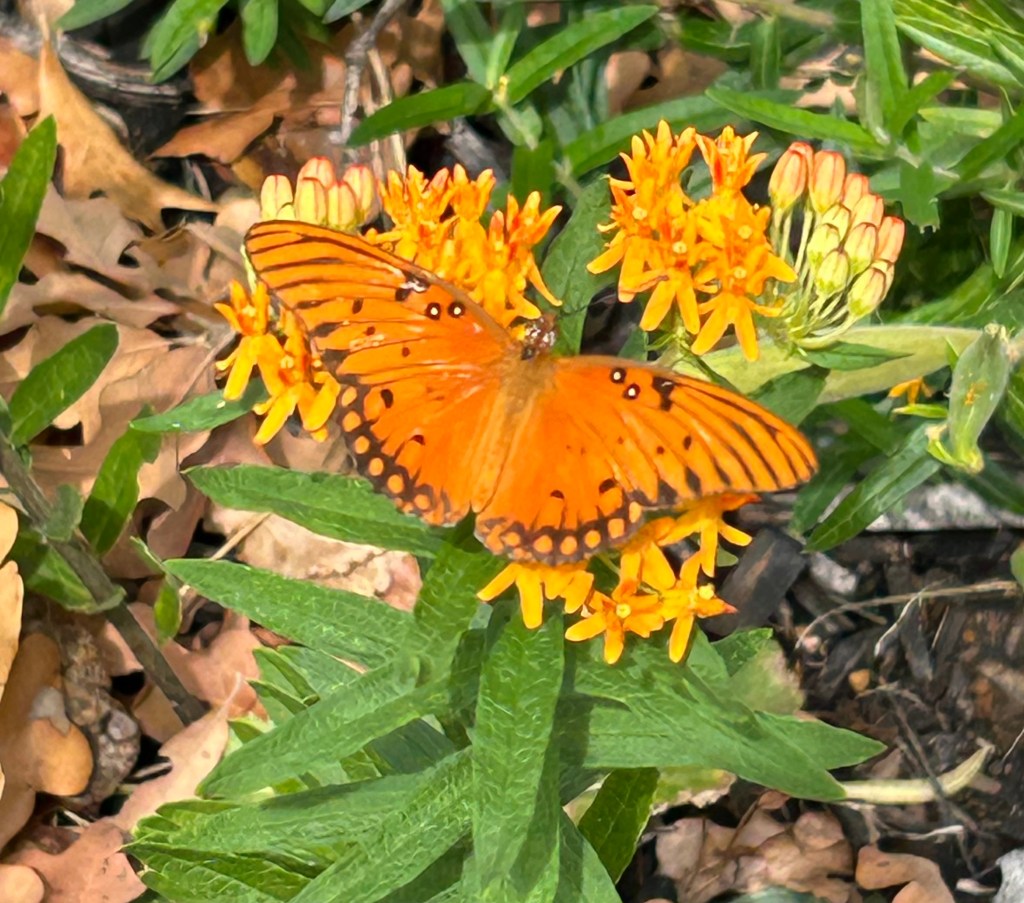
Gulf fritillary butterfly feeding on nectar from native orange milkweed.
5. How Wide Should Your Pathway Be?
For a residential yard:
• Main path: 3–4 feet
• Side pockets / plant nodes: 2–6 feet diameter
• Spacing between nodes: 10–20 feet
• Overall length: 20–60 feet is perfect
If you are tight on space:
Switch to a U-shape or looping walkway.
To fill large spaces, try a serpentine path with nodes tucked into curves.
6. Soil Prep for Texas Butterfly Pathways
You do not need perfect soil—you need consistent structure.
For Rocky Clay (common in Zone 8):
• Add expanded shale to improve drainage and aeration
• Mix in organic matter like leaf mold or compost
• Top with 3 inches mulch after planting
For Raised Beds:
• ⅓ compost
• ⅓ topsoil
• ⅓ coarse sand or grit
• Add leaf litter each fall
• Avoid peat in Texas
For In-Ground Beds:
Plant hardy natives directly and amend only the top 4–6 inches.
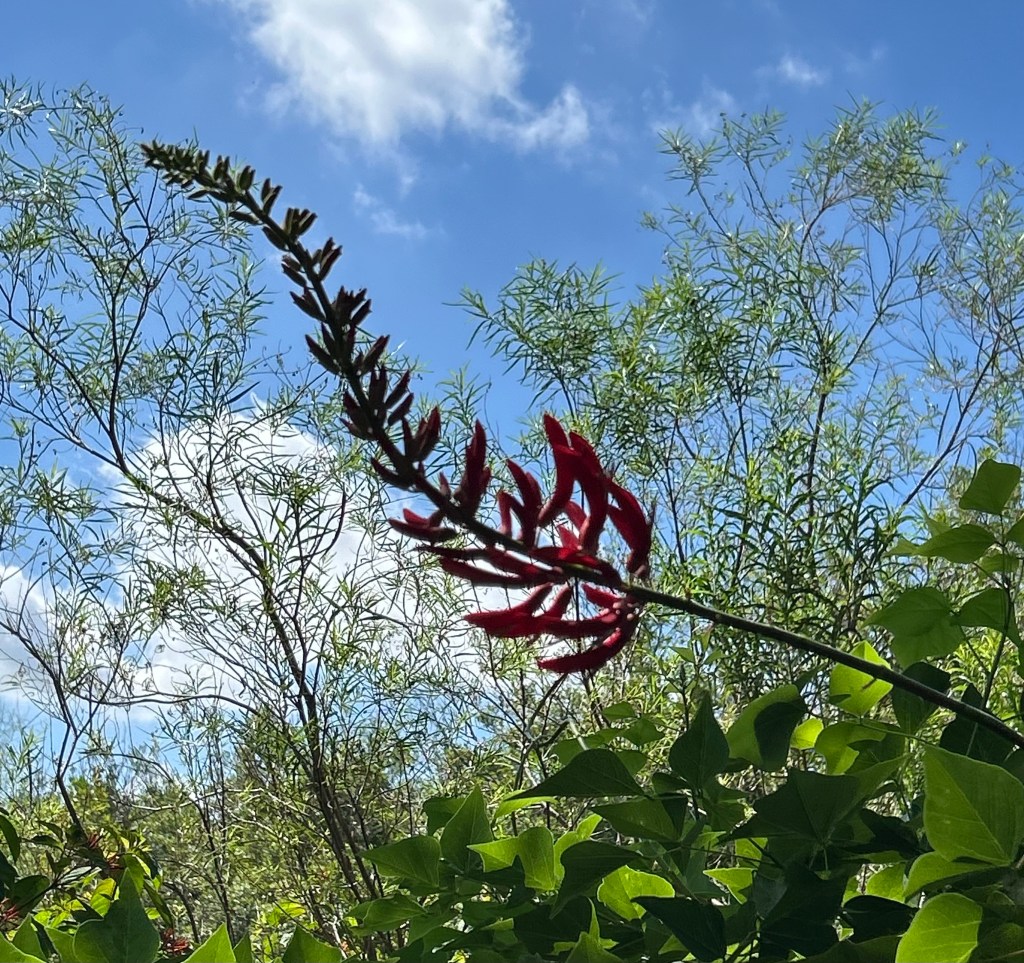
Coral bean shaded from the afternoon sun by surrounding trees.
7. Shade, Water, and Heat Management—Texas Strategy
Shade Strategy
• Morning sun + afternoon shade is ideal for a pathway bed.
• Salvias, mistflower, and milkweed still bloom beautifully in part shade.
Watering
• Deep water once weekly in the first season
• Twice weekly during 100–105°F spikes
• Reduce water drastically in fall to prepare plants for dormancy
• To learn more on how to water native plants correctly see this guide.
Heat Tips
• Add flat stones to create warming pads
• Plant bushes or tall salvias as heat buffers
• Mulch generously to protect roots
Hotter days = more butterfly traffic if nectar is available.
8. Optional Add-Ons That Make a Huge Difference
Puddling Station
Butterflies drink from muddy, mineral-rich water.
Use:
• A shallow saucer
• Sand + soil + water
• Replace weekly
• Complete steps for a DIY Puddler
Basking Rocks
Flat, dark stones heat quickly and help butterflies warm up to fly.
Native Grasses
These provide:
• Shelter
• Caterpillar cover
• Movement texture
Good options:
• Sideoats grama
• Little bluestem
• Curly mesquite
Aromatic Plants
Not crucial but fun to add:
• Rosemary
• Lemon beebalm
• Mountain mint
These can help pollinators orient themselves along the pathway.
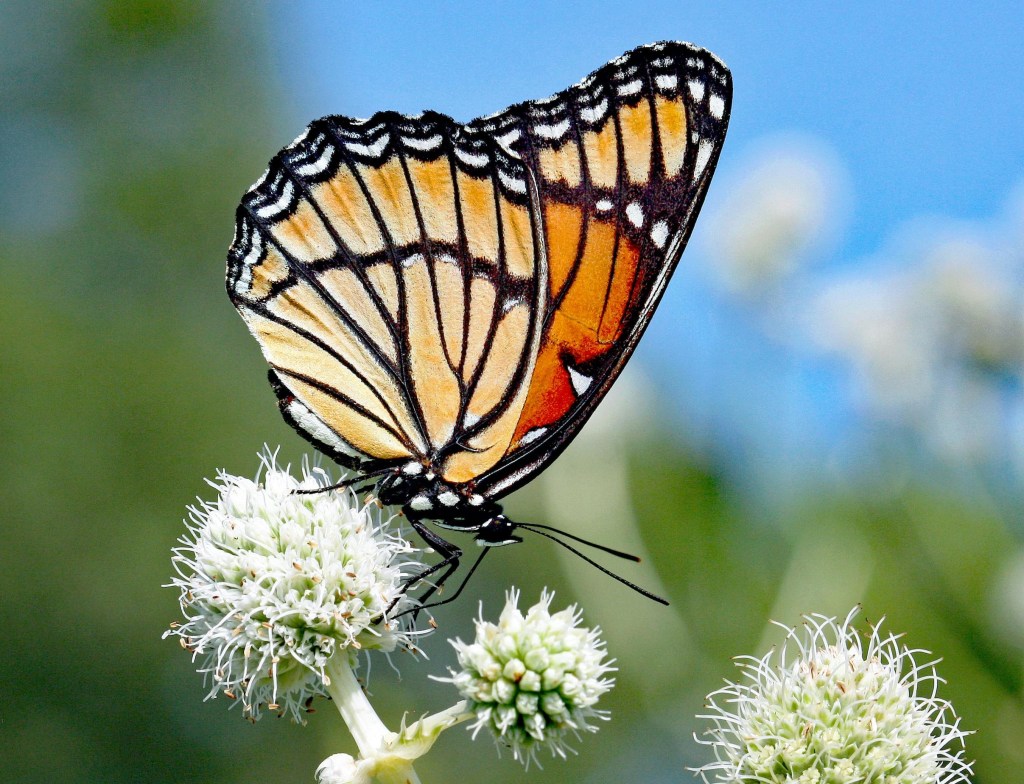
Viceroy butterfly on rattlesnake master (Eryngium yuccifolium) a great native architectural plant with white flowers.
9. Maintenance—The Low-Effort System
Butterfly pathways are low-maintenance because the design spreads out your plants.
Monthly Checklist:
• Check milkweed and other host plants for health
• Deadhead spent blooms on coneflower, salvia, zinnia
• Water deeply if rain is low
• Check for caterpillars before trimming
• If pests become a problem, see chemical-free pest control for caterpillar-safe methods
Seasonal Checklist:
• Spring: prune back dead stems
• Summer: add mulch and remove weeds
• Fall: let seed heads form for collection and/or songbird food
• Winter: minimal cleanup, leave stems for overwintering insects (Full guide on leaving habitat for butterflies and other overwintering insects can be viewed here)
Pathways = easier maintenance than beds, because airflow prevents disease and plants naturally self-limit.
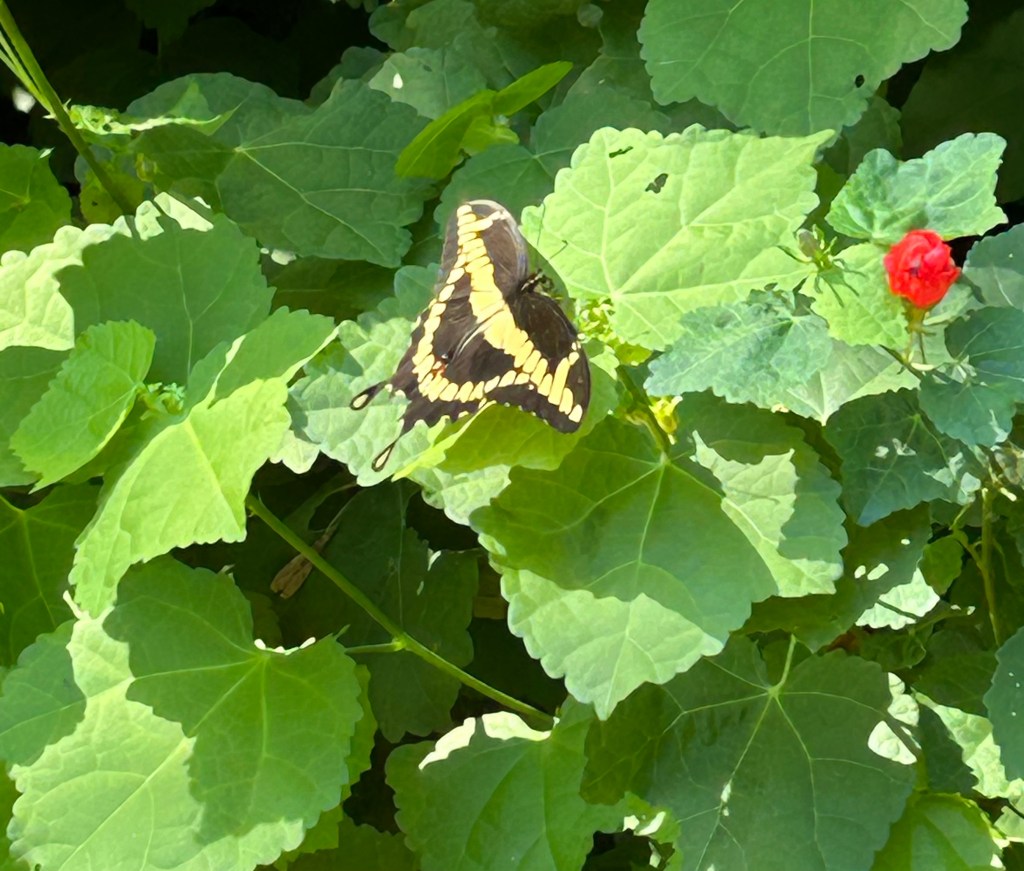
Giant swallowtail butterfly basking on red Turk’s cap plant.
Conclusion: Pathways Turn Your Yard Into a Living Habitat
A butterfly pathway garden transforms your landscape into a living, moving ecosystem. Instead of a single flowerbed, you build a series of nectar patches that butterflies actively follow—like bright stepping-stones across your yard.
The Result?
• More butterflies
• Better egg laying
• More activity all season
• A natural-looking, low-maintenance space
• A functional migratory stopover for monarchs and queens and other pollinators
• A yard that feels alive, not static
This is gardening with intention—not just for beauty, but for movement and life.
This article covers one part of butterfly gardening. The Butterfly Garden Cheat Sheet shows how these elements fit together at a basic level.
Related Guides:
The Complete Guide to Butterfly Gardening: How to Attract, Feed, and Protect Butterflies All Year
Step-by-Step Butterfly Garden Setup for Spring in Texas
How to Create a Monarch Waystation in Texas Zone 8
Photo credits: cover pathway with globe amaranth – Mr. Pugo, viceroy butterfly on rattlesnake master – Thomas Elliott
 Butterfly garden paradise
Leave a comment