
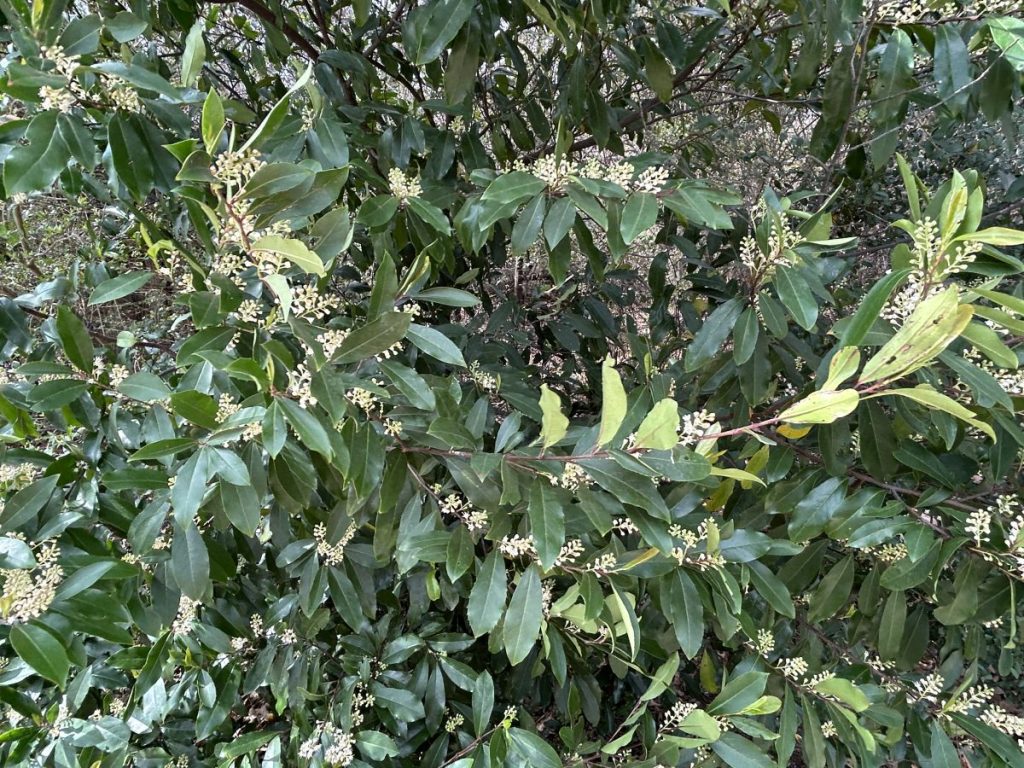
Cover photo: Chinese privet that makes a nice privacy barrier but has little ecological value
Many gardeners begin their butterfly garden journey with an existing landscape already in place. It may include ornamental shrubs, imported perennials, tropical foliage, or plants chosen for appearance rather than ecological function.
This is normal.
Very few people start with a blank slate. Most arrive at butterfly gardening gradually, through observation, curiosity, and a growing desire to support more life.
The question is not whether your garden is “pure” or “correct.”
The question is how to work thoughtfully with what you already have.
Moving toward a butterfly-friendly garden does not require removing everything and starting over. In fact, doing so often creates more disruption than progress.
This guide explains how to evaluate non-native plants calmly, decide what to keep, and transition your garden in a way that supports both butterflies and long-term stability.
Why This Question Comes Up So Often
Many gardeners reach this point after noticing patterns:
- Butterflies visit briefly but don’t stay
- Host plants are missing or struggling
- Maintenance feels high
- Some areas thrive, others never settle
As awareness grows, so does uncertainty.
Should everything be native?
Is keeping ornamentals harmful?
Is starting over necessary?
These questions reflect care, not confusion. They signal that you are beginning to think in systems rather than individual plants.
That shift matters more than any single planting decision.
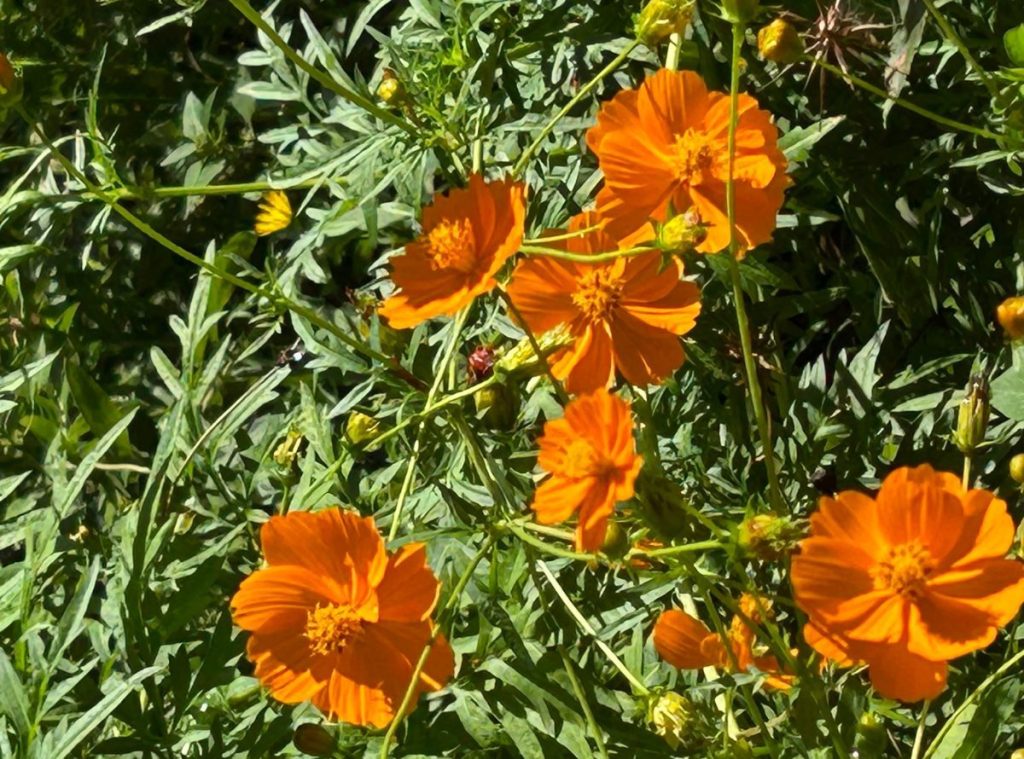
Cosmos are non-native annuals, but they can be useful to fill space for a season and provide nectar to bees and butterflies.
Understanding the Role of Non-Native Plants
Not all non-native plants function the same way in a garden.
Some are:
- Neutral
- Supportive
- Benign fillers
- Temporary scaffolding
Others are:
- Invasive
- Resource-heavy
- Ecologically empty
- Structurally disruptive
The goal is not to label plants as “good” or “bad.”
It is to understand how they behave in your specific space.
Butterfly gardens succeed when plants contribute to stability, shelter, and continuity. Any plant that supports those functions deserves consideration.
Step One: Observe Before You Remove
Before changing anything, spend time noticing:
- Where butterflies rest
- Where they feed
- Where caterpillars appear
- Which plants stay healthy through heat
- Which need constant rescue
Pay attention for at least one season if possible.
You may discover that some non-native plants are quietly providing:
- Wind protection
- Afternoon shade
- Moisture retention
- Resting sites
- Structural balance
Removing these too quickly can destabilize the system you are trying to improve.
Observation prevents unnecessary loss.
Step Two: Evaluate Each Plant by Function
Instead of asking “Is this native?” ask:
“What is this plant doing here?”
Consider:
1. Does it Support Butterflies Directly?
- Host plant?
- Nectar source?
- Shelter?
- Basking site?
If yes, it has immediate ecological value.
2. Does it Support the System Indirectly?
- Provides shade for host plants
- Reduces wind
- Improves soil moisture
- Creates layered structure
If yes, it may be worth keeping for now.
3. Does it Require Constant Intervention?
- Daily watering
- Heavy fertilizing
- Frequent pruning
- Pest control
High-input plants usually weaken long-term resilience.
4. Does it Displace Other Plants?
- Aggressive spreading
- Dense shading
- Root competition
These may limit future habitat development.
This functional lens leads to clearer decisions than ideology.
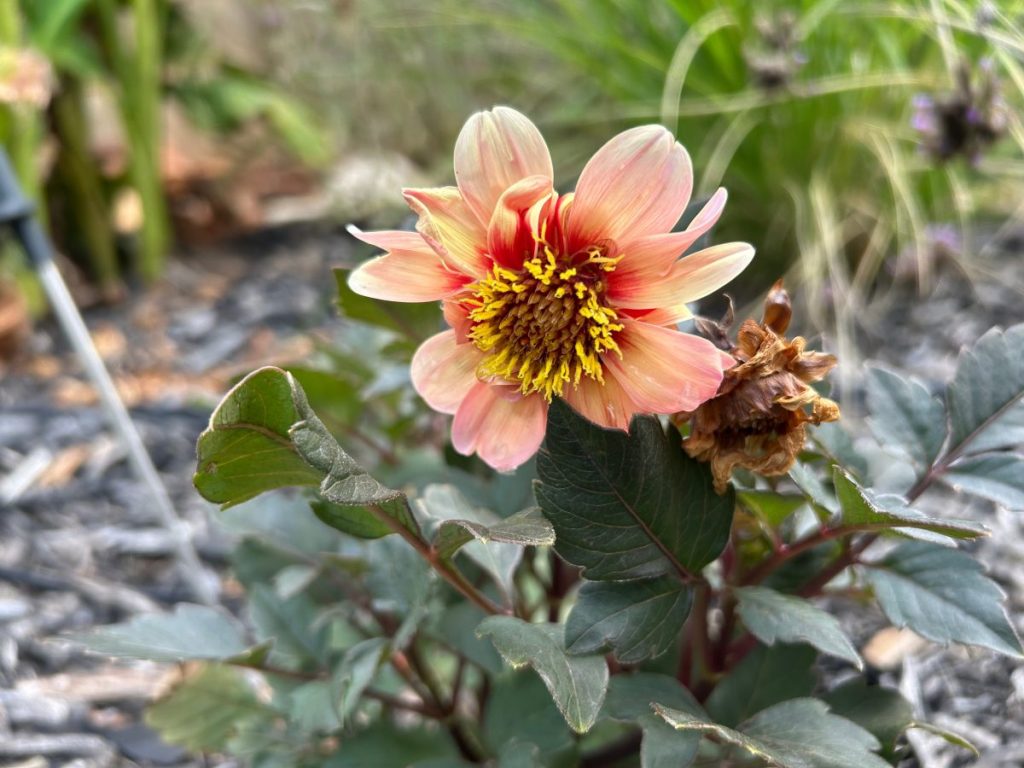
Dahlia struggling in the Texas heat. Sometimes the decision on which plants are worth the effort is difficult, but ultimately, I replaced this plant with a low-maintenance native with habitat value for butterflies.
Plants That Are Often Safe to Keep (At Least Temporarily)
Many non-native plants can coexist with butterfly gardens when they behave well.
Examples include:
- Well-managed ornamentals
- Non-invasive shrubs
- Stable perennials
- Established groundcovers
- Structural plants
If a plant:
- Is healthy
- Doesn’t spread aggressively
- Doesn’t require chemicals
- Supports surrounding growth
…it is not urgent to remove it.
Gradual replacement is often better than immediate clearing.
Plants That Usually Deserve Reconsideration
Some plants consistently interfere with habitat development. These include:
Invasive Species
- Rapid spread
- Displacement of natives
- Difficult removal
These should be addressed first.
High-Input Ornamentals
- Depend on fertilizers
- Require pesticides
- Struggle in heat
- Decline quickly
They create ongoing work without long-term return.
Ecologically Empty Plants
- No nectar
- No host value
- Minimal shelter
- Little seasonal function
These are prime candidates for replacement.
Step Three: Transition in Layers, Not Waves
The most stable gardens change in stages.
Instead of removing everything at once:
Start with One Area
Choose a small section to transition first. Add:
- Native host plants
- Nectar sources
- Support species
- Groundcovers
Let this area mature before expanding.
Build Around Existing Structure
Use established shrubs and trees as anchors.
Layer natives beneath and around them.
This maintains continuity while increasing function.
Replace Gradually
As older plants decline naturally, replace them with better-adapted natives.
This respects both time and energy.
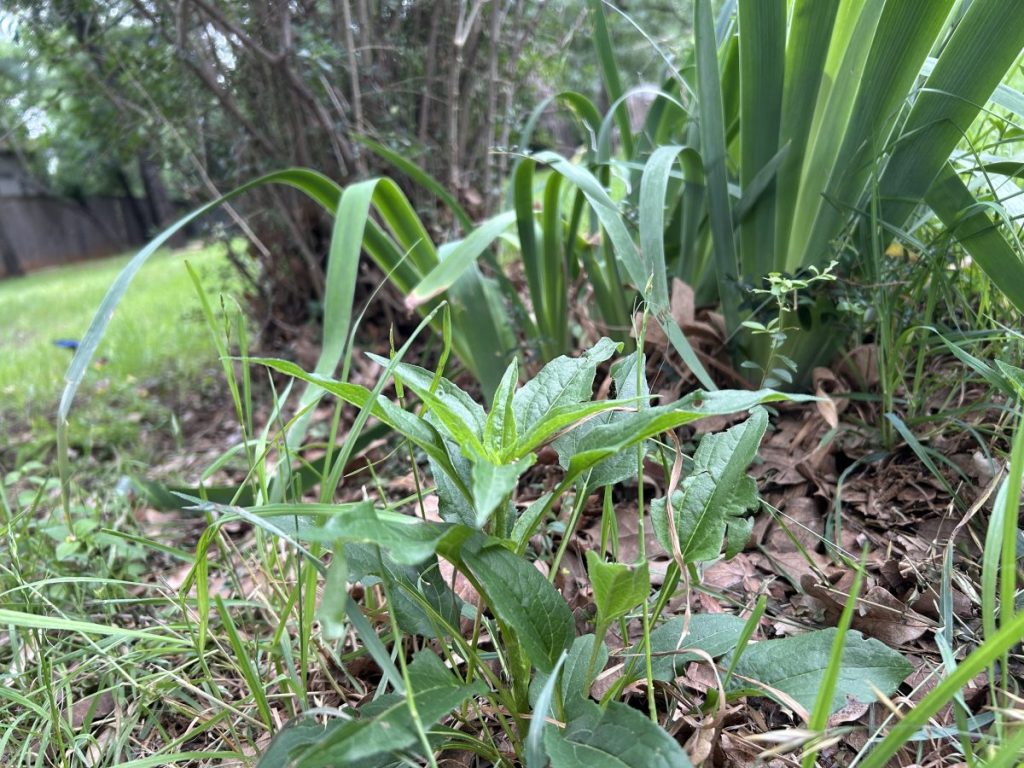
Nonnative privet (back) is providing shade, wind protection, and erosion control here for now.
Native plants are being established around it first, then it will be gradually reduced and removed.
Using Non-Natives as Temporary Support
In many gardens, non-native plants act as transitional scaffolding.
They may:
- Shade young natives
- Protect seedlings
- Hold soil
- Reduce wind
Once native communities establish, these supports often become unnecessary.
At that point, removal becomes easier and less disruptive.
This is not compromise. It is systems thinking.
Common Mistake: Starting Over Too Soon
One of the most damaging responses to learning about native plants is full removal.
Sudden clearing leads to:
- Exposed soil
- Weed invasion
- Heat stress
- Moisture loss
- Habitat collapse
Butterflies depend on continuity.
Stability matters more than purity.
Gardens that transition slowly retain life throughout the process.
Step Four: Prioritize High-Impact Additions
You do not need to replace everything to improve habitat.
A few key plants can start to change everything.
Focus first on:
Host Plants
These determine whether butterflies reproduce.
Examples:
- Milkweeds
- Passionflower
- Native grasses
- Asters
Long-Season Nectar Plants
These support adults across months.
Examples:
- Mistflower
- Coneflower
- Coreopsis
- Gaillardia
- Liatris
Structural Plants
These create shelter.
Examples:
- Native shrubs
- Tall grasses
- Dense perennials
Adding these around existing plants often brings more butterflies than removing ornamentals.
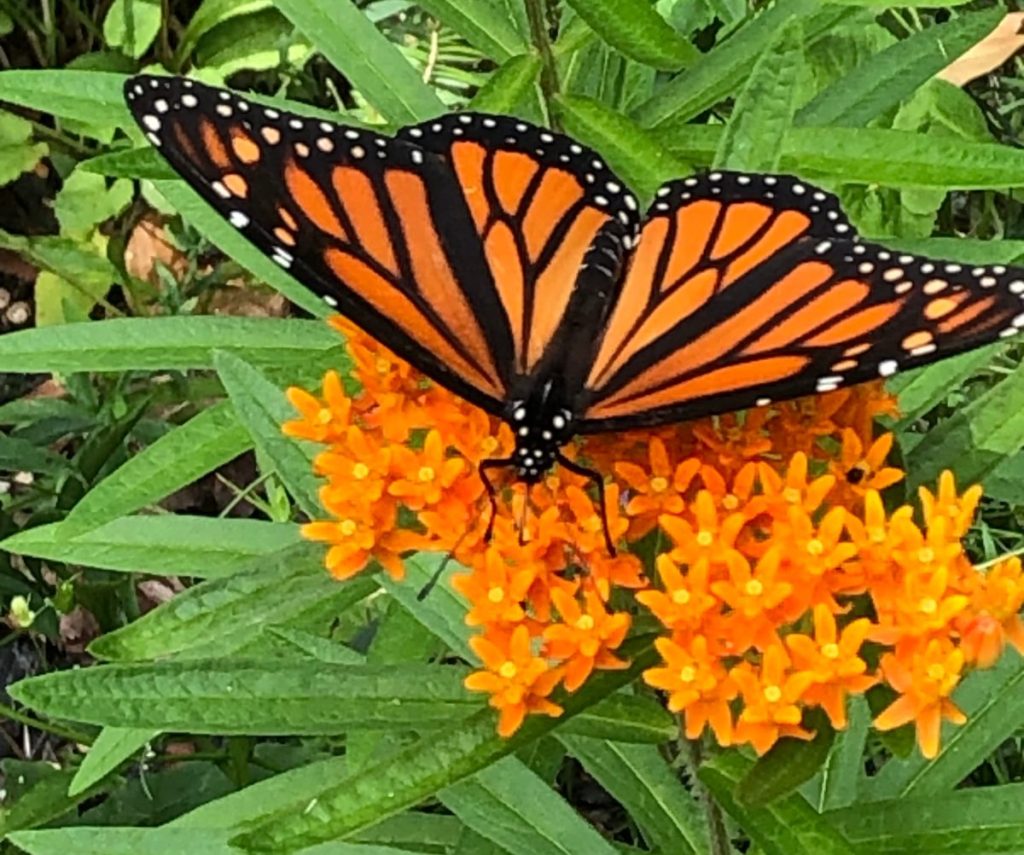
Monarch butterfly feeding on nectar from orange milkweed, a native host plant.
Note: planting only native milkweeds makes a big difference for monarchs in your area. See the Best Native Milkweeds to Plant in Texas Zone 8 for Monarchs.
Step Five: Release the Idea of “Finished”
Transitioning gardens are rarely tidy.
You may see:
- Mixed styles
- Uneven growth
- Temporary gaps
- Overlapping plant communities
This is normal.
Ecological gardens mature through adjustment, not design perfection.
Over time, the most functional plants persist. Others fade naturally.
Your role is to guide that process gently.
When Removal Is the Right Choice
Sometimes, removal is necessary. Consider it when a plant:
- Prevents establishment of key natives
- Requires chemicals
- Spreads uncontrollably
- Fails repeatedly
- Creates constant stress
When removing:
- Replace immediately if possible
- Mulch exposed soil
- Add replacement plants quickly
Avoid leaving empty space. Nature fills gaps fast—often with weeds.
A Note on Guilt and “Doing It Wrong”
Many gardeners feel regret when learning more about ecology.
They look at past choices and feel they made mistakes.
This is unnecessary.
Every healthy butterfly garden is built through learning.
Your current awareness exists because of previous experience.
That experience matters.
Gardens are allowed to grow alongside their caretakers.
What Progress Actually Looks Like
A garden moving toward habitat often shows subtle changes:
- Longer butterfly visits
- More caterpillars
- More resting behavior
- Greater seasonal stability
- Less need for rescue
These signals matter more than plant labels.
They indicate that your system is strengthening.
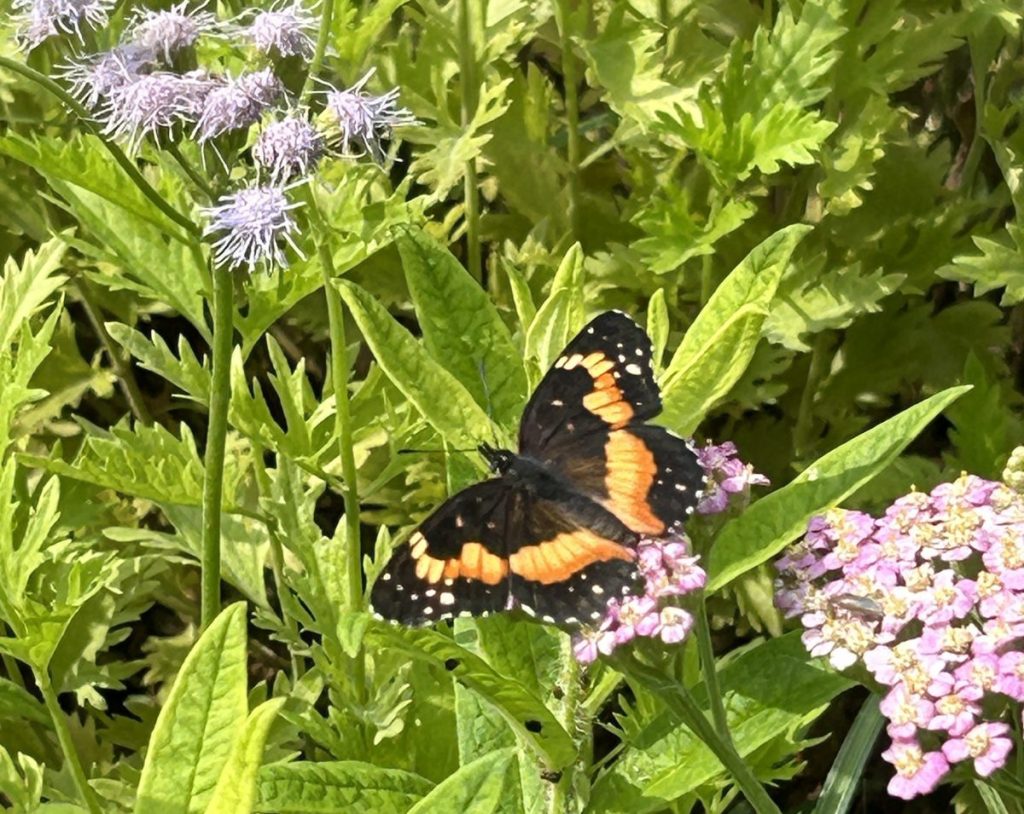
Bordered patch butterfly on yarrow and Gregg’s mistflower, both spreading native perennials with plenty of nectar for pollinators.
Final Thoughts: Direction Matters More Than Speed
You do not need to remove all non-native plants to support butterflies.
You need:
- Observation
- Thoughtful replacement
- Strategic additions
- Patience
A butterfly garden is not a project.
It is a developing relationship between land, plants, insects, and time.
When you move forward with restraint and clarity, that relationship deepens naturally.
And over time, your garden becomes not just more native — but more alive.
If you want a simple way to see how different plants fit into a functioning butterfly garden over time, the Butterfly Garden Cheat Sheet brings it together in one place.
Related Guides:
The Complete Guide to Butterfly Gardening: How to Attract, Feed , and Protect Butterflies All Year
Host Plants vs. Nectar Plants: Why Butterflies Need Both (with Texas Examples)
How to Build a Butterfly Pathway Garden: A Step-by-Step Guide to Creating a Migration-Friendly Yard
 Butterfly garden paradise
Leave a comment