How to Grow This Butterfly Magnet in Texas
Few native perennials earn as much praise from butterfly gardeners as Gregg’s mistflower. While its clusters of soft lavender-blue blooms may seem delicate, this Texas native is surprisingly tough and has an uncanny ability to draw butterflies from across the garden. During late summer and fall, it’s common to see monarchs, queens, swallowtails, skippers, and countless other pollinators sharing the flowers at the same time.
If your goal is to create a garden that’s alive with butterflies rather than simply filled with colorful plants, Gregg’s mistflower deserves a place near the top of your list. It thrives in much of Texas, flowers for months, and provides valuable late-season nectar when many other plants have finished blooming. Whether planted in a naturalized meadow, a cottage-style border, or a dedicated butterfly garden, it quickly becomes one of the busiest plants in the landscape.
Plant Profile:
| Gregg’s Mistflower | Attributes |
|---|---|
| Botanical name | Conoclinium greggii |
| Common names | Gregg’s mistflower, Gregg’s blue mistflower |
| Plant type | Herbaceous perennial |
| Native to Texas? | Yes |
| Texas ecoregions | Edwards Plateau, Cross Timbers, Post Oak Savannah, Blackland Prairie, Rolling Plains and parts of South Texas |
| Native range | Texas, Oklahoma and northern Mexico |
| USDA Zones | 7–10 |
| Height | 1½–3 feet |
| Spread | 2–4 feet (slowly spreading by rhizomes) |
| Bloom color | Lavender-blue |
| Bloom season | Late summer through fall |
| Sun requirements | Full sun to part shade |
| Water needs | Low to moderate |
🦋 Butterfly Garden Snapshot
| Feature | Rating |
|---|---|
| 🦋 Butterfly Nectar | ⭐⭐⭐⭐⭐ |
| 🐛 Host Plant | ⭐☆☆☆☆ |
| 🐝 Native Bees | ⭐⭐⭐⭐☆ |
| 🐦 Hummingbirds | ⭐⭐☆☆☆ |
| 🌺 Bloom Length | ⭐⭐⭐⭐⭐ |
| ☀️ Heat Tolerance | ⭐⭐⭐⭐☆ |
| 💧 Drought Tolerance | ⭐⭐⭐⭐☆ |
| 🌱 Beginner Friendly | ⭐⭐⭐⭐⭐ |
Why You’ll Love It
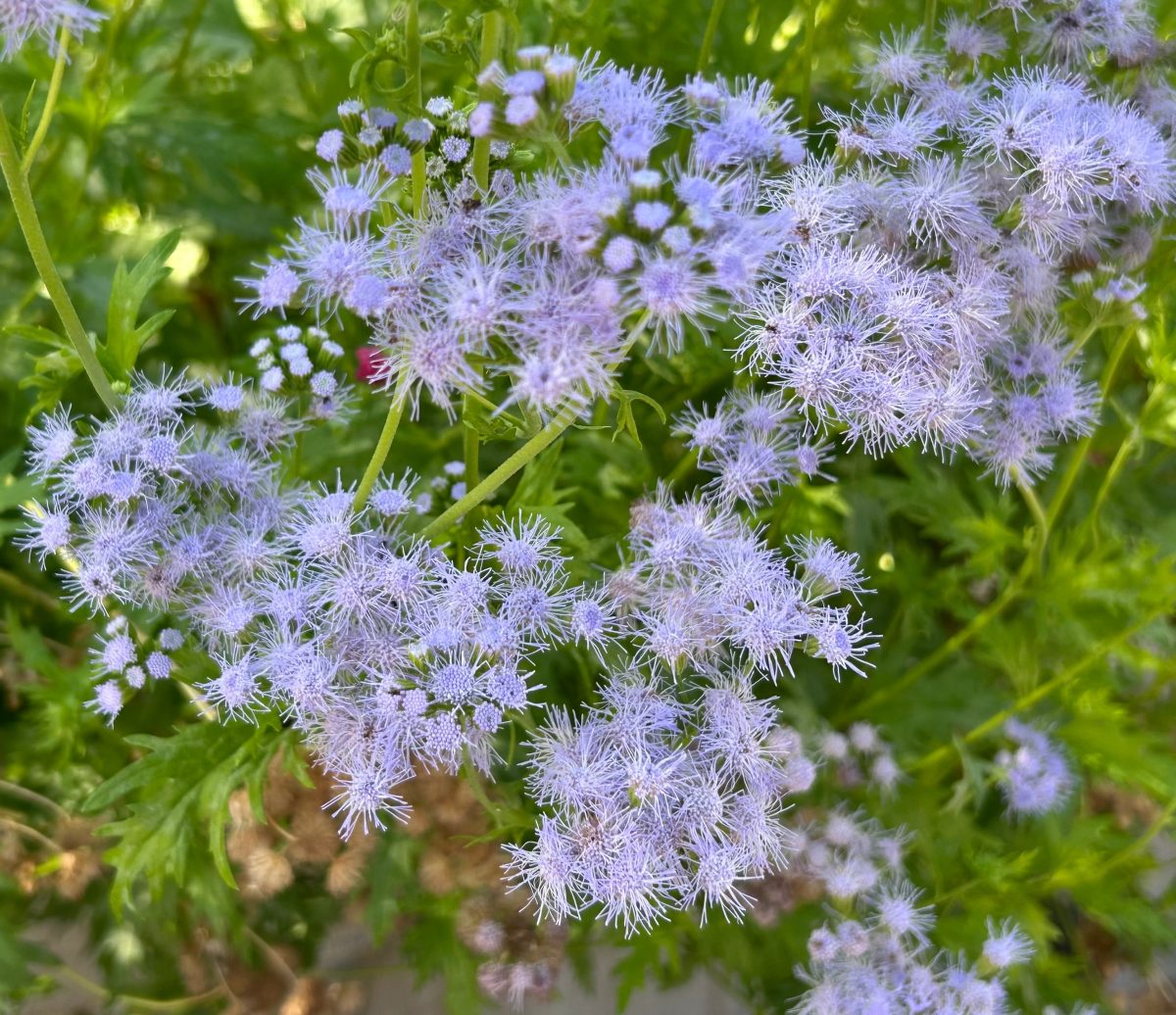
Gregg’s mistflower has a way of stealing the show without demanding much attention. Its fuzzy flower clusters create a soft haze of lavender-blue that pairs beautifully with almost any other native perennial, but the real attraction isn’t the flowers themselves—it’s what they bring to the garden.
Unlike many spring bloomers that flower for only a few weeks, Gregg’s mistflower begins blooming just as summer starts winding down and often continues until frost. That timing makes it one of the most valuable nectar plants in a butterfly garden, providing food during a season when many pollinators are preparing for migration or producing one last generation before winter.
It’s equally at home in formal garden beds, naturalized landscapes, and pollinator gardens. Over time, it slowly spreads into attractive colonies that create an increasingly impressive display while still remaining easy to manage.

Butterfly & Pollinator Value
This is where Gregg’s mistflower truly shines. Few native perennials attract as many butterflies on a consistent basis. On warm fall afternoons, it’s not unusual to find several butterfly species feeding together, often with bees weaving among them.
Who Visits Gregg’s Mistflower?
| Pollinator | What You’ll Typically See |
|---|---|
| 🦋 Monarchs | Frequent nectar visitors during migration and throughout late summer. |
| 🦋 Queens | One of the plant’s most dependable butterfly visitors in Texas. |
| 🦋 Swallowtails | Giant, Black, and Pipevine Swallowtails regularly stop to feed. |
| 🦋 Skippers | Often cover the flowers throughout the bloom season. |
| 🐝 Native Bees | Small solitary bees and bumble bees visit throughout the day. |
| 🦋 Painted Ladies & Crescents | Common visitors when populations are high. |
Although Gregg’s mistflower is grown primarily as a nectar plant rather than a host plant, its exceptional nectar production makes it one of the cornerstone species for supporting adult butterflies.
Because it blooms from late summer into fall, it provides an important food source for monarchs and other migrating butterflies at a time when nectar can become increasingly scarce.
Growing Conditions
Gregg’s mistflower performs best with at least six hours of sunlight, although gardeners in North Texas often find that a little afternoon shade helps plants look fresher during periods of extreme heat.
Unlike many drought-loving native plants, Gregg’s mistflower appreciates slightly more moisture. It naturally grows in rocky slopes, woodland edges, and stream corridors where the soil drains well but doesn’t remain bone dry for long.
Well-drained clay, loam, and even rocky soils all work well, provided water doesn’t stand after heavy rains. Once established, plants tolerate short periods of drought, but flowering is usually heavier when they receive occasional deep watering during extended dry spells.
If you’re gardening in heavy North Texas clay, incorporating compost before planting can improve drainage while helping retain enough moisture for vigorous growth.
Planting Tips
- Spring and fall are both excellent planting seasons, although fall planting often gives roots time to establish before the following summer.
- Space plants about two to three feet apart. While young plants may seem modest at first, they’ll gradually spread by underground rhizomes and eventually form attractive drifts.
- Water consistently during the first growing season. Once roots are established, watering can become much less frequent, though occasional deep watering during drought will keep plants blooming longer.
- Apply a two-three inch layer of mulch to conserve moisture and reduce weeds, but avoid piling mulch directly against the stems.
Care & Maintenance
Gregg’s mistflower is remarkably easy to grow once established.
- Water during prolonged drought, especially if flowering begins to slow. Unlike some prairie natives, this plant responds well to occasional supplemental irrigation during hot, dry weather.
- Fertilizer is rarely necessary. Too much nitrogen can encourage leafy growth at the expense of flowers.
- Many gardeners cut plants back by about one-third in early summer if they begin growing tall or floppy. This simple pruning encourages bushier plants with more blooms later in the season.
- After frost, stems naturally die back and can be left standing through winter to provide shelter for beneficial insects before cutting them back in late winter or early spring.
Every few years, mature clumps can be divided if they become larger than desired or to create new plants for other parts of the garden.
Common Problems
Gregg’s mistflower is generally healthy and trouble-free.
Its biggest surprise for new gardeners isn’t disease—it’s enthusiasm. Given favorable conditions, it can slowly spread by underground rhizomes. Some gardeners love this because it creates larger butterfly patches over time, while others prefer to edge around the clumps every few years to keep them contained.
Powdery mildew may occasionally appear during humid weather with poor air circulation, although it’s usually cosmetic rather than harmful. Plants can also become floppy if grown in too much shade or overly rich soil. More sunlight and avoiding heavy fertilization usually solve the problem.
Companion Plants
Gregg’s mistflower combines beautifully with other Texas natives that extend the nectar season and create layers of color throughout the year:
Flame acanthus provides fiery orange blooms just as Gregg’s mistflower reaches its peak, creating one of the classic late-summer butterfly combinations.
Mealy blue sage begins blooming earlier and overlaps beautifully, giving gardens months of blue flowers in different shades.
Blackfoot daisy offers bright white flowers and a low, tidy mound that contrasts nicely with the mistflower’s softer texture.
Frostweed extends the native theme into autumn while supporting additional pollinators.
Autumn sage (Gregg’s salvia) blooms over a remarkably long season and attracts both butterflies and hummingbirds.
Gulf muhly provides graceful pink seed heads in fall, adding movement and texture after many perennials begin fading.
Together, these plants create a resilient Texas butterfly garden with blooms from spring until frost.

In the Garden
Gregg’s mistflower is one of those plants that often surprises people. Early in the season it can seem fairly ordinary, producing attractive green foliage without much fanfare. Then, almost overnight in late summer, it begins covering itself with fuzzy lavender-blue flowers—and suddenly the butterflies arrive.
It’s also one of those plants that rewards patience. The first year is often about establishing roots, while the second and third years reveal its true potential as it slowly forms larger clumps and becomes an increasingly reliable nectar source. If you’ve ever dreamed of walking into your garden and seeing multiple butterflies feeding at once, Gregg’s mistflower is one of the best plants to help make that happen.
Frequently Asked Questions
Is Gregg’s mistflower native to Texas?
Yes. Gregg’s mistflower is native to much of Texas and is well adapted to the state’s climate, particularly where soils drain well.
Is Gregg’s mistflower a host plant?
No. It’s grown primarily as an outstanding nectar plant that supports adult butterflies rather than caterpillars.
Does Gregg’s mistflower spread?
Yes. It slowly spreads by underground rhizomes to form attractive colonies. If it becomes larger than you’d like, it’s easy to divide or edge around the clump.
Can Gregg’s mistflower grow in shade?
It grows best in full sun to partial shade. In North Texas, some afternoon shade can actually improve its appearance during the hottest part of summer.
Do monarch butterflies like Gregg’s mistflower?
Absolutely. It’s one of the best native nectar plants for monarchs during late summer and fall migration and is frequently visited by queens, swallowtails, skippers, and many other butterflies as well.
Final Thoughts
If your goal is to create a butterfly garden that’s full of life from late summer into fall, it’s hard to improve on Gregg’s mistflower. This easy-growing Texas native combines months of lavender-blue blooms with exceptional wildlife value, attracting an incredible diversity of butterflies while asking for very little in return.
Whether you’re just getting started with native plants or expanding an established pollinator garden, Gregg’s mistflower is a perennial you’ll likely wonder how you ever gardened without.
Continue Exploring the Plant Library:
Leave a Reply