
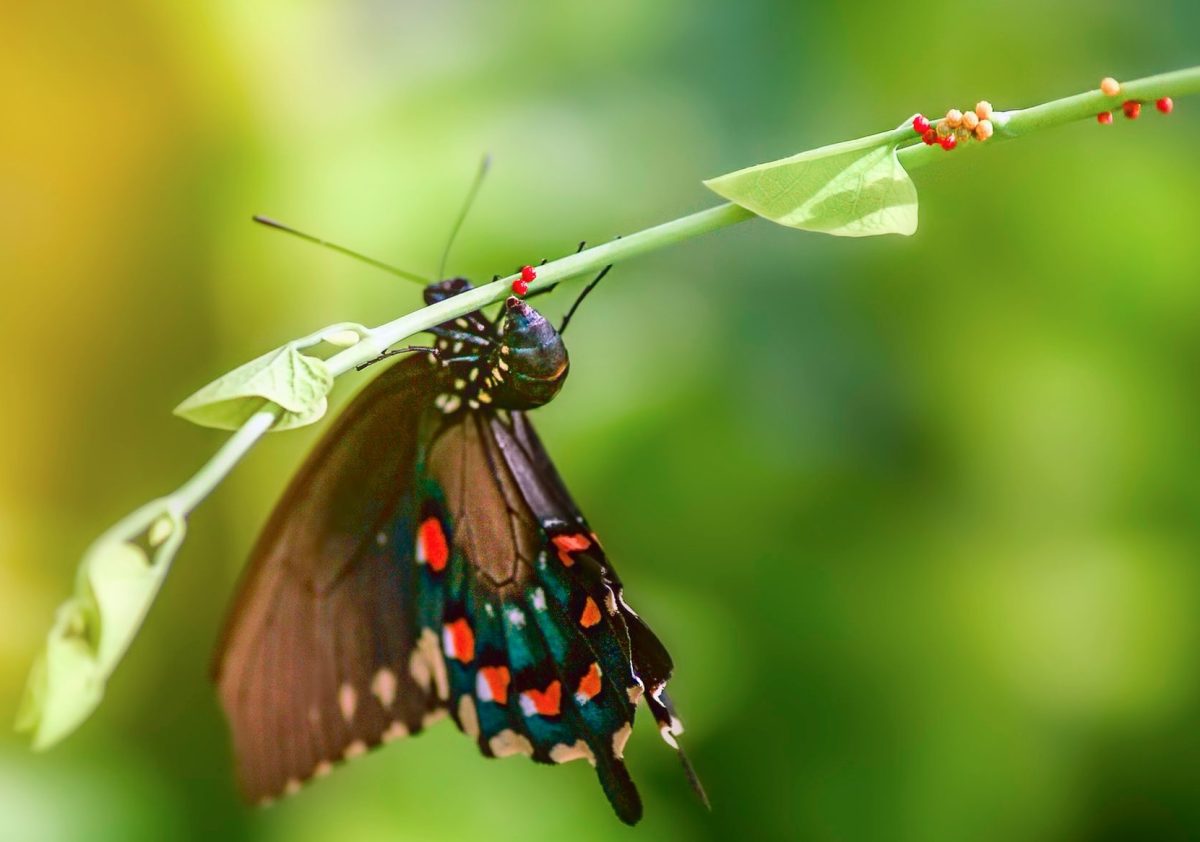
You’ve planted beautiful flowers, butterflies are fluttering through your garden every day, yet weeks go by without a single caterpillar. If this sounds familiar, you’re not alone. One of the most common questions new butterfly gardeners ask is why butterflies seem happy to visit for nectar but never lay eggs. The good news is that there is usually a simple explanation—and often, a simple solution.
Have you ever walked through your garden and smiled as butterflies floated from flower to flower, only to wonder a few weeks later, “Why aren’t there any caterpillars?”
It’s a question almost every butterfly gardener asks at some point. You may have planted plenty of colorful flowers, watched monarchs or swallowtails stop by for nectar, and assumed caterpillars would soon follow. But instead, the butterflies seem to disappear as quickly as they arrived.
The good news is that butterflies visiting your garden is already an encouraging sign. It means you’ve successfully created a place where adult butterflies want to stop and feed. Getting them to lay eggs is simply the next step— and there are several reasons why they may not be doing that just yet.
In this article, we’ll look at the most common reasons butterflies visit without laying eggs and, more importantly, what you can do to encourage them to make your garden part of their life cycle.
Butterflies Need Two Different Things
One of the biggest misconceptions about butterfly gardening is that butterflies visit gardens for only one reason. In reality, adult butterflies are searching for two very different resources:
The first is nectar, which provides the energy they need to fly, find mates, and continue their journey. Nectar plants are what attract the colorful butterflies most gardeners notice fluttering through the landscape.
The second is host plants, where female butterflies lay their eggs. These plants become the food source for the caterpillars after they hatch.
Here’s the important distinction:
A butterfly may happily drink nectar from your flowers and then fly somewhere else to lay her eggs.
Think of it like stopping at a favorite restaurant while traveling. Enjoying a meal doesn’t necessarily mean you’re going to move into the neighborhood. Many butterfly gardens have plenty of nectar but very few suitable places for caterpillars to grow.
Understanding this difference is the key to turning a garden that butterflies simply visit into one where they actually reproduce. Read more about the differences between nectar and host plants.

Monarch caterpillar feeding on its only host pant, milkweed.
1. You Don’t Have the Right Host Plants
The most common reason butterflies don’t lay eggs is surprisingly simple— they can’t find the right nursery for their young.
Unlike bees, which visit many different flowers, most butterfly species are very particular about where they lay their eggs. Female butterflies have evolved to recognize specific plants that their caterpillars can safely eat. If those plants aren’t present, they’ll continue searching, even if your garden is full of beautiful blooms.
Examples of Common Host Plants:
| Butterfly Species | Common Host Plants |
|---|---|
| Monarch | Milkweed |
| Black Swallowtail | Bronze fennel, golden Alexander, parsley, dill |
| Gulf Fritillary | Passionvine |
| Giant Swallowtail | Citrus, wafer ash, hoptree |
This surprises many new gardeners. They may have planted colorful nectar flowers like lantana, zinnias, or salvias and wonder why butterflies never stay. The answer is that nectar attracts the adults, but host plants are what convince a female butterfly that your garden is a suitable place to raise the next generation.
If your goal is to find caterpillars in your garden, adding the appropriate host plants is often the single most important step you can take.
Best Host Plants for Caterpillars in Zone 8
2. Your Host Plants Are Too Small
Having the correct host plants is important, but size matters too. A female butterfly isn’t just looking for the right species— she’s also evaluating whether the plant can support hungry caterpillars.
Imagine laying eggs on a tiny milkweed with only a handful of leaves. The caterpillars could quickly eat the entire plant before they’re fully grown, leaving them without enough food to survive. Larger, healthier plants provide a much better chance of success, so they’re often more attractive to egg-laying butterflies.
This is one reason new butterfly gardens sometimes take longer to become productive. Young plants need time to establish strong root systems and produce enough foliage to support caterpillars.
If you’re planting host plants for the first time, don’t be discouraged if butterflies don’t immediately begin laying eggs. As those plants mature over the coming months, they’re likely to become much more appealing. Growing several plants together can also make them easier for butterflies to find while providing plenty of food once caterpillars hatch.
3. Your Garden Is Still New
Butterfly gardens rarely become thriving habitats overnight. Even when you’ve planted all the right species, butterflies first have to discover your garden.
At first, your plants may be small, scattered, or simply not noticeable enough from the air. As they grow larger and begin blooming more heavily, your garden becomes increasingly visible to butterflies flying through the area.
Over time, the habitat also becomes richer. Plants mature, more flowers bloom throughout the season, and the garden begins providing food, shelter, and breeding sites all in one place.
Many gardeners notice that butterfly activity increases significantly during the second or third growing season. It’s not necessarily because they changed anything dramatically— it’s because the garden itself has matured. Patience is one of the most overlooked parts of butterfly gardening, but it often pays off.

Newly hatched Gulf Fritillary caterpillar hiding on the underside of a passionvine leaf.
4. You’re Looking in the Wrong Place
Sometimes butterflies are laying eggs— you just haven’t found them. Butterfly eggs are incredibly small. Many are no larger than the head of a pin and blend remarkably well into the leaves they’re attached to.
Newly hatched caterpillars can be just as difficult to spot. They often feed quietly on the undersides of leaves or along the edges where they remain well hidden from predators.
Many gardeners spend their time watching nectar flowers because that’s where the butterflies are easiest to see. However, eggs are almost always laid on host plants instead.
When searching for eggs or tiny caterpillars, check:
- The undersides of leaves.
- New growth near the tips of stems.
- Flower buds and unopened leaves.
- Plants early in the morning when lighting is softer.
Don’t be surprised if you miss them several times before spotting your first one. Once you’ve seen a butterfly egg in person, your eyes become much better at finding them in the future.
5. Predators May Be Finding the Eggs First
Finding butterfly eggs and caterpillars can feel exciting, but it’s important to remember that they’re also an important food source for many other animals. Birds, spiders, paper wasps, assassin bugs, lacewing larvae, and even some ants regularly feed on butterfly eggs and young caterpillars. While it can be disappointing to lose caterpillars you’ve been watching, this is a completely natural part of a healthy ecosystem.
In fact, butterflies lay far more eggs than will ever reach adulthood. A single female monarch may lay hundreds of eggs during her lifetime because only a small percentage will survive predators, disease, weather, and other hazards.
If butterflies are visiting your garden but you rarely find caterpillars, it’s entirely possible they’re laying eggs successfully— you just aren’t seeing the ones that disappear soon after hatching.
Although many gardeners choose to raise a few caterpillars in protected enclosures, it’s also worth remembering that predators play an important role in keeping nature in balance. A butterfly garden supports far more wildlife than butterflies alone.

Praying mantises are among the many predators that hunt butterfly caterpillars. See How to Protect Butterfly Caterpillars from Predators (Without Chemicals).
6. The Timing May Not Be Right
Butterflies don’t reproduce at the same rate throughout the year. Some species have multiple generations each season, while others are most active during only certain months. Weather also plays a major role in when butterflies are flying, feeding, and laying eggs.
In Texas, for example, you’ll often notice a surge of butterfly activity during spring as temperatures warm and host plants begin producing fresh growth. Many species become less active during the hottest part of summer before becoming more noticeable again in late summer and fall.
Migrating butterflies can add another layer of confusion. A monarch passing through your garden during migration may stop for nectar before continuing its journey. It doesn’t necessarily mean she’s looking for a place to lay eggs that day.
If your timing happens to fall between generations or during a slower part of the season, you may simply need to wait a little longer before seeing caterpillars appear. Butterfly life cycles change throughout the season depending on seasonal variables as well as plant cycles and availability.
7. Butterflies Need More Than Flowers
Flowers are one piece of the puzzle, but they aren’t the whole habitat. A successful butterfly garden provides everything butterflies need to complete their life cycle safely.
In addition to nectar and host plants, butterflies benefit from:
- Sunny places to warm their wings.
- Shelter from strong winds.
- Shallow water or damp soil for drinking.
- Areas where caterpillars can feed undisturbed.
- A garden free from insecticides and other harmful chemicals.
Many gardeners unintentionally create beautiful flower beds that function more like feeding stations than complete habitats. Butterflies stop for a quick meal before moving on to find safer places to reproduce.
As your garden becomes more diverse and natural, butterflies are more likely to spend time there instead of simply passing through.
The Complete Guide to Butterfly Gardening: How to Attract, Feed, and Protect Butterflies All Year
8. Some Butterflies Are Just Passing Through
Not every butterfly you see is looking for a place to lay eggs. Some species travel surprisingly long distances while searching for food, mates, or better habitat. Others may simply be exploring the landscape. It’s common to see butterflies stop briefly to nectar before continuing on their way.
Migrating monarchs are one obvious example, but they’re not the only species that wander. Painted ladies, cloudless sulphurs, and several swallowtail species may travel considerable distances as they search for suitable habitat.
This is why seeing butterflies in your garden is always encouraging— even if you don’t immediately find eggs. It means your garden has become part of the larger landscape that butterflies use throughout their lives.
Eventually, one of those visiting females may decide your garden has exactly what she’s been looking for.

A tiny Black Swallowtail egg laid on the leaf of a bronze fennel plant.
How to Encourage Butterflies to Lay Eggs
If butterflies are already visiting your flowers, you’re closer than you might think. Small improvements to your garden can make it much more attractive to egg-laying females.
Here are some of the most effective ways to increase your chances of finding caterpillars:
- Plant the correct host plants for the butterfly species you hope to attract.
- Grow several host plants together instead of scattering individual plants throughout the garden.
- Allow host plants to become well established before expecting heavy use.
- Include nectar plants that bloom throughout the growing season.
- Avoid pesticides, even products marketed as “natural” insect killers.
- Leave a few areas of the garden slightly wild to provide shelter.
- Check host plants regularly for eggs and tiny caterpillars.
Remember that butterflies don’t need a perfect garden— they need one with the right elements.
Frequently Asked Questions
Can butterflies lay eggs on flowers?
Usually no. Most butterflies lay their eggs on specific host plants that their caterpillars can eat after hatching. Nectar flowers provide food for adult butterflies, but they rarely serve as host plants.
How long does it take butterflies to find a new garden?
There’s no exact timeline. Some gardens attract egg-laying butterflies within weeks, while others may take a year or two as plants mature and become easier for butterflies to find.
Why do I have butterflies but no caterpillars?
The most common reasons are a lack of suitable host plants, plants that are still too small, seasonal timing, or predators removing eggs and young caterpillars before you notice them.
Do butterflies lay eggs every day?
Female butterflies often lay eggs over several days or even weeks rather than all at once. They typically spread their eggs among many different plants to improve the chances that some caterpillars will survive.
Can I encourage butterflies to stay longer?
Providing a combination of nectar plants, host plants, shelter, water, and a pesticide-free environment gives butterflies more reasons to remain in your garden instead of simply stopping for a quick meal.
Final Thoughts
One of the most rewarding moments in butterfly gardening isn’t seeing your first butterfly— it’s discovering your first egg or tiny caterpillar. That small discovery means your garden has become more than a place to feed adult butterflies. It’s becoming part of their life cycle.
If butterflies are already visiting your flowers, you’re on the right track. The next step is creating a habitat where they feel confident raising the next generation.
Focus on growing healthy host plants, providing a variety of nectar sources, and giving your garden time to mature. Butterflies have been making these decisions for millions of years, carefully choosing the best places for their offspring to survive.
With a little patience and the right habitat, there’s a good chance the butterflies already visiting your garden will one day decide it’s the perfect place to leave behind the next generation.
Enjoy learning about butterfly gardening?
Subscribe to the Butterfly Garden Paradise newsletter and receive the free Butterfly Garden Cheat Sheet—a one-page printable checklist that highlights the key concepts from this article. You’ll also receive seasonal gardening tips, new guides, and occasional updates as the garden changes throughout the year.
Related Guides:
- Top Nectar Plants for Butterflies by Season in Texas Zone 8
- How to Attract Monarch Butterflies to Your Garden
- The Complete Guide to Butterfly Gardening: How to Attract, Feed, and Protect Butterflies All Year
Photo credit: Cover – Pipevine swallowtail laying eggs on pipevine – Ray Bilcliff
Leave a Reply