How to Grow This Native Texas Groundcover for Butterflies
If you want a native groundcover that can handle Texas heat while providing genuine habitat for butterflies, frogfruit deserves a place in your garden. This low-growing perennial spreads across the ground in a mat of green foliage dotted with tiny white and lavender flowers from spring through fall. The flowers may be small, but butterflies and bees certainly notice them.
Frogfruit is especially valuable because it does more than provide nectar. It also serves as a host plant for several butterfly species, giving caterpillars a place to feed and develop. Add its tolerance for heat, occasional drought, mowing, and a surprisingly wide range of soils, and you have one of the most useful native groundcovers for a Texas butterfly garden. It can fill spaces between larger perennials, soften garden edges, replace small areas of conventional lawn, or simply be allowed to wander naturally through a pollinator planting.
Plant Profile:
| Frogfruit | Attributes |
|---|---|
| Botanical name | Phyla nodiflora |
| Plant family | Verbenaceae |
| Common names | Frogfruit, turkey tangle frogfruit, matchweed, capeweed |
| Plant type | Creeping perennial groundcover |
| Native to Texas? | Yes |
| Texas ecoregions | Widespread across Texas, including the Blackland Prairie, Cross Timbers, Post Oak Savannah, Edwards Plateau, Gulf Coast Prairies and Marshes, and South Texas Plains |
| Native range | Southern United States through Mexico and tropical regions of the Americas |
| USDA Zones | Approximately 7–11 |
| Height | About 3–6 inches, sometimes taller |
| Spread | 2–4+ feet, spreading along the ground |
| Bloom color | White to pale lavender with purple accents |
| Bloom season | Spring through fall |
| Sun requirements | Full sun to part shade |
| Water needs | Low to moderate once established |
🦋 Butterfly Garden Snapshot
| Feature | Rating |
|---|---|
| 🦋 Butterfly Nectar | ⭐⭐⭐⭐☆ |
| 🐛 Host Plant | ⭐⭐⭐⭐⭐ |
| 🐝 Native Bees | ⭐⭐⭐⭐☆ |
| 🐦 Hummingbirds | ⭐☆☆☆☆ |
| 🌺 Bloom Length | ⭐⭐⭐⭐⭐ |
| ☀️ Heat Tolerance | ⭐⭐⭐⭐⭐ |
| 💧 Drought Tolerance | ⭐⭐⭐⭐☆ |
| 🌱 Beginner Friendly | ⭐⭐⭐⭐⭐ |
Why You’ll Love It
Frogfruit doesn’t make a dramatic first impression in the way a five-foot flowering perennial might. Its charm is subtler. Instead of growing upward, it travels horizontally, rooting along its stems and gradually knitting open areas of soil into a living green carpet.
This growth habit makes it incredibly useful.
Frogfruit can grow between taller native plants, spill over the edge of a bed, soften pathways, or cover places where maintaining traditional turfgrass doesn’t make much sense. It tolerates foot traffic better than many flowering groundcovers and can even handle occasional mowing.
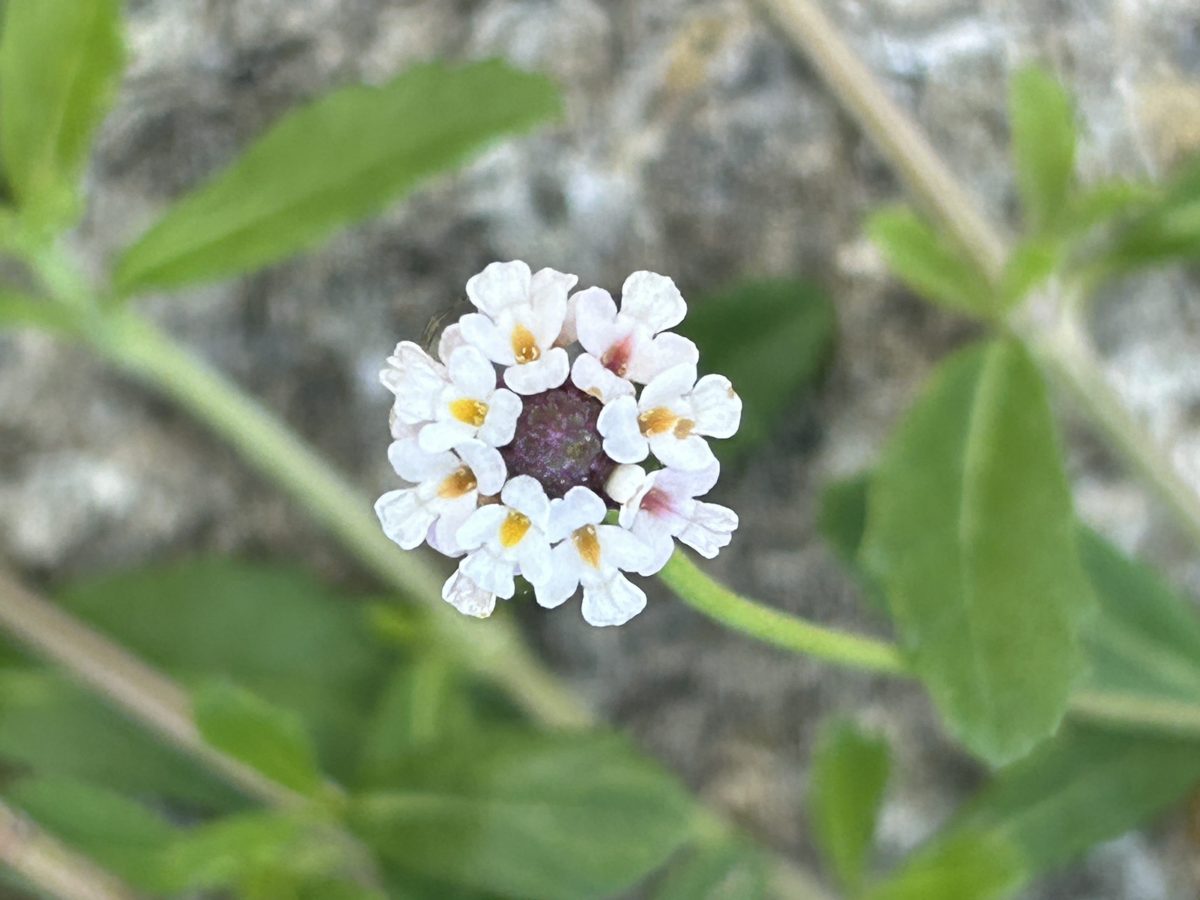
Then there are the flowers. From a distance, they’re tiny specks of white scattered across the foliage. Up close, each flower head reveals a delicate ring of white to pale lavender flowers surrounding a darker center.
Those little flowers keep appearing for months—and pollinators make remarkably good use of them.
For butterfly gardeners, however, frogfruit’s biggest advantage is that it combines nectar and host-plant value in the same plant. That’s an especially useful combination when you’re trying to build a garden that supports the entire butterfly life cycle rather than simply attracting adults for a quick visit.

Common buckeye butterfly uses frogfruit as a host plant in North Texas.
Butterfly & Pollinator Value
Frogfruit may be small, but ecologically it punches well above its weight.
Its flowers provide nectar for numerous small and medium-sized butterflies as well as native bees and other beneficial insects. Because plants can flower repeatedly from spring into fall, an established patch provides a long-lasting food source close to ground level.
More importantly, frogfruit serves as a larval host for several butterflies.
Who Uses Frogfruit?
| Visitor | What You’ll Typically See |
|---|---|
| 🐛 Phaon Crescent | Frogfruit is an important larval host plant, with females laying eggs on the foliage. |
| 🐛 Common Buckeye | Caterpillars can use frogfruit as one of several native host plants. |
| 🐛 White Peacock | Uses frogfruit and related plants as larval hosts, especially farther south. |
| 🦋 Skippers | Small skippers frequently stop at the flowers for nectar. |
| 🦋 Crescents | Adults commonly nectar on the tiny blooms as well as using the plant as habitat. |
| 🐝 Native Bees | Small native bees regularly work the flowers throughout the blooming season. |
This combination of nectar and host value is one reason frogfruit is such a useful butterfly garden plant.
A garden filled exclusively with nectar flowers may attract plenty of adult butterflies, but a true butterfly habitat also needs plants where females can lay eggs and caterpillars can feed. Frogfruit helps bridge that gap.
Its low growth also creates shelter near the soil surface for insects and other small wildlife, adding another layer of habitat beneath taller plants.
Growing Conditions
Frogfruit is remarkably adaptable. It flowers most heavily in full sun, but it also grows well in partial shade. In North Texas, some afternoon shade can help foliage remain greener during the hottest and driest part of summer, although flowering may be somewhat lighter than in sunnier locations.
It tolerates a wide range of soils, including clay, loam, sand, and rocky ground. Unlike many native plants that require exceptionally sharp drainage, frogfruit can also tolerate periodically moist soil.
That adaptability makes it particularly useful in difficult transition areas where conditions change throughout the year.
Once established, frogfruit handles Texas heat extremely well. During extended drought, the foliage may become thinner or less lush, but established plants often rebound quickly after rain or irrigation returns. Plants receiving occasional supplemental water usually remain greener and flower more heavily through summer.
Planting Tips
Spring is an excellent time to plant frogfruit because warm soil encourages its creeping stems to root quickly. Early fall can also work well in Texas, provided plants have enough time to establish before cold weather.
- If you’re using frogfruit as a groundcover, space individual plants roughly 12 to 24 inches apart. They’ll gradually grow together and create a continuous mat.
- Water regularly during establishment, particularly during the first few months. Once the stems begin rooting in multiple places, the plant becomes considerably more resilient.
- One important difference between frogfruit and many of the other plants in a native garden is mulch. A thick layer of mulch can actually interfere with its ability to spread and root along the ground. Keep mulch relatively light around areas where you want frogfruit to expand, or leave patches of exposed soil for the stems to colonize.
Once it gets going, you may find that your biggest task isn’t encouraging frogfruit to spread—it’s deciding where you want it to stop.
Care & Maintenance
Frogfruit is about as low maintenance as a flowering groundcover gets.
- Established patches usually need supplemental water only during prolonged dry periods, although occasional irrigation encourages denser foliage and heavier flowering.
- Fertilizer is generally unnecessary. Rich soil and heavy fertilization can encourage excessive vegetative growth, and native plants typically perform perfectly well without routine feeding.
- You don’t need to deadhead the tiny flowers.
- If frogfruit begins wandering beyond its designated area, simply trim the runners back. Plants tolerate cutting remarkably well and can even be mowed occasionally when used as a lawn alternative or between larger landscape areas.
- Cold weather may cause the foliage to brown or disappear in North Texas. Don’t assume the plant is gone. Established roots generally survive underground and produce new growth when temperatures warm in spring.
Common Problems
Frogfruit has very few serious pest or disease problems, which is one of the reasons it’s so easy to grow.
The issue gardeners are most likely to encounter is simply too much spreading. Its creeping stems root wherever they touch suitable soil, allowing one plant to cover a surprisingly large area. For a groundcover, that’s exactly what you want. In a tightly organized perennial border, however, occasional trimming may be necessary to prevent it from creeping around smaller plants.
Very dry conditions can cause foliage to look sparse or tired, especially in exposed full-sun locations. A deep watering usually encourages rapid recovery.
And don’t mistake caterpillar damage for a problem. If you notice chewed leaves alongside caterpillars, that may mean your frogfruit is doing exactly what you planted it to do.
Companion Plants
Because frogfruit stays close to the ground, it pairs beautifully with taller native perennials and shrubs without competing for the same visual space.
Flame acanthus rises above frogfruit with fiery orange-red flowers through summer and fall, creating a layered planting that supports both butterflies and hummingbirds.
Gregg’s mistflower adds clouds of lavender-blue flowers later in the season and can create spectacular butterfly activity when planted nearby.
Black-eyed Susan provides cheerful yellow flowers above the low foliage and adds strong summer color.
Mealy blue sage adds vertical spikes of blue flowers while attracting bees, butterflies, and hummingbirds.
Autumn sage provides another long-blooming layer and thrives in many of the same sunny, well-drained conditions.
Little bluestem adds height, texture, fall color, and valuable wildlife habitat without overwhelming the low-growing frogfruit.
Frogfruit can also be useful along the front edge of a butterfly garden, where its spreading habit softens the transition between taller plants and paths or lawn.

In the Garden
Frogfruit is the kind of plant that becomes more interesting the closer you look. From across the yard, it may simply appear to be a pleasant green groundcover. Walk closer, however, and you’ll start noticing tiny flower heads, little bees working from bloom to bloom, and perhaps a small butterfly hovering just a few inches above the ground.
It’s also a plant that makes a garden feel more connected. Instead of isolated shrubs and perennials surrounded by empty mulch, frogfruit can weave between larger plants and create another living layer of habitat.
Don’t expect it to behave like a perfectly manicured ornamental groundcover. It wanders, finds openings, and occasionally shows up somewhere you didn’t specifically plant it. In a wildlife garden, that’s part of its charm. Give it some boundaries where necessary, but otherwise let it do what native groundcovers do best: cover soil, flower, and create habitat.
Frequently Asked Questions
Is frogfruit native to Texas?
Yes. Frogfruit is native and widespread across Texas and grows naturally in a variety of habitats, making it well adapted to many Texas gardens.
Is frogfruit a butterfly host plant?
Yes. This is one of frogfruit’s greatest advantages for butterfly gardeners. It’s an important host plant for the Phaon Crescent and can also support Common Buckeye and other butterfly caterpillars.
Does frogfruit spread aggressively?
Frogfruit spreads readily by creeping stems that root along the ground. This makes it an excellent groundcover, although plants may need occasional trimming if they’re growing beside smaller or less vigorous perennials.
Can frogfruit replace grass?
In some situations, yes. Frogfruit can form a low-growing flowering groundcover that tolerates occasional mowing and light foot traffic. It won’t behave exactly like conventional turfgrass, but it’s an excellent option for naturalistic lawns, pollinator-friendly spaces, and areas where a perfectly manicured lawn isn’t necessary.
Can frogfruit grow in North Texas clay?
Yes. Frogfruit is adaptable and can grow successfully in clay soil as long as conditions aren’t permanently waterlogged. Once established, its spreading stems help it cope surprisingly well with difficult sites.
Final Thoughts
Frogfruit proves that a butterfly garden doesn’t have to be filled entirely with large, showy flowers. Sometimes one of the most valuable plants is growing only a few inches above the soil.
Its long bloom season provides nectar for butterflies and native bees, while its foliage supports butterfly caterpillars and its spreading growth creates shelter at ground level. Add its tolerance for Texas heat, adaptable growing requirements, and minimal maintenance, and it’s easy to see why frogfruit deserves a place in a native butterfly garden.
Whether you use it as a living mulch beneath taller perennials, allow it to spill along a garden path, or experiment with it as a flowering lawn alternative, frogfruit can turn an otherwise empty layer of the landscape into valuable butterfly habitat.
Continue Exploring the Plant Library:
Leave a Reply