How to Grow This Shade-Tolerant Texas Native for Butterflies and Hummingbirds
If you’re searching for a native plant that brings reliable color to partly shaded gardens while supporting butterflies, hummingbirds, and other pollinators, Turk’s cap is hard to beat. This easygoing Texas favorite produces distinctive scarlet flowers from late spring through fall, often continuing until the first frost. Unlike many flowering plants that struggle in shade or summer heat, Turk’s cap thrives in conditions that challenge other garden favorites.
Whether you’re filling a woodland edge, brightening a shady border, or creating a wildlife-friendly landscape, Turk’s cap offers months of blooms with very little maintenance. Its lush foliage, long flowering season, and ability to handle Texas heat have made it a staple in native gardens across the state, and it’s equally at home in cottage gardens, pollinator beds, and naturalized landscapes.
Plant Profile:
| Turk’s Cap | Attributes |
|---|---|
| Botanical name | Malvaviscus arboreus var. drummondii |
| Common names | Turk’s cap, Texas Turk’s cap, Drummond’s wax mallow |
| Plant type | Herbaceous perennial to subshrub |
| Native to Texas? | Yes |
| Texas ecoregions | East Texas, Blackland Prairie, Post Oak Savannah, Edwards Plateau, South Texas, and parts of the Cross Timbers |
| Native range | Texas, the southeastern United States, Mexico, and Central America |
| USDA Zones | 7–10 |
| Height | 3–6 feet |
| Spread | 3–5 feet |
| Bloom color | Scarlet red (occasionally pink or white cultivars) |
| Bloom season | Late spring through first frost |
| Sun requirements | Part shade to full sun |
| Water needs | Low to moderate once established |
🦋 Butterfly Garden Snapshot
| Feature | Rating |
|---|---|
| 🦋 Butterfly Nectar | ⭐⭐⭐⭐⭐ |
| 🐛 Host Plant | ⭐☆☆☆☆ |
| 🐝 Native Bees | ⭐⭐⭐⭐☆ |
| 🐦 Hummingbirds | ⭐⭐⭐⭐⭐ |
| 🌺 Bloom Length | ⭐⭐⭐⭐⭐ |
| ☀️ Heat Tolerance | ⭐⭐⭐⭐⭐ |
| 💧 Drought Tolerance | ⭐⭐⭐⭐☆ |
| 🌱 Beginner Friendly | ⭐⭐⭐⭐⭐ |
Why You’ll Love It
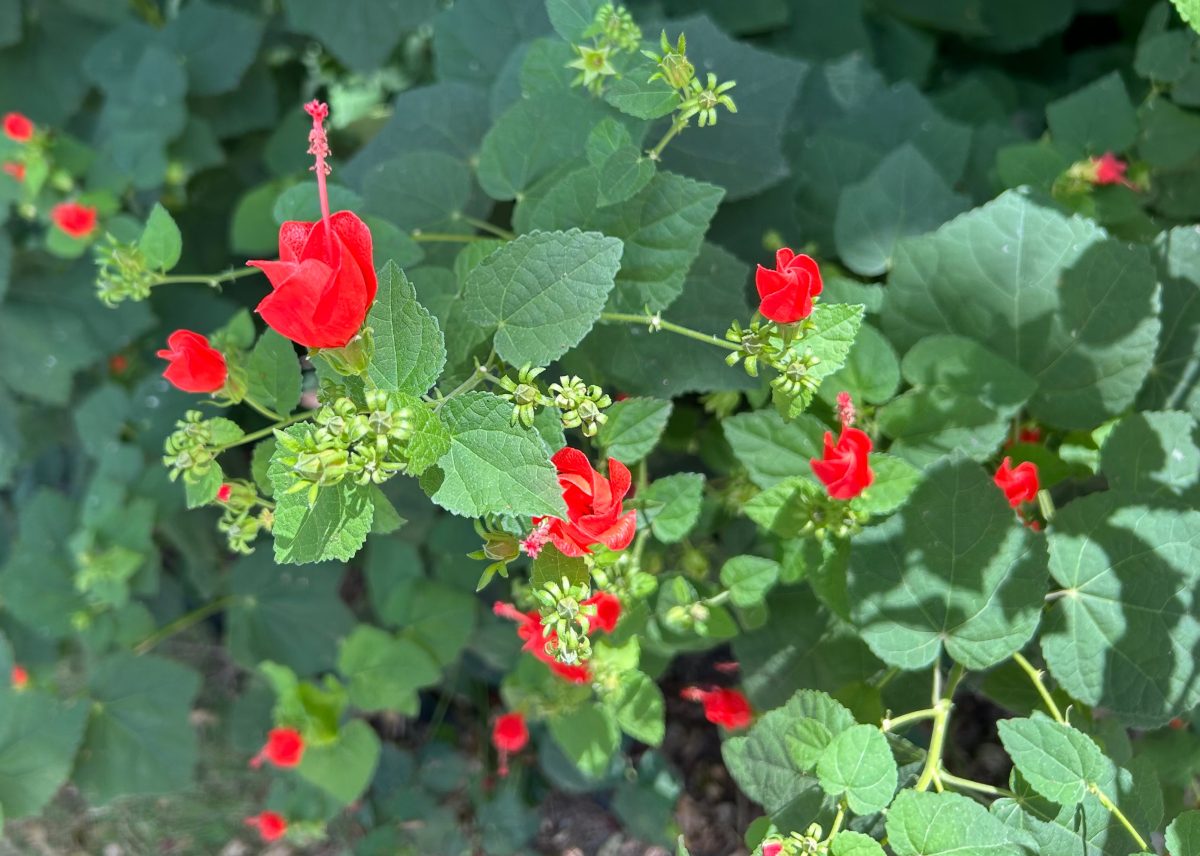
Turk’s cap is one of those dependable plants that quietly earns its place in the garden year after year. Its unique flowers never fully open, resembling tiny folded turbans that give the plant its memorable common name. Even without large, showy blooms, the vivid red flowers stand out beautifully against its rich green foliage.
One of Turk’s cap’s greatest strengths is its versatility. It flowers happily in partial shade where many butterfly plants produce few blooms, yet it also tolerates full sun if given enough moisture. This makes it especially valuable for gardeners trying to create pollinator habitat beneath mature trees, along woodland edges, or on the east side of a home.
As summer temperatures climb, Turk’s cap keeps blooming while many other perennials begin to fade. By extending nectar availability into autumn, it helps support migrating butterflies and hummingbirds long after spring flowers have disappeared.

Butterfly & Pollinator Value
Turk’s cap is one of the most dependable nectar plants you can grow for a wide variety of pollinators. Its flowers are produced continuously over several months, ensuring there’s almost always something in bloom during the growing season.
Who Visits Turk’s Cap?
| Pollinator | What You’ll Typically See |
|---|---|
| 🦋 Monarchs | Regular nectar visitors during migration. |
| 🦋 Queens | Frequent visitors throughout summer and fall. |
| 🦋 Swallowtails | Giant and Black Swallowtails commonly stop to feed. |
| 🦋 Skippers | Reliable visitors throughout the bloom season. |
| 🐝 Native Bees | Bumble bees and solitary bees gather nectar and pollen. |
| 🐦 Hummingbirds | One of the plant’s biggest fans, visiting repeatedly throughout the day. |
Although Turk’s cap is not considered a major host plant for butterflies, its abundant nectar production makes it an important part of a butterfly garden. It becomes especially valuable during late summer and early fall when pollinators are searching for dependable food sources.
After flowering, bright red berries develop and provide food for mockingbirds, cardinals, and other songbirds, adding another layer of wildlife value to the garden.
Growing Conditions
Turk’s cap performs best in part shade, where it receives morning sun and protection from the hottest afternoon rays. In North Texas, this is often the sweet spot for lush growth and consistent flowering.
That said, don’t be afraid to plant it in full sun if your soil retains some moisture or you can provide occasional irrigation during prolonged dry spells. In shadier locations, flowering may be slightly lighter, but the plant usually develops especially attractive foliage.
Turk’s cap adapts well to clay, loam, and limestone soils as long as drainage is adequate. Once established, it’s surprisingly drought tolerant, though it appreciates occasional deep watering during long stretches without rain.
This is one of the few native plants that truly excels in those “difficult” locations where many butterfly plants struggle—under large shade trees, beside fences, or in bright woodland gardens.
Planting Tips
- Spring and fall are both excellent times to plant Turk’s cap, with fall often giving roots the opportunity to establish before the following summer.
- Space plants about three to four feet apart. They may look small at first, but mature plants gradually fill in to form attractive, informal masses.
- Water deeply after planting and continue watering regularly during the first growing season. Once established, reduce watering frequency and encourage deep root growth with occasional thorough soakings rather than frequent shallow watering.
- A layer of organic mulch helps conserve moisture, suppress weeds, and protect roots from summer heat.
Care & Maintenance
Turk’s cap asks for remarkably little maintenance once established.
- Water during extended drought, particularly if plants are growing in full sun. Plants growing in partial shade generally require even less supplemental irrigation.
- Fertilizer is rarely needed. A light top-dressing of compost in spring is usually sufficient if your soil is especially poor.
- In North Texas, Turk’s cap often dies back to the ground after the first hard freeze. Wait until late winter or early spring to remove old stems, as they help protect the crown during cold weather and provide shelter for beneficial insects.
- If plants become larger than desired, they can easily be divided or lightly pruned to maintain their shape.
Common Problems
Turk’s cap is refreshingly trouble-free.
The most common complaint is actually that plants become larger than expected in favorable conditions. Fortunately, they respond well to pruning if you need to keep them within bounds.
Leaf spot diseases occasionally appear during extended periods of humid weather but rarely threaten the plant’s health.
Spider mites may become active during unusually hot, dry summers, though healthy plants generally recover quickly with improved moisture.
Deer typically browse Turk’s cap less than many ornamental plants, although hungry deer may sample new growth.
Companion Plants
Turk’s cap combines beautifully with other Texas natives that thrive in similar growing conditions.
Inland sea oats provide graceful arching seed heads and attractive foliage for shady gardens.
Gregg’s mistflower adds lavender-blue flowers later in the season and creates a wonderful contrast with Turk’s cap’s scarlet blooms.
Coralberry offers soft pink berries that extend seasonal interest into fall and winter.
American beautyberry produces vivid purple berries that pair beautifully with Turk’s cap’s rich green foliage.
Columbine provides early spring flowers before Turk’s cap reaches its stride.
Cedar sage continues the hummingbird theme with brilliant red blooms in fall and winter.
Together, these plants create a layered shade garden that provides nectar, berries, and year-round interest for wildlife.

Turk’s cap also comes in pink and white flowered varieties.
In the Garden
Turk’s cap is one of those plants that seems to become more appreciated with every passing year. It isn’t flashy in the traditional sense, but once it settles into the garden, you’ll notice how consistently it performs regardless of the weather. While other plants may pause during the hottest weeks of summer, Turk’s cap simply keeps producing flower after flower.
Its bright red blooms often become gathering places for hummingbirds, especially during migration, and it’s not unusual to spot butterflies stopping in between visits to nearby salvias or mistflowers. By late summer, the plant feels less like a single specimen and more like an important part of the garden’s ecosystem.
Frequently Asked Questions
Is Turk’s cap native to Texas?
Yes. Turk’s cap is native to much of Texas and has long been one of the state’s most popular native landscape plants.
Does Turk’s cap grow in shade?
Absolutely. It’s one of the best native flowering plants for part shade and bright shade, although it also grows well in full sun with adequate moisture.
Does Turk’s cap attract butterflies?
Yes. Its long bloom season makes it an excellent nectar source for monarchs, queens, swallowtails, skippers, and many other butterflies.
Do hummingbirds like Turk’s cap?
Very much. The tubular red flowers are among the best native nectar sources for hummingbirds in Texas gardens.
Are Turk’s cap berries edible?
Yes. The small red fruits are edible for people and have a mildly sweet flavor, although they’re most often left for birds and other wildlife to enjoy.
Final Thoughts
If you need a native plant that performs beautifully in shade, tolerates Texas heat, and provides months of nectar for butterflies and hummingbirds, Turk’s cap deserves a place in your garden. Its unique flowers, dependable nature, and exceptional wildlife value make it one of the most rewarding native plants for beginners and experienced gardeners alike.
Whether paired with woodland natives or incorporated into a larger butterfly garden, Turk’s cap brings color, movement, and life to spaces where many flowering plants struggle. Once established, it’s likely to become one of the hardest-working plants in your landscape.
Continue Exploring the Plant Library:
Texas Native Plants for Beginners
Photo credits: pipevine swallowtail on Turk’s cap flower – Reagan Ross
Leave a Reply