

Milkweed is the lifeline of monarch butterflies — it is the only host plant on which they lay their eggs and the sole food source for their caterpillars. But many gardeners are surprised to learn that milkweed benefits from a little care to keep it healthy, lush, and caterpillar-ready. Whether you have just planted seeds or have established plants, this guide will walk you through every step of caring for milkweed in your garden.
In previous guides, we covered how to harvest milkweed seeds, including the right time to collect them from milkweed pods and how to store them. In a corresponding guide, we provided instructions on how to germinate milkweed seeds, with the easiest most reliable method.
This guide will cover the next steps to establish your milkweed plants in the garden to create a thriving habitat, both beautiful to enjoy and usable for monarchs as host plants and other pollinators as a nectar-source.

Choosing the Right Location
• Sunlight
Most milkweed varieties thrive in full sun (6–8+ hours daily). A sunny location helps plants grow strong and flower more abundantly.
• Soil
While milkweed is tough and adaptable, it prefers well-drained soil. Clay can be improved with compost, and sandy soil can benefit from organic matter.
• Spacing
Give plants room to spread. Spacing 18–24 inches apart prevents overcrowding and improves airflow.
Transplanting
• Butterfly weed (A. tuberosa), green, and antelopehorns (A. viridis, A. asperula) – These deep taprooted natives are difficult to move once mature. Plant young seedlings directly in their permanent spot, ideally in spring or fall.
• Swamp milkweed (A. incarnata) – Can be transplanted more easily. Put young plants in the ground early spring or fall while dormant, and keep soil consistently moist until established.
• Common (A. syriaca) and showy milkweed (A. speciosa) – Spread by rhizomes that can divided, so they are easier to transplant. Plant divisions in early spring or fall for best root establishment.
• With all transplants, choose a time when weather conditions are milder for your area to reduce stress on the plants and water thoroughly after planting.
Watering Milkweed
• New Plants:
Water regularly until established (first season), and about once a week in dry conditions. Water around the base of the plant to encourage deep root growth.
• Established Plants:
Native milkweeds are drought-tolerant and usually only need water during prolonged dry spells.
• Avoid Overwatering:
Too much moisture can lead to root rot and fungal issues.

Close up of flowers of butterfly weed or orange milkweed (Asclepias tuberosa)
Fertilizing Milkweed
• Milkweed generally does not require fertilizer.
• If soil is very poor, you can add a light compost dressing in spring.
• Avoid high-nitrogen fertilizers — they can cause excessive leafy growth with fewer flowers.
Pruning and Deadheading
• Encourage bushier growth: Pinch back young plants in early summer to promote branching. Seed heads can be pruned off if more leafy growth and repeat flowering is desired.
• Deadheading flowers: Cutting off spent blooms can also encourage more flowers in some species.
• Cutting back in fall: Not necessary in colder climates where frost kills it back to the ground.
Important note in warmer climates: Cutting stems down to 6 inches or less after the first frost or late Fall is recommended for milkweed to prevent the spread of a detrimental fungus that infects monarchs call OE (Ophyrocytus elekrosscirrha). It is spread via spores than stick to leaves and stems. Cut stems can be composted or to be extra careful you can bag them and throw them away.
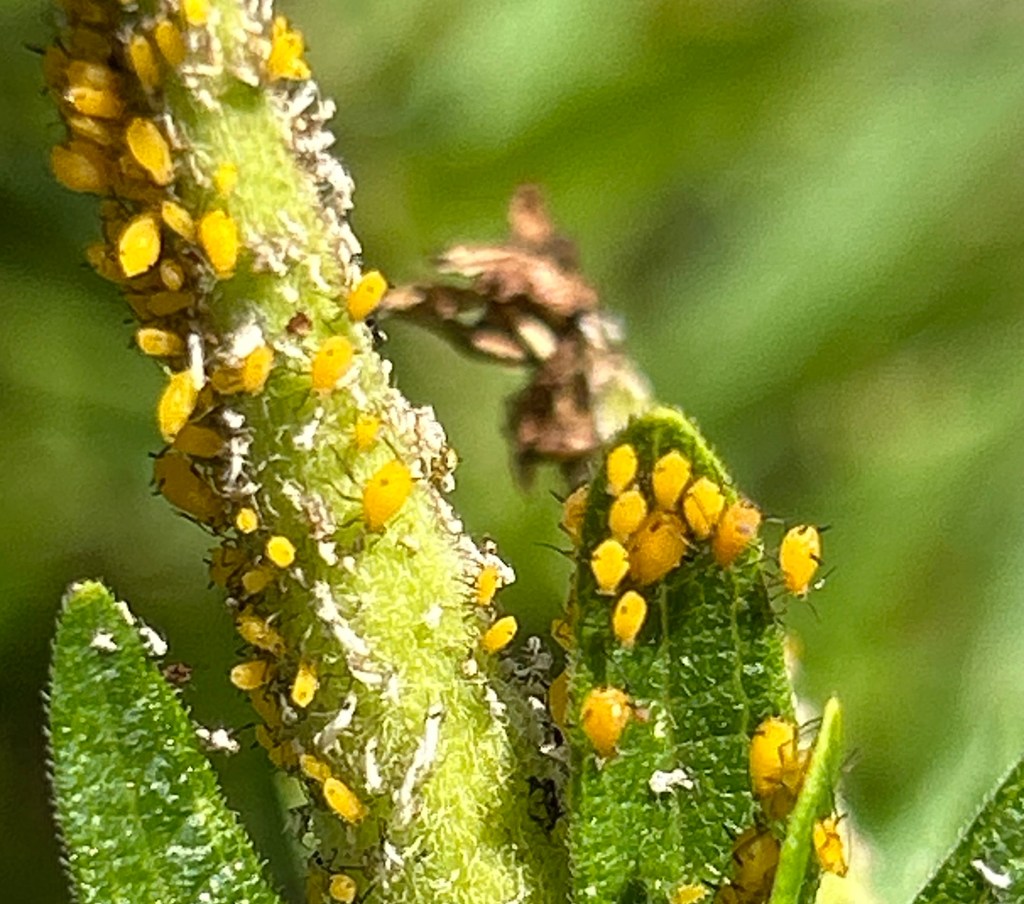
Yellow oleander aphids on milkweed, the white stuff is their molted skins
Managing Pests Naturally
• Aphids: Common but not always harmful. You can blast them off with a strong spray of water or introduce ladybugs. Avoid pesticides (they harm caterpillars and butterflies). Studies have shown that aphids are not harmful to monarch caterpillars, but too many can weaken the plant. This is a subject of much debate! I would like cover more in depth in a future guide.
• Milkweed bugs & beetles: Usually harmless in small numbers, but you can hand-pick if they get overwhelming.
• Ants: Often attracted by aphids’ honeydew — controlling aphids will reduce ant activity.
Preventing Disease
• Fungal leaf spots: Improve air circulation by spacing plants properly and avoiding overhead watering.
• Yellowing leaves: Often natural as the plant matures, but persistent issues may mean poor drainage or nutrient imbalance.
Supporting Monarchs
• Plant multiple milkweed plants clusters so hatched caterpillars will find plenty of food.
• Avoid any pesticide or insecticide use — even organic sprays and herbicides can harm monarchs and other pollinators.
• Combine milkweed with nectar-rich flowers (coneflower, zinnias, lantana, goldenrod) to feed adult butterflies too.
• Additional gardening techniques to help monarch butterflies.
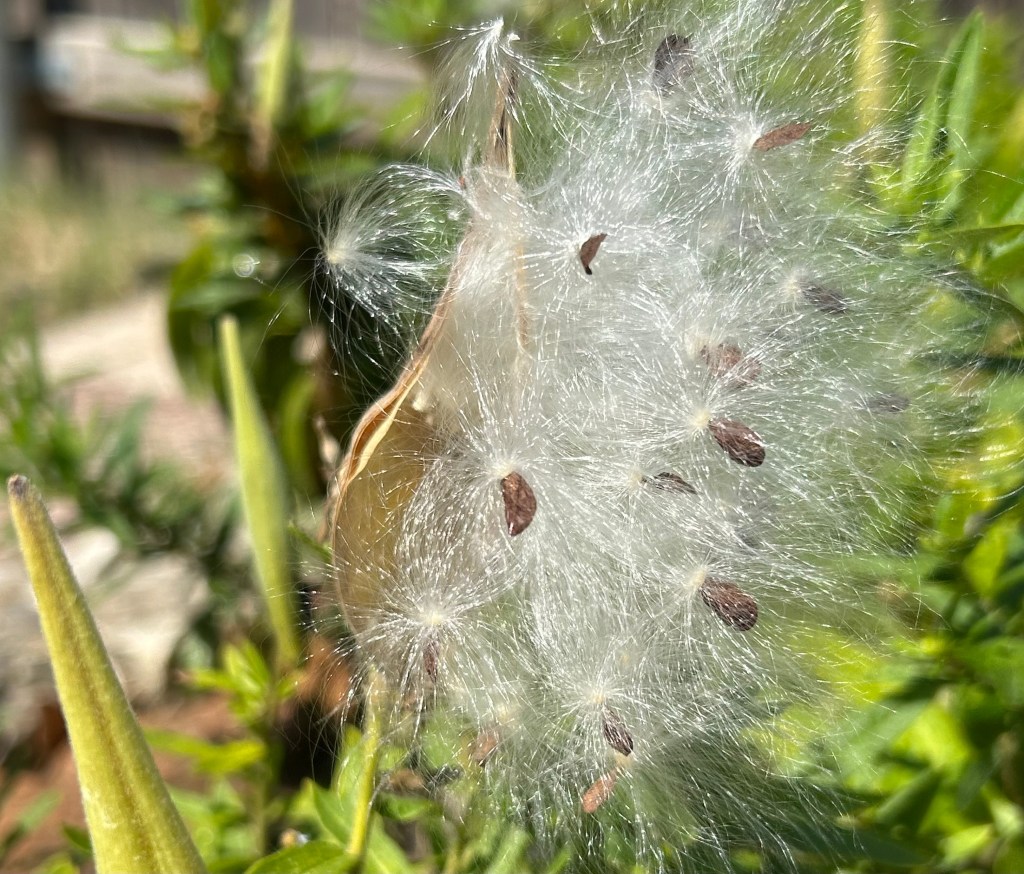
Fluffy milkweed seeds ready to fly away after their seed pod split open
Propagating Milkweed
• Propagation by seed is the most common way to multiply plants. Our guide How to Germinate Milkweed Seeds breaks it into easy steps.
• Some species of milkweed like Common (A. syriaca) and Showy (A. speciosa) can be grown from root cuttings.
• Division: Common milkweed (A. syriaca) can spread by underground rhizomes; you can divide clumps if they get too large.
Seasonal Care
• Spring
Watch for new shoots and work some compost into the soil for nutrients.
• Summer
Pinch back for branching, keep watered in drought, and watch for visits from pollinators or even some monarch caterpillars appearing.
• Fall
Allow some seed pods to mature and release naturally, or collect seeds for next season. Cut back stems to 6 inches or less after frost to prevent disease in warmer climates.
• Winter
Most native milkweeds are perennials, they die back in winter and return from the roots in spring. Mulch lightly in colder zones for protection.
Conclusion
Milkweed is a wonderful native and low-maintenance plant — just a few simple practices can keep your plants thriving year after year. In return, you provide a ton of ecological value for monarchs and other pollinators with the food and habitat they need to survive. By growing and maintaining healthy milkweed, you are making a meaningful contribution to wildlife conservation right in your own backyard.
This article covers one part of butterfly gardening. The Butterfly Garden Cheat Sheet shows how these elements fit together at a basic level.
Related Guides:
Monarch Host Plants vs. Nectar Plants: A Simple Beginner Guide
How to Create a Monarch Waystation in Texas Zone 8
Photo credits: monarch on common milkweed – Lasclay
 Butterfly garden paradise
Leave a comment