A Texas Native Grass for Butterflies, Wildlife, and Tough Landscapes
Little bluestem may not have the showy flowers that attract attention in a butterfly garden, but it deserves a place in the landscape for entirely different reasons. This warm-season Texas native grass provides structure, seasonal color, wildlife habitat, and even serves as a host plant for several skipper butterflies found in the Dallas–Fort Worth area.
Schizachyrium scoparium is also remarkably adaptable. It prefers full sun and well-drained soil, but it can handle a broader range of soil types and moisture conditions than many of the ornamental grasses commonly used in Texas landscapes. That makes it particularly useful in gardens where conditions change throughout the year—from wetter spring soils to hot, dry summer conditions.
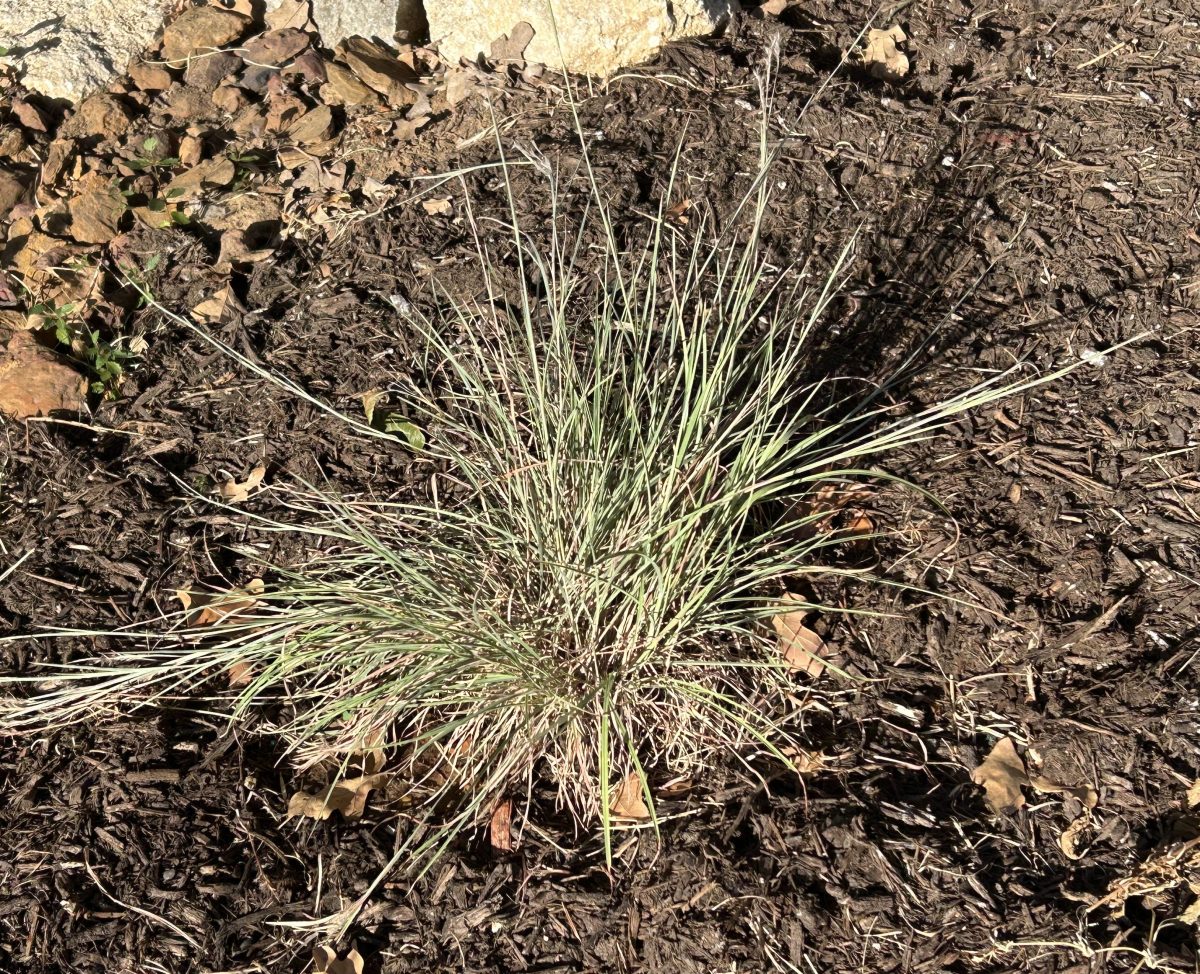
Instead of thinking of little bluestem as simply another ornamental grass, consider it a habitat plant that also happens to be beautiful. Its blue-green summer foliage develops rich copper, bronze, and reddish tones in fall, while its seed heads persist into winter and provide additional interest after many other plants have gone dormant.
Plant Profile:
| Little Bluestem | Attributes |
|---|---|
| Botanical name | Schizachyrium scoparium |
| Plant family | Poaceae (Grass Family) |
| Common names | Little bluestem, beard grass |
| Plant type | Warm-season perennial grass |
| Native to Texas? | Yes |
| Texas ecoregions | Widely distributed across Texas, including the Cross Timbers, Blackland Prairie, Grand Prairie, Post Oak Savannah, Edwards Plateau, and many prairie and savanna communities |
| Native range | Much of North America |
| USDA Zones | 3–9 |
| Height | Approximately 2–4 feet |
| Spread | Approximately 1½–2 feet |
| Foliage color | Blue-green in summer; copper, bronze, and reddish tones in fall |
| Bloom/seed season | Late summer through fall |
| Sun requirements | Full sun; tolerates some light shade |
| Water needs | Low once established; tolerates a range of moisture conditions |
Little bluestem occurs naturally across a remarkably broad range of Texas landscapes. It’s a dominant or common grass in prairie, savanna, woodland, and other grassland communities, including areas with clay loam and clay soils.
🦋 Butterfly Garden Snapshot
| Feature | Rating |
|---|---|
| 🦋 Butterfly Nectar | ⭐☆☆☆☆ |
| 🐛 Butterfly Host Plant | ⭐⭐⭐⭐☆ |
| 🐝 Native Bees | ⭐⭐⭐☆☆ |
| 🐦 Bird Habitat | ⭐⭐⭐⭐⭐ |
| 🍂 Seasonal Interest | ⭐⭐⭐⭐⭐ |
| ☀️ Heat Tolerance | ⭐⭐⭐⭐⭐ |
| 💧 Drought Tolerance | ⭐⭐⭐⭐⭐ |
| 🌱 Beginner Friendly | ⭐⭐⭐⭐☆ |
Why You’ll Love It
Little bluestem fills a role in the garden that flowering perennials simply can’t.
Its upright clumps add height and movement without becoming a large shrub, while the narrow foliage creates a softer texture that contrasts nicely with broad-leaved plants. It also provides something many butterfly gardens lack: habitat that remains useful after the flowers have faded.
The foliage stays blue-green through much of the growing season before developing increasingly warm shades of bronze, copper, and red as temperatures cool. The fluffy seed heads remain attractive into winter, giving the plant structure when many herbaceous perennials have disappeared.
It is also particularly useful when you’re dealing with a landscape where conditions aren’t identical everywhere. Little bluestem prefers well-drained soil, but it is more tolerant of changing moisture conditions than many drought-adapted ornamental grasses. It can handle clay and periods of greater moisture as well as the dry conditions of a Texas summer, provided the site isn’t persistently waterlogged.
That adaptability makes it a useful choice for transitional parts of a landscape where conditions shift substantially throughout the year.

Swarthy Skippers (Nastra lherminier) on lantana camara.
Butterfly & Pollinator Value
Little bluestem is unusual among the plants in a butterfly garden because its most important butterfly contribution happens before you ever see a butterfly feeding on it.
The grass is a larval host plant for several skipper butterflies. Caterpillars feed on the grass blades and often create shelters within the foliage, where they can be surprisingly easy to overlook. For gardeners in the DFW area, little bluestem has documented host relationships with several local skipper species, including:
- Swarthy Skipper
- Cobweb Skipper
- Arogos Skipper
- Meske’s Skipper
- Crossline Skipper
- Dusted Skipper
making the plant much more than an ornamental grass for local butterfly gardens.
Why Skippers Matter
Skippers are sometimes overlooked because many are small, brown, and fast-moving compared with showier swallowtails and monarchs. But they are an important part of Texas butterfly diversity, and native grasses are essential to their life cycles.
Planting little bluestem gives these butterflies somewhere to lay eggs and provides food for the caterpillars after they hatch. That makes it an excellent example of why a wildlife garden shouldn’t consist entirely of colorful nectar flowers.
Growing Conditions
Little bluestem performs best in full sun, where it develops the strongest growth and best fall coloration. It can tolerate some light shade, but increasing shade generally results in weaker, less upright plants.
The plant prefers well-drained soil and naturally occurs in upland prairies, savannas, and other relatively open habitats. It is adaptable to a wide range of soil types, including clay. Texas prairie communities containing little bluestem occur on clay loams, clayey uplands, calcareous clays, loams, and sandy soils.
Once established, it is highly drought tolerant and generally needs little supplemental irrigation. It also performs well without highly fertile soil, making it a good fit for native and low-input landscapes. In fact, excessive fertility can encourage softer, more vigorous growth that is less desirable for a naturally upright bunchgrass.
Little bluestem is a warm-season grass, so don’t expect much activity from it early in spring. New growth becomes more noticeable as the soil warms, and the grass remains active through the summer before developing its characteristic fall color.
Planting Tips
- Spring is generally the easiest time to establish little bluestem in North Texas once the soil has warmed.
- Give individual plants enough room to develop into upright clumps rather than crowding them together. Approximately 18–24 inches of spacing works well for many garden situations, although spacing can vary depending on the cultivar and the desired appearance.
- Water regularly during the establishment period, particularly during the first summer. Once the root system is established, irrigation can be reduced substantially.
- Little bluestem doesn’t require rich soil to perform well. Avoid heavily fertilizing it simply to encourage faster growth; excessive fertility can produce lush growth that is less desirable in a landscape setting.
Care & Maintenance
Little bluestem is relatively low maintenance once established.
- Little bluestem generally does not need fertilizer or frequent watering once established. Its natural clumping habit also means it is best given enough room to develop rather than repeatedly trimmed to keep it artificially small.
- Leave the dried foliage and seed heads standing through winter whenever possible. They provide structure, shelter, and wildlife value while also allowing the attractive winter coloration to remain part of the landscape.
- Cut the old foliage back in late winter or very early spring, before new growth begins. A few inches of the old stems can be left in place rather than removing every bit of vegetation at ground level. This clears away the previous season’s growth and allows the new shoots to emerge cleanly.
- Avoid cutting it back too early in fall. Doing so removes much of the seasonal color and eliminates winter habitat that the standing grass can provide.
Common Problems
Little bluestem has relatively few serious pest or disease problems when grown in an appropriate location. The most common problems are usually site-related rather than insect-related.
Too much water
Although adaptable, little bluestem isn’t a wetland grass. Poor drainage and prolonged saturation can cause decline, particularly if the soil remains wet through winter.
Too much shade
Plants growing with insufficient sunlight may become less upright and less vigorous. If a planting area becomes increasingly shaded as nearby trees mature, the grass may eventually struggle.
Excessive fertility
Rich, heavily fertilized soil can encourage overly lush growth. Little bluestem generally performs well without routine fertilizer.
Competition
Little bluestem is a prairie plant, but it can still be overwhelmed by aggressive turfgrasses or invasive plants. Keeping competing vegetation under control during establishment gives young plants a much better chance of developing into strong clumps.
Companion Plants
Little bluestem is particularly useful in a layered wildlife garden because it provides a vertical framework around which flowering plants can be arranged.
Blackfoot daisy works beautifully along the front of a planting, with its low white flowers contrasting against the taller grass.
Mealy blue sage adds long-lasting blue flowers and nectar for adult butterflies and bees.
Autumn sage contributes colorful tubular flowers and attracts hummingbirds.
Black-eyed Susan brings bright yellow flowers that contrast beautifully with the blue-green foliage.
Gregg’s mistflower adds late-season lavender flowers and can create an especially active butterfly planting alongside the grass.
Frogfruit can fill open ground around the base while providing a host plant for several butterfly species.
Little bluestem can also be planted in groups rather than as isolated specimens. A small drift of grasses interspersed with flowering natives often looks more natural and provides considerably more habitat than a single ornamental specimen.

In the Garden
Little bluestem is a particularly good choice for parts of a Texas landscape where conditions don’t stay the same throughout the year.
A garden bed might be relatively moist during spring rains and receive some temporary shade from surrounding vegetation, then become considerably hotter and sunnier as summer progresses. Plants that require consistently dry soil may struggle with the early-season moisture, while plants that prefer moist conditions may fail once summer arrives.
Little bluestem occupies a useful middle ground. It doesn’t want to sit in water or grow in deep shade, but it can tolerate more variation than many grasses marketed for drought-tolerant landscapes. That flexibility is one reason it has such a broad natural distribution across Texas. It occurs in prairie and savanna communities ranging from clay-rich soils to lighter, rocky sites.
And then there’s the seasonal transformation. The blue-green summer foliage gradually gives way to copper, bronze, and reddish tones in fall, followed by pale seed heads that can remain attractive into winter.
The silvery-white seed heads are especially valuable for wildlife. As the seeds mature in fall, birds may feed on them through the colder months, while the dense clumps of grass provide cover and nesting material for birds and small mammals. Leaving the plant standing also allows you to enjoy the gradual transition from its coppery fall color to its pale winter appearance.
For a butterfly garden, that’s a lot of value from a plant that doesn’t need to produce a single showy flower.
Frequently Asked Questions
Is little bluestem a butterfly host plant?
Yes. Little bluestem serves as a larval host for several skipper butterflies. In the Dallas–Fort Worth area, documented associations include Swarthy, Cobweb, Arogos, Meske’s, Crossline, and Dusted skippers.
Does little bluestem grow well in Texas clay?
Yes. Little bluestem occurs naturally in several Texas prairie and savanna communities with clay and clay-loam soils. Good drainage is still important, particularly in heavy clay.
Can little bluestem tolerate wet soil?
It can tolerate more moisture variation than many drought-adapted grasses, but it isn’t a wetland plant. It prefers well-drained soil and does not tolerate prolonged flooding or persistently saturated conditions well.
Does little bluestem need full sun?
Full sun is best for strong, upright growth and good fall color. It can tolerate some light shade, but it isn’t a good choice for deeply shaded locations.
Is little bluestem good for a butterfly garden?
Yes, particularly when the goal is to provide habitat rather than simply attract adult butterflies to flowers. Its role as a skipper host plant makes it a valuable complement to nectar-producing perennials and butterfly host plants such as milkweed and frogfruit.
Final Thoughts
Little bluestem may not be the first plant that comes to mind when you picture a butterfly garden, but that’s exactly why it’s worth including.
It provides something that flowering plants can’t: habitat for skipper caterpillars, structure for wildlife, seasonal color, persistent winter interest, and seeds that can benefit birds. At the same time, its ability to tolerate heat, drought, clay, and changing moisture conditions makes it practical for many Texas landscapes.
For gardeners in North Texas, little bluestem is especially useful when you’re trying to choose plants for locations that don’t behave the same way throughout the year. It isn’t a solution for waterlogged soil or deep shade, but its flexibility makes it a valuable option for the many in-between situations found in real gardens.
Pair it with flowering natives such as mealy blue sage, Blackfoot daisy, autumn sage, and Gregg’s mistflower, and you’ll have a planting that supports butterflies at multiple stages of their life cycle—not just when they’re visiting flowers.
Continue Exploring the Plant Library:
Texas Native Plants for Beginners
12 Drought-Tolerant Pollinator Plants That Thrive in Texas Heat
Texas Native Grasses That Support Butterflies (and Why They Matter More Than You Think)
Photo credit: Swarthy skippers on lantana camara – xpda, CC BY-SA 4.0, cropped, via Wikimedia Commons
Leave a Reply